The single most effective way to protect fragile items during a move is to over-wrap individual pieces, build a shock-absorbing base in every box, and never leave empty space for items to shift. After packing thousands of homes over 35 years, we can tell you that broken items almost never come from a rough bump — they come from under-packed boxes where things collide with each other. Get the wrapping and box-packing right, and breakage drops to nearly zero.
Why fragile items break (and it's not what you think)
Most people blame the movers — a dropped box, a hard corner on the truck. In reality, the vast majority of damage we've seen happens inside perfectly intact boxes. A wine glass wrapped in a single sheet of paper sitting next to another glass in a half-empty box will snap in transit from nothing more than highway vibration. The culprits are almost always:
- Insufficient individual wrapping — one layer of paper is never enough for glass or ceramics.
- Empty space in the box — movement = impact. A snug box is a safe box.
- Wrong box weight — heavy items in oversized boxes flex and buckle; pack dense fragiles in small (1.5 cu ft) boxes only.
- Stacking fragile boxes under heavy ones — even a 30-lb box of books sitting on a dish pack for four hours will crush stemware.
Understanding why things break is the fastest shortcut to packing correctly.
What materials do you actually need?
You don't need to spend a fortune, but skimping here is false economy. Below are the materials we recommend, with typical retail costs so you can budget accurately.
| Material | Best for | Typical cost |
|---|---|---|
| Unprinted newsprint/packing paper (25 lb pack) | Dishes, glasses, ceramics | $20–$30 |
| Bubble wrap roll (3/16 in., 12 in. × 100 ft) | Art, mirrors, electronics | $25–$40 |
| Small dish-pack boxes (1.5–3 cu ft) | All glassware, ceramics | $3–$6 each |
| Dish-pack divider cell kits | Stemware, bottles | $5–$10 per kit |
| Foam pouches (set of 30) | Everyday glasses | $12–$18 |
| Packing peanuts or crumpled paper | Void fill in any box | $10–$20 per bag |
| Stretch wrap / plastic wrap | Bundling sets, protecting lids | $8–$15 |
| Painter's tape (not masking tape) | Securing wrap without marking items | $5–$8 per roll |
Avoid newspaper. The ink transfers permanently onto dishes and light-colored ceramics — we've seen irreplaceable pieces stained beyond recovery. Always use unprinted newsprint or foam pouches.
If you're trying to keep moving costs in check overall, our 2026 US Moving Cost Breakdown covers how professional packing services are priced versus DIY.
How to pack fragile items: a room-by-room process
Step 1 — Build a cushioned base before anything goes in
Crumple a 3–4 inch layer of packing paper into the bottom of every box before a single item touches it. This layer absorbs the bounce that comes from the truck floor. This step alone prevents more damage than almost any other technique.
Step 2 — Wrap every piece individually, fully
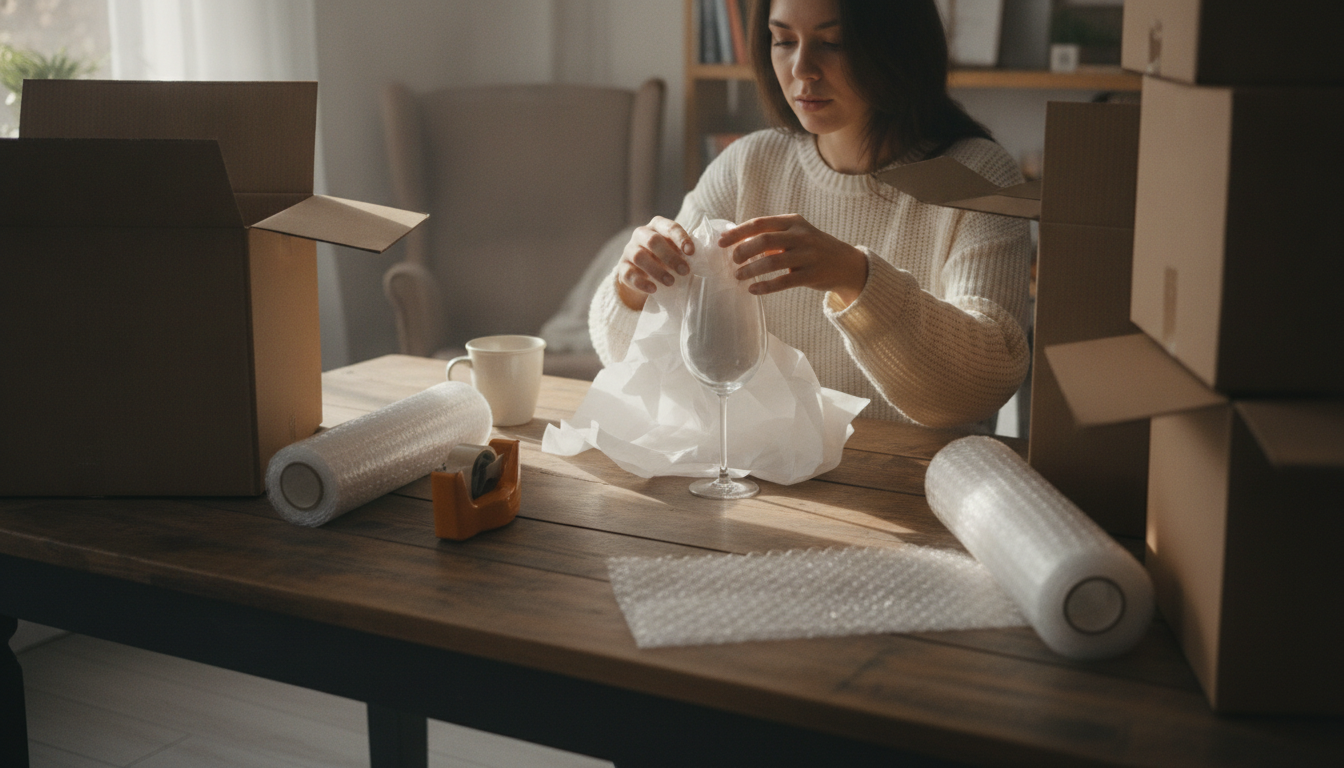
Lay one sheet of packing paper flat. Place the item in the center at a 45-degree angle. Roll, tuck the sides, and roll again — the final wrap should be at least 3 layers thick. For glasses, also stuff the inside cavity with a crumpled half-sheet before wrapping the outside. For anything truly valuable (crystal, antique ceramics), do a second wrap with bubble wrap on top of the paper wrap.
Step 3 — Pack plates vertically, never flat
This is the one rule that shocks most people. Plates stacked flat act like shock conductors — vibration travels straight through the stack and the bottom plate bears all the weight. Stood on edge, each plate absorbs independently, like a shock absorber. Stand dishes and plates vertically in the box, separated by individual paper wraps. We've transported full 12-piece china sets this way with zero losses, move after move.
Step 4 — Use cell dividers for stemware and bottles
A divider kit turns one box into 6, 9, or 12 separate padded compartments. Place one wrapped glass per cell. There should be zero lateral movement when the divider is loaded. These kits are worth every dollar — replacing a single crystal wine glass typically costs $40–$150.
Step 5 — Fill every void before closing
Shake the box gently after loading. If you hear or feel movement, add more crumpled paper until the box feels solid. The closed box should feel like one rigid unit. Then add a final 2–3 inch paper layer on top.
Step 6 — Label with precision, not just "FRAGILE"
Write FRAGILE – THIS SIDE UP – DO NOT STACK on all four sides and the top in large letters. Movers on a fast-paced job are looking at the sides of boxes in a truck — a single top label gets missed. We also recommend writing the contents ("champagne flutes × 6") so nothing gets stacked accidentally.
While you're reading
Skip the research — let Robert match you with movers.
Get quotes from professional movers in your area, free.
Packing specific high-risk items
Mirrors and framed art
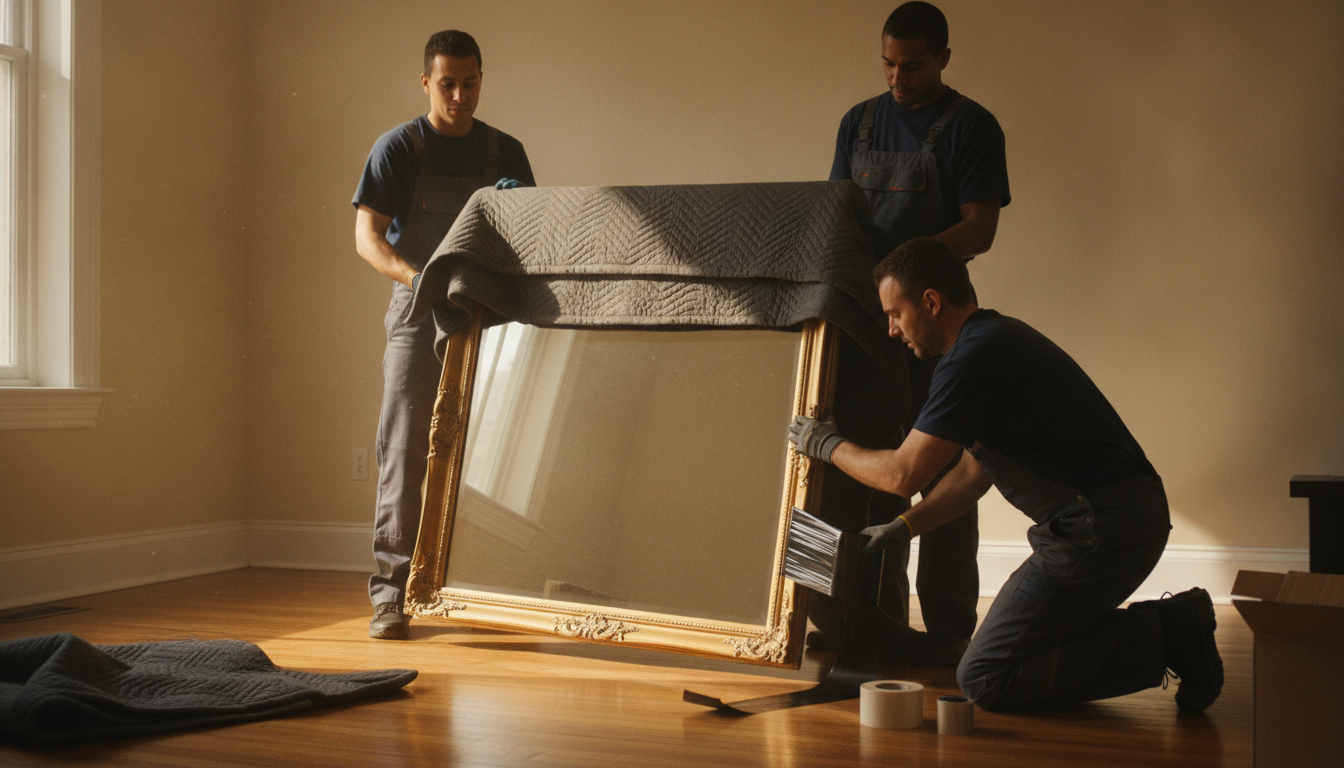
Always use a dedicated mirror box — a telescoping corrugated box available for $15–$30 that adjusts to the frame size. Wrap the entire piece in two layers of bubble wrap first, tape all corners, and stand it upright in the box. Fill the interior sides with foam sheets or paper. Never lay mirrors or art flat in a truck.
Flat-screen TVs and monitors
The original box is always best — keep it after you buy electronics for exactly this reason. If you don't have it, use a TV moving box (sized by screen diagonal; $20–$50 at moving supply retailers). Wrap the screen in foam wrap or a moving blanket, not bubble wrap directly against the screen (bubbles can leave impressions on anti-glare coatings). Mark clearly: SCREEN — DO NOT LAY FLAT.
Lamps and lamp shades
Never pack a shade with anything else — it will be crushed. Use a dedicated box slightly larger than the shade itself, with paper balls filling all space. The base can be bubble-wrapped and packed separately. Unscrew and bag bulbs — wrap them in paper individually.
Should you hire professional packers for fragile items?
For a standard household move, a professional packing team typically charges $25–$60 per hour per packer (full-service packing for a 3-bedroom home often runs $400–$900 total for labor). For high-value or irreplaceable items — family heirlooms, art collections, antique furniture — that cost is almost always worth it. Reputable movers also carry Full Value Protection liability coverage, which in most cases makes them financially responsible for items they pack (typically $0.60/lb released valuation is the free option; full value protection upgrades vary by carrier — confirm specifics with your mover). If you pack a box and it breaks, most carriers will not cover it under their liability policy.
You can browse verified mover reviews to find packers with proven track records for fragile-item handling in your area, or find movers near you to get quotes that include professional packing services.
For more guidance on evaluating movers before you commit, our 10 questions to ask before hiring a moving company covers exactly what to ask about packing liability and coverage.
Frequently asked questions
How much bubble wrap and packing paper do I need for a typical kitchen?
For a standard kitchen (about 30–40 boxes of dishes, glasses, and cookware), plan on one 25-lb bundle of packing paper and one 100-ft roll of 3/16-inch bubble wrap. It sounds like a lot — and it is — but running out mid-pack and improvising with towels or newspaper is how things break. Buy more than you think you need; most moving supply stores accept unopened returns.
Can I use towels, T-shirts, or clothing instead of packing paper?
Soft clothing works reasonably well as a secondary wrap for moderately durable items like everyday mugs and pots. It is not reliable for stemware, crystal, or ceramics — fabric doesn't provide the stiffness needed to prevent glasses from touching each other under vibration. Use proper packing paper as the primary wrap; clothes can supplement as void fill.
What does "Full Value Protection" mean for fragile items?
Full Value Protection (FVP) is the higher-tier liability option offered by interstate movers under FMCSA rules. Under FVP, the carrier is typically responsible for repairing, replacing, or paying current market value for any item damaged in transit — regardless of weight. The free default option ("Released Value") only pays $0.60 per pound, meaning a 2-lb glass worth $80 yields a $1.20 claim. For a move with significant fragile items, upgrading to FVP is almost always worthwhile. Confirm exact terms with your carrier before signing the bill of lading.
Should fragile boxes go on the truck first or last?
Last on, first off — always. Fragile boxes should be loaded at the back of the truck (closest to the door) so they're the last thing stacked and the first thing unloaded. They should never be under heavy boxes or furniture. A good moving crew will place them on top of soft items like mattresses or upholstered furniture, never on the bare truck floor.
How do I pack a large mirror or piece of artwork I can't get a box for?
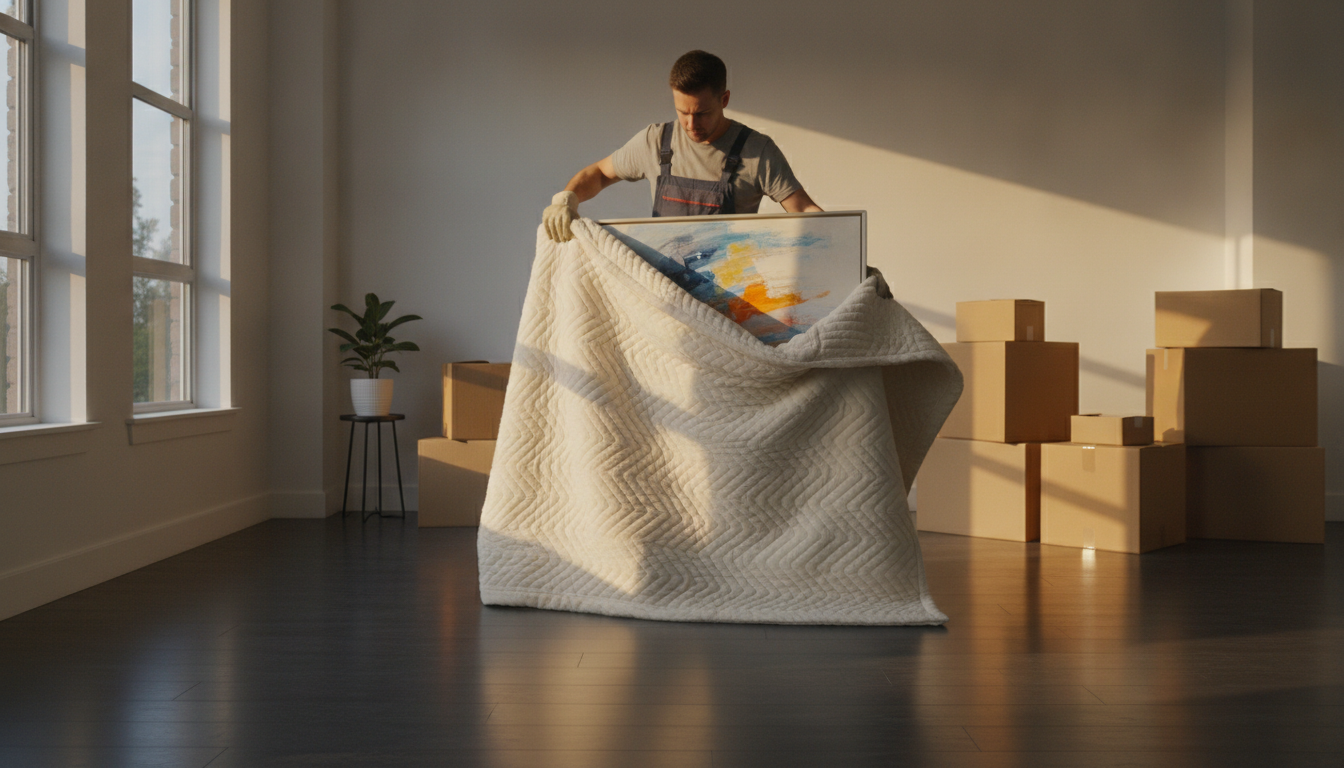
Wrap entirely in moving blankets secured with stretch wrap, then sandwich the piece between two pieces of cardboard cut to size and taped firmly. Stand it upright and brace it against the truck wall — never lay it flat. For anything genuinely valuable or oversized (large oil paintings, antique mirrors), a specialty art-moving company or crating service is the right call. Costs vary widely but typically start around $100–$300 for a standard crated piece.
Are there fragile items movers will refuse to transport?
Yes. Most carriers will not transport items they consider excessively fragile without special handling agreements — this commonly includes loose ceramic sculptures, unsecured aquariums, and perishable plants. Some movers also exclude electronics in original boxes from standard liability. Always disclose your high-value and unusual fragile items when getting quotes, and ask explicitly how each will be handled and covered.
Planning a move and want to be sure your fragile items are in safe hands? Browse moving companies by state to find experienced, vetted movers in your area — or chat with Robert, our AI moving assistant on Majestic Moving Companies, for personalized guidance on what to ask and what to expect.
Tagged