
Find movers near you
Movers across Rhode Island.
Compare top-rated local and long-distance movers — and let Robert do the comparison for you.
Get Your Quote→Rhode Island · RI
Moving companies in Rhode Island.
3 movers across 1 city in Rhode Island — local, long-distance, and specialty handling. Compare listings, get transparent quotes, and use our honest cost guide before you book.
Robert
Online·Call for a quote
Hi — I'm Robert, and I'll help you find the right movers. Where are you moving from, and where are you headed? Prefer a live representative? Just say the word and I'll connect you, or use the call button for a quote anytime.
By chatting with Robert, you agree we may share your move details with movers in your origin city so they can contact you with a quote. We never sell or share your info outside this network. Privacy Policy.
Top movers in Rhode Island
Rhode Island movers worth a look.
A few of the top movers statewide. Want a tailored recommendation? Chat with Robert above.
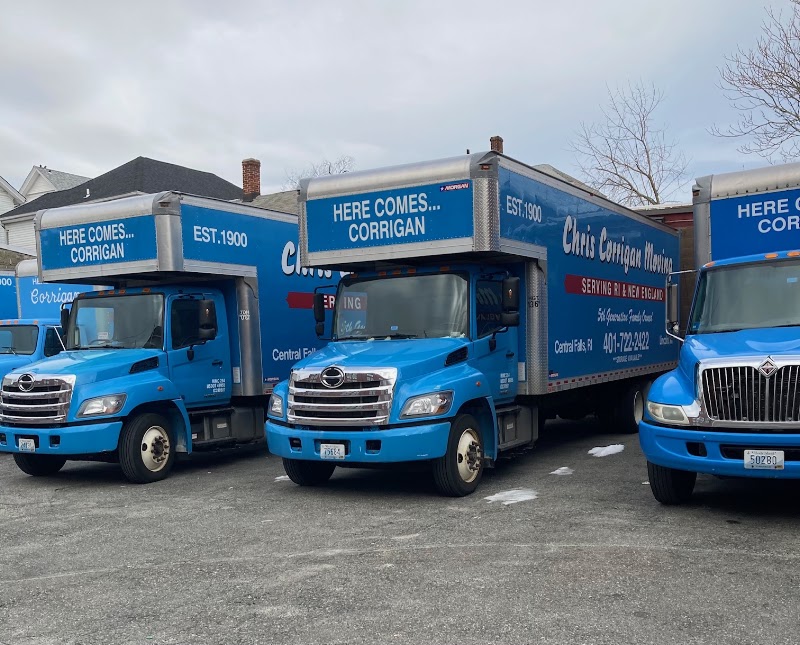
Cities in Rhode Island
Jump to movers in your city.
1 Rhode Island city has moving companies listed.
About moving in Rhode Island
What shapes a Rhode Island move.
Rhode Island's moving market reflects its unique position: a small, densely populated state wedged between Massachusetts and Connecticut along one of the busiest travel corridors in the country. Providence anchors most intrastate demand, while coastal communities like Newport and Narragansett generate significant seasonal moves. Many residents relocate to nearby Boston or New York for work, while retirees and remote workers move into the state from higher-cost metros. The housing stock — older triple-deckers in Providence, Victorian homes in Newport, and tight Cranston streets — frequently poses access challenges for large moving trucks.
Dense Urban Streets
Providence, Pawtucket, and Woonsocket feature narrow streets, on-street parking conflicts, and older multi-family buildings with steep stairways. Movers familiar with the local layout can plan truck placement and routes in advance, avoiding delays that commonly affect teams unfamiliar with Rhode Island's urban core. Always confirm whether a permit is needed for temporary parking in front of your building.
Coastal and Seasonal Access
Coastal communities such as Newport, Westerly, and Narragansett see heavy move-in activity in spring and early summer, driven by seasonal rentals, tourism-related relocations, and second-home transactions. Book movers several weeks ahead during May–September. Beach roads and historic districts can restrict oversized vehicles, so verify access routes before move day.
I-95 Corridor Proximity
Rhode Island sits directly on I-95, connecting Providence to Boston (about 50 miles north) and New Haven/New York to the south. This makes Rhode Island one of the most frequently transited states in the Northeast. Many long-distance moves follow this corridor, and companies that regularly run the Boston–Providence–New York route typically offer competitive pricing on these lanes.
Older Housing Stock
A large share of Rhode Island's residential buildings predate the mid-20th century, meaning low doorways, narrow hallways, tight stairwells, and uneven floors are common. This affects how movers disassemble furniture and what equipment they bring. When requesting quotes, describe your specific building type accurately so the crew arrives prepared with proper dollies, padding, and stair-carry experience.
Anywhere in the state
Find a mover anywhere in Rhode Island.
Tell Robert where you're headed and get matched with professional local + long-distance movers — free.
Cost of living
Rhode Island Cost of Living and What It Means for Your Move
Rhode Island has a cost of living above the national average, driven largely by housing costs in Providence and coastal towns, plus elevated energy costs. The state is cheaper than Boston and Manhattan but more expensive than most of Connecticut's smaller cities. This creates a steady flow of residents moving out to lower-cost states while attracting buyers from pricier Northeast metros looking for relative value near the coast.
| Metro | COL Index | What to expect |
|---|---|---|
| Providence | 118 | Rents typically run ~$1,700–$2,100 for a 2BR; home prices have risen sharply since 2020 |
| Newport | 135 | A high-demand coastal city where 2BR rents often reach $2,200–$2,800, driven by tourism and historic housing scarcity |
| Warwick | 112 | More affordable than Providence proper, with 2BR rents around $1,500–$1,900 and easier truck access |
| Cranston | 110 | A practical suburban alternative with 2BR rents around $1,450–$1,800, popular with families relocating within the state |
| Woonsocket | 100 | One of Rhode Island's more affordable cities, with 2BR rents near $1,200–$1,500, attracting budget-conscious movers from Providence |
| East Greenwich / South County | 128 | Upscale suburbs and coastal towns where 2BR rentals can exceed $2,000 and single-family homes command premium prices |
Common routes
Most Common Rhode Island Moving Routes
Rhode Island → Massachusetts
~50 mi (Providence to Boston)
$900–$2,200
The Providence–Boston corridor is one of the busiest short interstate moves in New England, driven by job changes, university relocations, and housing cost differences.
Rhode Island → Connecticut
~80 mi (Providence to Hartford)
$1,000–$2,500
Many Rhode Islanders relocate to Connecticut for employment in the Hartford insurance corridor or lower-cost suburban towns along I-95.
Rhode Island → New York
~180 mi (Providence to New York City)
$1,800–$4,000
New York City is a top long-distance destination for Rhode Island residents pursuing careers in finance, media, and tech, or family-driven moves.
Rhode Island → Florida
~1,400 mi (Providence to Miami)
$3,500–$7,500
Florida is a leading out-of-state destination for Rhode Island retirees seeking warmer climates, with Tampa, Orlando, and South Florida all drawing Ocean State transplants.
Rhode Island → North Carolina
~850 mi (Providence to Charlotte)
$2,500–$5,500
North Carolina's lower cost of living and growing job market attract younger Rhode Island families and remote workers priced out of the Northeast.
Rhode Island → New Hampshire
~110 mi (Providence to Manchester)
$1,100–$2,800
New Hampshire's lack of state income tax draws some Rhode Island residents northward, particularly those who can work remotely.
Licensing + rules
Rhode Island Moving Regulations You Should Know
Intrastate Mover Registration
Movers operating entirely within Rhode Island are typically required to register with the Rhode Island Division of Public Utilities and Carriers (DPUC). This registration helps ensure basic accountability. Before hiring, ask your mover for their Rhode Island DPUC registration number and confirm it is active. Requirements can change, so verify current rules directly with the DPUC.
Intrastate movers register with the Rhode Island Division of Public Utilities and Carriers (DPUC)
Interstate Mover Federal Licensing
Any mover transporting your belongings across state lines — for example, from Providence to Boston — must hold a valid USDOT number and be registered with the FMCSA. You can verify a mover's USDOT number and insurance status for free on the FMCSA's online database before signing any contract.
Interstate movers must hold a valid USDOT number issued by FMCSA
Required Written Estimates
For interstate moves, FMCSA rules require movers to provide a written estimate — either binding, non-binding, or binding-not-to-exceed. Rhode Island consumers should request a written estimate for intrastate moves as well, even if not always legally mandated. A written document protects you if costs are disputed after delivery.
FMCSA mandates written estimates for interstate moves; request them for all moves
Valuation and Insurance
Federal rules require interstate movers to offer two valuation options: Released Value (minimal coverage at no extra charge, typically $0.60 per pound per item) and Full Value Protection (full replacement or repair cost, for an additional fee). Neither is traditional insurance. For high-value items, consider a separate moving insurance policy through a licensed insurer.
Released Value and Full Value Protection are federally required valuation options for interstate moves
Parking Permits for Moving Trucks
In Providence and other dense Rhode Island cities, temporarily blocking a street or sidewalk with a moving truck may require a permit from the city's traffic engineering or public works department. Permit requirements and fees vary by municipality. Failing to obtain one can result in fines or the truck being towed, disrupting your move day.
Check with the Providence Department of Traffic Engineering or your local city hall for temporary parking permits
Rhode Island moving FAQ
Common Rhode Island Moving Questions.
When is the best time of year to move in Rhode Island?
+
Fall (September–November) and early spring (March–April) are generally the least congested times to move in Rhode Island. Summer is peak season — especially near coastal areas like Newport and South County — when demand is high and movers book up fast. College move-ins around Providence (Brown University, RISD, URI, Johnson & Wales) in late August also strain availability. If you must move in summer, book at least four to six weeks ahead.
How much does a local move within Rhode Island typically cost?
+
Local intrastate moves in Rhode Island are usually priced hourly. A two-person crew with a truck typically runs $100–$160 per hour, and most small to mid-size moves take three to six hours, putting total costs roughly in the $350–$950 range. Larger homes, extra stairs, long carries from parking, or specialty items like pianos will increase the time and cost. Always get at least two written quotes.
Do I need to tip movers in Rhode Island?
+
Tipping is not required but is a widely appreciated practice in Rhode Island when movers perform well. A common range is $20–$50 per mover for a half-day job, or $50–$100 per mover for a full day or a particularly demanding move. Cash is preferred. Factors like navigating tight Providence triple-decker stairs, handling heavy items carefully, or working in summer heat are all reasonable reasons to tip on the higher end.
Is Rhode Island a good state to move to from Boston or New York?
+
Providence has attracted remote workers and younger residents from Boston and New York in recent years, drawn by relatively lower home prices, a walkable downtown, an active arts and food scene, and coastal access. Commute times to Boston by Amtrak or MBTA commuter rail run roughly 50–65 minutes. Housing costs in Providence are still notably lower than Boston proper, though the gap has narrowed since 2020.
How do I verify a Rhode Island moving company is legitimate?
+
For intrastate movers, check registration status with the Rhode Island Division of Public Utilities and Carriers (DPUC). For interstate movers, look up their USDOT number on the FMCSA's official website (protectyourmove.gov) to confirm active registration and insurance. Also ask for proof of liability insurance and cargo insurance. Review verified reviews on mover-specific platforms or the Better Business Bureau before signing anything.
What are the biggest challenges of moving in Providence specifically?
+
Providence presents several practical obstacles: narrow streets in older neighborhoods like Federal Hill, Fox Point, and College Hill; multi-family triple-decker buildings with steep, narrow stairwells; limited truck parking downtown; and active traffic around I-95 and Route 146 interchange areas. Confirm in advance whether your building requires an elevator reservation or parking permit. Experienced local Providence movers will know these areas well and can plan accordingly.
What should I know about moving to or from Newport, RI?
+
Newport's historic district has strict traffic and access regulations, and many streets near the waterfront and Bellevue Avenue area are narrow or have weight restrictions. Moving trucks over a certain size may not be permitted on some routes. Summer moves in Newport are extremely competitive and expensive due to peak seasonal demand. Book as early as possible, confirm your mover has worked in Newport before, and check with the city about any access restrictions for your specific address.
How does Rhode Island's size affect long-distance move pricing?
+
Because Rhode Island is the smallest U.S. state, even a move across the state line to Massachusetts or Connecticut is technically an interstate move subject to FMCSA rules, but the short distance keeps costs lower than longer hauls. Many movers will quote short interstate runs in the $900–$2,500 range. For longer hauls to Florida or the South, expect to pay significantly more. Distance, weight, and access all influence final pricing.
Are there weight restrictions or street access issues for moving trucks in Rhode Island?
+
Yes. Rhode Island maintains posted weight limits on many local and secondary roads, and some historic or coastal neighborhoods have additional restrictions. This is most relevant in Newport, Bristol, and sections of Providence's East Side. Confirm your mover will survey the route ahead of time. Using a smaller shuttle truck to carry items from a restricted street to a larger truck parked on a permitted road is a common workaround, though it adds time and may add cost.
What documents should I receive from a Rhode Island moving company before my move?
+
Before any move, you should receive a written estimate, a copy of the mover's tariff or rate schedule, and for interstate moves, the FMCSA-required 'Your Rights and Responsibilities When You Move' booklet. For intrastate moves in Rhode Island, request a written contract specifying the services, hourly rate or flat fee, any extra charges, and the mover's DPUC registration information. Do not pay large deposits upfront — legitimate movers typically collect full payment at delivery.
Get your moving quote
Many ways to get a moving quote.
Chat, text, email, or call — whichever’s easiest. Tell Robert about your move and matching movers in your city reach out, usually within a few minutes.