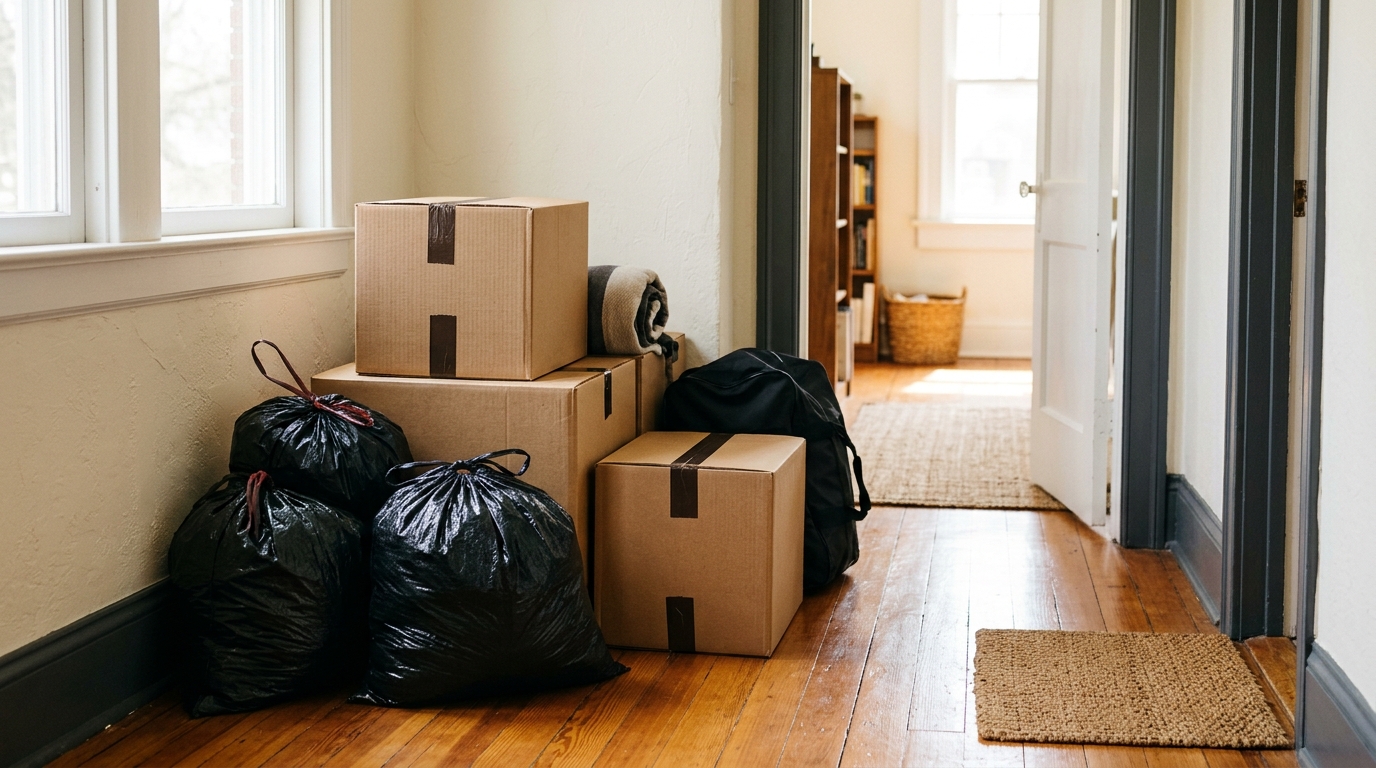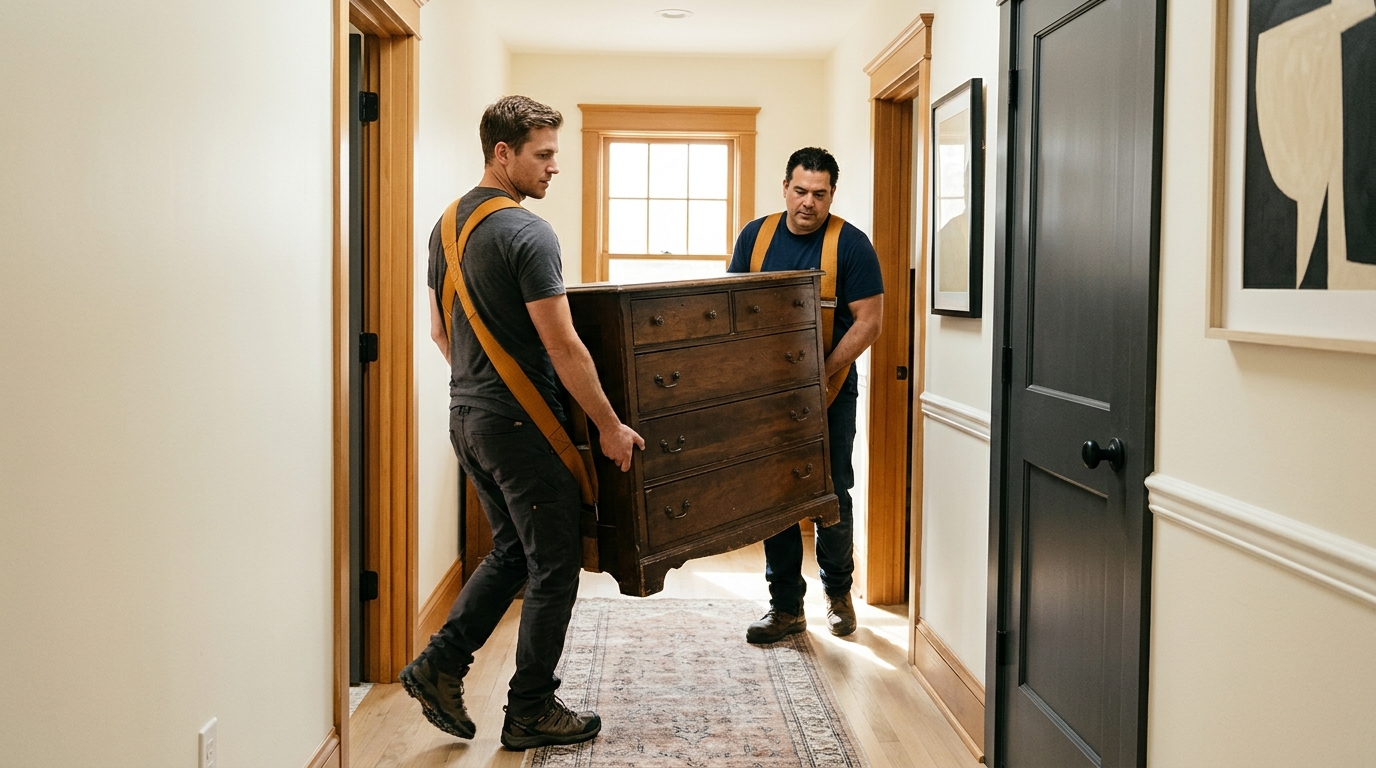
Moving into a house — especially one you own — is a bigger operation than moving into an apartment. You're responsible for every system, every room, and every decision about what goes where before the truck even arrives. The pros who handle this well treat move-in day as the finish line of a two-week sprint, not a single chaotic afternoon.
Here's exactly what that process looks like, done right. Here's exactly what that process looks like, done right.
What should you do before the movers arrive at your new house?
The week before move-in is your highest-leverage window. Work you do now prevents hours of chaos on the day itself.
1. Do a walkthrough and document everything
Before a single box crosses the threshold, walk every room with your phone camera rolling. Photograph existing scuffs, scratches, stains, and any appliances or fixtures left behind. If you're buying, this protects you from disputes at closing or after. If you're renting out a secondary property, it's your baseline record.
Check that every system actually works: HVAC, water heater, garbage disposal, garage door, circuit breakers. Turn on every faucet. Flush every toilet. Discovering a dead water heater on move-in day is avoidable — discovering it a week later is not.
2. Change the locks before you move anything in
This is the single most-skipped step we see. Previous owners, contractors, real estate agents, and neighbors may all have copies of your keys. A standard re-key by a locksmith typically costs $20–$50 per lock cylinder, or around $100–$200 to re-key an entire house. Smart lock installation runs $150–$400 but gives you keypad and app access from day one. Do this before your furniture arrives.
3. Transfer or set up utilities before move-in day
You need electricity, water, and gas running on moving day, not the day after. Most utilities require 2–5 business days' notice to transfer service; some providers in busy markets like Nashville or Charlotte book out further in peak summer months. Our full guide on how to handle utilities when you move walks through every service and the exact lead times to hit.
4. Deep-clean before the furniture goes in
Cleaning an empty house takes a fraction of the time it takes once furniture is in. Pay special attention to:
- Inside cabinets and drawers (previous owners' crumbs and debris)
- Refrigerator coils and interior
- Bathroom grout and caulk lines
- HVAC vents and returns
- Window tracks
A professional cleaning service for a 3-bedroom house typically runs $200–$400 for a move-in/move-out deep clean — money well spent before your belongings fill every surface.
5. Plan your room layout before the truck arrives
Sketch a rough floor plan and decide where large furniture goes before movers show up. Directing a crew on the fly wastes time you're paying for by the hour. Measure doorways and stairwell widths in advance — standard interior doors are 32–36 inches, but older homes can run narrower. If you have questions about what's worth moving versus replacing, our guide on how to move furniture covers that decision in detail.
What should you do on moving day at a house?
Protect the house first, then move in
Lay down floor protection (cardboard, moving blankets, or plastic runners) on hardwood floors and carpeted stairs before the first item comes through the door. Protect door frames with moving pads or foam. A scuff on a doorframe from a dresser corner is a $200 paint repair that takes three minutes to prevent.
Designate a staging area
Pick one room — often the garage or a large living room — as the box-staging zone. Instruct the crew to put all labeled boxes there first, then move large furniture into final rooms. This keeps hallways clear and gives you control over where things land.
Do a truck walkthrough before it leaves
Before the crew drives away, walk the truck yourself. Look in every corner, on every shelf, under every pad. We've seen nightstands, lamps, and even TV remotes left behind simply because nobody looked. Once the truck is gone, retrieving items can cost you another trip fee.
What should you do in the first week after moving in?
This is where most people lose momentum. The boxes are in, the furniture is placed, and the adrenaline wears off. But a few critical tasks belong in the first 7 days:
| Task | Why It Matters | Typical Cost |
|---|---|---|
| Locate & label circuit breaker panel | Know what controls what before something trips | Free |
| Find main water shut-off valve | Essential for any plumbing emergency | Free |
| Test all smoke & CO detectors | Required by code; batteries die over time | $5–$15 in batteries |
| Register with USPS mail forwarding | Takes 7–10 days to fully activate | $1.10 (online verification fee) |
| Update driver's license / vehicle registration | Most states require within 30–60 days of move | $10–$50 depending on state |
| Introduce yourself to immediate neighbors | Practical (garbage day, parking norms) and neighborly | Free |
Most states require you to update your driver's license address within 30 days; some extend to 60 days. Check your state DMV directly — penalties for non-compliance are typically a fine of $50–$200.
While you’re reading
Skip the research — let Robert match you with movers.
Free quotes from movers in your area. Pick whichever is easiest.
How do you move into a house efficiently when you're doing it yourself?
If you're renting a truck and handling the move yourself rather than hiring a crew, the sequence matters more than the effort. Start with:
- Disassemble large furniture (bed frames, desks, shelving) the night before
- Load heaviest items first — appliances and dressers against the truck cab wall
- Fill gaps with soft items — bags, pillows, blankets prevent shifting
- Load boxes last, stacked by room destination
- Unload in reverse — boxes first, furniture last, so you're not stepping over boxes to place a couch
For a standard 3-bedroom house, plan on 8–12 hours for a DIY move with 3–4 helpers, or 4–6 hours with a professional two-person crew. If you want to compare what pros charge versus DIY costs, our 2026 moving cost breakdown lays out both scenarios with numbers.
What are the biggest mistakes people make moving into a house?
These are the ones we see on repeat:
- Not reserving elevator or loading dock time (relevant if you're in a city like Raleigh where townhomes with shared drives are common)
- Assuming movers know your preferences — tell the crew explicitly which items are fragile, which rooms things go to, and what never goes in a particular room
- Underestimating box count — a typical 3-bedroom house requires 60–100 boxes, not the 30 people usually estimate
- Skipping mover insurance review — under federal FMCSA rules, interstate movers must offer Released Value Protection (at $0.60/lb per item) and Full Value Protection; you choose before signing, not after damage happens. Read more in our guide on how to file a claim when movers damage your belongings
- Not tipping the crew — if your team did great work, $20–$50 per mover is standard for a local house move. Our full breakdown of how to tip movers covers what's customary and when
Finding the right movers for your house move
Whether you're moving locally or crossing state lines, find movers in your area or browse moving companies by state to compare licensed, insured options near your new home. Reading mover reviews before you book is the single best way to avoid a bad experience — the stories that show up there are ones you don't want to live yourself.
Our moving concierge Robert is also available on the site to help you get matched to the right mover for your specific move size, timeline, and budget — no forms, no pressure.
Frequently asked questions
How far in advance should I book movers for a house move?
For a local house move, book at least 3–4 weeks ahead. For a long-distance move, 6–8 weeks is the safer window — especially if you're moving between May and September, which is peak season for most US moving companies. Last-minute bookings in peak season often carry a 10–20% premium, if you can get a crew at all.
Do movers disassemble and reassemble furniture?
Most full-service moving companies will disassemble and reassemble standard furniture (bed frames, basic shelving) as part of the move. Complex items — like modular wall units, treadmills, or specialty beds — may carry an additional fee, typically $50–$150 per item. Confirm this explicitly when you get your quote.
What do I do if something gets damaged during my house move?
Document the damage immediately with photos, note it on the Bill of Lading before the crew leaves, and file a written claim with the moving company. Under FMCSA regulations for interstate moves, companies must acknowledge your claim within 30 days and resolve or deny it within 120 days. Our step-by-step guide on how to file a moving damage claim walks through the full process.
Should I be home on moving day?
Yes — or designate one responsible adult who can make decisions. Someone needs to direct the crew, sign the Bill of Lading, do the final truck walkthrough, and handle any surprises (a sofa that won't fit through a doorway, a discovered leak under a sink). Moving day is not the day to run errands.
How do I update my address after moving into a new house?
Start with USPS mail forwarding (allow 7–10 days to activate), then update in roughly this order: employer/payroll, bank and credit cards, IRS (via Form 8822), state DMV, voter registration, insurance policies, subscriptions, and medical providers. Most of these can be handled online within a couple of hours.
Is it worth hiring professional movers for a local house move?
For most 3-bedroom or larger houses, yes. A two-person professional crew typically covers a local house move in 4–6 hours at $120–$180/hour, for a total of roughly $500–$1,100. The math often favors hiring when you factor in truck rental, fuel, equipment, and the actual cost of a bad back or a broken TV. Our moving costs guide helps you run the numbers for your specific situation.
Tagged