
Find movers near you
Movers in Iowa City.
Compare top-rated local and long-distance movers — and let Robert do the comparison for you.
Get Your Quote→Iowa
Moving companies in Iowa City, IA.
Iowa City blends a Big Ten university town with a genuine literary and arts culture — and a tight rental market that moves fast around the University of Iowa academic calendar. Whether you're relocating across town or arriving from another state, connecting with movers who know the Pentacrest grid, Coralville spillover, and U of I move-in crunch can save time and money.
Robert
Online·Call for a quote
Hi — I'm Robert, and I'll help you find the right movers. Where are you moving from, and where are you headed? Prefer a live representative? Just say the word and I'll connect you, or use the call button for a quote anytime.
By chatting with Robert, you agree we may share your move details with movers in your origin city so they can contact you with a quote. We never sell or share your info outside this network. Privacy Policy.
Top movers in Iowa City
Iowa City movers worth a look.
A few of Iowa City’s top movers. Want a tailored recommendation? Use the Get quotes form below.
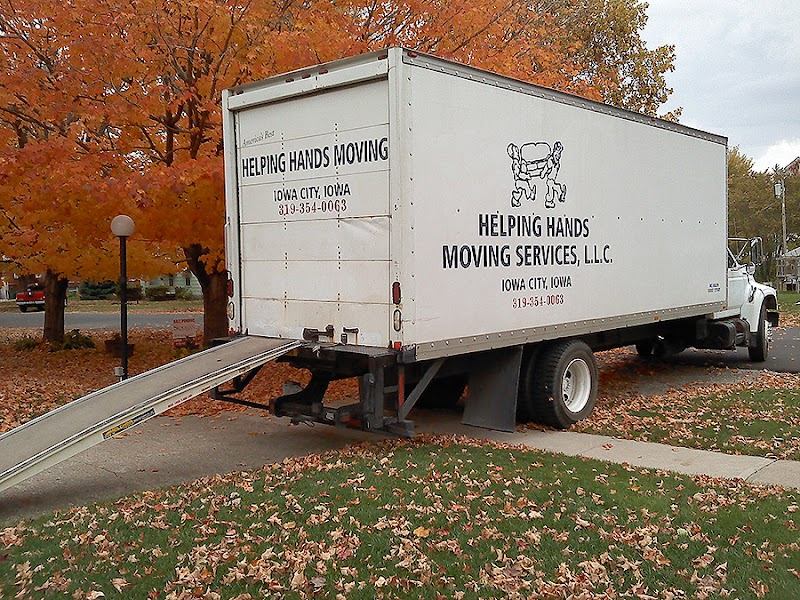

All Iowa City movers
6 movers serving Iowa City.
Movers near Iowa City
14 more movers within 50 miles of Iowa City.
Based in a neighboring town and serving Iowa City. Each one shows where it is based and how far that is, nearest first.
Advanced Moving Services
Cedar Rapids, IA · 22 miles away
NeX Level Moving
Cedar Rapids, IA · 22 miles away
Porter Moving Company
Cedar Rapids, IA · 22 miles away
Riley Moving and Storage
Cedar Rapids, IA · 22 miles away

Town & Country Moving & Storage
Cedar Rapids, IA · 23 miles away
★ 2.0 (2 reviews)
Hecks Transfer and Moving
Cedar Rapids, IA · 23 miles away
Uni Movers Cedar Rapids
Cedar Rapids, IA · 24 miles away

Marion Movers
Marion, IA · 26 miles away
★ 5.0 (10 reviews)
Quinn Self-Storage and Moving Supplies
Marion, IA · 26 miles away
White Glove Movers
Marion, IA · 26 miles away
Master Moving Company LLC IA
Cedar Rapids, IA · 27 miles away
★ 5.0 (3 reviews)
Horizon Movers and Climate Control Storage
Davenport, IA · 48 miles away
★ 4.9 (389 reviews)
Argo Moving and Labor Service
Davenport, IA · 48 miles away
D&J Moving And Labor
Davenport, IA · 48 miles away
Move planner
Two quick steps. A personalized plan in 30 seconds.
Robert builds a Iowa City-specific timeline, estimated cost range, and 3-mover shortlist tailored to your job. No forms. No spam. No commitment.
Step 1 of 2
Tell us about your move.
Distance
Property type
Property size
Zip codes (optional — sharpens the cost estimate)
When are you hoping to move?
Cost calculator
Typical Iowa City moving costs by home size
These ranges reflect Iowa City market rates for standard moves. Local moves are within Johnson County. Regional is within ~150 miles (Cedar Rapids, Des Moines, Quad Cities). Long-distance is 400+ miles (Chicago, Minneapolis, Kansas City). Rates are higher in July–August.
| Home size | Local (under 50 mi) | Regional (50-500 mi) | Cross-country (500+ mi) |
|---|---|---|---|
| Studio / 1BR | $350–$700 | $900–$1,800 | $1,800–$3,200 |
| 2BR | $600–$1,100 | $1,400–$2,600 | $2,600–$4,500 |
| 3BR house | $900–$1,600 | $2,000–$3,800 | $3,800–$6,500 |
| 4BR+ house | $1,400–$2,400 | $3,200–$5,500 | $5,500–$9,500 |
Skip the guesswork
Get matched with professional Iowa City movers.
Robert, our moving concierge, lines up quotes from movers who actually serve your route — free, no obligation.
Local movers in Iowa City
Local moving in Iowa City is billed by the hour — you're paying for a crew (two or three movers) plus a truck, with most companies setting a two-hour minimum and rates that generally land somewhere between $100 and $180 per hour depending on crew size and the time of year. The single biggest swing factor on your final bill is building access: Iowa City's dense student-housing corridors and older apartment buildings near the University of Iowa campus are full of narrow stairwells, limited elevator access, and streets where a full-size moving truck simply can't park at the door — each of those friction points adds time to the clock.
What shapes the cost of a local move in Iowa City:
- Home size & crew needed — a one-bedroom needs a two-person crew; a larger house or a loaded 3BR will move faster and safer with three or four.
- Building access — stairs, walk-ups, long carries from a distant parking spot, and tight hallways all add time.
- Date & time of month — end-of-month and late-July/August dates (peak lease-turnover season around the university) book fast and may command higher rates; mid-month weekdays are typically the most flexible.
- Packing services — having movers pack and unpack adds hours and materials cost; being packed and ready before the crew arrives is the easiest way to keep the clock in check.
If you're moving to or from a high-rise or older apartment building near downtown or the Pentacrest area, it's worth calling the building manager ahead of time to ask about elevator reservations or whether a loading-zone permit is needed — a reserved spot can shave 30–45 minutes off a move that would otherwise require repeated long carries. For single-family neighborhoods like Shimek or Longfellow, access is generally straightforward, but alley-loaded homes and detached garages can add carry time worth flagging when you get quotes.
When you're ready to compare crews, browse movers in Iowa City to find local companies and request quotes side by side.
Neighborhood guide
Where to land in Iowa City and nearby
Northside Marketplace
Bohemian, walkable, older homes near campus
Median 2BR rent: ~$1,050/mo (1BR)
Many streets are narrow and lined with mature trees; large trucks may need to approach from Linn or Gilbert Street and carry items a short distance.
Downtown / Ped Mall Area
Dense urban core, apartments above retail
Median 2BR rent: ~$1,300/mo (1BR)
The Pedestrian Mall itself is closed to trucks; coordinate with the Iowa City Parking & Transportation Division for temporary loading zone permits on adjacent blocks.
Manville Heights
Quiet, established, owner-occupied, near hospital
Median 2BR rent: ~$1,600/mo (2BR) or $280,000+ to buy
Residential streets are manageable for standard moving trucks, but parking is tight on game days when Kinnick Stadium events draw overflow parking to the neighborhood.
South of Burlington (SoBu)
Student-heavy rental district, close to UI Arts campus
Median 2BR rent: ~$950/mo (1BR)
August move-in is extremely congested here; book movers at least 6–8 weeks out and confirm elevator reservations in multi-story buildings.
Coralville
Suburban, commercial corridor, family-friendly
Median 2BR rent: ~$1,200/mo (2BR)
First Avenue and Highway 6 corridors are well-suited for truck access; Coralville has its own permit system separate from Iowa City, so confirm rules for any street parking needed.
North Liberty
Fast-growing suburb, newer construction, young families
Median 2BR rent: ~$1,400/mo (2BR) or $250,000–$350,000 to buy
Most developments have wide streets and driveways built for suburban traffic; movers report this is one of the more operationally straightforward areas in the Johnson County metro.
Towncrest
Mid-century neighborhood undergoing gradual revitalization
Median 2BR rent: ~$1,100/mo (2BR)
Older split-levels and ranch homes are common here; movers should confirm staircase configurations before booking — many homes have below-grade entry points from the alley side.
Longfellow / Southeast Iowa City
Residential, mix of rentals and owner-occupied, near elementary schools
Median 2BR rent: ~$1,200/mo (2BR)
Court Street and Burlington Street are the main arterials; mid-sized trucks navigate the grid well, and on-street parking is generally available outside of football weekends.
Common routes
Where Iowa City residents move to and from
Iowa City → Des Moines, IA
~115 mi west
$900–$1,800
The most common in-state relocation corridor, following I-80 W; faculty, healthcare workers, and state-government employees frequently move between Iowa City and the capital.
Iowa City → Chicago, IL
~220 mi east
$1,800–$3,200
I-80 E connects Iowa City to the Chicago metro in roughly 3.5 hours; a well-worn route for UI graduates entering Chicago-area professional markets.
Iowa City → Cedar Rapids, IA
~30 mi north
$500–$1,100
The nearest major city, accessible via I-380 N; many Iowa City workers commute or relocate to Cedar Rapids for housing affordability or manufacturing and tech employment.
Iowa City → Minneapolis, MN
~285 mi north
$2,200–$3,800
A regular route for UI graduates and Big Ten academic transfers; typically follows I-380 N to I-35 N through the Twin Cities metro.
Iowa City → Kansas City, MO
~265 mi southwest
$2,000–$3,500
Healthcare professionals rotating to or from KC-area systems and UI graduates entering the KC job market drive this corridor; usually via I-80 W to I-35 S.
Iowa City → Madison, WI
~195 mi northeast
$1,600–$2,800
A common academic-circuit move between two major state research universities; follows I-80 E to I-90 E through southern Wisconsin.
Honest prices beat estimates
Want an actual quote for your Iowa City move?
Tell Robert the basics and get matched in minutes.
Local figures
Iowa City in numbers.
What the homes are
Iowa CityUnited States
- Detached houses
- 41% in Iowa City61% in United States
- Townhouses
- 9% in Iowa City6% in United States
- Buildings of 2 to 4 homes
- 8% in Iowa City8% in United States
- Buildings of 5 to 19 homes
- 22% in Iowa City9% in United States
- Buildings of 20 or more homes
- 18% in Iowa City10% in United States
Rent, home values and income
| Figure | Iowa City | Iowa | U.S. |
|---|---|---|---|
| Median monthly rent | $1,094 | $949 | $1,348 |
| Median home value | $273,600 | $195,900 | $303,400 |
| Median household income | $57,533 | $73,147 | $78,538 |
| Households that rent | 54% | 28% | 35% |
| Residents who moved in the past year | 31% | 13% | 13% |
Source: U.S. Census Bureau, American Community Survey 2019-2023 5-year estimates.
When to move
Iowa City's moving calendar, month by month
Jan
off
Coldest and snowiest stretch of Iowa winter; movers have availability and often lower rates, but frozen ground, ice, and sub-zero wind chills create logistical challenges.
Feb
off
Still deep winter, though mover availability is excellent and pricing is at its lowest; a good option if you can tolerate Iowa cold and schedule around storm systems.
Mar
off
Early spring brings mud season and variable temps; snowfall is still possible in March, but the tail end of the month often turns usable — early bird rates still apply.
Apr
shoulder
Weather improves significantly and rates begin to climb; mid-April is a sweet spot with moderate temps, drying roads, and movers not yet booked solid.
May
shoulder
A popular month for end-of-semester moves as UI students vacate; book 3–4 weeks out and expect prices to rise toward the second half of the month.
Jun
peak
Demand rises as summer leases begin and families move before school starts; humidity and heat are factors for movers and for protecting wood furniture and electronics.
Jul
peak
The single most congested month — leases in Iowa City overwhelmingly flip August 1, so move trucks flood the city in late July; book 6–8 weeks out minimum.
Aug
peak
August 1 is effectively Iowa City's citywide moving day; UI students, new faculty, and incoming residents all compete for movers and parking simultaneously — the most expensive and chaotic window.
Sep
peak
Football Saturdays begin (Kinnick Stadium, 69,000+ capacity) and parking near campus is severely restricted on game days; schedule moves on non-game days and confirm street access.
Oct
shoulder
Football continues through October but mid-week and non-game-day moves are smooth; fall foliage is pleasant and temperatures are ideal for physical labor.
Nov
shoulder
Mover availability opens up after football season ends; weather turns cold but rarely severe before Thanksgiving — a reasonable window if you want off-peak pricing without winter risk.
Dec
off
Many movers take holiday time and availability shrinks; however, between-semester moves (mid-December) can be arranged at low cost if you plan far enough ahead.
Permits + local rules
What Iowa City movers need to know about permits and access
Iowa City parking/loading zone permits
If you need to occupy a metered parking space or a portion of the street for a moving truck, you'll need to coordinate with Iowa City Parking & Transportation. The city can issue temporary no-parking orders for specific blocks to reserve loading space. This is especially critical in the downtown core and near campus where curb space is heavily competed.
Permit ~$25–$50/day, request at least 5–7 business days ahead
Pedestrian Mall vehicle access restriction
The Iowa City Pedestrian Mall (College and Dubuque Street intersection zone) is closed to motor vehicles during pedestrian hours. Moving trucks serving apartments or businesses that front the Ped Mall must load/unload from adjacent streets — Clinton, Linn, or Washington — and carry items on foot or by dolly. Coordinate with the Iowa City Public Works office for any exceptions.
No direct permit fee but requires advance approval; allow 1–2 weeks
University of Iowa move-in elevator reservations
If you're moving into University of Iowa residence halls or UI-owned graduate housing, you must reserve a freight elevator with the Department of Residence before your move date. Civilian-hired movers are permitted but must follow UI facilities rules, including equipment restrictions in certain halls. Off-campus apartments near campus often have their own elevator reservation policies set by private management companies.
Typically no fee but slots fill fast; reserve 4–6 weeks before August move-in
Coralville separate permit jurisdiction
Coralville is an independent city and does not operate under Iowa City permit rules. If your move involves a truck parked on a Coralville public street for an extended period, you may need to notify Coralville Public Works or the police non-emergency line. First Avenue and Highway 6 have commercial loading infrastructure, but residential streets have standard parking enforcement.
Contact Coralville city offices; no standard fee, situational
North Liberty and Johnson County roads
North Liberty is a separately incorporated city with its own public works department. New residential subdivisions generally have uncongested streets with no permit needed for a moving truck parked briefly in front of a home. For any work that involves blocking a lane of traffic or occupying a right-of-way for more than a few hours, contact North Liberty City Hall to confirm requirements under current ordinance.
No standard permit fee for typical residential moves; confirm for edge cases
About moving to Iowa City
What you should know before you book.
Iowa City sits in eastern Iowa along the Iowa River, anchored by the University of Iowa — a Big Ten research university and an internationally recognized UNESCO City of Literature. The city has a population of roughly 74,000 (Johnson County pushes past 150,000), with a demographic makeup heavily shaped by students, faculty, and healthcare workers at UI Hospitals & Clinics, one of the largest academic medical centers in the Midwest. Culturally, Iowa City punches above its weight: the Iowa Writers' Workshop, a walkable downtown, and a dense network of independent businesses give it a cosmopolitan feel uncommon for its size.
University of Iowa dominates the calendar
The University of Iowa enrolls roughly 30,000 students, and that single fact shapes nearly every aspect of life and logistics in Iowa City. Leases typically run August to July, football Saturdays (Kinnick Stadium holds over 69,000) shut down parking across the east side, and the downtown Ped Mall draws foot traffic year-round. Plan any move with the academic and athletic calendar in mind.
Healthcare is the other major employer
UI Hospitals & Clinics and the broader UI Health Care system employ thousands of physicians, nurses, and staff who cycle in and out of the metro regularly. Many relocating healthcare workers target neighborhoods north of campus or across the river in Coralville and North Liberty for easier hospital access and more family-oriented housing stock than the student-dense core.
Johnson County's tight housing market
Iowa City's vacancy rate is consistently low, especially for 1BR and studio units near campus. Rental turnover spikes in late July and early August, and well-priced listings often lease within days. Buyers in the owner-occupied market find competition for single-family homes in desirable school districts — particularly Iowa City Community School District — can be brisk even in a higher-rate environment.
A genuinely walkable and bikeable core
The downtown Pedestrian Mall and adjacent campus make Iowa City's urban core among the most walkable in Iowa. The Iowa River Corridor Trail and other bike infrastructure mean many residents — especially students and faculty — go car-light. Movers navigating the Ped Mall area, Dubuque Street, or Clinton Street should anticipate limited truck access and plan loading zones in advance with the city.
Iowa City moving FAQ
Common questions, locally-answered.
When exactly should I book movers for an August 1 move in Iowa City?
+
Book at least 6–8 weeks in advance, ideally by late May or early June. August 1 is the most concentrated moving day in Iowa City because the dominant lease cycle turns over that date for thousands of rental units near the University of Iowa campus. Movers are booked solid, parking is chaotic, and prices are at their annual peak. If you have any flexibility, moving July 29–30 or August 2–3 can ease the crunch.
Are there restrictions on moving trucks near the University of Iowa campus?
+
Yes. Several streets adjacent to campus — particularly along Madison Street, Jefferson Street, and Burlington Street near the Pentacrest — have timed parking restrictions, bus lanes, and limited curb space. During football season (September through November), Iowa Avenue and Riverside Drive corridors can be severely restricted on game days. Always confirm your truck's intended parking spot with the city or building management before move day.
How does Iowa City's weather affect moving logistics?
+
Iowa City winters are genuine — temperatures regularly drop below 0°F with wind chill, and snow and ice are common from December through March. Summer moves (June–August) face heat, humidity, and occasional severe thunderstorm risk. Spring and fall offer the best weather windows, though fall coincides with football season congestion. Movers here are experienced with all four seasons; just communicate your concerns when booking.
What's a typical cost for a local move within Iowa City?
+
A local move within Iowa City — within Johnson County — typically runs $400–$900 for a 1–2BR apartment and $800–$1,600 for a 3BR house, depending on distance, number of movers, and how many stairs or elevators are involved. August moves at peak demand tend to run toward the higher end of those ranges. Always get written estimates from at least two companies and ask specifically about fuel surcharges and stair fees.
Is moving to Iowa City from Chicago a common route, and what does it cost?
+
It's one of the most common in-bound routes — many UI students, faculty, and healthcare recruits arrive from the Chicago metro. The drive via I-80 W is roughly 220 miles and typically takes 3.5–4 hours. Long-distance moving costs for this corridor generally range from $1,800 to $3,200 for a 1–2BR apartment load, depending on weight, services, and season. Pod and container options are also popular on this route given the highway access.
Does Iowa City require any special permits for moving trucks on residential streets?
+
For most residential neighborhoods — Longfellow, Manville Heights, Towncrest, North Side — no permit is required for a standard moving truck parked in front of a home for a few hours. However, if you need to reserve or block a metered parking space or a portion of the street, you'll need to apply through Iowa City Parking & Transportation. Allow 5–7 business days and budget roughly $25–$50 per day for the reservation.
What neighborhoods are most practical for families relocating to Iowa City for UI employment?
+
Families employed at UI Health Care or in academic departments most commonly settle in Manville Heights (close to the hospital, quiet streets), Longfellow/Southeast Iowa City (good school access, less student-dense), or make the short commute from Coralville or North Liberty for more square footage per dollar. North Liberty in particular has seen significant new-construction single-family development over the past decade and is popular with healthcare and university employees with school-age children.
How does Coralville relate to Iowa City for moving purposes?
+
Coralville is a separate incorporated city directly adjacent to Iowa City's west side. It has its own permit system, its own parking enforcement, and its own public works contacts. Many renters and buyers choose Coralville for lower rents or better parking than equivalent Iowa City addresses. Moving trucks on Coralville's commercial corridors (First Avenue, Highway 6) face no special restrictions, but for any extended street use in residential areas, contact Coralville City Hall directly.
What should I know about moving into a high-rise or multi-story apartment near campus?
+
Elevator reservation is critical. Most multi-story buildings near campus — including the high-rises on Burlington Street and those managed by large Iowa City property companies — require you to book the freight elevator in advance, often with a deposit. August move-in slots fill in early summer. Confirm elevator dimensions before your movers show up with a sectional sofa. Some older buildings have stair-only configurations that significantly affect labor time and cost.
Are Iowa City movers experienced with long-distance interstate moves?
+
Several Iowa City-based moving companies offer both local and long-distance service, and the metro is also well-served by regional and national van lines operating out of Cedar Rapids (30 miles north). I-80 provides direct interstate access east and west, making Iowa City a practical hub for long-haul logistics. For moves over 400 miles, it's common to use a hybrid approach: a local crew loads the truck, which then runs under a national carrier's authority.
What's the best way to move during University of Iowa football season?
+
Avoid move days that overlap with home games at Kinnick Stadium, which holds over 69,000 fans and draws tailgaters from across eastern Iowa. Parking is restricted across large swaths of the east side of campus on game days, and traffic on Dubuque Street, Melrose Avenue, and Riverside Drive can be gridlocked for hours before and after kickoff. Check the UI Athletics schedule before finalizing your move date if you're moving anywhere within a mile of campus.
How far in advance should I reserve a moving company for a spring or fall move?
+
For shoulder-season moves (April–May or October–November), booking 3–4 weeks ahead is typically sufficient to get your preferred dates and a competitive price. The exception is the end of the spring semester (mid-May), when student move-outs spike demand briefly. For fall moves in September that avoid football game days, 2–3 weeks is usually enough. Always get your quote in writing and confirm the reservation with a deposit.
Moving away from Iowa City?
Long-distance moves out of Iowa City.
What an interstate move from Iowa City costs and how to choose a licensed mover.
Long distance movers in Iowa City→Nearby cities
Movers in cities close to Iowa City.
Browse moving companies in other Iowa cities, or explore the full directory by state.
Get your moving quote
Many ways to get a moving quote.
Chat, text, email, or call — whichever’s easiest. Tell Robert about your move and matching movers in your city reach out, usually within a few minutes.