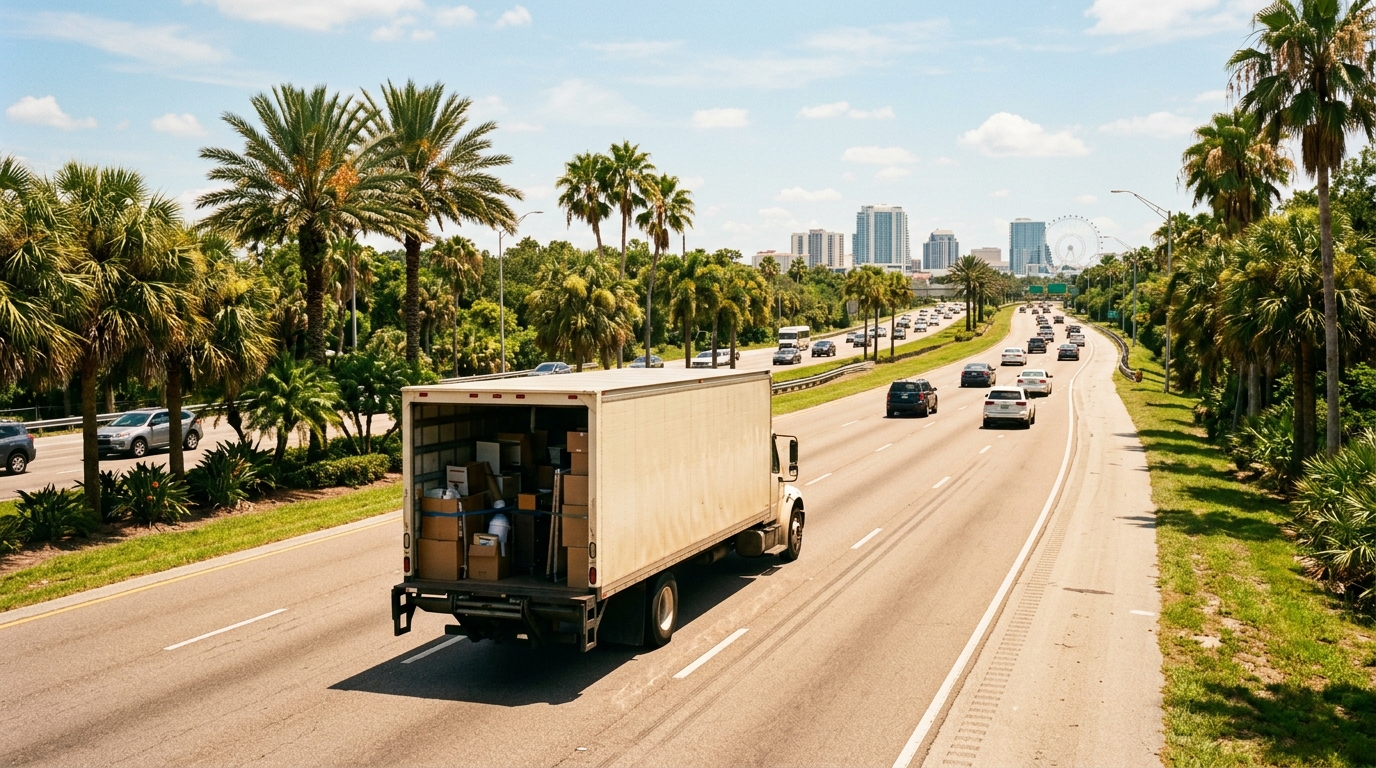
Houses in Jacksonville, apartment buildings in Orlando
Start with the gap in housing, because it shapes everything else. In Jacksonville, 60% of homes stand alone and only 24% sit in buildings of five or more units. In Orlando those numbers nearly flip: 49% of homes are in larger buildings and just 32% are detached. If you are carrying a garage, a shed and a yard's worth of belongings into an apartment, plan around that before you plan anything else.
The practical question is what fits through the door at the other end. A driveway lets a truck back up, and a house lets a crew carry furniture in a straight line. A multi-unit building brings loading zones, shared hallways, elevator reservations and sometimes limits on the hours you may move in. Ask your new building's office what it requires before you book a date, then pass those details to the mover so the quote reflects the actual carry from truck to door.
If you are downsizing, decide early what stays behind. Lawn equipment, a second refrigerator, patio sets and the contents of a garage are the usual candidates. Everything you leave out of the load is one less item for your mover to price and one less to fit into a smaller space.
What Orlando costs compared with Jacksonville
Both cities sit in Florida, so there is no state income tax at either end and your paycheck math does not change at the state level. Day-to-day costs do. Measured against a national baseline of 100 for 2024, the Jacksonville area scores 99, just under it, and the Orlando area scores 101, just over it. Housing is where you feel the difference.
- Rent. Orlando's median is $1,650 a month and Jacksonville's is $1,375, so a comparable apartment tends to cost around 20% more after you arrive.
- Home values. Orlando's median home is $359,000 against $266,100 in Jacksonville, a gap of about 35%. The same money buys less house, or the same house sits further out.
- Income. Median income is $69,268 in Orlando and $66,981 in Jacksonville. The pay gap is small, so price the move and the new rent on your current paycheck rather than on a raise you hope for.
Set the higher rent against your budget before you choose a moving date. A larger truck, extra hands or a month of storage all draw on the same money.
Orlando neighborhoods worth visiting before you sign
Orlando is more than the theme park zip codes. Visit a few areas in person, at the hour you would commute, before you commit to a lease or an offer.
- Downtown / Lake Eola and Thornton Park: walkable, with restaurants and lake-side park life. Rents here run above the city median.
- Winter Park: the most established upscale area, with brick streets, Park Avenue shops and Rollins College. Home prices reflect it.
- College Park: bungalow-era homes and a walkable village-style strip, without the Winter Park price tag. Families and remote workers both settle here.
- Baldwin Park: a planned community on the old Naval Training Center grounds, with trails, a town center and newer construction.
- Lake Nona: a medical-city corridor with hospitals, research campuses and suburban family homes. A natural fit if your job is in healthcare or tech.
- Doctor Phillips / Windermere: west of downtown near the attractions, quieter and more suburban, with a range of prices from mid-range to luxury.
- Mills 50 / Audubon Park: an arts-forward district with independent restaurants and plant shops, at moderate rents.
- Kissimmee: just south of the city limits, with some of the most affordable housing in the metro and SunRail access for commuters.
If you cannot decide, renting first is an option. A season in Orlando lets you learn the city before you pick a neighborhood to buy in.
A bigger rental market, and the lease overlap
Sixty percent of Orlando households rent, compared with 43% in Jacksonville. For you, that means more listings, more apartment communities and landlords used to newcomers.
Three things to settle before you sign in Orlando:
- Confirm the move-in date in writing.
- Ask the building about its moving rules, including any deposit for the elevator or a fee for the loading area.
- Read your Jacksonville lease's end date and notice requirement next to your Orlando start date, so you know whether the two overlap.
If you are selling a Jacksonville home first, keep the timeline loose. A closing that slips a week can leave you with furniture on a truck and nowhere to put it. Ask your mover what short-term storage they can arrange, what it costs per month or part of a month, and whether their liability for your goods continues while they sit in storage. Get the answers in writing.
A smaller city with more people coming and going
Orlando has 311,732 residents, about a third of Jacksonville's 961,739. With half its homes in larger buildings, more households share one roof, which affects parking and how many neighbors may be moving in on the same day as you. Orlando also has more recent arrivals: 20% of residents came within the last twelve months, against 17% in Jacksonville. Ask the building about its reservation system for loading areas and elevators, and book early.
What your move is priced on
This is a move within Florida, so the federal interstate rules do not apply to it. Florida's own rules do, and the state regulator for household movers is the Florida Department of Agriculture and Consumer Services (FDACS). Look up the license number of any company you are considering on the state's site before you hand over a deposit.
Ask each mover to put three things in writing:
- The price, and whether it can change.
- The liability they accept for your belongings.
- The date or window for delivery.
Do not sign a blank document, and treat a large cash deposit as a red flag.
The details that shape the price are the ones that differ between your two homes: the number of flights of stairs, how far the carry is from truck to door, how much you are moving and how much packing help you want. A one-bedroom apartment and a four-bedroom house are different jobs even though they travel the same road. Ask whether packing materials, fuel and stair charges are listed separately, so you can compare quotes line by line. The price range at the top of this page gives you a starting point; the written quotes give you the actual figure.
Whether you call this a local or a long-distance move depends on the mover. Some companies classify a move of this length differently from others and price it on a different rate structure, so ask each one how it classifies yours.
Moving day at each end
At the Jacksonville end you are probably loading from a house, with a driveway, a garage and fewer stairs. At the Orlando end, expect more work if you are heading into a building. Reserve the elevator, find out where the truck may park and tell the mover about every flight of stairs. Before you unload at an apartment, take photos of the unit, and decide where large furniture will go so the crew is not guessing in a hallway.
Most moves between the two cities can be loaded, driven and delivered in a single day. Larger homes, lots of furniture or stairs can stretch that, so ask the mover what their crew's schedule looks like for your job and what happens if the work runs over.
Weather belongs in the plan at both ends. Jacksonville has hot, humid summers and mild winters. Orlando is hot and humid all year, and the afternoon thunderstorms from June through September arrive most days between about 3 and 6 PM. That gives you a clear reason to load early, ask for a morning loading window and keep cardboard out of the rain: boxes left on a ramp in a downpour fail faster than any delay. Pack electronics and papers in sealed containers.
Hurricane season calls for a backup date and a plan for your belongings if a storm shuts down loading or delivery. Orlando's inland position means storms typically weaken before they arrive, but a weakened hurricane still brings wind and flooding. Update your homeowner's or renter's insurance before moving day, and check your new property's flood zone.
Settling into Orlando
- Getting around. The metro was built around the car. Orlando has SunRail commuter rail and the LYNX bus system, but budget for tolls: the 417, 408 and 528 are part of everyday commuting in a way Jacksonville's roads are not.
- Work. Orlando's economy is more varied than its tourist reputation suggests: healthcare (AdventHealth, Orlando Health), hospitality and entertainment, aerospace and defense near Cape Canaveral, and a growing tech sector.
- Paperwork. Update your address with the Florida Department of Highway Safety and Motor Vehicles (FLHSMV) on your license and vehicle registration. You can do it online, by mail or in person at a driver license office. Check its site for the deadline that applies to a move within the state.
Finding a mover for Jacksonville to Orlando
Start with movers who work in both places. Our directory lists movers in Jacksonville and movers in Orlando, and you can find movers by what you need, such as packing help or storage. To see how Florida listings are organised, browse by state.
Ask each company about the Orlando building before it quotes. A mover who asks about elevators, parking and stairs is pricing the actual job. One who gives a figure without asking has not seen it. Get at least three quotes based on an in-home or video survey rather than a phone call, compare what each one includes and choose the clearest, not only the cheapest. Recent reviews help most when they come from customers who made a similar move inside Florida.
Majestic Moving Companies is a directory, not a moving company: we connect you with licensed movers, and we do not move, pack or store anything ourselves. Our team has 35+ years of hands-on service-provider experience, including an operator who ran a moving company for 18 years.
Questions from people leaving Jacksonville for Orlando
Can a Jacksonville house move be done in one day?
Usually the loading, drive and delivery fit in a single day. A large house, a lot of furniture or a building with stairs and a long carry can add time, and the delivery window should be written into your agreement.
Do I need storage if my Jacksonville move-out and Orlando move-in dates do not line up?
Yes, if there is a gap you will need somewhere for your goods to wait. Movers usually charge per month or part of a month, so ask for that price up front and whether their liability continues while your belongings are stored.
Is Orlando more expensive than Jacksonville?
Slightly. The Orlando area scores 101 and the Jacksonville area 99 on the 2024 national price index. Orlando's median rent is $1,650 against $1,375, and its median home is $359,000 against $266,100.
Which rules cover a Jacksonville to Orlando mover?
The Florida Department of Agriculture and Consumer Services (FDACS) is the state regulator for household movers. Because both cities are in Florida, its rules apply to this move rather than the federal interstate ones.
What changes about moving day when I go from a Jacksonville house to an Orlando apartment?
Expect to coordinate with the building: an elevator reservation, a place for the truck to park and a clear path to the unit. Tell your mover about the stairs and the length of the carry, because those items shape the quote.
Do I have to change my Florida license address after the move?
Your address on your license and vehicle registration should be updated with FLHSMV. You can do it online, by mail or in person, and its site gives the deadline for a move within the state.