
Find movers near you
Movers in Oklahoma City.
Compare top-rated local and long-distance movers — and let Robert do the comparison for you.
Get Your Quote→Oklahoma
Moving companies in Oklahoma City, OK.
Oklahoma City's affordable housing, sprawling footprint, and steady job market attract relocators from both coasts and neighboring states. Whether you're moving within OKC's wide-open neighborhoods or hauling a household from out of state, connecting with experienced local movers means navigating flat plains, unpredictable spring weather windows, and a metro that keeps growing fast.
Robert
Online·Call for a quote
Hi — I'm Robert, and I'll help you find the right movers. Where are you moving from, and where are you headed? Prefer a live representative? Just say the word and I'll connect you, or use the call button for a quote anytime.
By chatting with Robert, you agree we may share your move details with movers in your origin city so they can contact you with a quote. We never sell or share your info outside this network. Privacy Policy.
Top movers in Oklahoma City
Oklahoma City movers worth a look.
A few of Oklahoma City’s top movers. Want a tailored recommendation? Use the Get quotes form below.
All Oklahoma City movers
24 movers serving Oklahoma City.
RNR Moving Of Oklahoma
Oklahoma City, OK
★ 3.4 (19 reviews)
Movers Real Estate
Oklahoma City, OK
★ 4.9 (268 reviews)

Bo Ballard Moving Services
Oklahoma City, OK
★ 4.9 (93 reviews)
Affiliated Movers of OKC
Oklahoma City, OK
City Moving & Storage Co.
Oklahoma City, OK
Best Movers
Oklahoma City, OK
2 Fellas & A Big Vehicle Moving Company
Oklahoma City, OK
Abide Moving & Storage
Oklahoma City, OK
★ 1.0 (1 reviews)
AAA Metro Movers
Oklahoma City, OK
All Muscle Moving & Delivery
Oklahoma City, OK
★ 3.7 (3 reviews)
High Quality Moving
Oklahoma City, OK
USDOT #4425470
Bigger Better Movers
Oklahoma City, OK
USDOT #3046997
24-7 Moving Solutions Group
Oklahoma City, OK
All Over Movers
Oklahoma City, OK
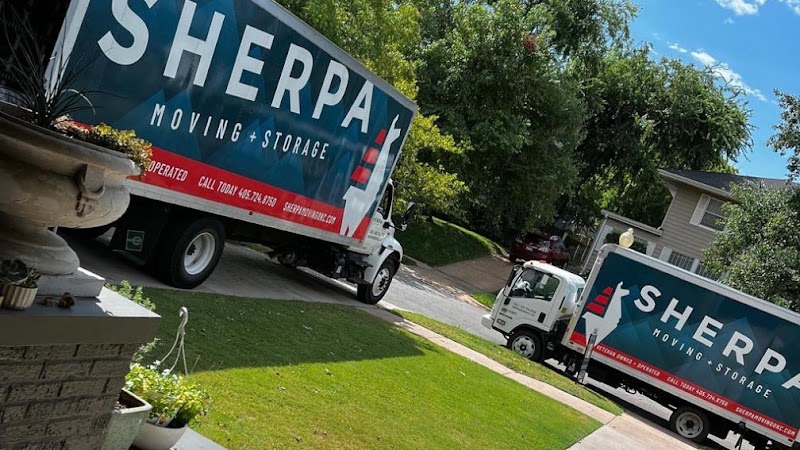
Sherpa Moving and Storage
Oklahoma City, OK
★ 4.8 (436 reviews)
Move planner
Two quick steps. A personalized plan in 30 seconds.
Robert builds a Oklahoma City-specific timeline, estimated cost range, and 3-mover shortlist tailored to your job. No forms. No spam. No commitment.
Step 1 of 2
Tell us about your move.
Distance
Property type
Property size
Zip codes (optional — sharpens the cost estimate)
When are you hoping to move?
Cost calculator
Typical moving costs in Oklahoma City
These are typical ranges based on OKC market rates. Local moves are priced hourly with 2–3 person crews; regional and long-distance moves are priced by weight and mileage. Rates rise 15–25% during June–August peak season.
| Home size | Local (under 50 mi) | Regional (50-500 mi) | Cross-country (500+ mi) |
|---|---|---|---|
| Studio / 1BR | $250–$550 | $900–$1,800 | $1,500–$2,800 |
| 2BR | $450–$900 | $1,500–$2,800 | $2,400–$4,000 |
| 3BR house | $750–$1,400 | $2,400–$4,200 | $3,800–$6,000 |
| 4BR+ house | $1,200–$2,200 | $3,500–$6,000 | $5,500–$9,000 |
Skip the guesswork
Get matched with professional Oklahoma City movers.
Robert, our moving concierge, lines up quotes from movers who actually serve your route — free, no obligation.
Local movers in Oklahoma City
Local moves in Oklahoma City are priced hourly — you're paying for the crew and truck together, with most companies setting a 2-hour minimum and rates that commonly run $100–$180 per hour for a two-person crew, scaling up with crew size. The single biggest swing in your final bill is almost always access at the property: a long carry from a third-floor apartment in Midtown, a narrow driveway in a historic Mesta Park bungalow, or a truck that has to park half a block away on a busy Bricktown street can add a meaningful chunk of time to what looks like a simple move on paper.
What typically drives the cost of a local Oklahoma City move:
- Home size and crew needed — a studio or 1BR moves faster with two movers; a 3BR+ usually warrants three or four
- Building access — stairs, no elevator, long hallways, or a tight turn into a garage all add labor time
- Parking and distance to the door — street parking congestion near dense areas like downtown OKC or the Plaza District means longer carries
- Time of month and season — end-of-month and summer weekends book fast and some companies charge peak rates; mid-month and fall moves tend to be easier to schedule
- Packing services — full or partial pack adds to the clock (or a flat add-on fee), so having boxes sealed before the crew arrives keeps hours down
Oklahoma City is largely a driving, spread-out city, which works in your favor — most residential neighborhoods have surface lots or wide streets where a moving truck can park close. That said, if you're moving into or out of one of the walkable urban-core districts (Deep Deuce, Film Row, or a multi-story Midtown complex), it's worth asking your mover upfront whether they factor in elevator-reservation windows or whether a street-use permit is needed, since building managers in those areas sometimes require advance notice.
To compare options that fit your move size and neighborhood, browse movers in Oklahoma City and get matched with available crews.
Neighborhood guide
Where people move in Oklahoma City
Midtown
Urban, walkable, renovated historic housing stock
Median 2BR rent: ~$1,450/mo
Older brick bungalows with narrow driveways make large truck parking tight; confirm street-side access in advance.
Bricktown
Entertainment district, apartments, young professionals
Median 2BR rent: ~$1,600/mo
Loading zones near the canal are limited and often blocked by event traffic on weekends — schedule moves on weekday mornings.
Edmond
Upscale suburban, top-rated schools, family-oriented
Median 2BR rent: ~$1,900/mo
New subdivisions north of I-35 and around Coffee Creek frequently have HOA rules requiring movers to use rear or side entrances.
Mesta Park
Historic, tree-lined, professional families
Median 2BR rent: ~$1,700/mo
Mature elm canopy means aerial obstructions for large trucks; 26-foot trucks are typically the largest that can safely maneuver here.
Norman
College town energy, diverse housing, OU campus adjacent
Median 2BR rent: ~$1,200/mo
Move-in and move-out traffic spikes hard in late July and mid-August around University of Oklahoma semester starts — book well ahead.
Yukon
Growing western suburb, newer construction, value-priced
Median 2BR rent: ~$1,550/mo
Wide streets and newer subdivisions make truck access easy, but some cul-de-sac lots require smaller shuttle vehicles for final approach.
Moore
South-side suburb, working-class, storm-shelter culture
Median 2BR rent: ~$1,250/mo
Many Moore homes have in-ground storm shelters that complicate furniture placement in garages — discuss garage access with movers upfront.
Deep Deuce
Hip urban infill, lofts, walkable to Bricktown
Median 2BR rent: ~$1,550/mo
Loft buildings often have freight elevator restrictions and limited parking on NE 2nd Street; coordinate building management access ahead of move day.
Common routes
Frequent moves to and from Oklahoma City
Oklahoma City → Dallas–Fort Worth, TX
~200 mi south via I-35
$1,800–$3,200
The OKC–DFW corridor is one of the busiest in the south-central U.S., driven by corporate relocations in energy, finance, and tech between the two metros.
Oklahoma City → Tulsa, OK
~100 mi northeast via I-44
$900–$1,800
Intrastate moves between Oklahoma's two largest cities are common for job transfers, family moves, and students heading to or from OU and OSU pipelines.
Oklahoma City → Denver, CO
~605 mi northwest via I-35 N to I-70 W
$2,800–$4,500
OKC-to-Denver moves have picked up as remote workers and energy-sector employees relocate between the two oil-and-gas hubs.
Oklahoma City → Houston, TX
~450 mi south via I-35 to I-45
$2,400–$4,000
Energy industry workforce mobility keeps this a perennial high-volume route, with families following job transfers between OKC and Houston oil-field headquarters.
Oklahoma City → Kansas City, MO
~340 mi north via I-35
$2,000–$3,400
I-35 runs directly between the two cities with no major detours, making this a reliable route for Midwest corporate relocations and family moves.
Oklahoma City → Phoenix, AZ
~1,100 mi west via I-40
$3,500–$5,800
I-40 follows the old Route 66 alignment west through Amarillo and Albuquerque, a well-traveled path for retirees and remote workers heading to the Southwest.
Honest prices beat estimates
Want an actual quote for your Oklahoma City move?
Tell Robert the basics and get matched in minutes.
Local figures
Oklahoma City in numbers.
What the homes are
Oklahoma CityUnited States
- Detached houses
- 68% in Oklahoma City61% in United States
- Townhouses
- 4% in Oklahoma City6% in United States
- Buildings of 2 to 4 homes
- 6% in Oklahoma City8% in United States
- Buildings of 5 to 19 homes
- 12% in Oklahoma City9% in United States
- Buildings of 20 or more homes
- 8% in Oklahoma City10% in United States
Rent, home values and income
| Figure | Oklahoma City | Oklahoma | U.S. |
|---|---|---|---|
| Median monthly rent | $1,083 | $980 | $1,348 |
| Median home value | $215,100 | $185,900 | $303,400 |
| Median household income | $66,702 | $63,603 | $78,538 |
| Households that rent | 41% | 34% | 35% |
| Residents who moved in the past year | 17% | 15% | 13% |
Source: U.S. Census Bureau, American Community Survey 2019-2023 5-year estimates.
When to move
Oklahoma City's moving calendar
Jan
off
Cold, occasionally icy roads (OKC gets ice storms more than snow), but mover availability is high and rates are lowest of the year.
Feb
off
Still slow season; ice risk remains serious — the February 2021 winter storm paralyzed the region, so build weather buffer into your schedule.
Mar
shoulder
Demand starts picking up as spring arrives; weather is unpredictable with early severe storms possible by late March.
Apr
shoulder
Peak tornado season begins — severe weather watches are common and can delay moves by a day or more; keep flexible dates if possible.
May
peak
Highest tornado risk month, yet also one of the busiest for moves as end-of-school-year relocations ramp up; book weeks in advance.
Jun
peak
Brutally hot (highs routinely hit 95°F+) and fully peak season — movers are booked out, especially in Edmond and Norman with school-year transitions.
Jul
peak
Heat is at its worst, regularly exceeding 100°F; movers start early to beat midday heat, and rates are at annual highs.
Aug
peak
University of Oklahoma and OSU-OKC semester moves crowd Norman and campus-area apartments — book as early as possible.
Sep
shoulder
Heat breaks in mid-to-late September, demand softens slightly, and this is one of the more comfortable months to physically move in OKC.
Oct
shoulder
Pleasant temperatures and moderate demand make October a smart choice; a secondary severe-weather window exists but is less intense than spring.
Nov
off
Demand drops sharply after Halloween; rates fall and availability opens up, though early cold fronts can arrive by mid-November.
Dec
off
Slowest month of the year; holiday-week moves get deep discounts, but ice storm risk increases and some crews run reduced holiday schedules.
Permits + local rules
What OKC movers and residents need to know
OKC street/parking closure permit
If your move requires reserving a section of street or parking lane for a moving truck in downtown OKC, Bricktown, or Midtown, you may need a Right-of-Way Use Permit from Oklahoma City's Public Works Department. Required for blocking travel lanes or metered spots; residential side streets typically don't require a permit as long as the truck doesn't obstruct traffic flow.
Permit ~$50–$100 depending on duration, apply at least 5–7 business days in advance
Edmond HOA & subdivision rules
Many newer Edmond subdivisions (particularly in the Coffee Creek, Waterford, and The Greens communities) have HOA covenants that restrict moving truck hours to weekdays or require use of designated driveways. Some require advance notice to the HOA management company. Renters and buyers should request HOA move-in rules at closing or lease signing — violations can result in fines.
No city fee; HOA fines vary by community, notify HOA 48–72 hours ahead
High-rise & apartment freight elevator reservation
OKC's urban apartment towers in Deep Deuce, Bricktown, and the Film Row area require residents to reserve freight elevator time with building management. Most buildings limit move windows to 8 AM–5 PM on weekdays and set 2–4 hour blocks. Failure to reserve in advance often results in elevator conflicts with other residents or building maintenance shutdowns.
Typically no fee; reserve 3–5 business days in advance through building management
Norman city limits — OU campus area
The area around the University of Oklahoma in Norman doesn't require special permits for residential moves, but during move-in weekends in late July and mid-August, the City of Norman and OU Housing coordinate traffic management on Lindsey Street and Boyd Street. Moving trucks on OU Housing properties must use designated loading zones; unauthorized parking results in immediate tow from University property.
No permit fee; coordinate with OU Housing for on-campus moves, 1–2 weeks ahead during peak
Overweight vehicle permits (large shipments)
Semi-truck moves coming into OKC on I-35, I-40, or I-44 that are overweight or oversized require ODOT-issued oversize/overweight permits for state highway travel. Long-distance carriers typically handle this, but it's worth confirming with your mover for whole-house loads. Local city streets in OKC have posted weight limits on some residential streets that standard 26-foot moving trucks generally stay within.
ODOT single-trip permit ~$30–$60; apply online through ODOT, typically issued within 1–2 business days
About moving to Oklahoma City
What you should know before you book.
Oklahoma City is a sprawling, car-centric metro of roughly one million people in the heart of the Great Plains, built on an oil economy that diversified into aerospace, healthcare, and tech. It sits at the crossroads of I-35, I-40, and I-44, making it a genuine hub for goods and people moving across the central U.S. The city's growth is driven by affordability — housing costs remain well below national averages — and a revitalized urban core anchored by Bricktown, Midtown, and the Scissortail Park district. Newcomers often underestimate how spread out OKC is; the city proper covers more than 600 square miles, so neighborhood choice and drive times matter enormously.
Sprawling geography, long drives
Oklahoma City proper is one of the largest cities by land area in the U.S., covering over 600 square miles. Moving within the metro often means long hauls between suburbs like Edmond and Yukon, or from the far south side to Midtown. Movers charge by the hour locally, so distance between origin and destination inside OKC matters more here than in denser cities.
Tornado season is serious
Oklahoma City sits squarely in Tornado Alley. Peak tornado season runs April through June, with secondary activity in October and November. Spring moves can be disrupted by severe storms on short notice. Experienced OKC movers build weather contingencies into scheduling, and most residents treat storm shelter access as an actual home-search criterion.
Fast-growing suburban ring
Edmond to the north, Yukon and Mustang to the west, Moore and Norman to the south, and Midwest City to the east are all booming. New subdivisions open regularly, meaning movers frequently work streets that aren't yet on standard GPS maps. Confirming the exact address and subdivision entrance with your mover ahead of time is standard local practice.
Oil patch economy, transient workforce
The energy industry drives significant relocation activity in and out of OKC. When oil prices shift, entire departments relocate. This means the long-distance moving market is well-developed here, with many carriers experienced on corridors to Houston, Denver, and Dallas. It also means demand for short-notice moves can spike unpredictably.
Oklahoma City moving FAQ
Common questions, locally-answered.
How far in advance should I book a mover in Oklahoma City?
+
For summer moves (June–August), book 4–6 weeks out minimum, especially if you're targeting a specific Saturday or moving near University of Oklahoma's August move-in. Spring moves during April–May should be booked 3–4 weeks ahead given tornado-season schedule disruptions. Off-peak months (November–February) can often be arranged in 1–2 weeks, sometimes less. OKC's moving market is active year-round due to energy-sector relocations.
What does a local move within Oklahoma City typically cost?
+
Most local OKC movers charge hourly rates of $100–$160 for a 2-person crew with a truck. A standard 2-bedroom apartment move within the metro typically runs $400–$900 depending on distance (remember, OKC covers 600+ square miles, so a move from Edmond to Moore is nearly 40 miles), stairs, and amount of furniture. Get a binding quote if your move involves significant distance within the metro.
Is tornado season a genuine concern for scheduling a move?
+
Yes, it's a practical scheduling factor. April through June is peak tornado season in central Oklahoma; the May 2013 Moore EF-5 tornado and the May 20, 1999 Bridge Creek–Moore tornado are well-documented examples of how severe storms can hit the OKC metro. Reputable local movers will pause or reschedule if a tornado watch or warning is issued. Build at least one flexible date into spring move plans, and always have a storm shelter identified at your destination before move day.
Are there neighborhoods in OKC where large moving trucks can't access?
+
Mesta Park and parts of Heritage Hills have mature tree canopies that limit clearance for taller trucks — 26-foot trucks are typically the largest practical option. Deep Deuce and Bricktown lofts have tight street parking with loading zone restrictions. Many newer Edmond and Yukon cul-de-sac subdivisions require shuttle loads from the street if driveways are short. Always describe your street and building type when getting quotes.
How do OKC movers handle the extreme summer heat?
+
Summer temperatures in OKC regularly exceed 100°F in July and August. Experienced local crews start as early as 7–8 AM to finish heavy hauling before midday heat peaks. Some movers add a surcharge for long days in extreme heat. On your end, have water available, keep AC running in the home, and if you have temperature-sensitive items — electronics, candles, vinyl records, plants — plan to transport those in your personal vehicle with climate control.
What's the best route for a long-distance move from OKC to Dallas?
+
I-35 South is the direct route from OKC to the DFW Metroplex, roughly 200 miles. It's straightforward and well-maintained, passing through Norman, Purcell, Ardmore, and Gainesville before crossing into Texas. Most OKC-to-DFW moves are completed in a single day by professional movers. Traffic congestion builds around the I-35/I-635 split near Fort Worth, so late-afternoon arrivals can add time. This is one of the most frequently traveled moving corridors in the region.
Do I need a permit to park a moving truck on a residential street in OKC?
+
For most residential streets in OKC, no permit is required as long as the truck doesn't obstruct the travel lane. However, in Midtown, Bricktown, and downtown corridors where metered parking or travel lanes are involved, a Right-of-Way Use Permit from OKC Public Works is required. If your apartment building is in a dense urban block, confirm with your building manager about reserved loading zones. In Edmond, check HOA rules as well.
Is it cheaper to move to or from OKC compared to other major Texas cities?
+
Generally yes. Because OKC has a lower cost of living than Dallas or Houston, labor rates for movers are somewhat lower. A local OKC move typically costs 20–30% less per hour than comparable moves in Dallas. Long-distance rates are driven more by mileage and fuel, so the gap narrows on interstate moves, but OKC's competitive local market means more options and reasonable pricing compared to Texas metros.
What should I know about moving to Norman near the University of Oklahoma?
+
Norman's rental market tightens dramatically in late July and early August around OU's fall semester start. If you're moving into the OU campus area or adjacent streets like Jenkins Avenue or Lindsey Street, expect heavy competition for move dates and tight street access. For on-campus housing, OU Housing assigns specific move-in windows — you cannot show up outside your slot. Off-campus, most landlords require leases to start August 1, creating a single-day surge in the market.
How does OKC's sprawl affect moving costs compared to denser cities?
+
OKC's 600+ square-mile footprint means intra-city moves can cover 30–40 miles, which directly adds to hourly moving costs. A move from Edmond in the north to south OKC or Moore can take as long to drive as some interstate moves between small cities. When getting quotes, always give the mover both full addresses so they can account for drive time between origin, destination, and their facility. This is especially important for two-stop moves.
Are there reliable movers experienced with oil-industry corporate relocations in OKC?
+
Yes. OKC has a mature corporate relocation infrastructure built around the energy sector — Devon Energy, Continental Resources, and Chesapeake (now Expand Energy) have all driven large relocation volumes over the years. Several local moving companies hold corporate account relationships with oil-field service companies and work regularly with relocation management companies (RMCs). If your employer is covering the move, ask whether they have preferred carriers and whether you need separate insurance beyond standard valuation coverage.
What hidden costs should I watch for when hiring OKC movers?
+
Common extra charges in OKC include: long-carry fees if the truck can't park within 75–100 feet of your door (common in Bricktown and Deep Deuce lofts); stair fees per flight (standard in many Midtown walk-ups); fuel surcharges on long intra-city hauls between far-flung suburbs; and weekend premium pricing June through August. Always ask for an itemized quote and confirm whether the rate is binding or a non-binding estimate before signing.
Moving away from Oklahoma City?
Relocation guides from Oklahoma City.
Costs, distance, and what to expect for popular moves out of Oklahoma City.
Long distance movers in Oklahoma City→Keep browsing
More movers across Oklahoma.
Browse moving companies in other Oklahoma cities, or explore the full directory by state.
Get your moving quote
Many ways to get a moving quote.
Chat, text, email, or call — whichever’s easiest. Tell Robert about your move and matching movers in your city reach out, usually within a few minutes.