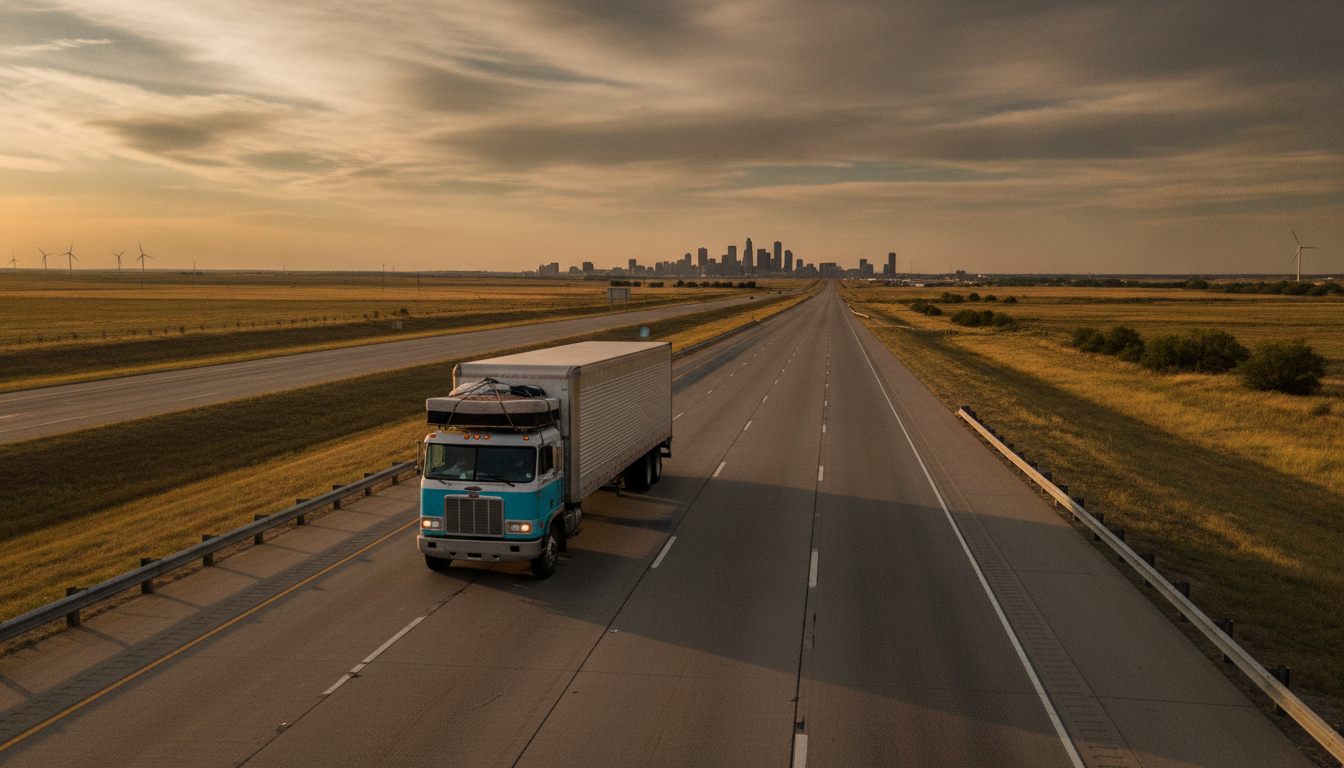
An interstate move from California to Dallas typically costs between $3,000 and $8,500 depending on your home size, the volume of belongings, and the time of year — with larger households or peak-season moves running higher. The single biggest change most California movers notice isn't the distance: it's the dramatic shift in cost of living, taxes, and climate. Dallas has no state income tax, overall prices roughly 7% lower than the California statewide average on the federal price index for 2024 (103 for the Dallas-Fort Worth area against 111; U.S. = 100), and summers that regularly top 100°F — a world away from the coast, the valley, or the Sierra foothills you may be leaving behind.
What does a move from California to Dallas cost?
Moving costs on a California-to-Dallas route are driven by four main variables: the weight or volume of your shipment, the distance from your specific origin city to Dallas, the time of year, and any add-on services like packing, specialty item handling, or storage.
Rough estimates by home size:
- Studio or 1-bedroom: $2,500 – $4,500
- 2-bedroom: $3,500 – $6,000
- 3-bedroom: $5,000 – $8,500
- 4+ bedrooms: $7,500 – $12,000+
These are estimates only. A move from San Diego will cost less than one from the Bay Area or Sacramento, because distance — and sometimes routing — differs. Moving in summer (May through August) is peak season for interstate movers, and prices typically run higher than moves booked in fall or winter. Always get at least three written, binding estimates before committing.
Other costs to budget for:
- Packing materials and labor (if you're not packing yourself): $300 – $1,500+
- Vehicle transport (driving or shipping a second car): $700 – $1,400
- Temporary housing or storage: varies widely
- Texas vehicle registration and driver's license: budget a half-day and modest fees once you arrive
If you're ready to start comparing quotes, you can find movers or go straight to movers in Dallas and movers in California to browse licensed, options.
How do California and Dallas compare on cost of living and taxes?
This is where the move often makes the most financial sense — or at least feels like it. The table below uses the California statewide average on the left and Dallas city-level figures on the right. Because one is a state average and the other is a single city, these are not a strict apples-to-apples comparison — your personal costs will depend on your exact origin city and Dallas neighborhood — but they paint a clear directional picture.
The absence of a Texas state income tax is the headline number for many California movers, particularly those in higher income brackets who have been paying California's top marginal rate. Combined with a median home price that is less than half of the California statewide average, Dallas can meaningfully change what a dollar buys — though it's worth noting that Texas property tax rates tend to be higher than California's, so factor that into any homebuying calculation.
Where should I live in Dallas?
Dallas is a large, spread-out city with distinct neighborhoods that suit very different lifestyles. While specific neighborhood-level statistics shift frequently, here's a practical orientation to help you start your search:
- Uptown & Oak Lawn — Walkable by Dallas standards, dense with restaurants, bars, and nightlife. Popular with young professionals and those coming from urban California environments who want a city feel without a car-dependent commute.
- Bishop Arts District / North Oak Cliff — Creative, independent, and increasingly popular. A growing arts and dining scene with a neighborhood feel that appeals to movers from places like Silver Lake or the Mission District.
- Deep Ellum — Dallas's live music and arts hub. Close to downtown, with a gritty, energetic character. Better suited to renters than buyers at the moment.
- East Dallas / Lakewood — Tree-lined streets, older homes with character, proximity to White Rock Lake. A favorite among families and those who want a quieter residential feel with easy access to the city core.
- Plano, Frisco & the northern suburbs — If you're moving with a family and prioritizing school districts and square footage, the northern suburbs of Dallas are some of the most popular destinations for California transplants. These are separate cities, but deeply integrated with the Dallas metro.
- Irving & Las Colinas — A strong choice for those whose jobs are near DFW Airport or the Metroplex's corporate corridor.
A local buyer's agent who works specifically with relocation clients is worth engaging early — Dallas's market moves quickly.
How different is the climate in Dallas from California?
Very different, and it's worth preparing seriously rather than assuming you'll adjust quickly.
California has one of the most varied climates of any U.S. state — Mediterranean mildness on the coast, intense dry heat in the inland deserts, and alpine cold in the Sierra Nevada. What much of coastal California shares is relatively low humidity, mild winters, and manageable summers. The statewide hazards to be aware of: significant wildfire risk and earthquake hazards along major fault lines.
Dallas operates on a different meteorological calendar entirely:
- Summers are hot and humid, with temperatures frequently exceeding 100°F (38°C). The humidity makes it feel hotter than California's dry heat at similar temperatures — plan for it.
- Winters are generally mild, but Dallas does experience occasional ice storms that can shut down roads and infrastructure in ways that catch newcomers off guard.
- Spring is severe weather season. Dallas sits in Tornado Alley and faces periodic tornado and severe thunderstorm risk, particularly from March through May.
Practical steps: make sure your new home has a storm shelter or that you know the nearest one; review your renters' or homeowners' insurance for tornado and hail coverage (both are common claims in North Texas); and invest in a quality air conditioning system check before your first summer.
How does an interstate move actually work?
Moving between states isn't the same as a local move. Here's what you need to know before you sign anything.
Licensing: Any mover operating across state lines must be registered with the Federal Motor Carrier Safety Administration (FMCSA) and hold a valid USDOT number and MC (motor carrier) number. You can verify both at the FMCSA's mover search tool before hiring. Never book an interstate mover who can't provide these numbers.
Binding vs. non-binding estimates: A binding estimate locks in the price regardless of actual shipment weight. A non-binding estimate is based on a weight estimate and can increase — sometimes significantly — at delivery. For an interstate move of this length, a binding estimate offers more budget certainty. Get it in writing before your move date.
Valuation (not insurance): Federal law requires movers to offer two valuation options. Released value protection is minimal (typically $0.60 per pound per item) and is included at no cost. Full value protection covers repair or replacement of lost/damaged items at current market value and costs extra. Consider purchasing additional third-party moving insurance for high-value items.
Delivery windows: Interstate movers typically operate on a delivery window — a range of days, not a guaranteed single date — especially for long-haul routes like California to Dallas. Discuss the window before signing, and make sure your housing timeline accounts for it. Storing items for a few days on either end is common.
How do I choose a licensed long-distance mover?
Relocations run the full spectrum — from flawless moves to nightmare holdage scams. Here's the short version of what actually protects you:
- Verify USDOT and MC numbers before any conversation about price.
- Get a binding, in-home or virtual survey estimate — not a quote given over the phone based on a bedroom count.
- Read reviews on verified review platforms, and specifically look for reviews from people who moved long-distance, not just locally.
- Understand the payment terms — legitimate movers do not demand full cash payment upfront.
- Confirm delivery window in writing and have a contingency plan if it runs long.
- Ask about subcontracting — some brokers book your move and then hand it to a carrier you've never vetted. Know who is actually loading your truck.
You can browse by state to find licensed movers wherever your California origin city is, or go directly to movers in Dallas to find carriers who regularly run this corridor.
Frequently asked questions
How long does a moving truck take to get from California to Dallas?
Transit time on a California-to-Dallas interstate move typically ranges from 3 to 7 business days, depending on your specific origin city, the carrier's routing, and whether your shipment is consolidated with other loads. Movers are required to provide a delivery window in your contract — confirm it before you sign and plan your housing start date with buffer time built in.
Is it cheaper to move from California to Dallas yourself (DIY) vs. hiring a mover?
A DIY move using a rented truck is almost always cheaper on paper — truck rentals for this route can run $1,200 to $2,500 plus fuel, which on a California-to-Texas haul can add $400 to $700 or more. However, once you factor in packing supplies, lodging en route, the physical toll, and the risk of damage to items you've packed and loaded yourself, the gap narrows considerably. For households with substantial furniture or valuables, full-service interstate movers often provide better overall value than the sticker price suggests.
Do I need to update my driver's license and vehicle registration after moving to Texas?
Yes. Texas requires new residents to register their vehicles within 30 days of establishing residency and to obtain a Texas driver's license within 90 days. You'll visit a Texas Department of Public Safety (DPS) office for your license and a county tax assessor-collector's office for vehicle registration. Budget a few hours and modest fees, and bring proof of residency, your current license, and vehicle title.
Will my California movers be licensed to operate in Texas?
Any mover registered with the FMCSA and holding a valid USDOT and MC number is legally authorized to operate across all U.S. state lines, including into Texas. Texas also has its own state-level mover regulation through the Texas Department of Motor Vehicles (TxDMV) for intrastate moves, but for your interstate California-to-Dallas move, federal FMCSA licensing is what matters. Always verify both numbers independently before booking.
What's the best time of year to move from California to Dallas?
Fall (September – November) and early spring (February – March) are generally the best windows. Summer is peak moving season nationally, which means higher prices and tighter availability — and you'd be arriving in Dallas during its most brutal heat. Winter moves are possible and often cheaper, but be aware that Dallas can experience ice storms that may delay your delivery window. If you have flexibility, October is a sweet spot: moderate temperatures, competitive rates, and off-peak scheduling.
Is the cost of living really lower in Dallas than in California?
Based on the available data, yes — meaningfully so, though the comparison comes with a caveat. The figures in our table compare a California statewide average against Dallas city-level data, so they're directional rather than perfectly apples-to-apples. Your personal experience will depend on where in California you're coming from and where in Dallas you land. That said: a reading of 103 for the Dallas-Fort Worth area versus 111 for California statewide on the federal price index for 2024, combined with zero state income tax and a median home price under $325,000, represents a genuine and significant shift in purchasing power for most California movers.