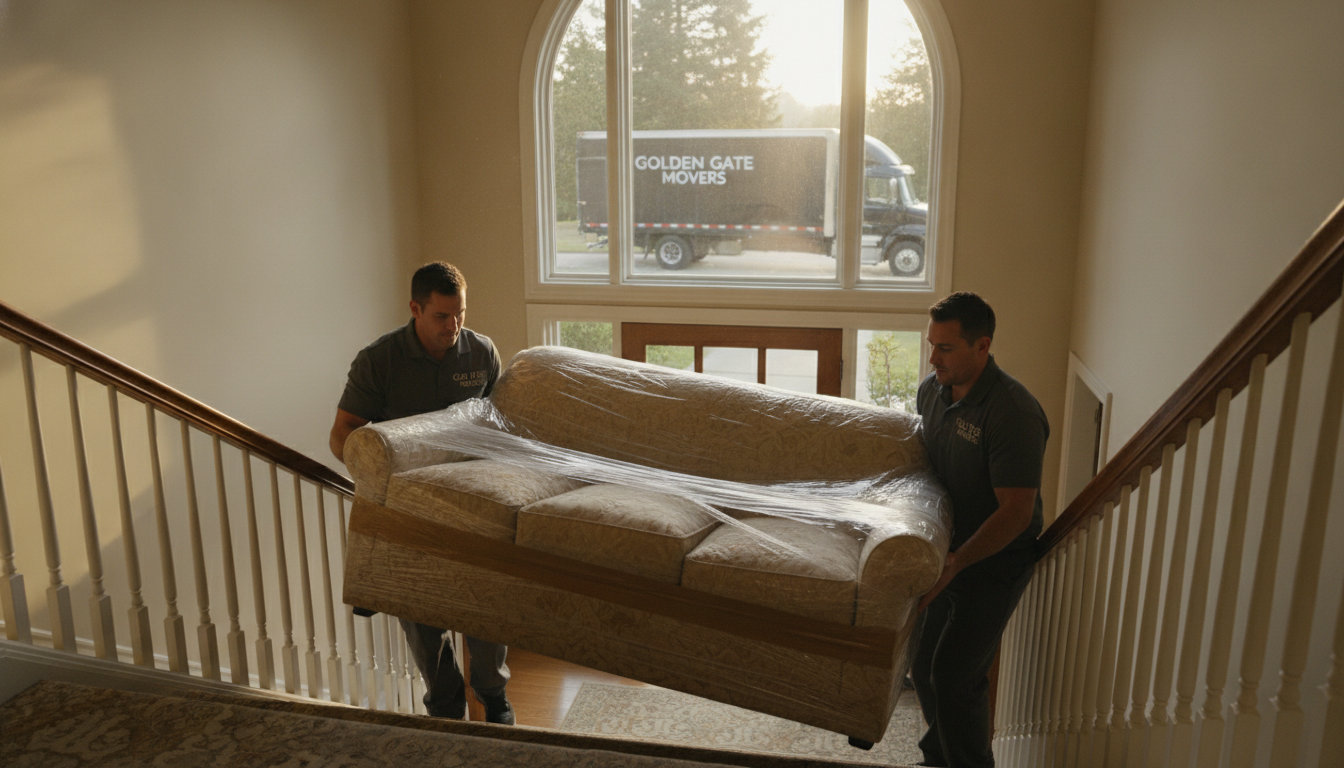
Most local movers charge $100–$200 per hour for a two-person crew, with three-person crews running $150–$270 per hour depending on your market, the time of year, and the company. That hourly rate is almost never the whole story — minimum hour requirements, travel time fees, truck charges, and stair or elevator surcharges layer on top. Knowing how all the pieces fit together is the only way to compare quotes honestly and avoid a surprise at the end of your move.
What is the average hourly rate for local movers in 2026?
Here's the honest range we see across most US markets right now:
| Crew size | Typical hourly range | Best for |
|---|---|---|
| 2 movers + truck | $100 – $200/hr | Studios, 1-BR apartments, small homes |
| 3 movers + truck | $150 – $270/hr | 2–3 BR homes, tight timelines |
| 4 movers + truck | $200 – $350/hr | Large homes, multi-floor, heavy items |
| Additional mover (add-on) | $40 – $80/hr each | Upgrades mid-job when volume surprises |
High-cost metros (New York City area, San Francisco Bay Area, Boston, Washington DC, Seattle) routinely land at the top of — or above — these ranges. Midsize and southern cities like Nashville, Columbus, Charlotte, and Raleigh often sit comfortably in the middle. Smaller markets and rural areas can come in below the floor.
We've dispatched crews in all kinds of markets over 35 years, and the single biggest variable isn't labor — it's demand on your specific date. A Saturday in late May can push rates 20–30% higher than a Tuesday in October, even with the same company.
What does the hourly rate actually include?
Most companies bundle the following into their hourly rate:
- Labor for the number of movers listed
- The moving truck (one truck per crew, typically)
- Moving blankets and basic padding to protect furniture
- Standard dollies and hand trucks
What it almost never includes without an explicit line item:
- Fuel surcharge or travel time fee — many companies charge a flat "drive fee" of $50–$150 round-trip, or bill travel time at half the hourly rate
- Packing materials — boxes, tape, and bubble wrap are almost always billed separately
- Stair and elevator fees — commonly $50–$100 per flight of stairs above the first, or a flat elevator-wait fee
- Long-carry or shuttle fees — if the truck can't park within ~75 feet of your door, expect an upcharge
- Piano, safe, or gun-cabinet fees — specialty items often add $100–$500 regardless of hourly billing
Before you book, ask for a written quote that itemizes every fee. Our guide on moving hidden fees and surcharges walks through every charge that routinely blindsides customers.
How many hours should I budget for my move?
This is the question we get most often — and the answer depends heavily on how prepared you are when the crew arrives.
| Home size | Estimated hours (2 movers) | Estimated hours (3 movers) |
|---|---|---|
| Studio / 1-BR apartment | 2 – 4 hrs | 1.5 – 3 hrs |
| 2-BR apartment or small house | 4 – 6 hrs | 3 – 5 hrs |
| 3-BR house | 6 – 9 hrs | 5 – 7 hrs |
| 4+ BR house | 9 – 12+ hrs | 7 – 10 hrs |
These are move-only times — if you're having the crew pack boxes, add 1–3 hours depending on home size. We've packed thousands of kitchens over the years; a full kitchen pack alone runs 1.5–2.5 hours for a standard household.
Key variables that add time:
- Stairs, tight hallways, or no elevator access
- Long-carry distances (apartment complexes with distant parking)
- Disassembly/reassembly of beds, desks, or sectionals
- A large number of boxes vs. furniture-only
The single biggest time-saver: have every box fully packed, sealed, and stacked near the door before the crew arrives. Unpacked rooms are the number-one cause of moves running overtime — and overtime comes straight out of your pocket.
Does crew size actually save money?
Usually yes — but do the math first.
If a 2-person crew charges $150/hr and takes 6 hours, your labor cost is $900. A 3-person crew at $210/hr that finishes in 4 hours costs $840 — cheaper and done faster. The break-even point shifts depending on how much furniture you have and how complex the layout is.
When 3+ movers are worth it:
- You're moving a 2- or 3-bedroom home with lots of furniture
- You have multiple flights of stairs
- You're on a tight schedule (booked parking, elevator reservation windows)
- You have specialty items that require a third set of hands for safety
When 2 movers are fine:
- Studio or 1-bedroom with mostly boxes
- Single-story home with good truck access
- You're flexible on timeline and have a weekday booking
What's a "minimum hours" charge — and how does it affect my bill?
Almost every local mover has a 2- or 3-hour minimum, regardless of how fast the job goes. If your studio move takes 90 minutes, you're paying for 2 hours. This is standard and disclosed in reputable contracts — but always confirm the minimum before you book.
A few companies run 4-hour minimums on weekends. If your job will genuinely take only 2 hours, that's a meaningful reason to consider a weekday booking or a company with a lower minimum.
While you're reading
Skip the research — let Robert match you with movers.
Get real quotes from vetted movers in your area, free.
How to get an accurate hourly quote (not a lowball estimate)
Getting quotes right is how you avoid ugly surprises. Here's what we recommend:
- Get at least three written quotes — verbal quotes aren't worth much.
- Do a video or in-home walkthrough — companies that quote sight-unseen are guessing, and they're usually guessing low to win the job.
- List every heavy or specialty item explicitly — piano, gun safe, treadmill, pool table, sectional sofa.
- Describe your access conditions — parking restrictions, elevator, stairs, long hallway from door to truck.
- Ask about the travel/fuel fee, stair fees, and minimum hours — in writing.
- Confirm what happens if the job runs long — the hourly rate should be pre-agreed, not negotiated at the end.
For a deeper walkthrough of what every line item means, read our guide to reading a moving quote and spotting red flags before you sign anything.
Are hourly rates regulated?
Local moves (moves that stay within a single state) are regulated at the state level, not by the federal government. The FMCSA (Federal Motor Carrier Safety Administration) and USDOT govern interstate (cross-state) moves — those require a USDOT number and are subject to federal tariff rules. For a local move, your state's Public Utilities Commission (PUC) or Department of Transportation sets the rules, which vary significantly.
What this means practically: hourly rates are not federally capped, but most states require that rates be clearly disclosed in writing before work begins. California, for example, requires movers to provide a written estimate and limits how much the final bill can exceed it under specific conditions. Texas, Florida, and most other states require written disclosure but have fewer pricing controls.
Always verify your mover has the appropriate state operating authority for local moves, plus active cargo and liability insurance. Our full guide on how movers are licensed and insured explains exactly what to check and where to look it up.
How to keep your hourly bill as low as possible
- Book mid-week, mid-month — avoid Fridays, Saturdays, and the last/first days of the month
- Pack everything yourself — every box the crew packs adds time and sometimes a separate packing fee
- Disassemble beds and large furniture the night before
- Prop doors open and clear pathways before the crew arrives
- Have a designated "first-load" pile near the door so the crew can start immediately
- Defrost the freezer 24 hours early — crews can't move a frost-full freezer, and waiting costs time
- Measure doorways in advance for oversized sofas or dressers — knowing whether a piece needs to be disassembled saves 20–40 minutes of on-the-clock problem-solving
For more ways to trim costs on a local move, check out how to move on a tight budget — many of those tactics apply directly to hourly-rate moves.
Frequently asked questions
How much does a 2-person moving crew cost for 4 hours?
A 2-person crew at the US midpoint rate of roughly $140/hr would run approximately $560 for 4 hours of labor, before any travel fees, stair surcharges, or materials. In higher-cost cities (New York, Boston, San Francisco), budget closer to $700–$800. In lower-cost markets, the same job might come to $450–$500.
Do movers charge for travel time to my home?
Most local movers charge either a flat drive fee (typically $50–$150) or bill travel time from their depot to your pickup address at half the standard hourly rate. A few companies bill the full rate portal-to-portal. Always ask how travel time is calculated — it should be in writing on your quote.
What is the minimum I should expect to pay for local movers?
Even a very small local move — a studio apartment, just a few pieces of furniture — typically costs $200–$400 once the 2-hour minimum, travel fee, and truck charge are factored in. Don't expect to pay less than that for any legitimate, insured mover.
Should I tip movers on top of the hourly rate?
Yes — tips are customary and separate from the hourly charge. The general guideline is $20–$50 per mover for a standard half-day job, scaled up for long, difficult, or exceptionally careful work. The hourly rate goes to the company; the tip goes directly to the crew. See our full breakdown in how to tip movers.
Does adding a third mover always make the job faster?
Usually, but not always. A third mover helps most when there's a lot of heavy furniture, stairs, or a long carry. For a boxes-only studio with easy truck access, a third person can actually slow things down because the crew runs out of efficient tasks. Describe your move honestly to the company and ask for their recommendation — a good crew coordinator will tell you which size is genuinely best.
Where can I find and compare hourly rates from local movers near me?
The fastest way is to find local movers in your area or browse movers by state to see verified companies with transparent pricing. Reading verified mover reviews for companies in your market is also one of the best ways to confirm that the rate you're quoted actually matches what past customers paid.
Still have questions about what your specific move should cost? Visit Majestic Moving Companies and chat with Robert, our AI moving assistant — describe your move and get a clear, honest sense of what to expect before you call a single company.
Tagged