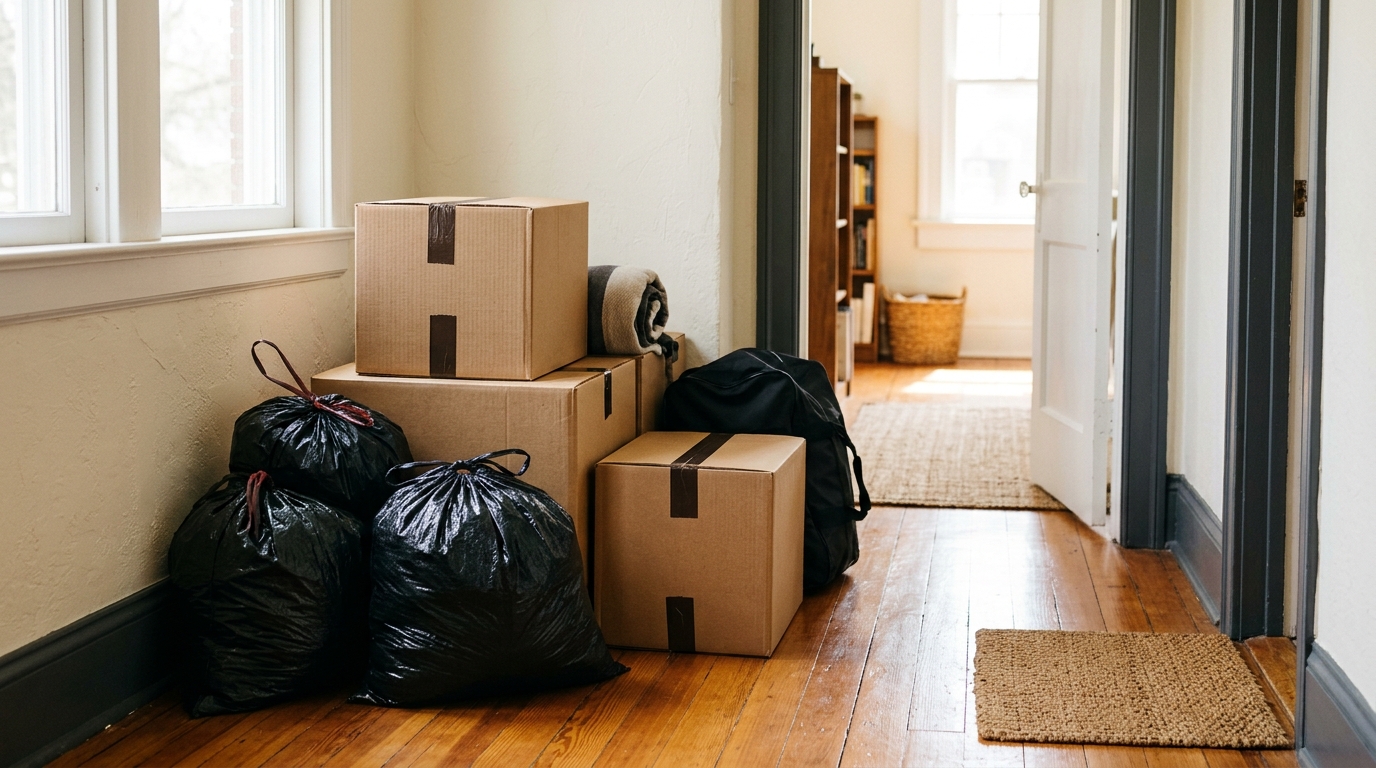
A college move is one of the most manageable moves you'll ever do — small load, short timeline, tight budget — but it goes sideways fast when students underestimate the logistics or skip the planning. Whether you're hauling gear into a dorm, signing your first off-campus lease, or shuffling between apartments every May, a little structure saves a lot of chaos.
What makes a college move different from a regular move?
College moves are almost always small-volume moves — a bedroom's worth of stuff, maybe two — which puts them in a category where renting a truck or hiring a small crew is genuinely cost-effective. The actual challenges are timing (everyone moves during the same two-week window in August and May), building access rules (elevators, loading docks, reserved slots), and the fact that most students are doing this for the first time without a roadmap.
The ones that go smoothly share one thing: they treat even a dorm move like an actual move, with a plan.
Step 1: Figure out exactly what you're moving
Before you rent anything or call anyone, inventory what you're actually bringing. A dorm move and an off-campus apartment move are very different in scale.
| Move Type | Typical Load | Best Option |
|---|---|---|
| Dorm (single room) | 10–20 boxes + bed/desk | Family SUV or minivan, maybe a cargo van rental |
| Off-campus studio | 20–40 boxes + furniture | Cargo van or 10-ft truck rental, or 2-mover crew |
| Off-campus 1BR | 40–60 boxes + full furniture | 10–15-ft truck rental, or 2–3-mover crew |
| Off-campus 2BR+ | 60+ boxes + shared furniture | Full local moving crew, or split DIY/hybrid |
If you're moving from a dorm with no large furniture, a family trip in a loaded minivan or SUV is often enough. If you're moving out of a furnished off-campus apartment with a couch, bed frame, and dresser, budget for a truck or a crew.
Step 2: Decide between DIY, hybrid, or hiring movers
DIY (truck rental)
Renting a 10-foot truck from a national rental company typically runs $20–$50/day plus mileage for local moves, with gas on top. It's the cheapest option if you have strong friends and a flexible schedule. Budget an extra $30–$60 for moving blankets and a hand truck if the rental doesn't include them.
Hiring a local moving crew
For an off-campus 1BR or larger, hiring two movers for a local hourly job often makes more sense than you'd think. Local crews typically charge $100–$160/hour for a 2-person team, with a 2–3 hour minimum. A well-packed studio can move in 2–3 hours; a 1BR in 3–4 hours. That puts most student moves in the $250–$550 range for labor — often less than the stress, injuries, and pizza you'd spend going DIY.
You can find movers near your campus and compare local rates before committing.
Hybrid approach
A popular middle-ground: rent a truck yourself but hire two movers for just a couple of hours to handle the heavy lifting — furniture, appliances, anything awkward. Many local movers offer "labor only" bookings. Check mover reviews to find crews that explicitly offer this service.
Step 3: Book early — student move season is brutal
August and mid-May are the busiest weeks of the year for movers in college towns. In cities like Boston and Columbus, where student populations are huge, the demand spike is serious — crews book out 3–4 weeks in advance during peak season, and truck rental availability drops fast.
Our rule of thumb: Book your mover or rental truck at least 3–4 weeks before your move date for an August or May move. If you're moving in September, January, or another off-peak time, 1–2 weeks is usually fine.
If you find yourself booking last-minute, read our guide on same-day and short-notice moves in the last-minute moves category — there are still good options, they just cost more.
Step 4: Know your building's rules before move day
Dorms and apartment buildings in college towns are used to move traffic, but they enforce rules strictly during peak periods. Ignoring these is the #1 cause of delays on student move days.
Before you arrive, confirm:
- Elevator reservation requirements (many dorms require a 2–4 hour booking window)
- Loading dock or parking pad availability
- Whether movers need a certificate of insurance (COI) to enter — most professionally licensed movers can provide this on request
- Move-in time slots (some buildings limit access to morning or afternoon windows)
- Whether your building allows dollies on hardwood floors (protection pads are sometimes required)
Call the housing office or property manager at least a week out. Don't assume.
Step 5: Pack smart for a student move
Student moves tend to be under-packed (loose items, no labels) or over-packed (boxes so heavy two people can't lift them). Both slow you down.
Pack by weight and fragility:
- Books, records, and kitchen gear go in small boxes (under 30 lbs)
- Bedding, pillows, and clothes go in large boxes or wardrobe boxes
- Electronics get their original boxes if you kept them, or double-box in fresh packing paper
Label every box with the destination room AND contents — not just "bedroom." If you're moving into a shared apartment, add your name. Our room-by-room moving day checklist has a solid labeling system worth borrowing.
For anything fragile — a monitor, record player, or guitar — check our detailed guide on packing fragile items for moving before you reach for the bubble wrap.
While you’re reading
Skip the research — let Robert match you with movers.
Free quotes from movers in your area. Pick whichever is easiest.
Step 6: Understand the actual cost of a student move
Here's an honest cost breakdown for the most common student move scenarios:
| Scenario | DIY Truck Cost | Hired Movers Cost |
|---|---|---|
| Dorm room (local) | $50–$120 (cargo van + gas) | $200–$350 (2hr minimum) |
| Off-campus studio (local) | $80–$180 (10-ft truck) | $300–$500 (3hr job) |
| Off-campus 1BR (local) | $100–$220 (10-ft truck) | $400–$650 (4hr job) |
| Long-distance (to/from home state) | $300–$800 (truck + fuel) | $800–$2,000+ (varies by miles) |
These are typical ranges — your actual cost depends on your city, floor, access, and how well-packed you are. For a deeper look at what affects moving costs, see our full 2026 moving cost breakdown.
One cost students frequently overlook: deposits. Some movers require a deposit of $50–$200 to hold a booking during peak season. Make sure you understand the cancellation policy before you pay — in most cases, deposits are refundable if you cancel with enough notice (typically 48–72 hours), but policies vary. Always get it in writing.
Step 7: Moving between states for school
If you're moving from home to school across state lines, or relocating after graduation, you're in long-distance territory. That means different rules: interstate movers must be registered with the FMCSA (Federal Motor Carrier Safety Administration) and carry a USDOT number. You can verify any mover's license at the FMCSA's online lookup before you book. Our guide to browsing movers by state makes it easy to find interstate carriers near you.
For long-distance student moves, a portable container (you pack it, they ship it) is often the most cost-effective option — typically $1,000–$2,500 depending on distance, compared to $1,500–$3,500+ for a full-service long-distance move of a 1BR worth of belongings. It also gives you flexibility on delivery timing, which matters when your apartment isn't ready the exact day you arrive.
Frequently asked questions
Do I really need professional movers for a dorm move?
Usually not — a dorm move is small enough that a family vehicle or cargo van rental handles it fine. Where professional movers pay off is if you're on a high floor with no elevator, have large furniture, or are moving into an off-campus apartment with a full room's worth of gear.
How much should a local college student move cost in 2026?
For a local studio or 1BR move with hired movers, budget $300–$650 for a 2–3 person crew. DIY truck rental for the same job typically runs $80–$220 plus fuel and your own labor. Long-distance moves (100+ miles) cost significantly more.
What's the best way to find a trustworthy mover near my campus?
Start by checking mover reviews and confirming the company has a valid USDOT number (required for any interstate move). For local moves, state-licensed carriers should be registered with your state's public utilities commission (PUC) or department of transportation — requirements vary by state.
Can I hire movers for just a few hours to help with heavy items?
Yes — many local movers offer "labor-only" hourly bookings where they provide the muscle but you provide the truck. This hybrid approach is popular with students and typically costs $100–$160/hour for a two-person team with a 2-hour minimum.
What happens if the movers damage something in the dorm or apartment building?
Reputable moving companies carry general liability insurance that covers damage to the building (walls, floors, elevators). Your belongings are covered under the mover's released value protection at a minimum — typically $0.60 per pound per article under federal rules for interstate moves. If that sounds low (it is), ask about full-value protection before you book. See our guide on how to file a moving damage claim if something does go wrong.
When should I start planning my college move?
For August or May moves, start 4–6 weeks out — reserve your building elevator slot, book your mover or truck, and start packing 2 weeks before. For off-peak moves (January, June, September), 2–3 weeks is usually enough runway.
Moving for school doesn't have to be stressful or expensive — it just needs a plan that fits your actual situation. Whether you're heading to Raleigh for grad school or moving out of a campus apartment for the first time, the right crew makes all the difference.
Use our directory to find movers near you or chat with Robert, our moving concierge, who can help you figure out exactly what kind of move you need and connect you with the right companies in your area.
Tagged