The only packing supplies you truly need are sturdy double-wall boxes in a few key sizes, unprinted newsprint paper, a couple of rolls of quality packing tape, and bubble wrap for genuinely fragile items. Everything else sold at a moving-supply store is either a convenience or a gimmick. Knowing the difference saves the average mover $50–$150 and a lot of frustration on moving day.
What size moving boxes do you actually need?
Here's what each size is built for:
| Box size | Approx. dimensions | Best for | Weight limit (typical) |
|---|---|---|---|
| Small | 16″ × 12″ × 12″ | Books, tools, canned goods, small appliances | 60–65 lbs |
| Medium | 18″ × 18″ × 16″ | Kitchenware, toys, lamps, electronics | 65 lbs |
| Large | 18″ × 18″ × 24″ | Pillows, linens, lightweight clothing | 65 lbs |
| Wardrobe | 24″ × 24″ × 48″ | Hanging clothes — keeps them wrinkle-free | N/A |
| Dish pack | 18″ × 18″ × 28″ | China, glassware, kitchen fragiles | 60 lbs |
The most common mistake is buying too many large boxes. Large boxes are for light, bulky things only. Filled with books or kitchenware they become back-breaking and are more likely to fail at the bottom seam — costing you damaged items and a miserable moving day.
A typical 2-bedroom home needs roughly: 10 small, 15 medium, 10 large, 2–3 wardrobe, and 3–5 dish-pack boxes. A studio or 1-bedroom needs about half that. For a 4-bedroom house, double the 2-bedroom numbers and add 5–8 extra mediums for the kitchen alone. Our post on packing tips for every room goes deeper on room-by-room counts.
What kind of boxes should you buy — new, used, or free?
You have options here. Each has genuine trade-offs:
New boxes from a moving supplier or home-improvement store
- Cost: $1.50–$5.00 per box depending on size and retailer
- Pros: consistent sizing, clean, full structural integrity, easy to stack
- Cons: cost adds up fast for large moves
Free used boxes (liquor stores, bookstores, buy-nothing groups, community apps)
- Cost: $0
- Pros: obvious
- Cons: variable quality, odd sizes that don't stack well, risk of pests or moisture damage from prior use. Always inspect: press the bottom seam — if it flexes easily or has water staining, skip it.
Box rental programs (plastic reusable crates)
- Cost: typically $2–$5/crate per week, rented as a set
- Pros: extremely sturdy, no assembly required, eco-friendly
- Cons: must be returned on a schedule; not ideal for long-distance moves where delivery windows are unpredictable. Check our guide on delivery windows and long-distance timelines if this applies to you.
Our honest take: Use free boxes for anything soft — linens, pillows, stuffed animals, towels. Buy new small and medium boxes for anything heavy or breakable. It's the cheapest combination that actually protects your stuff.
What packing materials do you really need?
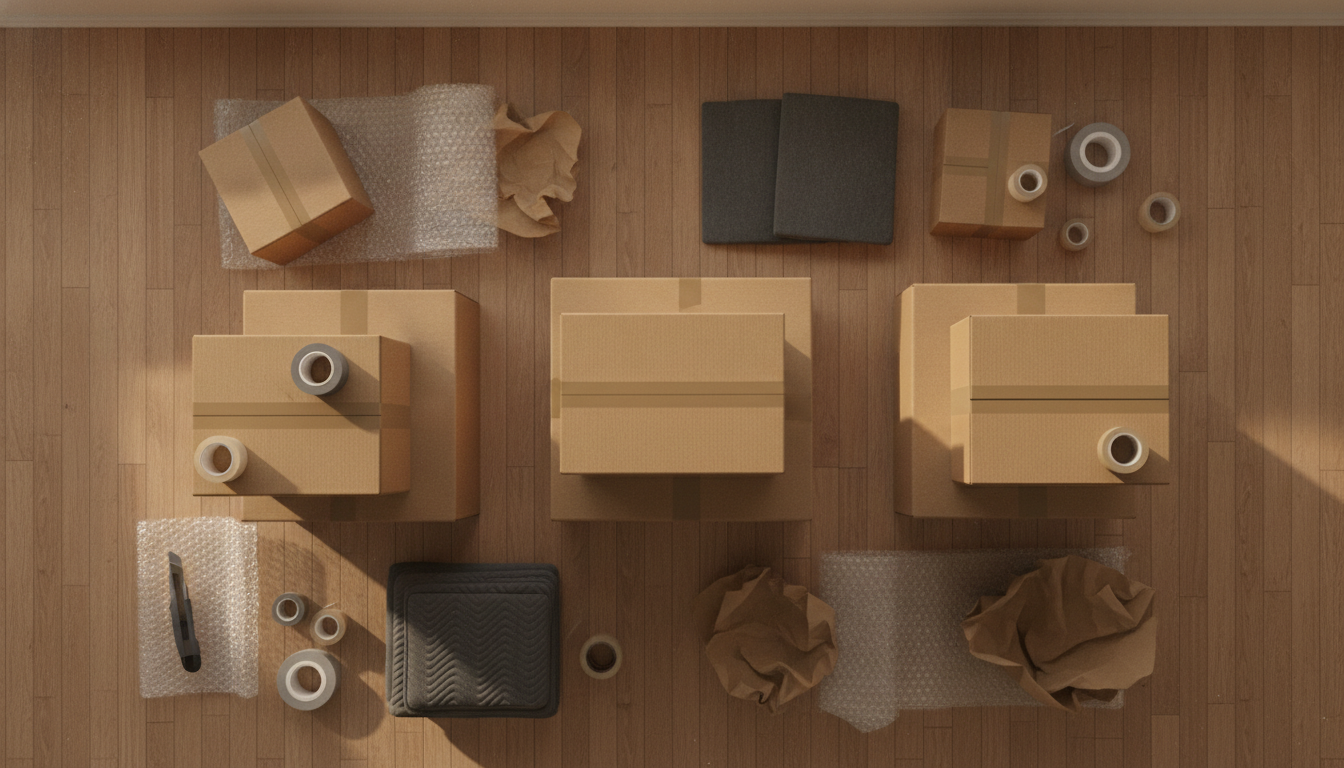
Here's the full breakdown of what works, what's optional, and what you can skip entirely:
Must-haves
-
Unprinted packing paper (newsprint) — A 25-lb bundle covers most 2-bedroom moves. Use it to wrap individual items, fill void space, and cushion dish packs. It's far more versatile than bubble wrap for volume use and costs less. Never use printed newspaper — the ink transfers and can stain dishes and linens permanently.
-
2-inch heavy-duty packing tape + dispenser gun — Budget tape delaminates when boxes are stacked or moved in heat. Buy a name-brand or "heavy duty" tape, 2.0–2.5 mil thickness. You'll use 4–6 rolls for a 2-bedroom move. A $5 dispenser gun pays for itself in time and frustration saved.
-
Bubble wrap — A 12-inch wide, 25-foot roll handles most of a household's genuinely fragile items. Reserve it for irreplaceable items: stemware, picture frames, mirrors, ceramics. For everything else, layered packing paper does the job.
-
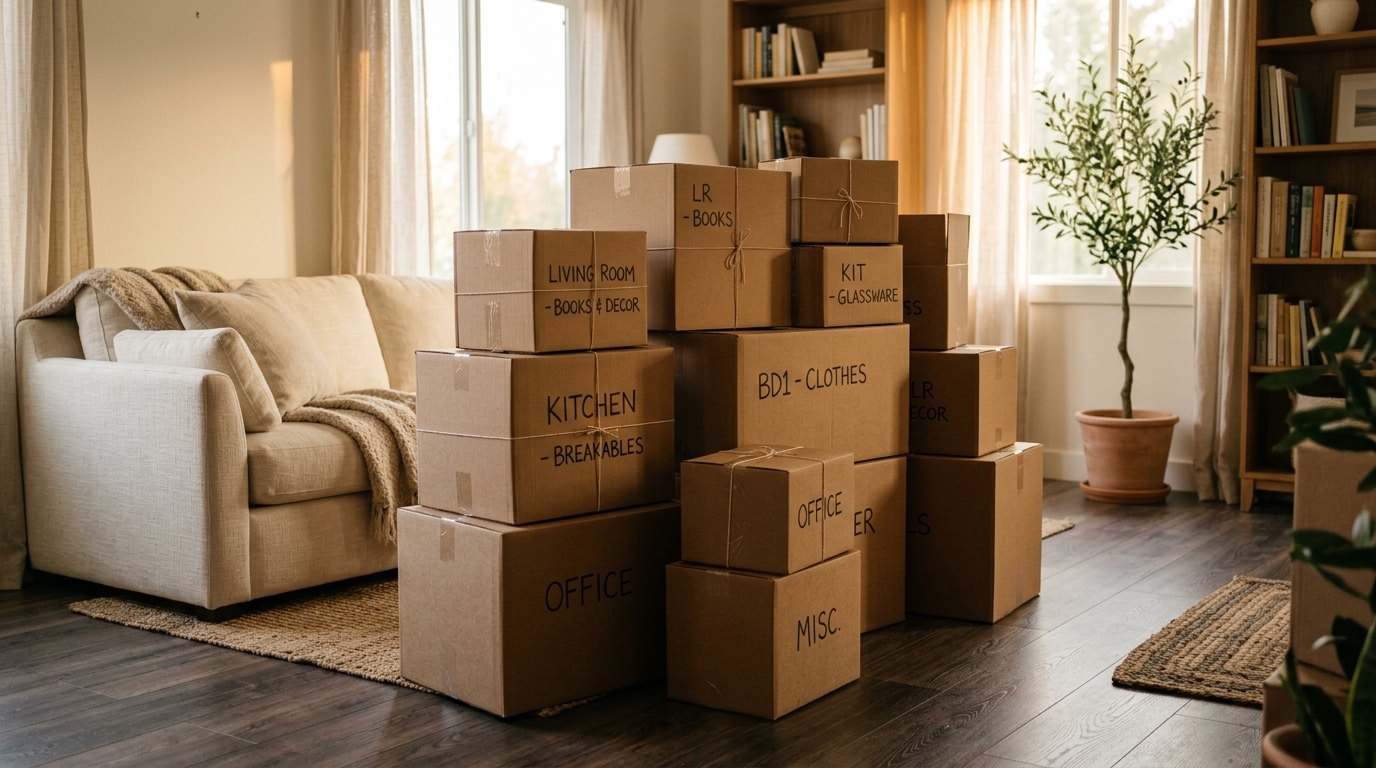
Permanent markers (thick tip) — Two markers minimum. They run out faster than you expect. Clear labeling is one of the biggest time-savers at your destination — see our detailed labeling and organization guide for a system that actually works.
Useful but optional
- Foam pouches — Pre-formed sleeves for plates and glasses. Fast to use but expensive per unit; only worth it if you're packing a lot of china quickly.
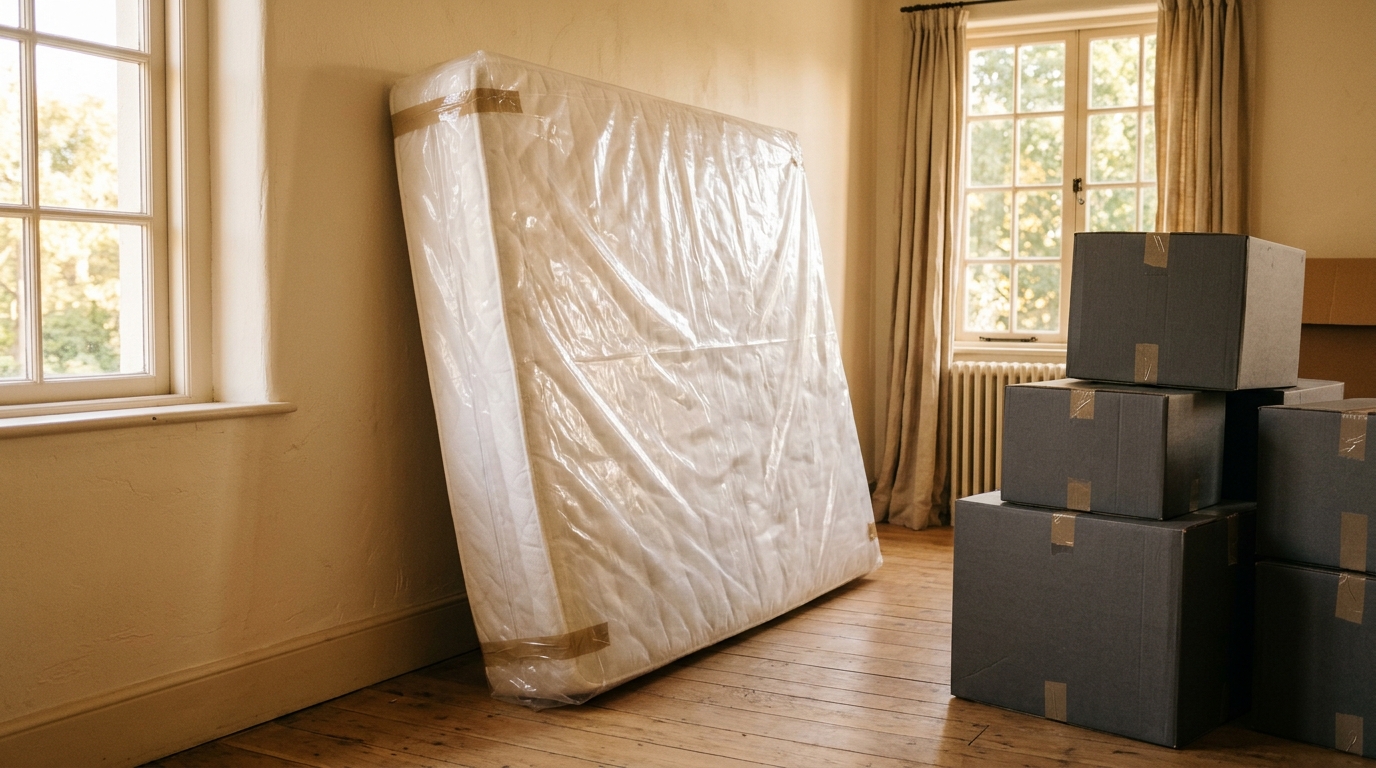
- Mattress bags — A poly bag ($8–$15) that keeps your mattress clean in the truck. Worth it if you have a new or expensive mattress; skip it for an old one you're replacing.
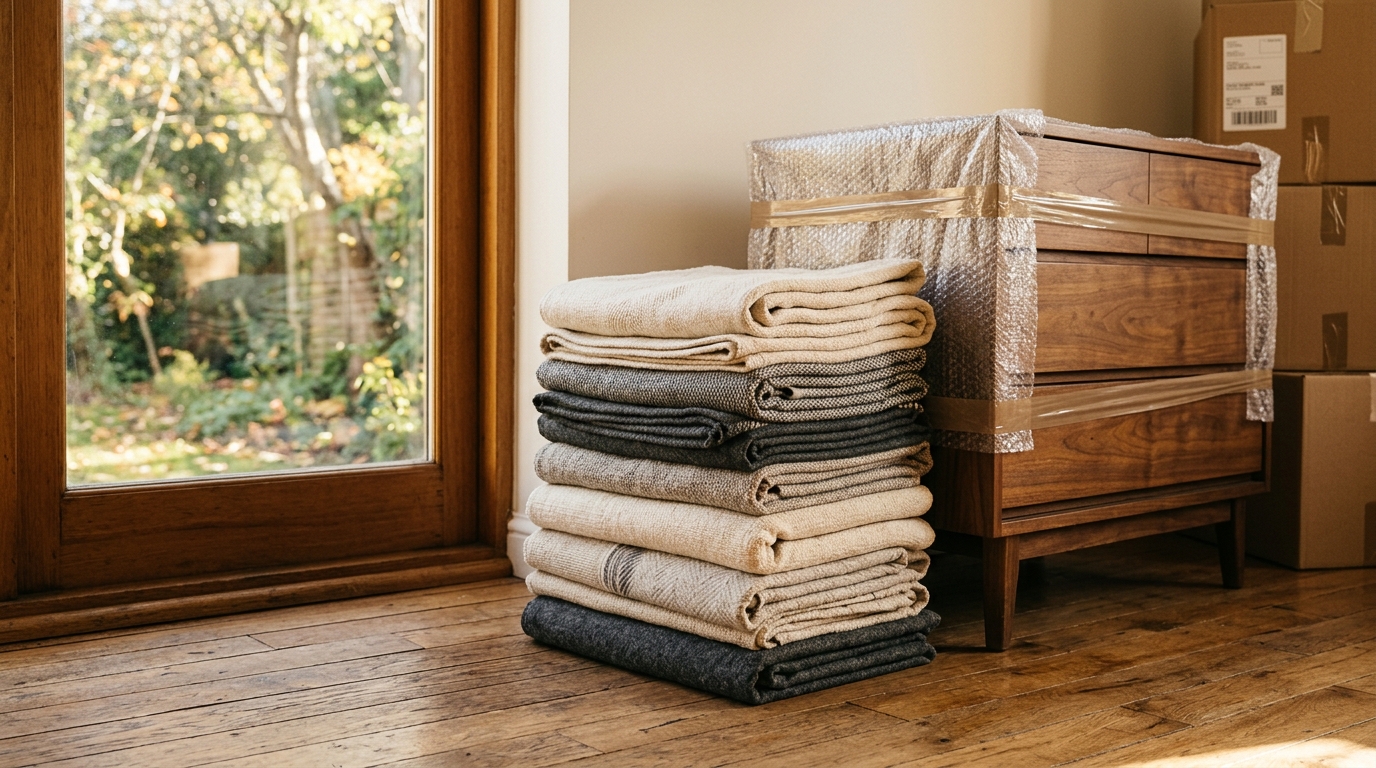
- Stretch wrap / plastic wrap — Excellent for bundling drawers shut, protecting upholstered furniture from scuffs, and wrapping tools. One roll goes a long way.
- Furniture pads/blankets — Professional movers bring these. If you're doing a hybrid or DIY move, renting them from a truck-rental company typically costs $10–$20 for a set of 6.
Skip entirely
- Pre-printed "fragile" labels — A handwritten "FRAGILE" in big red marker is equally visible and costs nothing.
- Fancy box dividers (pre-packaged) — Cut cardboard from your own dish-pack boxes instead; it works just as well.
- Foam peanuts — They migrate, make a mess, and offer inconsistent protection compared to crumpled paper. Professional packers stopped using them years ago.
While you’re reading
Skip the research — let Robert match you with movers.
Free quotes from movers in your area. Pick whichever is easiest.
How much will packing supplies cost?
Here are realistic supply budgets based on move size. These assume you're buying new boxes and sourcing free boxes for soft goods:
| Move size | Estimated supply cost |
|---|---|
| Studio / 1 bedroom | $40–$90 |
| 2 bedrooms | $80–$160 |
| 3 bedrooms | $140–$250 |
| 4+ bedrooms | $220–$400+ |
These numbers can drop significantly if you source free boxes aggressively. They can also climb if you over-buy large boxes or get drawn into bundled "moving kits" that include supplies you don't need. Our broader moving cost breakdown shows where packing supplies fit into the total picture of what a move costs.
Where to buy moving boxes and supplies for less
- Home-improvement stores — Consistent quality, easy to return unused boxes (save your receipt — most have return policies on unused, undamaged boxes).
- Moving company directly — Many movers sell or rent supplies; sometimes bundled pricing beats retail if you're hiring them anyway. When you find movers through a directory, ask about supply packages during the quote process.
- Wholesale clubs — Good per-unit prices on tape and paper in bulk; box sizing can be inconsistent.
- Online retailers — Convenient for dish packs and wardrobe boxes that local stores may not stock. Watch shipping costs — boxes are bulky.
- Free sources — Liquor/wine stores (thick-walled boxes), bookstores, office-supply stores (great small/medium boxes), community swap groups.
If you're already trying to keep the overall move affordable, our guide on how to move on a tight budget has more strategies that work alongside smart supply sourcing.
How to estimate how many boxes you need
The industry rule of thumb is 1–1.5 boxes per linear foot of bookshelf and cabinet space. Walk each room and count your storage. Then add:
- 1 wardrobe box per 36 inches of hanging rod
- 1 dish-pack box per 12–15 dishes/glasses
- 1 extra small box per 1 linear foot of books
Always buy 10–15% more than you think you need. Unused boxes in original condition can often be returned. Running out of boxes on packing day — when movers are arriving in the morning — is a genuinely stressful situation. If that ever happens, see our tips on same-day and last-minute moving situations.
Frequently asked questions
How many boxes do I need for a 2-bedroom apartment?
Most 2-bedroom apartments require 40–60 boxes total. A practical breakdown: 10 small, 15 medium, 10 large, 2–3 wardrobe, and 3–5 dish packs. Kitchens and home offices consistently need more boxes than people expect — budget extra mediums for both.
Is it worth buying new boxes or can I use free ones?
Both can work well together. Use free boxes for light, soft items (linens, clothing, pillows) where box failure isn't a genuine risk. Buy new boxes for heavy items, breakables, and anything you'd be upset to lose — the structural integrity of a new box is worth the $2–$4 for those loads.
What's the best packing tape for moving?
Look for tape labeled "heavy duty" or "packaging tape" with a minimum thickness of 2.0 mil. Avoid generic dollar-store tape — it fails under the heat and pressure of a loaded truck. A decent tape dispenser gun makes the job faster and protects your wrists over hours of packing.
Can I use garbage bags instead of boxes for clothes?
Ask your mover first. Florida's consumer protection agency says not to use plastic bags, or any box that can't be closed and sealed. Bags tear, and they don't stack. If your mover does take them, they're not suitable for anything fragile, anything you'd want to hang (use wardrobe boxes), or any item that could be crushed. Label the bag on the outside with a piece of tape and a marker.
Should I keep boxes from products I already own (like TVs or appliances)?
Absolutely — manufacturer boxes are the single best packaging for electronics and appliances because they're molded to the exact item. If you still have your TV box, use it. If not, a well-padded moving blanket wrap and a snug-fitting large box is the next best option.
Where can I find free moving boxes near me?
The most reliable free-box sources are liquor and wine stores (strong, small-to-medium boxes), bookstores (tight small boxes), office-supply stores, and buy-nothing or community swap groups online. Call ahead to liquor stores — they often set boxes aside if you ask the day before their weekly delivery.
Getting your supplies right is one of the few parts of a move where a little preparation pays off immediately. If you're still working out the full plan — who to hire, what it'll cost, and how to browse movers by state to find local companies — our directory and our moving concierge Robert are ready to help you pull it all together.
Tagged