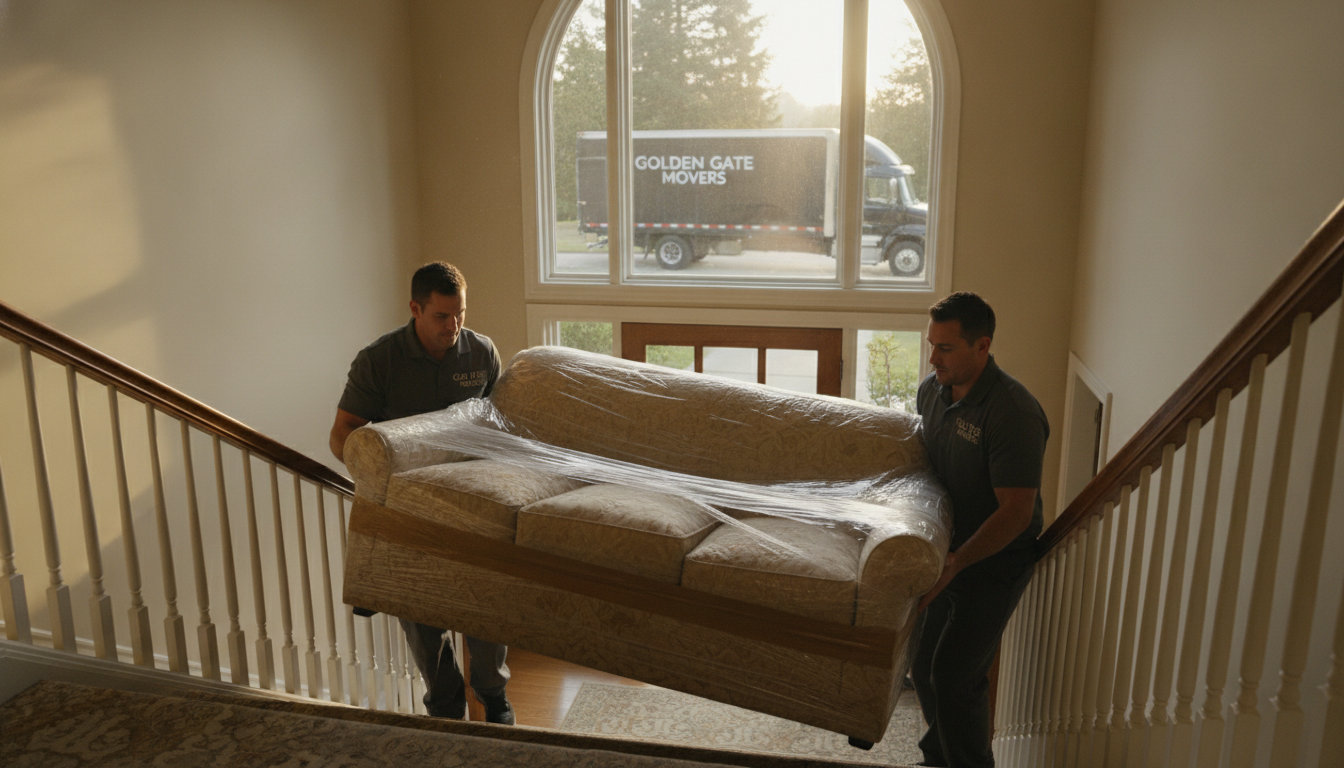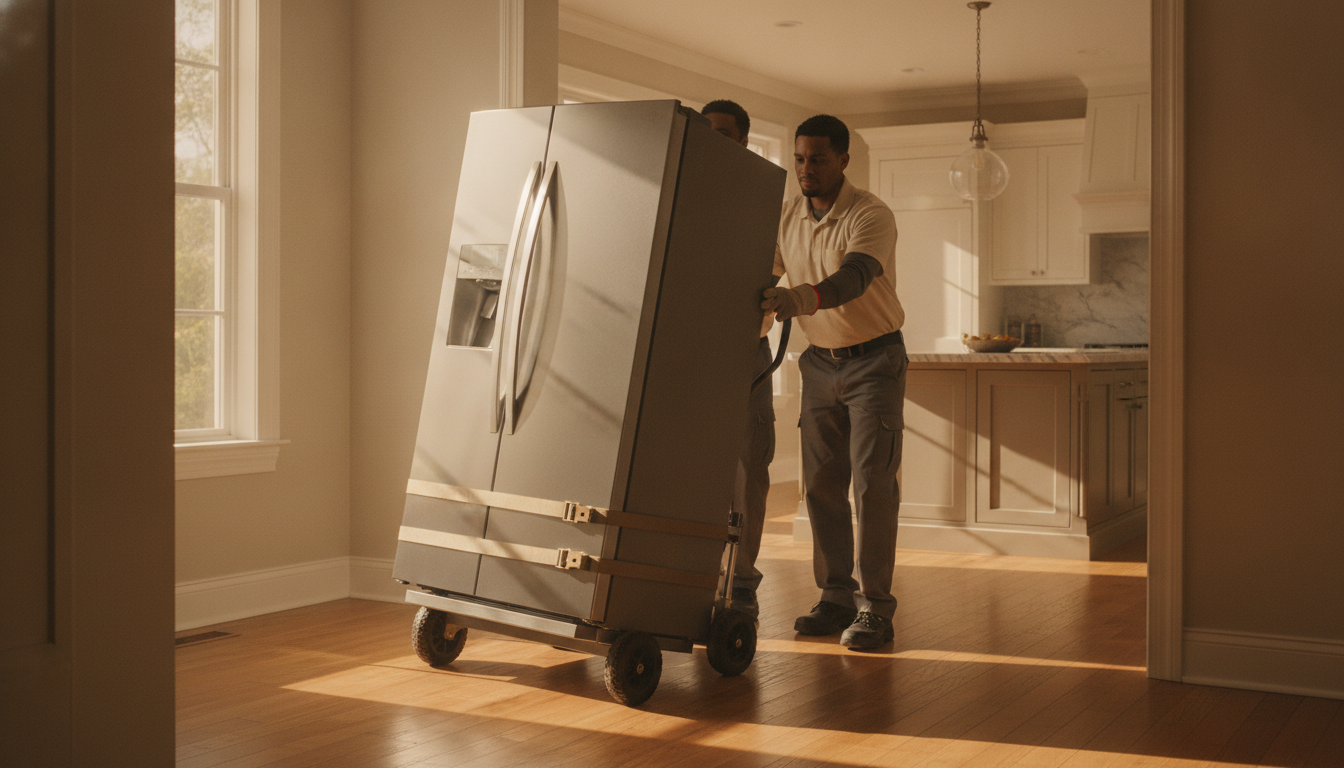
Moving large appliances safely requires draining and securing them 24–48 hours before the move, using the right equipment (appliance dolly, moving straps, furniture pads), and never laying a refrigerator on its side for more than a few minutes. Skip any one of those steps and you're looking at a damaged compressor, a flooded truck, or a torn-up floor — all of which we've seen firsthand after 35+ years in this business.
Why large appliances are the most mishandled items in any move
We've packed thousands of kitchens. The single most common cause of avoidable damage claims isn't fragile china or flat-screen TVs — it's appliances that weren't prepped before loading day. A fridge that wasn't defrosted leaks all over the truck. A washer drum that wasn't secured cracks its own tub in transit. A gas range that was yanked free without capping the line creates a real safety hazard.
Large appliances also weigh more than most people expect. A standard top-freezer refrigerator runs 150–250 lbs. A front-loading washer is typically 170–250 lbs. A gas or electric range hits 100–200 lbs. These aren't items you improvise around. If you're handling them yourself, plan carefully. If you're hiring movers, confirm in advance that they include appliance moves — some crews charge extra or require you to disconnect first.
For everything else that affects your moving budget, see our 2026 US moving cost breakdown.
What you'll need before you start
Tools and supplies:
- Appliance dolly with a toe plate (not a standard furniture dolly)
- Ratchet straps or heavy-duty moving straps
- Furniture/moving pads (at least 4–6)
- Appliance slide sheets or carpet scraps for floor protection
- Bungee cords or tape (for doors and drawers)
- Adjustable wrench and pliers
- Bucket and towels
For specific appliances:
- Refrigerator: defrost kit or just time; water line shutoff tool if it has an ice maker
- Washer: shipping bolts (reuse the originals if you kept them — always worth saving)
- Gas range: pipe cap and plumber's tape; confirm gas is shut off at the valve
- Dishwasher: screwdriver set; towels for water in the line
How to prep each appliance — step by step
Refrigerator (24–48 hours ahead)
- Empty it completely. Pack perishables in coolers with ice. Donate or toss anything you won't be cooking before the move.
- Turn it off and defrost. Modern frost-free models still accumulate moisture. Place towels on the floor, pull out the drain pan, and give it a full 24 hours minimum.
- Shut off and disconnect the water line if your fridge has an ice maker. Turn the saddle valve behind the unit to the off position, then disconnect the supply line and let it drain into a bucket.
- Clean and dry the interior. A damp fridge loaded onto a truck in summer turns into a mold problem by delivery day.
- Tape or bungee the doors shut. Interior shelves should come out and be wrapped separately — they're almost always the first thing that shatters.
- Wrap the entire unit in moving pads and secure with straps before tipping onto the dolly.
Transport upright whenever possible. If a refrigerator must be tilted, tilt it as little as possible and let it stand upright for at least the same amount of time it was on its side before plugging it back in. This lets the compressor oil resettle.
Washing machine
- Run a spin cycle to empty standing water from the drum and hoses.
- Disconnect the water supply hoses (hot and cold). Have a bucket ready — there's always some water left in the lines.
- Disconnect and drain the drain hose.
- Install shipping bolts to lock the drum. This is the step people skip most often. Without them, the drum swings freely during transport and can crack the drum housing or damage the bearings. Most washers shipped to you came with 3–4 bolts stored in a bag — keep them.
- Secure the lid or door with tape or a bungee cord.
- Move upright only. Unlike a fridge, a washing machine should never be transported on its side or back — the drum and suspension system aren't built for it.
Dryer (electric or gas)
- Electric: Unplug the power cord (240V — never yanked, always unplugged at the outlet).
- Gas: Turn off the gas shutoff valve behind the unit. Disconnect the flex line and cap both ends with a pipe cap and plumber's tape. Do not attempt gas disconnection if you are not comfortable with it — a licensed plumber typically charges $50–$150 to disconnect and reconnect, well worth the peace of mind.
- Disconnect and remove the vent duct. Tape the dryer's exhaust port closed to keep dust and debris out during the move.
- Clean the lint trap and drum before wrapping — you don't want a fire hazard sitting in a hot truck.
- Wrap in moving pads; transport upright.
Gas or electric range
- Pull the range away from the wall carefully — use slide sheets under the feet to avoid gouging floors.
- Disconnect: electric ranges unplug at the wall (240V outlet). Gas ranges: turn the shutoff valve and disconnect the flexible connector, then cap the line.
- Remove and wrap all grates, burner caps, and oven racks separately. These are the parts that scratch everything around them.
- Tape the oven door shut with blue painter's tape (it won't leave residue on stainless).
- Transport upright with padding on all six sides.
While you're reading
Skip the research — let Robert match you with movers.
Get real quotes from vetted movers in your area, free.
Moving appliances without damaging your floors
Hardwood and tile floors are the first casualty of appliance moves. Use this sequence every time:
- Lay a furniture pad or moving blanket on the floor where the appliance currently sits.
- Use an appliance dolly — tip the unit back, slide the toe plate underneath, secure with straps, and roll.
- Protect doorway corners and jambs with foam padding or folded moving blankets taped in place.
- Use a stair-climbing dolly or extra crew for any steps. Two people are the minimum for any appliance on stairs — three is better.
Should you hire movers for appliances, or DIY?
| Appliance | DIY Feasibility | Typical Add-On Cost (Pro) | Key Risk if DIY |
|---|---|---|---|
| Top-freezer refrigerator | Moderate | $50–$150 extra | Compressor damage from tilting |
| French-door/side-by-side fridge | Low | $75–$200 extra | Weight (250–350 lbs), door panels |
| Front-load washer | Low | $50–$100 extra | Drum damage without shipping bolts |
| Top-load washer | Moderate | $50–$100 extra | Same as above, but lighter |
| Electric dryer | Moderate–High | $25–$75 extra | Manageable with two people |
| Gas dryer / gas range | Low | $50–$150 + plumber | Gas line safety |
| Dishwasher (built-in) | Low | $75–$150 extra | Water line + mounting screws |
"Appliance moves" are sometimes bundled into full-service moves and sometimes billed as a specialty add-on. Always confirm in writing before your move date. Our guide on moving hidden fees and surcharges explains what else can show up on your final bill.
What happens at delivery
- Refrigerator: Let it stand upright and unplugged for at least 2–4 hours before turning it on (longer if it spent any time on its side). This prevents compressor damage.
- Washer: Remove shipping bolts before running the first load — failing to do this is one of the most expensive appliance mistakes we see.
- Gas appliances: Have a licensed plumber or your gas utility reconnect gas lines at your new home unless you are qualified to do it yourself. Most utilities will do a free safety check on request.
- All appliances: Level them properly at the new location. An out-of-level washer walks across your floor; an out-of-level fridge doesn't seal correctly.
If anything is damaged in transit, document it immediately with photos and notify your mover in writing within 9 months (the federal FMCSA window for interstate claims). For step-by-step guidance, see our post on how to file a moving damage claim.
Finding movers who handle appliances correctly
Not every crew is trained on appliances, and not every quote includes them. When you find movers in your area, ask specifically: "Do you disconnect, move, and reconnect appliances, and is that included in the estimate?" Get the answer in writing.
If you want to compare movers across your state before calling anyone, browse movers by state to see licensed, vetted companies near you. Our AI agent Robert can also help you figure out what questions to ask and what to budget for your specific appliance list.
For a full picture of what your move will cost — appliances and all — our guide to what do movers actually charge in 2026 is the best place to start.
Frequently asked questions
Can you lay a refrigerator on its side to move it?
You can tilt a refrigerator briefly to navigate tight spaces, but transporting it horizontally for any extended distance risks the compressor oil migrating into the cooling lines. If a fridge must travel on its side, stand it upright for at least as many hours as it was on its side — and preferably 24 hours — before plugging it in.
Do I need shipping bolts to move a washing machine?
Yes. Shipping bolts lock the drum in place so it can't swing or bounce during transport. Without them, the drum can damage its own suspension, bearings, or housing. If you've lost the original bolts, your washer's model number will let you find replacements online for $10–$25, which is far cheaper than a drum repair.
Will movers disconnect my gas range?
Many full-service movers will move your range once it's disconnected, but won't disconnect the gas line themselves — that typically requires a licensed plumber or your gas utility. Always confirm this with your mover before moving day, so you aren't scrambling for a plumber at the last minute.
How far in advance should I defrost my refrigerator before a move?
At minimum 24 hours, ideally 48. This ensures the interior is fully dry and the drain pan is empty. A fridge that's still dripping when it goes onto the truck soaks the moving pads, drips on other items, and can cause mold or odors by the time it arrives.
Are appliances covered by standard mover's valuation?
Appliances are typically covered under the same Released Value Protection all federally licensed interstate movers are required to offer (60 cents per pound, per article under FMCSA rules). That means a 200-lb refrigerator damaged in transit would be worth $120 in compensation — probably not enough. Full Value Protection or a third-party policy covers repair or replacement at current market value. Always confirm your coverage before moving day.
What's the safest way to protect hardwood floors when moving a refrigerator?
Use an appliance dolly rather than sliding. If you must slide the appliance temporarily, place moving pads or carpet scraps face-down underneath the feet. Never drag directly on hardwood. For doorways and hallways, pad the corners with foam or folded blankets — the frame of a refrigerator is harder than almost any door jamb.
Tagged