How to Move a Safe or Oversized Piece of Furniture: Weight, Access, and What It Really Costs
Moving a gun safe, fireproof vault, or a 400-pound antique armoire is not a standard moving job. These items require specialized equipment, extra crew, and honest conversation with your mover upfront — or you risk injury, property damage, and a bill that bears no resemblance to your original quote.
Why safes and oversized furniture are in a category of their own
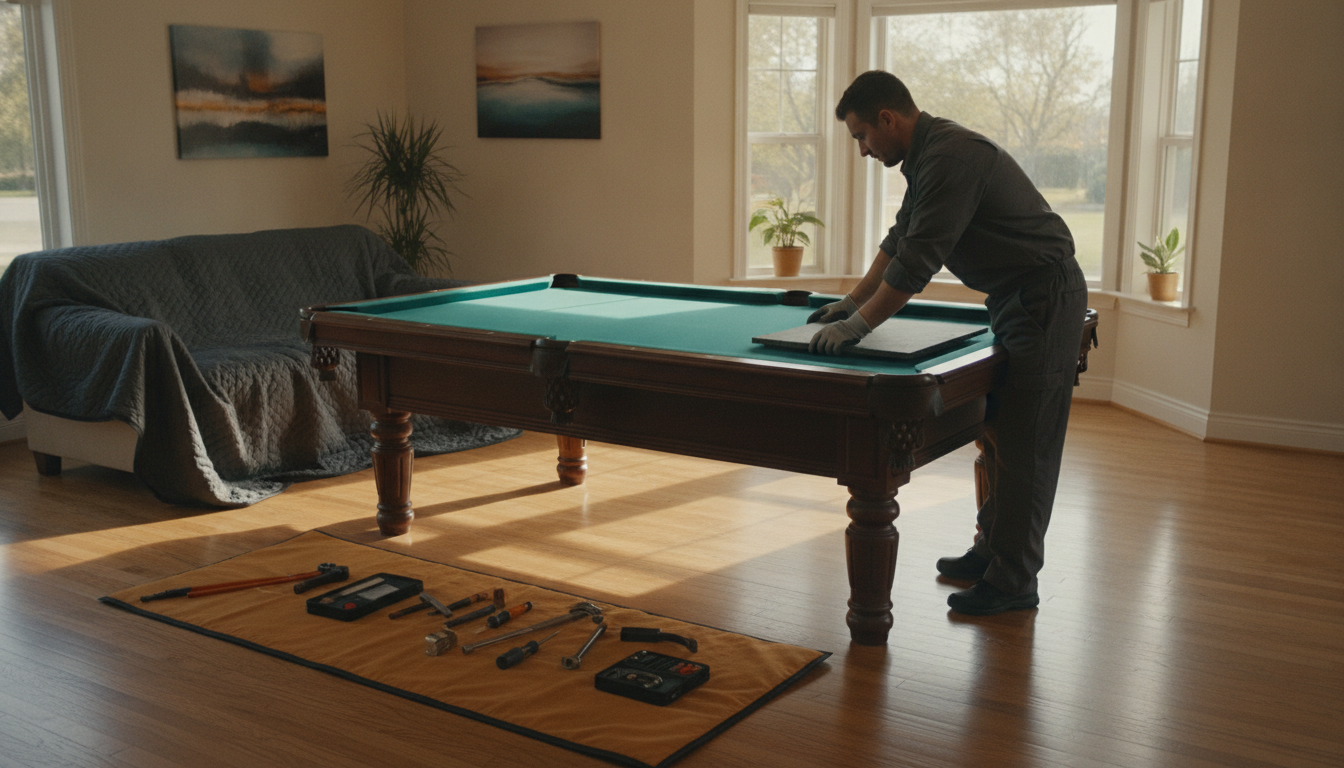
Most residential movers are equipped for items up to about 300–400 lbs. A loaded gun safe can weigh anywhere from 200 lbs for a small rifle cabinet to over 1,500 lbs for a large Liberty or Fort Knox floor safe. An antique armoire, solid-mahogany sideboard, or California king sleigh bed frame can hit 500–700 lbs while also being awkward to grip, fragile at the joints, and wider than a standard 32-inch doorway.
We've moved thousands of these pieces over 35+ years, and the number one cause of damage — to the item, the floors, the walls, and occasionally the movers — is underestimating the job before it starts.
What equipment does a mover actually need for a heavy safe?
For safes under 600 lbs
- 4-wheel furniture dolly (rated for the weight)
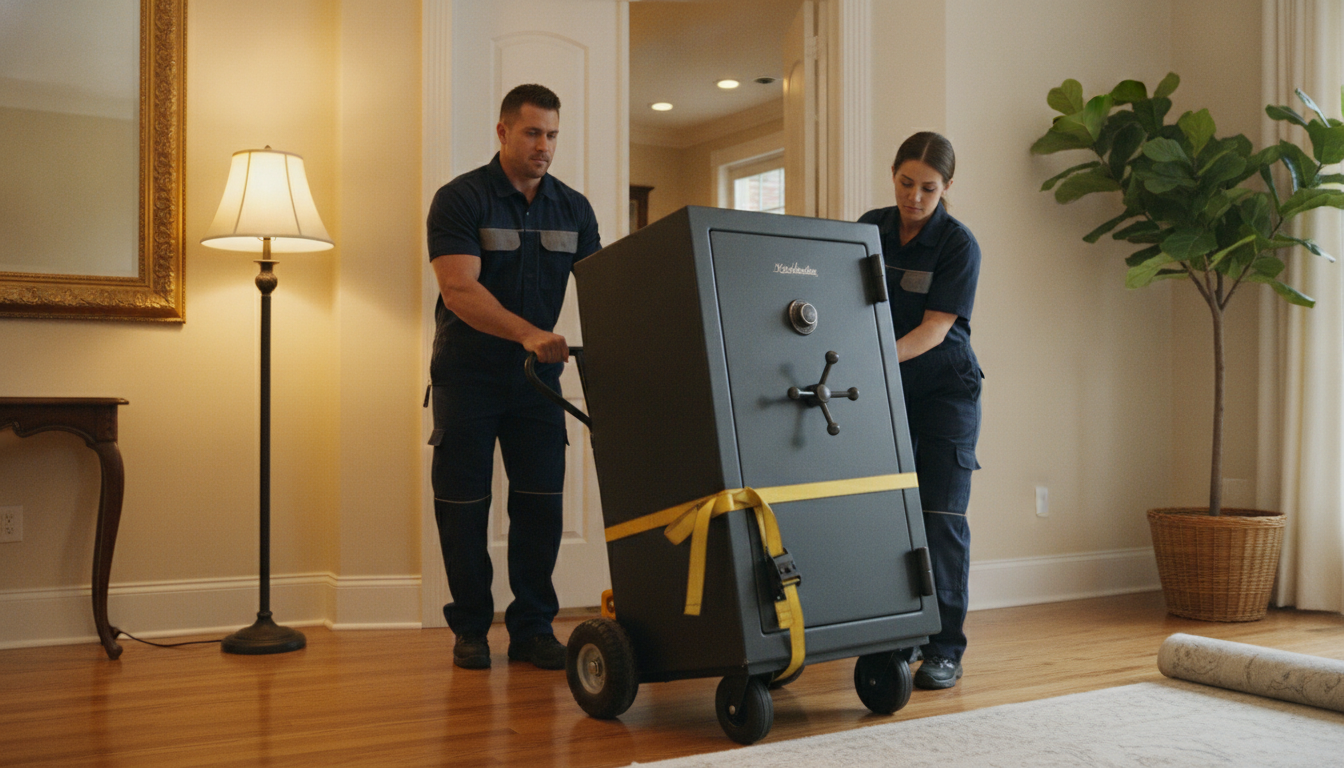
- Heavy-duty appliance dolly with straps
- Mover's blankets to protect door edges and flooring
- Stair rollers or step rollers if any stairs are involved
- Minimum 2-person crew (3 strongly recommended for stairs)
For safes 600–1,500 lbs
- Hydraulic lift dolly or Dutro truck (specialized stair-climbing dolly)
- Floor runners or plywood sheets to protect hardwood and tile
- 3–4 person crew minimum
- Possible need for a loading ramp rated for the weight
For oversized furniture (armoires, sleigh beds, sectional sofas)
- Furniture sliders for repositioning on hard floors
- Moving straps and forearm forklifts for carrying without grip points
- Disassembly tools — many of these pieces must come apart; if they can't, door frames sometimes need to be temporarily removed
If a mover shows up with a standard two-wheel dolly and two guys for a 900-lb safe, send them home. That's a setup for a broken floor, a wall claim, or a back injury that stops your move cold.
Step-by-step: how a proper safe or oversized furniture move works
-
Measure everything before booking. Measure the item's width, depth, and height — then measure every doorway, hallway, stair landing, and elevator it must pass through. A 36"-wide safe will not fit through a 32" door opening without removing the door trim (sometimes the door itself).
-
Disclose the weight to your mover in writing. Most moving contracts have language about items over a specific weight threshold (often 300–400 lbs). Failing to disclose can void specialty coverage.
-
Unload the safe before moving it. A 600-lb safe becomes 800 lbs when it's still full of guns and documents. Remove all contents, store them securely, and re-weigh mentally before quoting the job.
-
Prep the path. Lay down floor protection — hardboard, Masonite sheets, or heavy-duty floor runners — on every surface the dolly will cross. Remove furniture, rugs, and anything breakable from the path entirely.
-
Communicate about the destination. First floor to first floor is one price. Basement stairs with a 90-degree landing are a completely different job. Be specific.
-
Confirm placement before the crew arrives. Once a 1,000-lb safe is in position, you're not moving it again without a full crew reset.
What does moving a safe cost?
Costs vary by weight, floor level, and distance traveled, but here are typical ranges based on real jobs we've quoted:
| Safe / Item Weight | Same Floor, No Stairs | Up/Down 1 Flight | Up/Down 2+ Flights |
|---|---|---|---|
| Under 400 lbs | $150–$300 | $250–$450 | $400–$650 |
| 400–800 lbs | $300–$600 | $500–$800 | $700–$1,200 |
| 800–1,500 lbs | $600–$1,000 | $900–$1,500 | $1,200–$2,000+ |
| Oversized furniture (500+ lbs) | $200–$500 | $400–$700 | $600–$1,000 |
These are estimates for local moves only. For long-distance moves, heavy items are billed by weight on the truck — check your binding vs. non-binding estimate carefully so the declared weight of a single safe doesn't blindside you at delivery.
Stair fees are typically charged per flight, per item — often $50–$150 per flight on top of the base rate. Long-carry fees (when the truck can't park close and movers must carry items more than 75 feet) typically add $75–$200. If you're moving in a dense city like Chicago or Los Angeles, assume a long-carry fee is likely.
While you're reading
Skip the research — let Robert match you with movers.
Get real quotes from vetted movers in your area, free.
What can go wrong — and how to protect yourself
Floor damage is the most common claim we see. A 900-lb safe dragged even two inches across hardwood without proper runners can cost $2,000–$5,000 to repair. Confirm your mover carries general liability coverage and that it explicitly covers floor damage — not all policies do.
Wall and door frame damage is second. If a piece doesn't fit, an experienced crew will recommend removing the door frame rather than forcing it. Never let a crew force a piece through a tight opening.
Devaluation coverage gaps. Standard Released Value Protection (the default under FMCSA regulations for interstate moves, at $0.60/lb) pays $360 on a 600-lb safe — nowhere near replacement cost. Consider full-value coverage or a third-party policy. Our guide to moving valuation vs. insurance walks through exactly what each option covers.
Elevator weight limits. Residential elevators are commonly rated for 1,500–2,500 lbs including the cab structure — not 1,500 lbs of cargo on top of two movers and a dolly. Check the elevator's posted capacity plate and confirm with your building manager before the job.
Should you hire a specialty mover or a general mover for this?
| Scenario | Best Choice |
|---|---|
| Safe under 500 lbs, ground floor only | Most full-service movers can handle it with advance notice |
| Safe 500–1,000 lbs, any stairs | Specialty or heavy-item mover strongly preferred |
| Safe over 1,000 lbs | Specialty mover only — confirm they have hydraulic equipment |
| Antique armoire or period furniture | Specialty or full-service mover with fine-furniture experience |
| Oversized sectional or modular furniture | Most full-service movers, but confirm disassembly capability |
You can find movers who specialize in heavy and specialty items on our directory — filter by specialty services when you search. If you're outside a major metro, browse movers by state to see who's operating in your area.
For a general sense of what full-service movers charge before you add specialty fees, our 2026 moving cost breakdown gives you realistic baselines to work from.
Frequently asked questions
How much does it cost to move a gun safe?
Moving a gun safe typically costs $150–$600 for a ground-floor local move, and $500–$2,000 or more if stairs, long carries, or heavy equipment are involved. The single biggest cost driver is weight — get the manufacturer's listed weight (not your guess) and share it with every mover you quote.
Do movers have a weight limit for safes?
Most standard moving crews are set up for items up to 300–400 lbs. Items heavier than that typically require specialized equipment (hydraulic dollies, stair climbers, extra crew) and should be disclosed to your mover before booking. Some companies decline safes over a certain weight altogether.
Can a safe go in the moving truck with the rest of my belongings?
Yes, in most cases — but the safe must be secured against shifting and loaded last so it doesn't crush other items. For very large safes, some movers will use a separate dedicated truck or require the safe to be the only item on a partial load. Confirm the logistics in writing before moving day.
What happens if the safe doesn't fit through the door?
If a safe won't fit through a standard doorway, a crew has a few options: remove the door from its hinges (gaining roughly 2 inches), remove the door trim/casing (gaining another 1–2 inches), or in rare cases, remove a window or use an exterior crane. Always measure before booking — not on moving day.
Is it safe to move a safe while it's loaded?
No. Remove all contents before moving. Ammunition, firearms, documents, and valuables should be secured elsewhere during transit. Beyond the added weight, shifting contents can damage the locking mechanism and create a safety hazard.
How do I protect my floors when moving a heavy safe?
Lay down hardboard sheets (like Masonite, available at any home improvement store for $15–$25 per sheet) across every surface the dolly will cross. Add moving blankets under and around the safe. Have the crew use four-wheel dollies, not two-wheel hand trucks, for flat-surface rolling. For hardwood floors especially, confirm your mover uses floor runners as standard practice — not as an optional add-on.
Need a mover you can trust with the heavy stuff? Use our directory to find movers near you, or browse verified mover reviews to see how companies have handled specialty jobs for real customers. Our AI agent Robert is also standing by at majesticmovingcompanies.com to help you match with the right crew for your specific situation.
Tagged