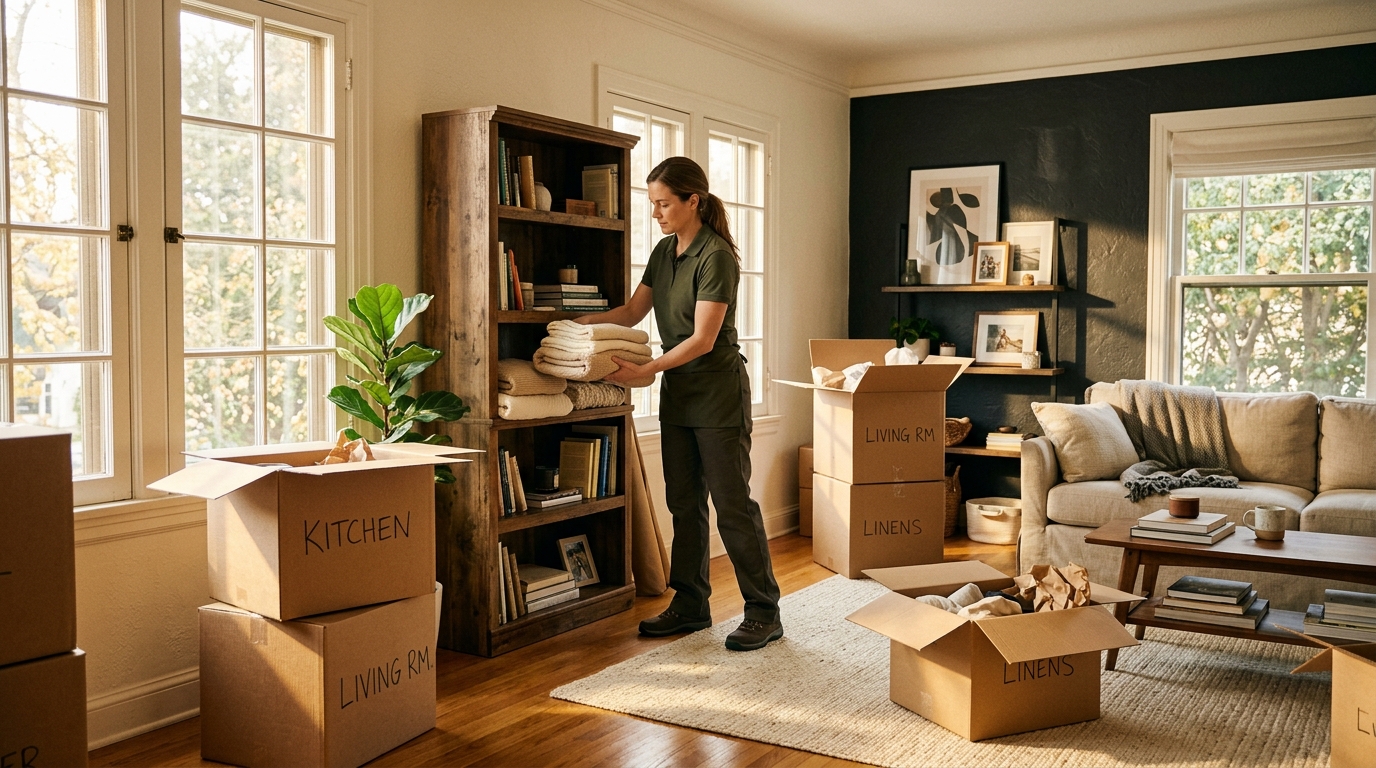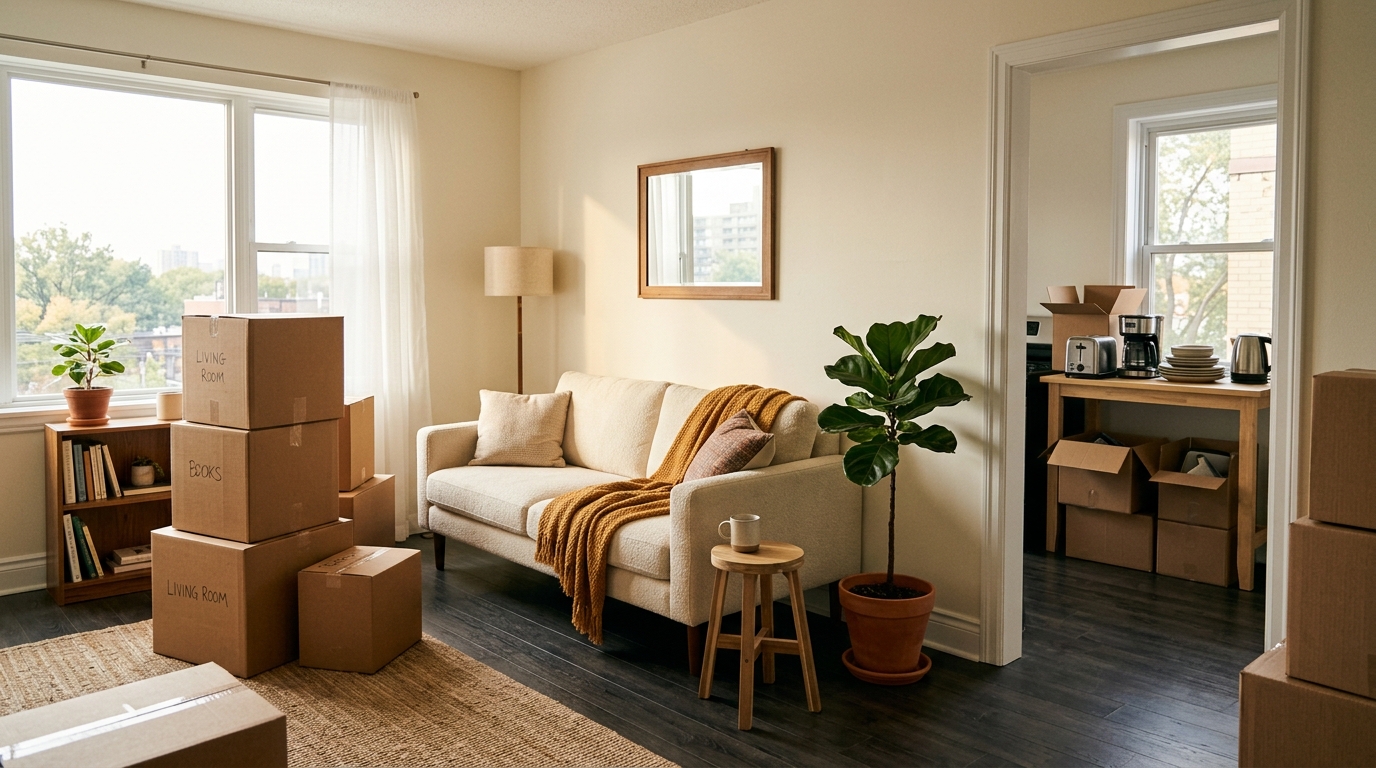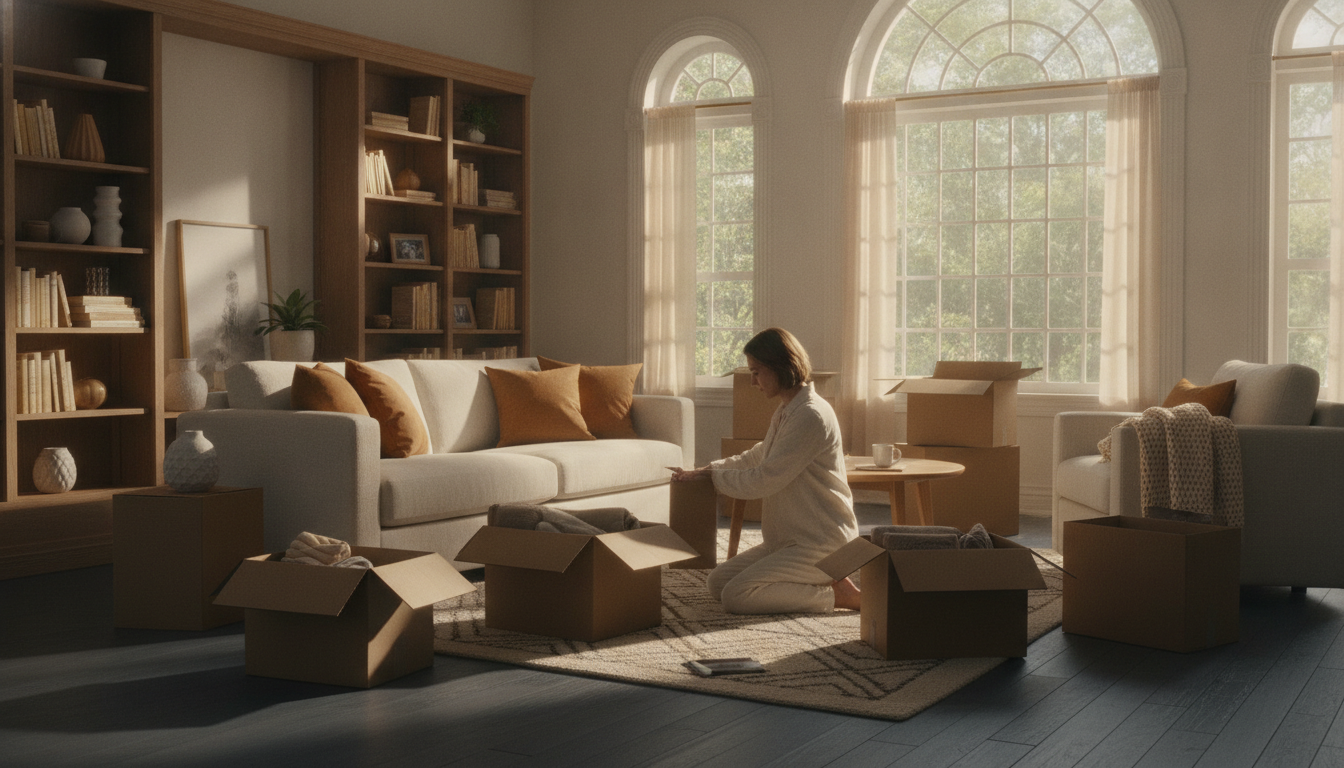
The fastest way to unpack after a move is to follow a deliberate room order — bedroom and bathroom first, kitchen second, living areas third — and to resist the urge to unpack everything at once. The households that settle in fastest all share one habit: they prioritize function over perfection for the first 72 hours.
Why unpacking order matters more than speed
Opening every box the same afternoon your truck unloads feels productive, but it almost always backfires. You end up with half-empty boxes in every room, nothing is actually done, and you can't find the one item you desperately need. A deliberate sequence means each room crosses a usability threshold before you move to the next.
Think of it in three tiers:
- Survival rooms — the spaces you need to function tonight
- Daily-use rooms — the spaces that affect your morning routine tomorrow
- Nice-to-have rooms — everything else that can wait a few days
The right room-by-room unpacking order
1. Master bedroom (Day 1, first two hours)
Before you touch a single kitchen box, make your bed. Seriously. When 9 pm hits and you're exhausted, a made bed is the single biggest morale asset in the house. Unpack:
- Bedding and pillows
- One set of clothes for tomorrow
- Chargers and phone/alarm clock
- Any medications or bedside essentials
Don't hang artwork or arrange nightstands yet — that's a Day 3 job.
2. Bathrooms (Day 1, alongside bedroom)
A functional bathroom takes 20–30 minutes to set up and makes everything feel less chaotic. Unpack:
- Toilet paper (this should be in a clearly labeled box — see our guide on how to label moving boxes so you can find everything on day one)
- Hand soap, towels, shampoo, toothbrush
- Shower curtain and liner (if not already hung)
One bathroom is enough for night one. Additional bathrooms can follow on Day 2.
3. Kitchen (Day 2)
The kitchen is the most labor-intensive room in any home — a full kitchen unpacking can easily take 4–6 hours for a 3-bedroom household. Tackle it in this sequence:
- Everyday dishes and glasses — get eating and drinking sorted first
- Pots, pans, and a basic knife set — so you can cook an actual meal
- Small appliances (coffee maker, toaster) — because mornings matter
- Pantry dry goods — shelf-stable items can wait a day
- Specialty gadgets and extras — last priority
Pro tip: Before you put anything in a cabinet, decide where the logical home is. Moving everything twice because you unpacked too fast is the number one kitchen mistake we see.
4. Living room and common areas (Day 2–3)
Once survival is handled, the living room goes next because it's where the household breathes. Start with seating and your TV/entertainment setup, then move to bookshelves and décor. Artwork can wait until Day 4 or 5 — you'll want to live in the space before you commit to wall placement.
5. Home office (Day 3–4)
If you work from home, bump this up to Day 2. Get your computer, monitor, and router online first, then organize files and peripherals. Our guide on how to move a home office and protect your gear and data has a full setup checklist worth bookmarking.
6. Garage, storage areas, and guest rooms (Day 5+)
These can wait. Seriously. A disorganized garage doesn't affect your quality of life the way a chaotic kitchen does.
Unpacking timeline at a glance
| Room | Target completion | Priority tier |
|---|---|---|
| Master bedroom | End of Day 1 | Survival |
| Main bathroom | End of Day 1 | Survival |
| Kitchen (functional) | End of Day 2 | Daily use |
| Kids' bedrooms | End of Day 2 | Daily use |
| Living room | Day 3 | Daily use |
| Home office | Day 3–4 | Daily use |
| Dining room | Day 4–5 | Nice to have |
| Guest rooms | Day 5–7 | Nice to have |
| Garage / storage | Week 2+ | Nice to have |
6 pro shortcuts that save hours
1. Use the "box junkyard" method. Designate one room (often a spare bedroom or garage) as your staging area. All empty boxes and packing paper go there immediately after unloading. This keeps every other room breathable.
2. Don't unpack what you're going to declutter anyway. If you're opening a box and thinking "I don't know why I kept this," the answer is obvious. Tape the box back up and set it in the donation pile. You'll save unpacking time and storage space.
3. Label your "open first" boxes before the move. If you're still in planning mode, mark two or three boxes per room as OPEN FIRST with a colored marker or tape. These should contain the 20% of items you use 80% of the time. If you've already moved, apply this lesson now: dig through boxes to find the essentials before unpacking everything else.
4. Set up Wi-Fi before anything else in the living room. It keeps the household sane, lets you stream music while unpacking, and avoids a scramble when you realize you need to look something up. Our full walkthrough on handling utilities and internet setup when you move covers how to time your service activation so nothing goes dark on move-in day.
5. Kids' rooms second, not last. Kids who feel settled in their own space are calmer and more self-sufficient while you handle the rest of the house. Even a basic setup — bed made, a few toys accessible — makes a meaningful difference.
6. Eat from delivery for the first 24 hours. Budget $30–$60 for takeout on move-in night. The time you save not cooking is worth far more than cooking cost savings. On Day 2 you'll have enough kitchen function to cook a simple meal.
While you’re reading
Skip the research — let Robert match you with movers.
Free quotes from movers in your area. Pick whichever is easiest.
What to do with all the boxes and packing materials
Empty boxes pile up faster than you expect. Your options:
- Recycling drop-off — most municipalities accept cardboard; break down boxes flat
- Marketplace give-away — free boxes are claimed within hours on most local listing platforms
- Moving company take-back — some full-service movers will pick up boxes; ask when you book
- Pay-it-forward — neighbors or friends moving soon will genuinely thank you
Foam peanuts and bubble wrap typically aren't accepted in curbside recycling; check your local program before tossing.
Don't forget these after-the-move tasks
Unpacking is just the physical layer. The administrative layer runs in parallel:
- Update your address with USPS (usps.com/move — $1.10 identity verification fee), banks, employer, subscriptions, and the DMV in your new state (typically 30–90 days to update your license and registration, depending on state law).
- Test all smoke detectors and CO alarms on Day 1 — non-negotiable.
- Locate your circuit breaker, water shutoff, and gas shutoff before you need them.
- Document any damage from the move with dated photos immediately, before you put items in place — this is critical if you need to file a damage claim with your mover.
Finding good help in your new city
If the move itself is still ahead of you and you're weighing your options, find movers in your area through our directory, or browse mover reviews to vet companies before you book. Whether you're landing in Nashville, Chicago, Atlanta, or anywhere in between, browsing movers by state is the fastest way to compare licensed, insured carriers in your new city.
Frequently asked questions
How long does it realistically take to unpack after a move?
Most households reach "fully functional" in 3–5 days and "fully unpacked" (including décor and extras) in 2–4 weeks. Larger homes, more belongings, and working adults with kids on the slower end of that range — and that's completely normal. The goal for week one is function, not perfection.
Should I unpack everything before organizing, or organize as I go?
Organize as you go, one room at a time. Unpacking everything first and organizing second means handling each item twice. Decide where something lives the moment it comes out of the box.
What should I unpack first when moving into a new house?
Your bedroom, then a bathroom — in that order. Getting a good night's sleep after move-in day is more valuable than any amount of extra unpacking you could squeeze in. See our full move-in guide for new houses for a complete Day 1 through Week 1 checklist.
Is it worth hiring an unpacking service?
For seniors, people with limited mobility, households with very young children, or anyone with a demanding back-to-work timeline, professional unpacking services can be well worth the cost — typically $200–$600 for a standard bedroom move, depending on crew size and hours. Ask your moving company if they offer it; many full-service movers include or upsell this alongside the move itself.
How do I unpack efficiently when I'm doing it alone?
Work one room to 100% completion before starting the next. Put on a podcast or playlist to keep energy up. Take a 10-minute break every 90 minutes — physical and mental fatigue are the primary causes of things getting "put somewhere for now" and lost for six months. And keep a notepad handy for the running list of things you realize you need to buy or fix.
What's the best way to handle boxes I'm not sure about unpacking?
The 90-day rule works well: if you haven't opened a box in 90 days, chances are you don't need what's in it. Set those boxes aside in a storage area and revisit them before your next season change. It's often the fastest way to naturally declutter what you no longer need — even if the decluttering happens a little late.
Tagged