
Find movers near you
Movers in Chicago.
Compare top-rated local and long-distance movers — and let Robert do the comparison for you.
Get Your Quote→Illinois · Cook County
Moving companies in Chicago, IL.
Browse {count} movers serving Chicago and the 9.5-million-person metro. Local crews know the freight-elevator dance in River North, the 3-flat walkup math in Logan Square and Wicker Park, and which suburbs need HOA paperwork two weeks out.
Robert
Online·Call for a quote
Hi — I'm Robert, and I'll help you find the right movers. Where are you moving from, and where are you headed? Prefer a live representative? Just say the word and I'll connect you, or use the call button for a quote anytime.
By chatting with Robert, you agree we may share your move details with movers in your origin city so they can contact you with a quote. We never sell or share your info outside this network. Privacy Policy.
Top movers in Chicago
Chicago movers worth a look.
A few of Chicago’s top movers. Want a tailored recommendation? Use the Get quotes form below.
All Chicago movers
157 movers serving Chicago.

All God Movers
Chicago, IL
★ 4.2 (448 reviews)

King David Moving & Storage
Chicago, IL
★ 5.0 (2 reviews)

Copher Movers & Storage Inc
Chicago, IL
★ 5.0 (3 reviews)

Monolith Moving Company
Chicago, IL
★ 5.0 (219 reviews)

Fallen Movers
Chicago, IL
★ 5.0 (243 reviews)

AM & PM Moving LLC
Chicago, IL
★ 5.0 (205 reviews)

Affordable City Movers Chicago
Chicago, IL
★ 4.9 (169 reviews)

All State Movers - Lincolnwood
Chicago, IL
USDOT #2487875
Girard's Moving, Hauling & Lawn Maint.
Chicago, IL
Piano Moving World LLC
Chicago, IL
DNA Movers
Chicago, IL
Jake's Piano and Expert Moving Services
Chicago, IL

Precision Movers
Chicago, IL
★ 5.0 (603 reviews)

BRG Office Movers
Chicago, IL

Sams Moving
Chicago, IL
★ 5.0 (1 reviews)
Movers near Chicago
18 more movers within 50 miles of Chicago.
Based in a neighboring town and serving Chicago. Each one shows where it is based and how far that is, nearest first.

Golan's Moving and Storage IL
Skokie, IL · 12 miles away
★ 4.7 (944 reviews)

Asher Movers
Skokie, IL · 12 miles away
★ 4.7 (248 reviews)
AAA Movers
Melrose Park, IL · 12 miles away
STI Moving & Storage Inc - Chicago Moving Company
Skokie, IL · 12 miles away
Move Matcher
Hillside, IL · 14 miles away
Good Move Movers
Elmhurst, IL · 16 miles away

LifeTime Movers
Oak Brook, IL · 17 miles away
★ 4.9 (126 reviews)

Qst Movers LLC IL
Mount Prospect, IL · 20 miles away
★ 4.9 (677 reviews)
Carlson Brothers Movers
Addison, IL · 20 miles away
Ez Moving Group
Wheeling, IL · 24 miles away
Long Distance Movers
Arlington Heights, IL · 24 miles away
Super Movers
Roselle, IL · 24 miles away

Great Chicago Movers
Schaumburg, IL · 26 miles away
★ 4.9 (816 reviews)
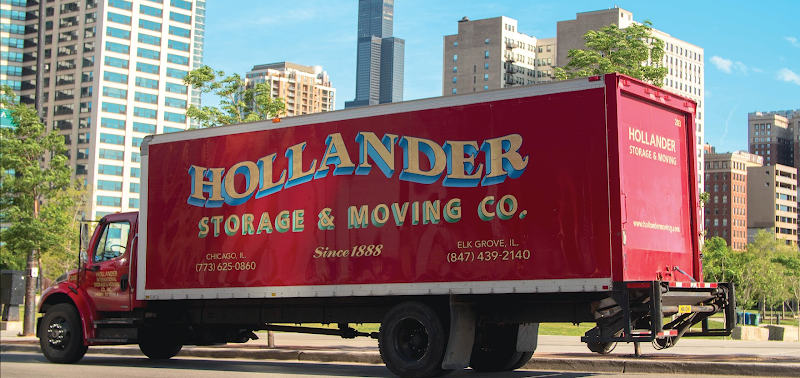
Hollander Moving
Schaumburg, IL · 26 miles away
★ 4.8 (421 reviews)
Indiana Moving Services
Mokena, IL · 27 miles away
Move planner
Two quick steps. A personalized plan in 30 seconds.
Robert builds a Chicago-specific timeline, estimated cost range, and 3-mover shortlist tailored to your job. No forms. No spam. No commitment.
Step 1 of 2
Tell us about your move.
Distance
Property type
Property size
Zip codes (optional — sharpens the cost estimate)
When are you hoping to move?
Cost calculator
Estimated Chicago moving costs
These ranges reflect what Chicago-area crews actually quote for full-service moves. Walkup surcharges, freight-elevator fees, and city moving permits are not included in the base ranges below.
| Home size | Local (under 50 mi) | Regional (50-500 mi) | Cross-country (500+ mi) |
|---|---|---|---|
| Studio / 1BR | $600-$1,200 | $1,400-$2,600 | $2,800-$4,800 |
| 2BR | $1,000-$1,800 | $2,000-$3,400 | $3,800-$6,400 |
| 3BR | $1,600-$2,800 | $3,000-$4,800 | $5,000-$8,400 |
| 4BR+ | $2,400-$4,400 | $4,400-$7,000 | $7,000-$12,000 |
Skip the guesswork
Get matched with professional Chicago movers.
Robert, our moving concierge, lines up quotes from movers who actually serve your route — free, no obligation.
Local movers in Chicago
Local moving in Chicago is priced hourly — you're paying for the crew and truck together, with most companies setting a 2- to 3-hour minimum and rates that generally run $100–$200 per hour for a two-person crew, scaling up with additional movers. The single biggest variable on a Chicago bill is building access: the city's dense mix of vintage walk-up greystone apartments, high-rises with timed elevator reservations, and narrow coach-house alleys can add meaningful time to any move, and time is money on an hourly clock.
What drives your local move cost in Chicago:
- Home size & crew needed — a studio in Wicker Park needs two movers; a 3-bedroom in Lincoln Square realistically needs three or four
- Building access — walk-up floors, long carries from a freight elevator, or a building's required elevator deposit all add time and potential fees
- Parking & permits — Chicago requires movers to reserve a loading zone with a city parking permit (typically arranged 5–7 days in advance through the city); if the truck can't park close, carry time climbs fast
- Time of month & season — end-of-month and summer weekends command premium rates and book out weeks ahead in a city where most leases turn on the 1st
- Packing services — full or partial packing adds labor hours; supplying your own boxes and being packed before the crew arrives is one of the most reliable ways to keep the clock down
For Chicago specifically, if you're moving into or out of a high-rise in Streeterville, River North, or the South Loop, confirm your building's freight elevator window before booking your crew — a narrow morning slot can make or break your timeline. Neighborhoods like Logan Square and Pilsen have plenty of street-level walk-ups where a third-floor unit without an elevator is common, so be upfront about stairs when you request quotes.
Ready to compare crews for your move? Browse movers in Chicago to get matched with local companies that know the city's neighborhoods, buildings, and permit requirements firsthand.
Neighborhood guide
Moving to a specific Chicago neighborhood?
River North / Streeterville
high-rise downtown
Median 2BR rent: $2,900/mo
Freight elevator and loading dock booking needs 3 weeks lead time.
Lincoln Park
upscale walkable
Median 2BR rent: $2,600/mo
Permit-required parking; vintage walkups with narrow stairs and tight landings.
Wicker Park / Bucktown
gentrifying arts
Median 2BR rent: $2,300/mo
Tight residential streets; 3-flat walkups are the default housing type.
Logan Square
gentrifying multicultural
Median 2BR rent: $2,100/mo
Vintage 2-3 flats with steep interior stairs and original banisters.
Lakeview / Wrigleyville
urban residential
Median 2BR rent: $2,500/mo
Cubs home games close surrounding streets; check the schedule before booking.
Hyde Park
university-adjacent
Median 2BR rent: $2,000/mo
UChicago move-in mid-to-late September spikes capacity in this neighborhood specifically.
Evanston
inner-ring suburb / Northwestern
Median 2BR rent: $2,300/mo
Northwestern move-in week (Sep 8-15) is brutal for crew availability.
Naperville / Schaumburg
affluent suburbs
Median 2BR rent: $2,200/mo
HOA paperwork in newer developments; mostly easy single-family access.
Common routes
Most-booked Chicago routes
Chicago → Indianapolis, IN
~185 mi southeast
$1,800-$2,800
I-65 corridor; common corporate-relocation lane and the shortest popular outbound move.
Chicago → Detroit, MI
~285 mi east
$2,400-$3,800
I-94 corridor; the auto-industry transfer route, also common for people moving toward family.
Chicago → Minneapolis, MN
~410 mi northwest
$2,800-$4,400
I-94 corridor; both metros share Midwest corporate movement.
Chicago → Nashville, TN
~470 mi south
$2,800-$4,400
I-65 south; the most popular outbound lane for younger movers leaving Chicago.
Chicago → Atlanta, GA
~720 mi southeast
$4,000-$6,200
I-65/I-24; corporate-relocation lane, especially for finance and logistics roles.
Chicago → New York, NY
~790 mi east
$4,200-$6,400
I-80 long-haul; high-end coastal-relocation route, often consolidated loads.
Honest prices beat estimates
Want an actual quote for your Chicago move?
Tell Robert the basics and get matched in minutes.
Local figures
Chicago in numbers.
What the homes are
ChicagoUnited States
- Detached houses
- 26% in Chicago61% in United States
- Townhouses
- 4% in Chicago6% in United States
- Buildings of 2 to 4 homes
- 28% in Chicago8% in United States
- Buildings of 5 to 19 homes
- 16% in Chicago9% in United States
- Buildings of 20 or more homes
- 27% in Chicago10% in United States
Rent, home values and income
| Figure | Chicago | Illinois | U.S. |
|---|---|---|---|
| Median monthly rent | $1,380 | $1,227 | $1,348 |
| Median home value | $315,200 | $250,500 | $303,400 |
| Median household income | $75,134 | $81,702 | $78,538 |
| Households that rent | 54% | 33% | 35% |
| Residents who moved in the past year | 14% | 12% | 13% |
Source: U.S. Census Bureau, American Community Survey 2019-2023 5-year estimates.
When to move
Chicago moves by month
Jan
off
Off-season pricing but actual polar-vortex risk; build a snow-date clause and a 1-2 day buffer.
Feb
off
Coldest stretch of the year; cheapest pricing but expect the most weather cancellations.
Mar
off
Quiet until late month when leases start turning; weather still volatile, snow possible through April.
Apr
shoulder
Spring leases churn; decent availability and the first reliable above-freezing stretches.
May
peak
Peak season begins; corporate transfers from suburbs into the city accelerate.
Jun
peak
Summer demand fully on; book 4-6 weeks ahead for weekend slots in the neighborhoods.
Jul
peak
Hot and humid; crews start at 7am to beat the afternoon heat in non-AC walkups.
Aug
peak
UIC move-in (Aug 18-25) starts the college wave; book 6+ weeks ahead for any Aug Saturday.
Sep
peak
DePaul (Sep 1-8), Northwestern (Sep 8-15), and UChicago (Sep 18-25) hit back-to-back; absolute capacity peak.
Oct
shoulder
Demand drops sharply after the universities settle; best price-to-weather window of the year.
Nov
shoulder
Quiet month; first snow risk arrives mid-to-late month but pricing remains soft.
Dec
off
Off-season pricing returns; actual winter starts and so does delivery-window uncertainty.
Permits + local rules
Chicago parking, building, and HOA rules
Residential moving permits (city)
Chicago requires a temporary no-parking permit for moves on most residential streets in the neighborhoods. Apply through the City Clerk's office (in person or online) for the day of the move. The permit reserves curb space for the truck and posts no-parking signs the morning of. Without it, you're competing with neighborhood residents for street spots, especially in Lincoln Park, Lakeview, Wicker Park, and Logan Square.
Permit cost ~$30-$50 per address, 3-5 business days lead time.
High-rise freight elevator booking
Downtown high-rises (River North, Streeterville, the South Loop, Gold Coast) require freight-elevator booking and a Certificate of Insurance on file before move day. Most buildings book elevators in 2-4 hour windows and charge a move-in/move-out fee. Booking 3 weeks ahead is standard; popular weekends fill earlier. Some buildings restrict moves to weekdays only or specific business hours (8am-5pm).
Building fees $200-$500; book 3+ weeks ahead.
Cubs / Bears / Sox game-day closures
If you're moving anywhere near Wrigley Field, Soldier Field, or Guaranteed Rate Field on a game day, expect street closures, parking restrictions, and crew delays. Wrigleyville and Lakeview East are functionally impassable for trucks during weekday afternoon games and any weekend home game. Check the schedule before locking in your date — the difference between a 4-hour and an 8-hour job can be one bad afternoon home stand.
No permit needed; check schedule 4+ weeks ahead.
Suburban HOA paperwork
Naperville, Schaumburg, Hoffman Estates, and other newer suburban developments often require HOA pre-approval of the moving company, COI documentation, and weekday-only move windows. Some HOAs also require a refundable damage deposit ($250-$500) for common-area use. Get the HOA's specific rules in writing before signing the moving contract — companies that don't have a COI ready can be denied entry at the gate.
Deposits $250-$500; 1-2 weeks notice typical.
About moving to Chicago
What you should know before you book.
Chicago is the third-largest metro in the country and the largest mover market between the coasts, which means the local industry is unusually deep but also stratified: a small number of regional carriers run the bulk of corporate relocations, and several hundred smaller crews handle the 3-flat walkup work that defines most of the city's residential housing stock. Most inbound moves are coming from the Midwest, but a meaningful slice are coastal arrivals correcting for cost — and Chicago's defining mover challenge isn't access or pricing, it's winter. December through March can flip a routine job into a contingency-planning exercise.
Walkup city, freight-elevator suburbs
Chicago's housing stock splits cleanly: pre-war 2- and 3-flat walkups in the neighborhoods (Logan Square, Wicker Park, Lakeview, Bucktown) and high-rise glass downtown. The walkup crews are specialists at stair runs with vintage banisters; the high-rise crews live and die by freight-elevator booking. Many companies do both, but their pricing math is different — a 4th-floor walkup with no elevator can cost more in labor than a 28th-floor River North move that books a freight slot.
Winter is a genuine variable
From December through March, Chicago averages 30+ inches of snow and at least one polar-vortex stretch where temperatures stay below zero for 3-5 days. Local movers wrap shrink-wrap differently in deep cold (it cracks), use heated trucks for upholstered furniture and electronics, and write snow-date clauses into contracts. National companies hauling long-haul loads frequently miss delivery windows in January and February when I-80 or I-94 closes. Build a buffer day if your closing falls in winter.
Suburbs versus the city are different markets
The Loop, the North Side, and Hyde Park are one mover market. Naperville, Schaumburg, Evanston, and the rest of the collar suburbs are functionally a different one. Suburban movers run bigger trucks, deal with HOA paperwork, and quote by long-distance pricing rules even on intra-metro moves over 50 miles. If you're moving from Lincoln Park to Naperville, expect different companies to quote competitively than for a Lincoln-Park-to-Wicker-Park job.
Deep mover market, actual price variance
Because Chicago has hundreds of licensed movers, pricing spread is wider than in most metros. Three quotes for the same 2BR Lincoln Park move can range from $1,400 to $3,200 depending on whether you get a small owner-operator, a mid-sized neighborhood crew, or a regional carrier. The cheapest quote isn't always a red flag, but verify Illinois Commerce Commission registration and check whether they actually have insurance on file before signing.
Chicago moving FAQ
Common questions, locally-answered.
How much does a typical Chicago move cost?
+
For a 2BR move within the city on a weekday in shoulder season, expect $1,000-$1,800 from a reputable local crew. Walkup origin or destination pushes it toward the high end; high-rise moves with proper freight access often run lower than 4th-floor walkups because the crew works faster. Weekend dates in peak season (May-September) add 25-40%. The cheapest quote isn't always a red flag, but verify the company is registered with the Illinois Commerce Commission and has insurance on file before booking.
Do I need a moving permit in Chicago?
+
For most residential street moves in the neighborhoods (Lincoln Park, Lakeview, Wicker Park, Logan Square, etc.), yes. The City Clerk's office issues temporary no-parking permits that reserve curb space for the truck and post signs the morning of the move. Cost is $30-$50 per address with 3-5 business days lead time. High-rise destinations don't usually need a city permit but require freight-elevator booking and a Certificate of Insurance with the building. Out-of-state movers often won't pull the city permit for you — confirm during booking.
What's the worst time of year to move in Chicago?
+
Late August through late September is the universities stacked: UIC (Aug 18-25), DePaul (Sep 1-8), Northwestern (Sep 8-15), and UChicago (Sep 18-25) bring 94,000+ students moving in across roughly five weeks. Crew capacity in the affected neighborhoods (Hyde Park, Evanston, Lincoln Park) gets fully consumed. Book 6-8 weeks ahead if your dates overlap. The other danger zone is January-February: pricing is cheap but polar-vortex weather can close highways and force delivery delays of 1-3 days.
Can a winter move actually go wrong in Chicago?
+
Yes, and routinely. Chicago averages 30+ inches of snow per winter and at least one cold stretch where temperatures stay below zero for 3-5 days. Genuine risks: shrink-wrap cracks below 10°F, upholstered furniture absorbs moisture if it sits on a wet truck, and electronics shouldn't be left in unheated trucks overnight. Local crews use heated trucks and write snow-date clauses; out-of-state long-haul carriers often don't. Build a 1-2 day buffer for any closing between December and March, and confirm who covers storage costs if delivery slips.
Are walkups really more expensive than high-rises?
+
Often, yes. A 4th-floor Logan Square 3-flat walkup with no elevator can cost more in crew labor than a 28th-floor River North move with a booked freight elevator. The high-rise crew works in 2-4 hour windows with a dedicated elevator and elevator pad; the walkup crew climbs stairs with every piece. Most local quotes account for this with a flight-of-stairs surcharge ($25-$75 per flight after the second), but the variance between walkup and elevator buildings is the single biggest factor in Chicago pricing after distance.
How does Chicago-to-suburb pricing work?
+
The Loop or Lincoln Park to Naperville (~30 miles) is technically a local move under Illinois Commerce Commission rules but priced like a regional job because of distance, time, and HOA paperwork. Expect $1,400-$2,400 for a 2BR. Suburban crews and city crews quote it differently: city crews charge more for the highway time, suburban crews charge less for distance but more for downtown access. Get quotes from both sides — the difference can be $500-$800.
Moving away from Chicago?
Relocation guides from Chicago.
Costs, distance, and what to expect for popular moves out of Chicago.
Long distance movers in Chicago→Chicago → Indianapolis, IN
~165 mi
Read the guide →Chicago → Nashville, TN
~398 mi
Read the guide →Chicago → Charlotte, NC
~747 mi
Read the guide →Chicago → Miami, FL
~1,191 mi
Read the guide →Chicago → Phoenix, AZ
~1,452 mi
Read the guide →Chicago → Indiana
Statewide move
Read the guide →Chicago → Iowa
Statewide move
Read the guide →Chicago → Michigan
Statewide move
Read the guide →Chicago → Missouri
Statewide move
Read the guide →Chicago → Ohio
Statewide move
Read the guide →Chicago → Wisconsin
Statewide move
Read the guide →Nearby cities
Movers in cities close to Chicago.
Melrose Park, IL
about 12 miles away
Skokie, IL
about 12 miles away
Hillside, IL
about 14 miles away
Elmhurst, IL
about 16 miles away
Oak Brook, IL
about 17 miles away
Addison, IL
about 20 miles away
Mt Prospect, IL
about 20 miles away
Arlington Heights, IL
about 24 miles away
Browse moving companies in other Illinois cities, or explore the full directory by state.
Get your moving quote
Many ways to get a moving quote.
Chat, text, email, or call — whichever’s easiest. Tell Robert about your move and matching movers in your city reach out, usually within a few minutes.