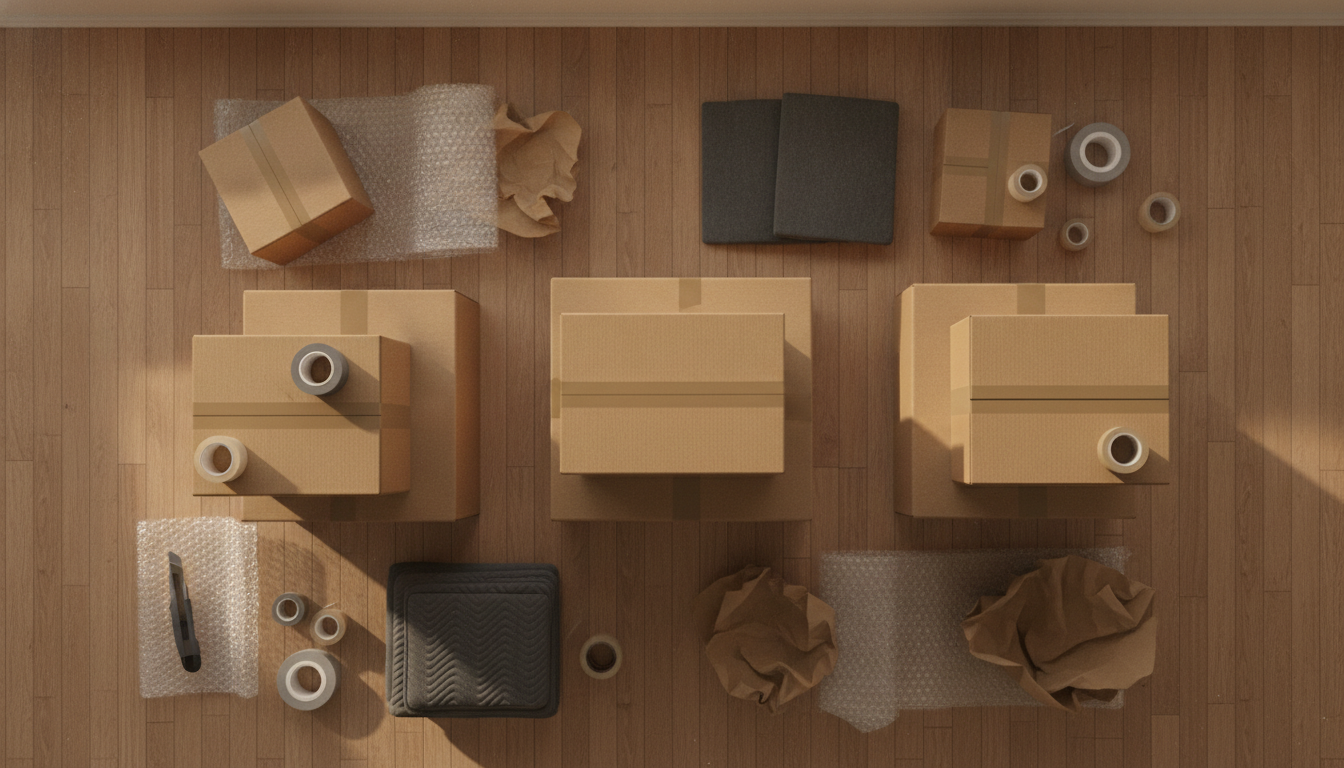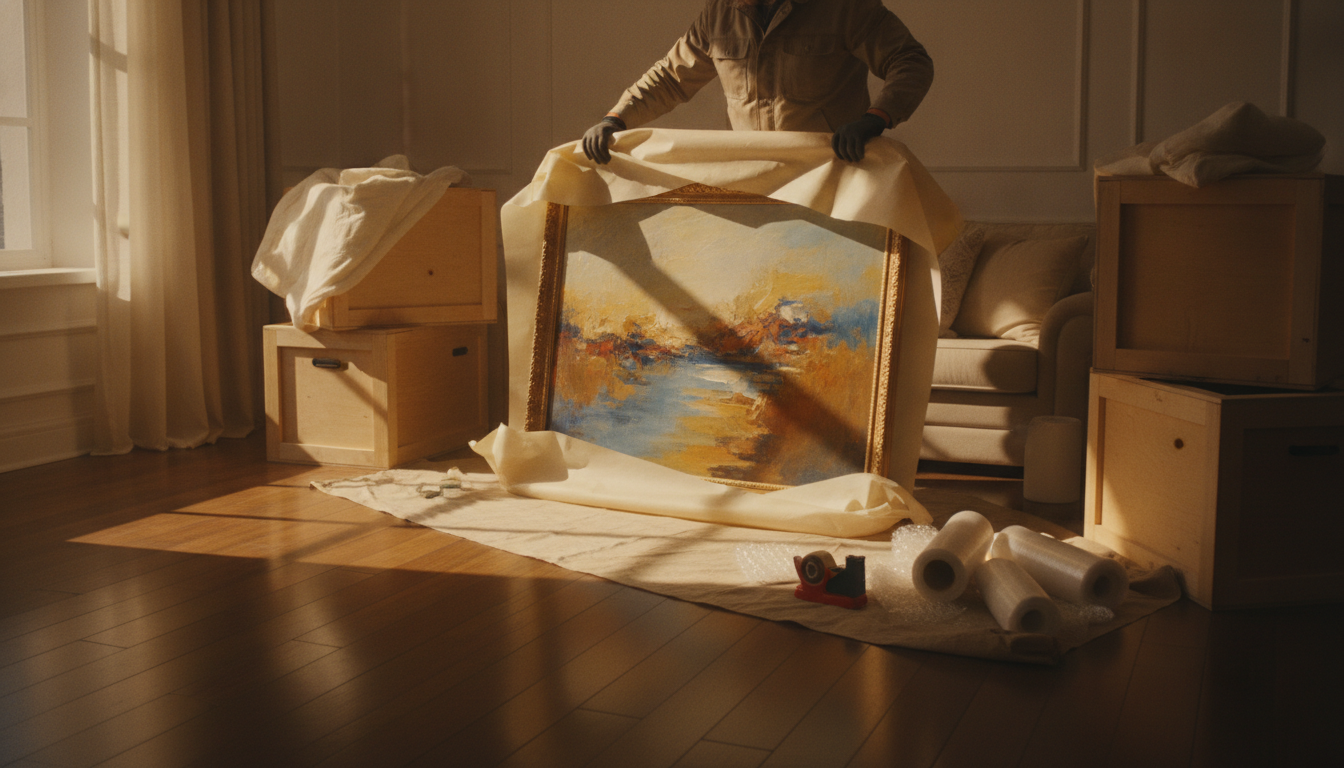
Art, antiques, and collectibles should never ride in a standard moving truck the same way a couch does. They need custom packing, specific climate considerations, and the right valuation coverage — and skipping any one of those three is how irreplaceable things get destroyed. After packing thousands of moves over 35 years, here's exactly what we tell every customer who has something genuinely precious to protect.
Why standard moving methods fail valuable pieces
A regular moving crew is trained to protect furniture from dents and boxes from crushing. That's not the same skill set as moving a 19th-century oil painting, a signed first-edition collection, or a hand-thrown ceramic vase worth more than your sofa. Standard packing blankets trap moisture. Generic cardboard boxes flex under weight. And most moving trucks have no climate control — temperature swings of 40°F or more in a single day are common in summer or winter transit.
The risk isn't just breakage. It's humidity warping a canvas, vibration cracking antique lacquer, or UV light through a truck door fading a watercolor. These are slow, invisible damages that don't show up until weeks later.
What counts as "specialty" for movers?
Before you book, know what you're dealing with. Most professional movers classify items as specialty if they fall into one of these groups:
- Fine art: oil paintings, watercolors, prints, sculptures, framed photography
- Antique furniture: pieces roughly 100+ years old with original finishes, veneer, or inlay
- Collectibles: signed memorabilia, vintage toys, coins, stamps, wine, records, rare books
- Ceramics and glass: art glass, porcelain figurines, decorative pottery
- Rugs: antique or hand-knotted rugs that require rolling, not folding
- Taxidermy and natural history pieces: fragile, often irregularly shaped
If you're unsure whether your item qualifies, treat it as specialty. The cost of proper packing is almost always less than the cost of a claim — and many items are irreplaceable no matter what the insurer pays.
How to pack art and antiques: step by step
1. Document everything before it's touched
Photograph each piece in detail — front, back, corners, any existing damage. If you have appraisals, dig them out now. This documentation is your evidence if a claim becomes necessary. Keep the photos in cloud storage, not just on the device you're moving with.
2. Choose the right materials for each item type
Generic bubble wrap is fine for a lamp. It's wrong for almost everything else on this list. Here's what actually works:
| Item type | Recommended packing method |
|---|---|
| Framed paintings / prints | Glassine paper first (acid-free), then foam corners, custom mirror box or wooden crate |
| Unframed canvases | Glassine, then rigid backing board, do NOT roll unless designed for it |
| Antique furniture | Cotton moving pads, NOT synthetic blankets; avoid plastic wrap directly on finish |
| Ceramics / porcelain | Acid-free tissue, cell kits or foam-lined boxes, double-box |
| Books and paper | Acid-free boxes, packed spine-down or flat, climate-controlled if possible |
| Rugs | Rolled (never folded), wrapped in breathable cotton, stored flat in truck |
| Wine / spirits | Temperature-controlled container or wine-specific shipper; standard trucks will ruin it |
3. Use or request custom crating for high-value pieces
For anything appraised above roughly $2,000–$5,000, or for oddly shaped sculptures, we strongly recommend custom wooden crates. A good art crating shop will build an interior foam cradle sized exactly to the piece. Expect to pay $150–$600+ per crate depending on size and complexity — it's worth every dollar for something irreplaceable.
Many specialty moving companies offer in-house crating. If yours doesn't, ask for a referral to a local art handler before moving day.
4. Climate control during transit is non-negotiable for certain items
Wooden antiques, paintings on canvas or panel, and paper-based collectibles are all sensitive to humidity and temperature swings. For moves longer than a few hours — especially cross-country relocations — ask specifically whether the truck or container is climate-controlled. Many standard trucks are not. Some specialty moving companies operate climate-controlled vehicles; if yours doesn't, a climate-controlled portable container may be the better option.
5. Load position matters
Art and antiques should ride vertically (paintings always travel on edge, never flat), away from the truck walls (where temperature changes are most extreme), and secured so they cannot shift. They should be loaded last and unloaded first — not buried under furniture.
What kind of insurance do you actually need?
This is where most people get hurt. Standard moving coverage — called Released Value Protection — covers your goods at $0.60 per pound per item. A 10-pound painting worth $8,000 would be covered for exactly $6.00. That is not a typo.
Full Value Protection (required by FMCSA regulations for interstate movers) makes the mover responsible for repair, replacement, or fair market value — but it still may not cover antiques and collectibles at their appraised value without a declared value rider.
For truly valuable pieces, talk to your homeowner's or renter's insurance provider about a fine art floater or scheduled personal property endorsement. This covers items at their appraised value, typically for $1–$3 per $100 of value annually, and it travels with you — not just in your home. You should also read our deeper guide on how movers are licensed and insured before signing anything.
Key rule: Get a written appraisal from a certified appraiser (look for ASA or AAA credentials) before the move. Insurers and movers both require documented value to process a claim above routine amounts.
While you're reading
Skip the research — let Robert match you with movers.
Get real quotes from vetted movers in your area, free.
Should you hire a specialty art mover or a general mover?
It depends on the volume and value of what you're moving.
| Scenario | Best approach |
|---|---|
| 1–3 framed pieces, value under $1,000 each | General mover with specialty packing instructions |
| Multiple pieces, mixed media, or any item over $2,000 | Specialty art/antique mover or general mover with proven fine-art experience |
| Entire estate with furniture, art, and collectibles | Specialty mover; consider separate art handler for the highest-value items |
| Single high-value sculpture or crated piece | White-glove art mover only |
When vetting movers, ask directly: "Have you moved fine art before? Do you have staff trained in art handling? Do you subcontract any specialty items?" If they hesitate or can't name their process, keep looking. You can find movers in our directory and filter for companies with specialty moving experience.
Red flags to watch for when booking
- Mover won't provide a written inventory with condition notes before loading
- No mention of specialty packing options or custom crating
- Released Value Protection is the only coverage offered without explanation of alternatives
- Mover discourages you from documenting items beforehand
- Unusually low estimate — proper specialty handling costs more, and that's correct
For a full breakdown of what to watch for across any move, our moving scams and red flags guide covers the warning signs that matter most.
What about shipping individual pieces separately?
Sometimes the smartest move is not moving everything in the same truck. For single high-value items, consider:
- Fine art shippers (companies that specialize only in art transport): higher cost, highest protection
- FedEx Art Program or UPS Fine Art: reasonable for smaller, well-crated pieces under ~$10,000
- Freight consolidators: useful for crated pieces when timing is flexible
If the piece is genuinely irreplaceable — a family heirloom, a piece you couldn't replace at any price — shipping it separately with its own insurance rider is often the right call, even if it costs more.
Frequently asked questions
How much does it cost to move art and antiques professionally?
Specialty handling typically adds 20–50% to your base moving estimate, depending on the number and complexity of items. Custom crating for a single large painting can run $150–$600. White-glove art moving services for an entire collection can cost several thousand dollars. Always get an itemized quote that separates specialty charges from standard labor.
Can I pack my own antiques and art to save money?
You can pack some items yourself — smaller framed prints, books, and collectibles in sturdy display cases, for example — but higher-value pieces and large canvases are almost always better handled by someone trained in fine art packing. Improper packing can void your insurance coverage; check your policy before DIY-packing anything of significant value.
Does homeowner's insurance cover art during a move?
Standard homeowner's policies typically cover belongings in transit at a reduced limit (often 10% of your personal property coverage) and may exclude breakage entirely. A scheduled personal property floater or fine art rider covers items at their appraised value and is usually the right solution for pieces worth $1,000 or more. Call your insurer before moving day — not after.
What's the best way to transport a large oil painting?
Always on edge (vertically), never flat. Wrap in glassine paper first, then apply foam corner protectors, and place in a mirror box or custom crate sized to the piece. Secure it so it cannot shift in transit and keep it away from truck walls. For anything over roughly $1,500–$2,000 in value, custom crating is worth the investment.
Do movers need a special license to move art?
There's no separate federal license for art moving in the US. Interstate movers are regulated by the FMCSA and must carry a USDOT number and valid operating authority regardless of what they're moving. What distinguishes an art mover is training, equipment, and experience — not a separate license. Always verify a mover's USDOT number and check their complaint history at the FMCSA's SAFER database before booking.
How do I find a mover experienced with antiques and collectibles?
Start by asking movers directly about their specialty moving experience and requesting references from comparable jobs. Look for verified customer reviews that specifically mention art or antique moves. You can also browse movers by state in our directory to find companies near you and compare their specialty service offerings.
Moving valuable art and antiques isn't the place to cut corners — but with the right preparation, the right mover, and the right coverage, it's entirely manageable. If you're still putting together your shortlist, start with our find movers directory, where you can search by location and service type. And if you have questions along the way, Robert — our AI moving assistant — is available on the site to help you think through any part of the process.
Tagged