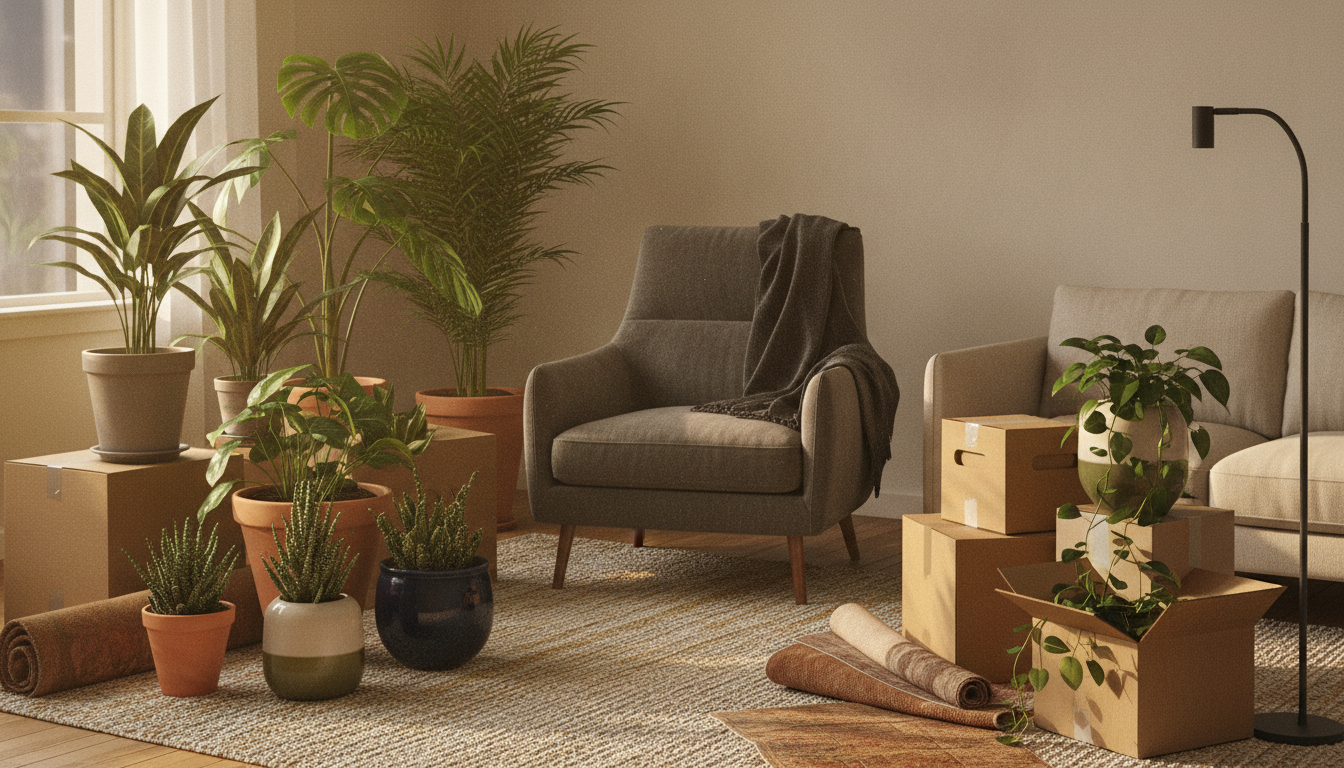
Houseplants survive a move when you treat them like what they are: living things that need light, stable temperatures, and minimal root disturbance. Start reducing stress two to three weeks before moving day, pack them last and unload them first, and get them back into natural light within 24 hours of arrival. Do those three things and most healthy plants will come through just fine.
We've helped thousands of families move over the past 35 years, and plants are one of those categories people almost always handle at the last minute — then wonder why their fiddle-leaf fig looks like it's dying two weeks later. A little planning up front makes all the difference.
Do movers transport houseplants?
Most professional moving companies will not transport plants on interstate moves — and for good reason. The USDA and many state departments of agriculture restrict or prohibit importing certain plants to prevent the spread of pests and disease. California, Arizona, Florida, and Hawaii have especially strict rules; if you're moving to any of those states, check the USDA APHIS website and your destination state's department of agriculture before packing a single pot.
On local moves (same city or metro area), most movers will carry plants, but confirm this when you book — some companies exclude them from liability coverage entirely. If your mover won't take them, plan to transport plants yourself in a climate-controlled personal vehicle.
| Move type | Movers typically transport plants? | Notes |
|---|---|---|
| Local (same city/county) | Often yes | Confirm coverage; typically excluded from claims |
| Intrastate (same state, long distance) | Sometimes | Check with your specific mover |
| Interstate (crossing state lines) | Usually no | USDA/state ag restrictions apply |
| International | No | Strict phytosanitary rules; permits required |
How far in advance should I prep my plants for a move?
Three to four weeks out is ideal. Rushed plant prep is the number-one reason plants struggle after a move.
3–4 weeks before moving day
- Repot anything root-bound. A plant that's been cramped will be more fragile during transport. Giving it fresh soil now lets it stabilize before the stress of the move.
- Treat for pests. Inspect every plant carefully. Moving is how pests hitch rides to new homes. Treat with neem oil or insecticidal soap and repeat in two weeks.
- Prune lightly. Trimming back leggy stems reduces the surface area that can be damaged in transit — and a smaller canopy means the plant loses less moisture.
1–2 weeks before
- Stop fertilizing. Fertilizer pushes new, tender growth that's more vulnerable to stress. Dial it back now.
- Begin transitioning to moving conditions. If you're moving from a sunny region to a cloudier one (say, from Tampa or Miami to Boston), start reducing direct sun exposure gradually so the plant isn't shocked by lower light.
2–3 days before
- Water normally, but don't over-water. Wet soil is significantly heavier, and soggy roots are more prone to rot if the plant sits in a sealed box. Water on your regular schedule; don't give a "farewell soak."
- Source your packing materials. You'll need sturdy boxes sized to your pots, newspaper or packing paper, plastic bags, and twist ties. Our guide to boxes and packing supplies covers what to stock up on for the whole move.
How do I pack houseplants for moving?
Pack plants on the morning of moving day — they should be the last thing loaded and the first thing unloaded.
Step-by-step: packing a potted plant
- Cover the soil. Place a plastic bag over the pot and secure it around the base of the stem with a twist tie. This keeps soil from spilling if the pot tips and helps retain moisture.
- Wrap the pot. Wrap the pot itself (not the plant) in a layer of packing paper or bubble wrap to prevent cracking.
- Support the stem. For tall or top-heavy plants, stake the main stem loosely with a bamboo stick before packing. Wrap large leaves individually with tissue paper or newspaper cones.
- Box it. Use a box that's slightly taller than the plant. Cut air holes in the sides (about 1–2 inches in diameter) — plants need gas exchange even during a short trip. Line the bottom of the box with crumpled paper for cushioning.
- Stabilize inside the box. Pack crumpled paper around the pot so it can't shift. The pot should feel snug, not rattling.
- Label clearly. Write "LIVE PLANTS — THIS SIDE UP — KEEP FROM FREEZING" on all four sides. If you're handing boxes off to movers, this label matters enormously. See our full labeling and organization guide for a system that keeps fragile loads straight on moving day.
Packing by plant type
| Plant type | Special consideration |
|---|---|
| Succulents & cacti | Pack dry; wrap spines in newspaper to protect handlers |
| Large floor plants (fiddle-leaf, monstera) | Wrap canopy in a garbage bag loosely; transport upright |
| Hanging plants | Remove from hanger; pack in a box as above |
| Tall trees / palms | Transport in the back seat or truck bed; stake the trunk |
| Herbs | Water lightly; pack in ventilated boxes; prioritize getting them into light quickly |
What temperature is safe for plants in a moving truck?
Most tropical houseplants start showing stress below 50°F (10°C) and can suffer permanent damage below 40°F. In summer, a sealed moving truck can exceed 120°F — equally fatal for most plants.
Key rules:
- Never leave plants in a parked, sealed truck for more than 30–45 minutes in temperatures below 50°F or above 85°F.
- In winter moves or hot-summer moves, transport plants in your personal vehicle with the climate control running.
- In mild weather, plants can ride in the truck — but load them last so they're not buried, and unload them the moment you arrive.
If you're planning a long-distance move and wondering whether to take your plants at all, our guide to moving across the country covers the full logistics of what to bring versus what to donate or replace.
What should I do with plants I can't take?
Be honest with yourself before moving day. Large, established trees in pots, very old specimen plants, or plants prohibited at your destination may not be worth the stress — to you or them.
Options for plants you can't take:
- Give to friends or neighbors — most people are delighted to receive a healthy plant.
- Donate to schools, libraries, or community centers — many actively seek greenery.
- Sell online — rare or large plants can fetch real money locally.
- Take cuttings — propagate cuttings of sentimental plants before you move. They travel far more easily than a full pot and root quickly once you're settled.
If you're downsizing and plants are just one piece of a larger decluttering effort, our decluttering before a move guide walks through how to decide what goes and what stays — room by room.
How do I help plants recover after a move?
Expect most plants to look unhappy for one to four weeks after a move. Yellowing lower leaves, drooping, and leaf drop are all normal stress responses — not death sentences.
- Get them into appropriate light within 24 hours. This is the single highest-impact action. Even a few hours near a bright window helps.
- Don't repot immediately. Give plants two to four weeks to stabilize in their existing soil before any further root disturbance.
- Hold off on fertilizing for 4–6 weeks. The plant's energy needs to go toward root recovery, not new growth.
- Mist tropical plants. Moving, especially in dry winter air or air-conditioned spaces, drops humidity. A daily mist helps tropicals acclimate.
- Water conservatively. Over-watering a stressed plant is the most common mistake. Check soil moisture with your finger — water only when the top inch is dry.
- Quarantine for pests. Keep new-to-the-space plants away from any existing plants for two weeks and inspect weekly.
Frequently asked questions
Can movers legally refuse to transport my plants across state lines?
Yes. Most interstate movers will decline plants because of USDA and state agriculture department restrictions that prohibit or require inspection of certain plant species crossing state lines. California, Florida, Arizona, and Hawaii are the strictest. Even if a mover agrees to carry your plants, you remain responsible for complying with destination-state rules. Always verify with your state's department of agriculture before an interstate move.
How long can houseplants survive in a dark moving box?
Most houseplants can handle 24–48 hours in a dark, ventilated box without lasting damage, provided temperatures stay between 50°F and 85°F. Longer than that — especially in heat — and you risk permanent damage. Succulents and cacti are more tolerant; tropical plants like orchids and ferns are more sensitive. Keep transit time as short as possible and unbox plants first thing.
Should I water my plants right before moving?
Water on your normal schedule in the days leading up to the move, but avoid a heavy soak the day before. Wet soil adds significant weight, increases the chance of pot tipping and spills, and can promote root rot if the plant sits in a sealed, poorly ventilated box. Slightly dry soil is better for transport.
What's the best way to move very large potted plants?
Wrap the canopy loosely in a large garbage bag or old sheet to protect leaves, and use a hand truck or furniture dolly to move the pot. Have two people handle anything over 30 lbs. For floor-standing plants over 5–6 feet tall, stand them upright in the bed of a truck or SUV and brace the pot so it can't tip. Laying large plants on their side, even briefly, can damage stems and disrupt roots.
Do I need to declare plants when moving to another state?
Depending on the destination state, yes. California requires a self-inspection and declaration for any plants brought into the state. Florida, Arizona, and Hawaii have similar requirements for certain species. The USDA APHIS website maintains state-by-state plant import rules. When in doubt, contact your destination state's department of agriculture directly before the move.
What types of plants travel best on long moves?
Succulents, cacti, snake plants (Sansevieria), ZZ plants, and pothos are the most resilient travelers — they tolerate low light, temperature swings, and missed watering better than most. Orchids, fiddle-leaf figs, peace lilies, and ferns are the most sensitive and require the most care during transit. If you have rare or irreplaceable specimens in the sensitive category, consider shipping them via a specialized plant shipping service rather than moving them yourself.
Ready to find a mover who handles your whole household — carefully? Browse verified mover reviews from customers across the country, or find licensed movers in your area to get quotes for your move. Our AI agent Robert is also standing by on the site to help you figure out exactly what you need.
Tagged