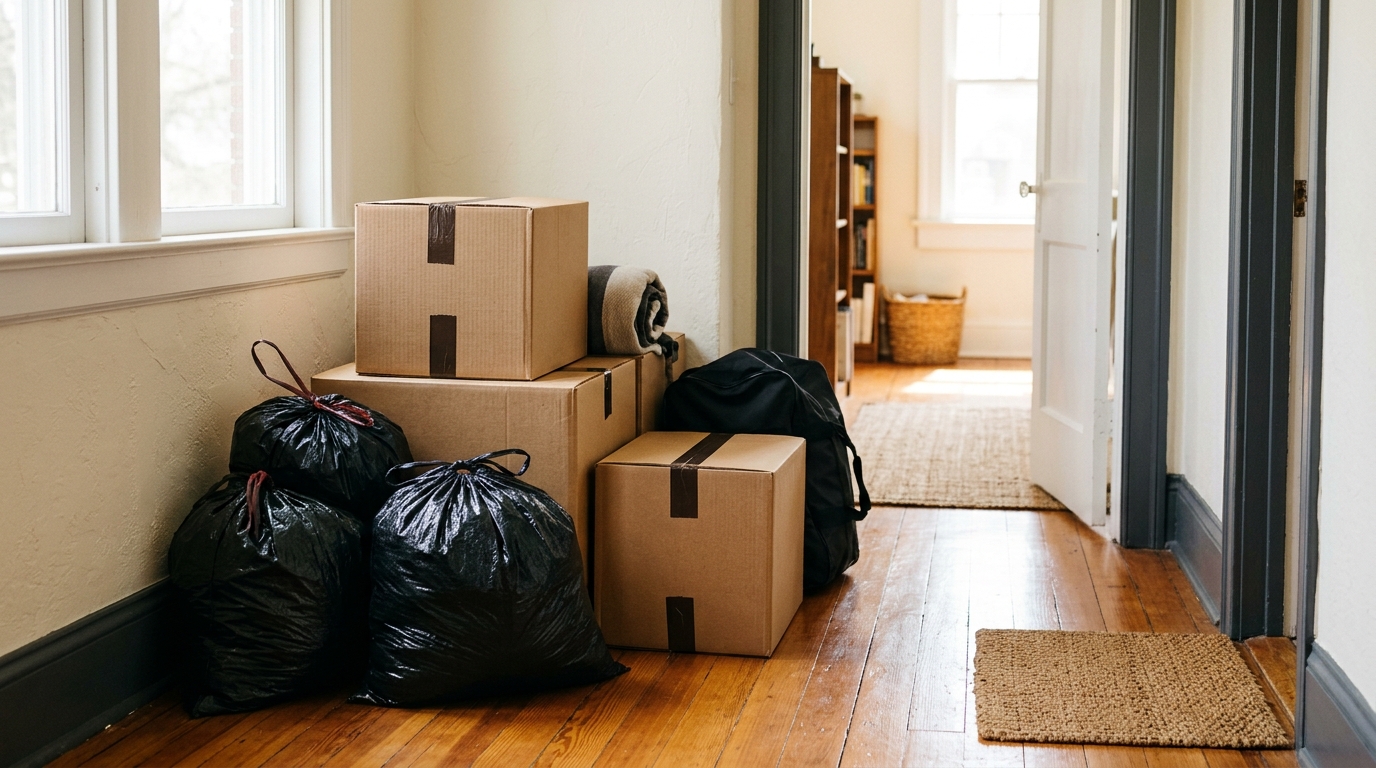
The kitchen is the room people underestimate the most. It looks small, but it has more individual items than any other room in the house — and most of them are either fragile, sharp, or food. The people who get this room right are the ones who treat it like a small move of its own, not like an afterthought you do at midnight on day-of.
Here is the system that works. You can do it in 48 hours if you plan it right.
Day one: everything you do not need
Start with what you have not touched in the last month. That bread maker, the second waffle iron, the seasonal serving platters, the spare set of plates — those go first.
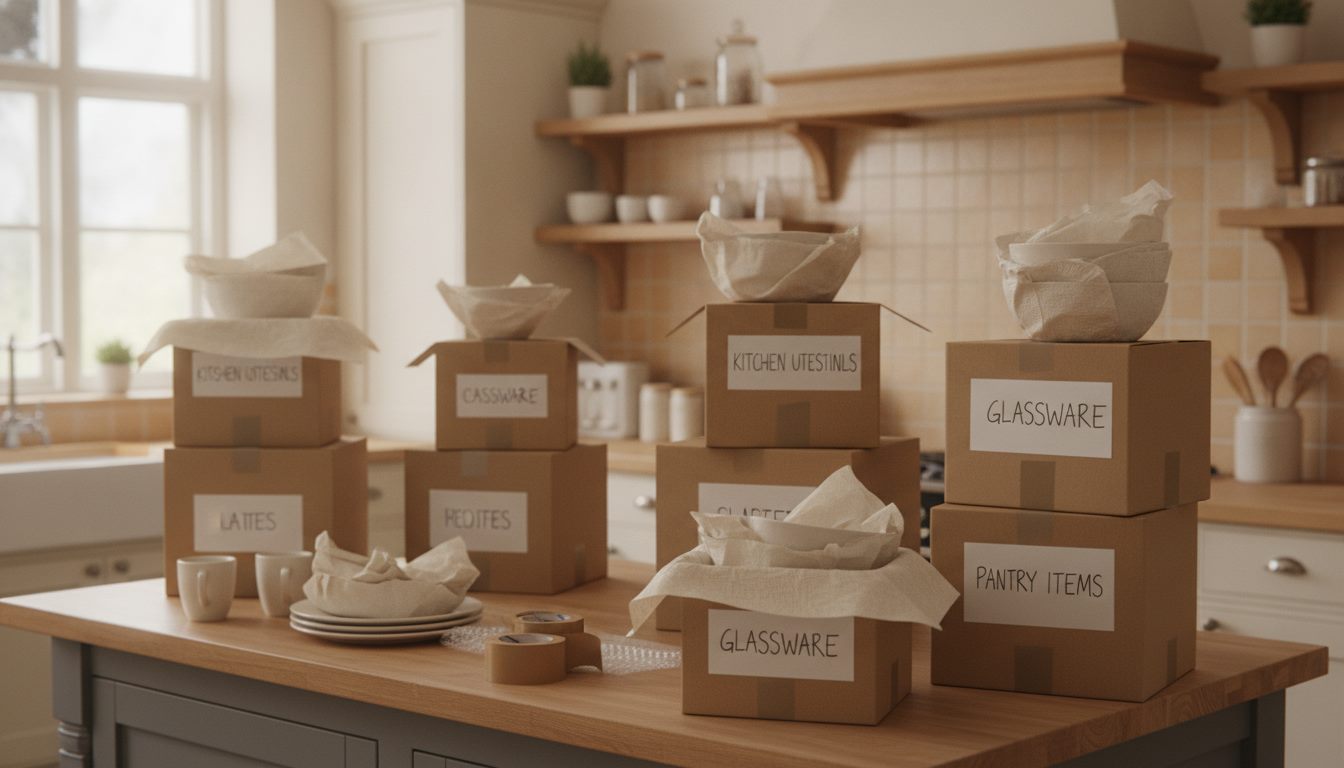
Pack them by zone, not by category. Pull everything off one shelf, wrap it, box it, label it, and move to the next shelf. Working in zones keeps you from a half-packed cabinet at 2am wondering which box has the measuring cups.
A few rules that save serious money on move day:
- Plates go on their edge, not stacked flat. Stacked plates crack when the box flexes. Edge-on, they distribute the load and survive long-distance trucks.
- Wrap glassware in clean packing paper, not newsprint. Newsprint ink transfers onto crystal and the inside of cups. Buy 25 lbs of packing paper for $15. It is the single best dollar you will spend.
- Fill every box completely. A half-full box is a broken box. If you run out of contents, top it off with crumpled packing paper. Empty space is what crushes things.
- Tape the bottom of every box twice. Single strip of tape on a 50-pound box of dishes is how mugs end up on a sidewalk in Tampa.
Day one, afternoon: pantry and dry goods
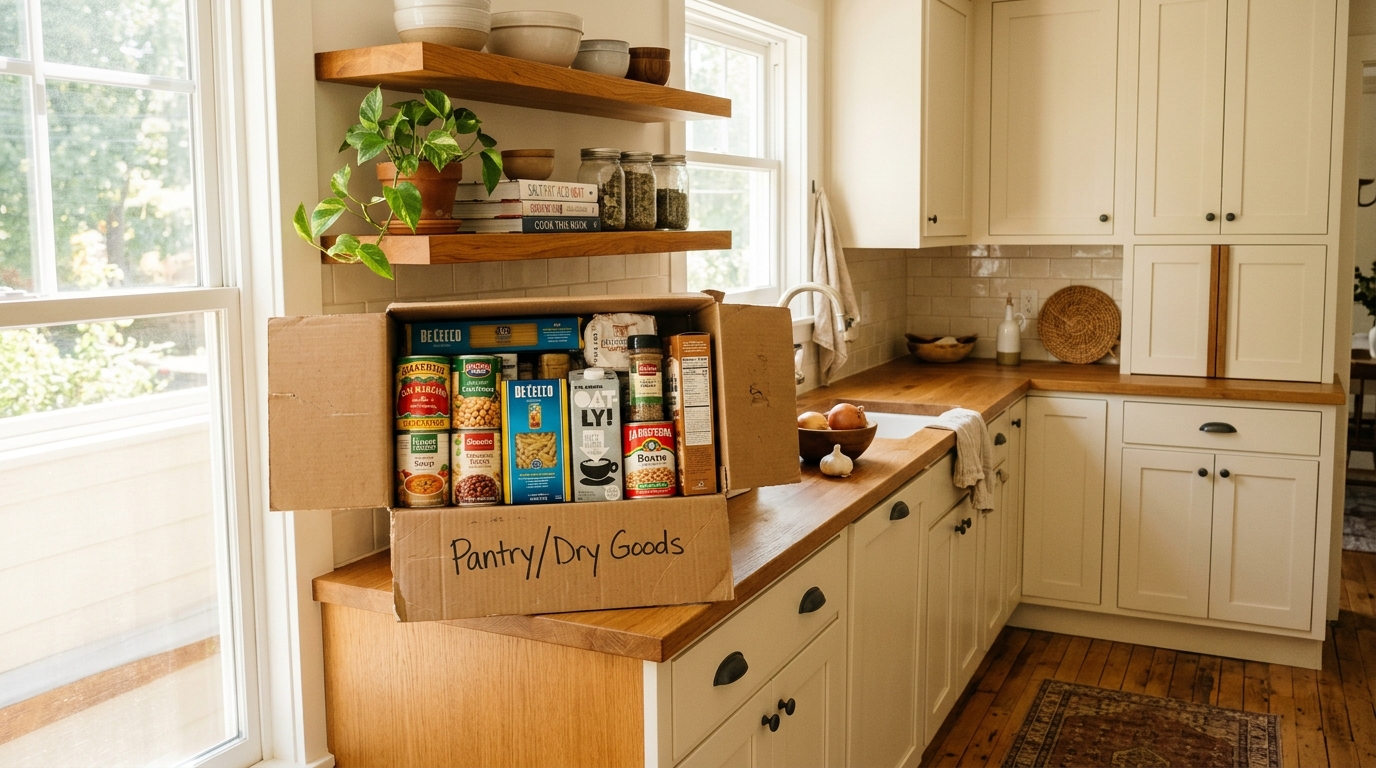
Most pantries have at least three things that are expired, two things that are open and half-empty, and one thing you forgot you owned. Move day is when you find out about all three.
Throw out anything past its date or open and half-eaten — do not pack it. Spices six months past expiration weigh more than your reading glasses combined and they are worthless on the other end. Liquids in open containers leak, period. We have unpacked olive oil in a moving truck and we have never wanted to do it again.
Pack everything in medium boxes, not large ones. Pantry goods are heavy per cubic inch. A large box of canned tomatoes is something a crew has to refuse to lift, and you do not want that delay on move day.
Day two, morning: appliances and cookware
Cords go with the appliances they belong to. Tape them to the side of the appliance with painter's tape (regular tape pulls the finish). Take a phone photo of any complicated wiring (espresso machine, mixer attachments) before you box anything — future-you will thank present-you.
Knives need a knife guard or a wrap of cardboard taped shut. A loose knife in a moving box has cut more than one mover's hand. The same goes for the food processor blade and the mandoline.
Pots and pans nest. Cushion between each one with a sheet of packing paper. Glass lids go in their own box, separated like plates.
While you’re reading
Skip the research — let Robert match you with movers.
Free quotes from movers in your area. Pick whichever is easiest.
Day two, afternoon: the three boxes you should never close
This is the move-day survival kit, and it is the difference between a smooth first night in the new place and you eating gas station food on the floor.
Box one — coffee and breakfast. Coffee maker (or French press), one mug per person, ground coffee, filters, a spoon, a knife, paper plates, paper towels. This box is the first thing you open in the new kitchen.
Box two — actual food. Whatever you have eaten in the last week. Cereal, peanut butter, bread, fruit. Plus a single pot, a single pan, a wooden spoon, a chef's knife, a cutting board, dish soap, a sponge, and a dishtowel. That is a functional kitchen for three days.
Box three — kids and pets. If you have either. Their food, their dishes, one comfort item each. Pets in particular do not understand why their bowl disappeared. Make sure it reappears immediately.
Label these three boxes OPEN FIRST KITCHEN on every visible side, in marker, in letters big enough to read from the truck. Put them in the truck last so they come off first. We tell everyone this, and it is still the step people are most thankful for.
The common mistakes we see every week
- People pack their dish soap in the same box as their plates. Then they open the box on the other end and realize they cannot wash anything. The dish soap goes in the open-first box.
- People throw out all their packing paper when they unpack on the other end. Then they realize they had wrapped the silverware tray in a sheet of it and they just threw out their silverware. Always check the paper before tossing.
- People do not photograph their spice rack before packing. The new spice rack ends up nothing like the old spice rack. Take a photo. Recreate it.
- People plan to pack the kitchen the morning of the move. The kitchen will take longer than every other room in the house. Plan accordingly.
When you book the mover
Tell the mover, in writing, that you have dishpacks — boxes containing fragile kitchenware. Reputable movers price dishpacks separately because they require a different handling tier on the truck. A binding estimate that does not mention dishpacks is usually a sign the estimator was sloppy.
Ask whether the crew will be packing the kitchen or whether you are doing it yourself. The two are priced differently, and a "we will help with the kitchen" answer is not a contract. Get the line item.
A good mover will tell you exactly which boxes go on the truck last (so they come off first) — including those three open-first boxes you just packed. If the mover does not know what an open-first box is, you have hired the wrong mover.
Ready to find a mover who knows the difference between a dishpack and a regular box? Browse the directory by city, or let Robert, our moving concierge, shortlist three movers that match your kitchen size, distance, and timeline.
Tagged