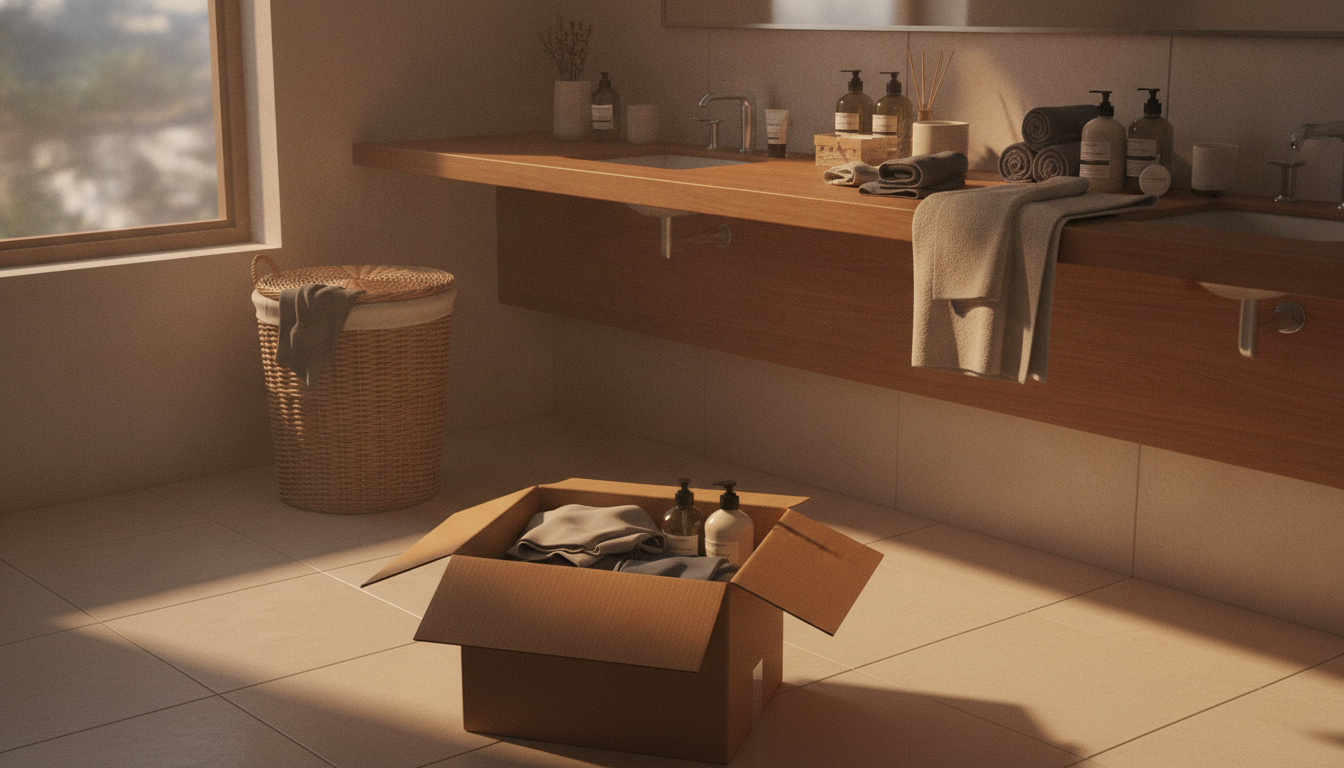
Pack your bathroom last among all rooms — but plan it first. The bathroom holds your daily essentials, your hazardous liquids, and items you'll need the moment you arrive at the new place. Done right, it takes about two hours and fits in three to five boxes. Done wrong, you're digging through packing paper at midnight looking for toothpaste.
The bathroom is the room that consistently trips people up — not because it's complicated, but because it's easy to ignore until you're out of time. Here's how to handle it properly.
Why the Bathroom Deserves Its Own Packing Plan
Most people mentally lump the bathroom in with "miscellaneous stuff." That's a mistake. Bathrooms typically contain:
- Liquids and gels that can leak and destroy other boxes
- Aerosol cans that are often prohibited in moving trucks in closed, hot environments
- Medications subject to TSA and DOT transport rules
- Dozens of small items that get lost without a system
- Items you'll need within hours of arriving — toilet paper, soap, a towel
A deliberate plan saves you from the two most common bathroom disasters: a shampoo explosion in a box of towels, and arriving at your new home with nothing to wash your hands with.
Step 1: Declutter Before You Pack a Single Box
This is the most valuable 30 minutes you'll spend. Pull everything out from under the sink, out of the medicine cabinet, and off every shelf. Lay it on the floor or a towel on the bed.
Throw away:
- Expired medications (use a DEA-authorized disposal site — pharmacies often accept them; never flush medications down the drain per EPA guidance)
- Expired sunscreen, makeup, and skincare products
- Nearly-empty bottles you've been "saving"
- Duplicate items you forgot you had
Donate or give away:
- Unopened toiletries and hotel samples you won't use
- Extra towels or linens you're downsizing
A good purge typically cuts your bathroom packing volume by 25–40%. That's serious money saved — fewer boxes, less weight on the truck. If you want a broader decluttering strategy before the move, our guide on how to declutter before a move (and cut your moving bill in the process) has a full system.
Step 2: Handle Hazardous and Restricted Items First
This is the step most people skip, and it's the one that can cause problems.
What typically can't go in a moving truck (per FMCSA/DOT hazmat guidelines):
- Aerosol cans (hairspray, dry shampoo, spray deodorant) — the heat inside a truck in summer can cause pressurized cans to explode
- Nail polish and nail polish remover (flammable)
- Rubbing alcohol
- Bleach and most cleaning products
- Ammonia-based cleaners
What to do with them:
- Use them up before moving day
- Give them to neighbors or friends
- Pack them in your personal car if the trip is short (not in a sealed trunk in summer heat — keep windows cracked)
- For long-distance moves, buy fresh supplies at your destination
Prescription medications should travel with you in your personal vehicle, not in the truck. This is especially important for controlled substances — DEA regulations require they remain under your personal supervision during transport.
Step 3: Sort What's Left Into Packing Groups
Once hazardous items are handled, sort the rest into these working groups before you touch a single box:
| Group | What Goes Here | Box Type |
|---|---|---|
| Daily essentials | Toothbrush, toothpaste, face wash, deodorant, medications | Open-top tote or "first-night" bag |
| Towels & linens | Bath towels, hand towels, washcloths, bath mats | Wardrobe or large box (great fill material) |
| Bottles & liquids | Shampoo, conditioner, body wash, lotions | Small or medium box, sealed in zip-lock bags |
| Hard goods | Curling irons, hair dryers, electric razors, scales | Medium box with packing paper |
| Under-sink items | Extra TP, cleaning supplies, feminine hygiene products | Medium box |
| Medicine cabinet | OTC medications, first aid, cotton balls, Q-tips | Small box or zip-lock bags |
This sorting step takes 10 minutes and prevents you from packing things you'll need to dig out immediately on the other end.
Step 4: Pack Each Group the Right Way
Liquids (the highest-risk box in any move)
- Tighten every cap as hard as it will go.
- Place each bottle in its own zip-lock bag — a quart-size bag fits most shampoo bottles.
- Pack bottles upright, with towels or packing paper wedged tightly around them so they can't tip.
- Mark the box "LIQUIDS — THIS SIDE UP" in large letters on all four sides.
- Pack this box last, load it last, and unload it first.
Never pack liquids in the same box as anything porous or valuable.
Towels and Linens
Towels make excellent free packing material. Use them to:
- Wrap hair dryers, electric shavers, and small appliances
- Cushion the inside walls of boxes containing hard goods
- Fill empty space in boxes to prevent shifting
Pack towels in large boxes — they're light and fluffy, so a large box won't get too heavy. Label clearly so your movers know these don't need to be treated like fragile boxes.
Hard Goods and Appliances
Hair dryers, curling irons, flat irons, and electric toothbrush bases can be grouped in one medium box. Wrap each item individually in packing paper or a hand towel, coil any cords and secure them with a rubber band, and pack them snugly so nothing rattles. If you're unclear on what supplies you actually need for this, our guide on choosing moving boxes and packing supplies breaks it down by room.
Medicine Cabinet
Small items — cotton balls, Q-tips, bandages — go into zip-lock bags first, then into a small box together. OTC medications can be grouped by type (pain relief, allergy, cold/flu, first aid) in separate bags. This makes it easy to find things fast at the new place without unpacking the whole box.
While you’re reading
Skip the research — let Robert match you with movers.
Free quotes from movers in your area. Pick whichever is easiest.
Step 5: Build Your First-Night Bathroom Bag
This is the most important thing you'll pack. It doesn't go in the truck — it rides with you.
What goes in it:
- Toothbrushes and toothpaste
- Face wash and moisturizer
- Deodorant
- Any daily prescription medications
- A razor
- One bar of soap or hand wash
- One towel and one washcloth per person
- Toilet paper (enough for 2 days — at least one roll per person)
- Contact lens supplies if applicable
- Feminine hygiene products if needed
- A small first-aid kit
Pack this in a reusable tote or a small duffel. When everything comes off the truck at the new place, you can go straight to the bathroom without opening a single box.
Step 6: Load and Unload the Bathroom Boxes Strategically
At load:
- The liquids box loads last, stacked near the truck door
- Towel boxes can go anywhere — they're tough and light
- The first-night bag never goes on the truck
At unload:
- Liquids box comes off first, goes directly to the bathroom
- Tell your movers which boxes go to which bathroom if you have more than one
If you're using professional movers, a quick heads-up — "that small box with the yellow tape has liquids, please keep it upright" — goes a long way. Movers always appreciate customers who label clearly. It protects your stuff and speeds up unload.
What Does It Cost If Something Goes Wrong?
If a shampoo bottle leaks on a box of books or linens, you're typically looking at replacing those items out of pocket — movers are not liable for damage caused by improper packing of liquids in customer-packed boxes. Under released-value protection (the free basic option at $0.60/lb, available on interstate moves only if you sign a written waiver choosing it), a soaked book worth $30 might get you $0.90 in reimbursement.
This is exactly why the zip-lock bag step matters. It's five minutes of prevention for potentially hundreds of dollars of damage. For a full picture of what moving coverage actually protects, see our guide on what moving insurance actually covers.
How Long Does Packing a Bathroom Actually Take?
| Bathroom Size | Declutter + Pack Time | Boxes Needed |
|---|---|---|
| Small (one person, minimal items) | 1–1.5 hours | 2–3 |
| Medium (shared bathroom, full cabinet) | 1.5–2.5 hours | 3–5 |
| Large (master bath, double sinks, linen closet) | 2.5–4 hours | 5–8 |
These estimates assume you've done an actual purge first. If you skip the declutter step, add 30–60 minutes and at least one extra box.
Putting It All Together: The Bathroom Packing Sequence
- Two weeks out: Stop buying new toiletries. Use what you have.
- One week out: Dispose of expired meds, aerosols, and restricted liquids. Set aside what will come in your car.
- Two days out: Sort everything into the groups above. Pull your first-night items.
- Moving day morning: Pack everything except what you're using that morning. Shower, then pack your toiletries last.
- Moving day: First-night bag goes in your car. Liquids box loads last, unloads first.
For a full moving-day sequence beyond the bathroom, our room-by-room moving day checklist covers every room in the house.
When you're ready to find a crew to handle the heavy lifting, browse movers in your area or search by state to compare licensed, insured companies near you. Our moving concierge Robert can also help you match with the right mover for your move size and timeline — no pressure, just actual answers.
Frequently Asked Questions
Can movers pack my bathroom for me?
Yes — most full-service movers will pack your bathroom as part of a full-pack service, typically for an additional fee. Expect to pay roughly $25–$60 per hour for packing labor, plus the cost of materials. However, most professional moving companies will not pack aerosols, flammable liquids, or bleach regardless of service level. You'll still need to handle those yourself.
What bathroom items can't go in a moving truck?
Items typically prohibited include aerosol cans, nail polish and remover, rubbing alcohol, bleach, ammonia-based cleaners, and other flammable or pressurized products. These restrictions follow FMCSA/DOT hazmat regulations for commercial carriers. Always ask your specific mover for their restricted-items list before moving day — policies vary slightly by company.
Should I pack toiletries in my suitcase or in moving boxes?
Daily essentials — anything you'll need within the first 24 hours — should travel with you, either in a suitcase or a dedicated "first-night" bag in your personal vehicle. Everything else can go in moving boxes. This ensures you're not stranded without toothpaste or toilet paper while the truck is in transit.
How do I keep shampoo and conditioner from leaking during a move?
Tighten caps fully, then place each bottle in its own zip-lock bag before boxing. Pack bottles upright and wedge packing paper or a rolled towel tightly around them so they can't tip or shift. Label the box "LIQUIDS — THIS SIDE UP" on all four sides. This method handles 99% of leaks before they happen.
What's the fastest way to unpack a bathroom after a move?
Start with your first-night bag — toilet paper, soap, toothbrushes, and towels. Get those in place first so the bathroom is functional. Then open your liquids box and set bottles under the sink or on shelves. Tackle the medicine cabinet last; it's small and can wait until the bigger rooms are handled. Our full unpacking guide has a prioritized room-by-room sequence if you want a complete plan.
Do I need special boxes for bathroom items?
Not usually. Small and medium boxes (roughly 1.5 and 3 cubic feet) handle most bathroom contents. The main exception: if you have a large linen closet with many towels, a large box or even a wardrobe box works well since towels are bulky but light. Avoid packing liquids in large boxes — if a bottle leaks, a smaller box limits the damage.
Tagged