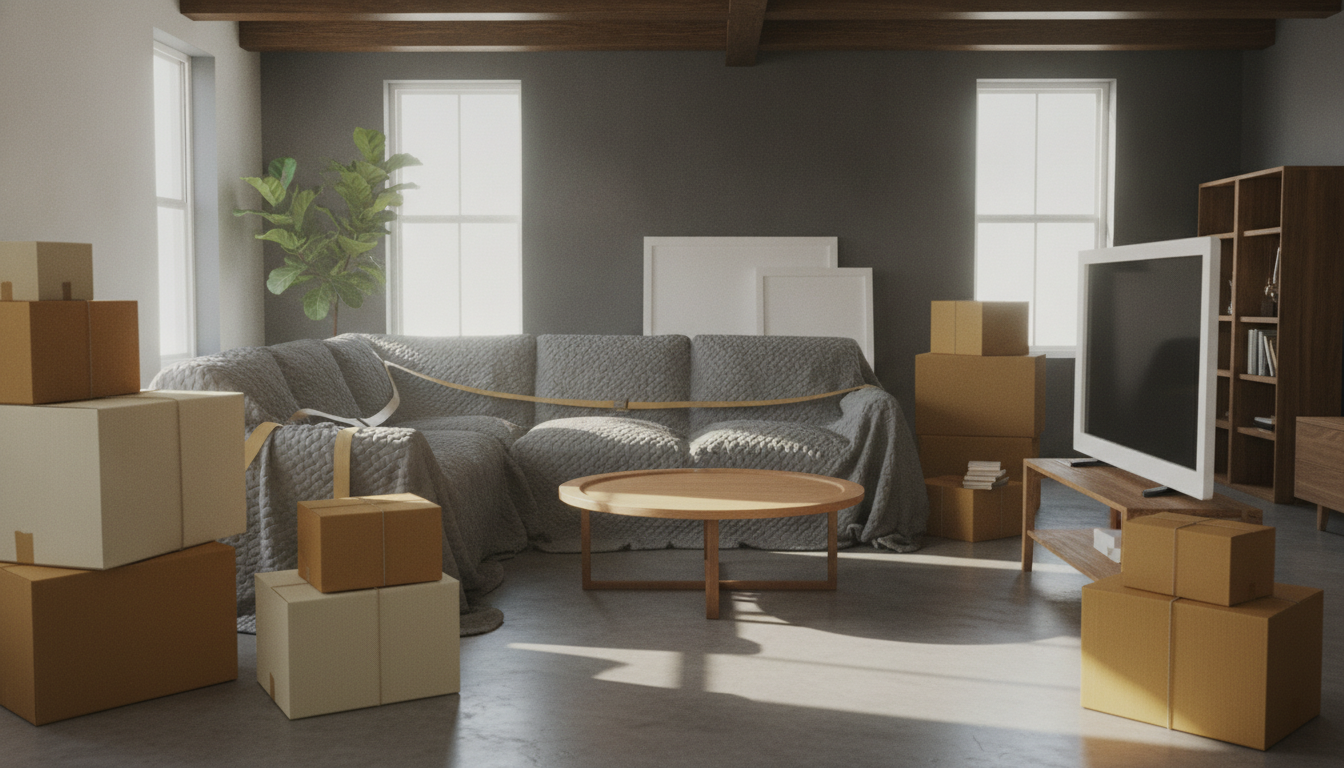
The living room is the most time-consuming room in the house to pack — not because it's stuffed with stuff, but because almost everything in it is awkward, fragile, or oversized. A flat-screen TV, floor lamps, picture frames, a tangle of cables, and a sectional sofa don't fit neatly into any standard box. The secret is working in the right order, using the right materials, and not underestimating how long it actually takes. Budget at least 3–5 hours for an average living room; more if you have built-in shelving, a large art collection, or a sectional.
Why Is the Living Room So Tricky to Pack?
The living room defies the usual "put it in a box" approach. You've got items that are:
- Too big for any box (sofas, armchairs, entertainment centers)
- Too fragile for a standard pack (flat-screens, glass table tops, mirrors, framed art)
- Too oddly shaped to stack (floor lamps, decorative vases, gaming equipment)
- Too easily lost if separated (remotes, charging cables, hardware for disassembly)
The key is treating each category differently — and in the right sequence, so you're not moving furniture around obstacles you've already packed.
What Packing Supplies Do You Need?
Gather these before you start. Running out mid-pack doubles your time.
| Item | What It's For | Typical Cost |
|---|---|---|
| Small boxes (1.5 cu ft) | Books, remotes, small décor | $1–$3 each |
| Medium boxes (3 cu ft) | Pillows, blankets, loose items | $2–$4 each |
| Large boxes (4.5–6 cu ft) | Lightweight bulky items (lamp shades) | $3–$5 each |
| TV/picture boxes (custom) | Flat-screens, framed art, mirrors | $10–$30 each |
| Moving blankets | Furniture, framed art | $8–$15 each (or free from mover) |
| Bubble wrap | Electronics, figurines, glass | $15–$30 per roll |
| Packing paper (unprinted newsprint) | General wrapping, fill | $15–$25 per bundle |
| Stretch wrap / shrink wrap | Keeping drawers closed, protecting upholstery | $10–$20 per roll |
| Foam corner protectors | Mirrors, picture frames, furniture corners | $10–$20 per set |
| Zip-lock bags + permanent marker | Hardware, remotes, cables | Under $5 |
| Packing tape + dispenser | Everything | $5–$15 |
For a full breakdown of what's worth buying vs. skipping, see our guide on choosing the right moving boxes and packing supplies.
Step-by-Step: How to Pack a Living Room
Work through the room in this order. Each stage clears space for the next.
Step 1: Declutter first (before a single box is taped)
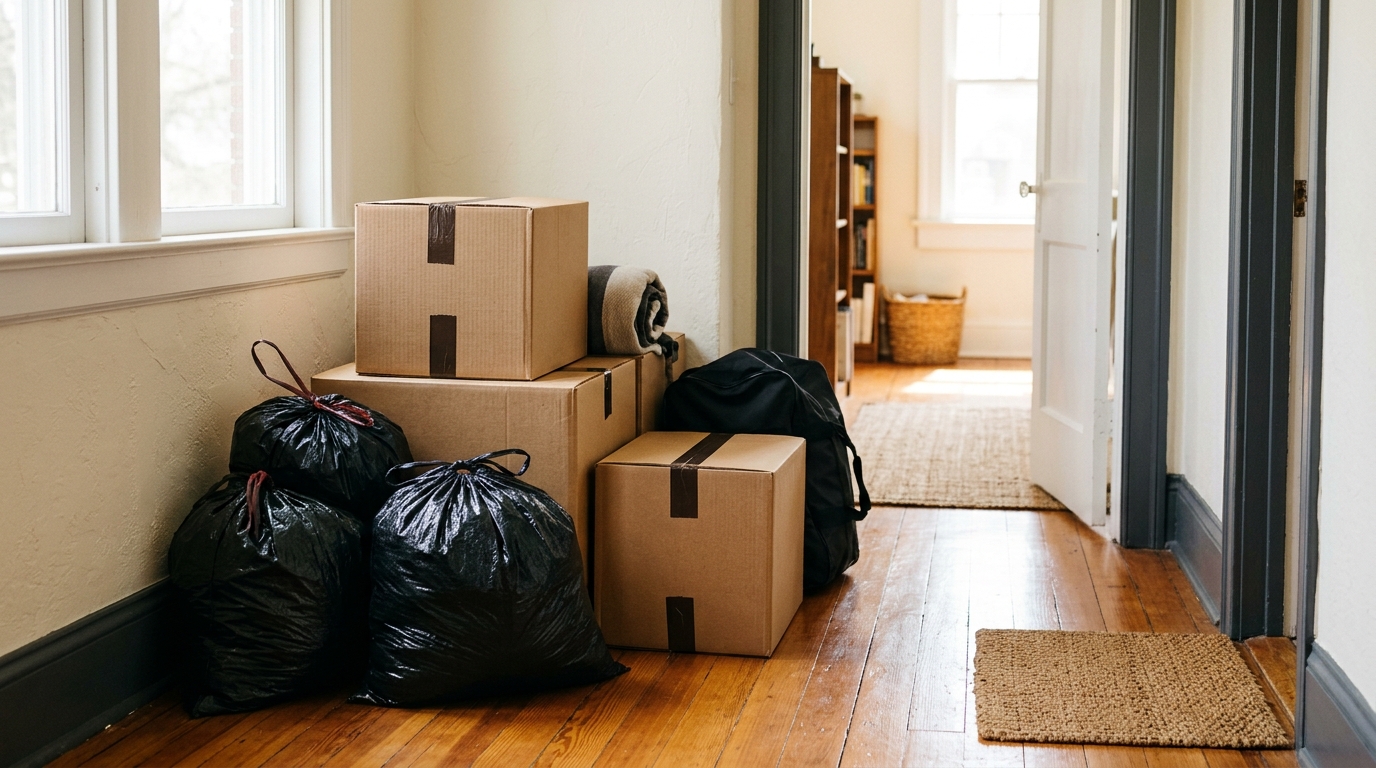
Don't pack what you're not taking. Walk the room with a trash bag and a donate box. The living room tends to collect items that crept in from other rooms — put them back where they belong now, not at the new house. Cutting your living room load by even 15–20% can meaningfully reduce your moving bill, since movers charge by weight on long-distance moves and by time on local ones.
Step 2: Document everything electronic before unplugging
Use your phone to photograph the back of your TV, gaming consoles, soundbar, and cable box before you touch a single wire. Photograph the configuration from multiple angles. You will not remember which HDMI port the Xbox was in. This five-minute step saves 45 minutes of frustration at the other end.
Step 3: Disassemble and bag all hardware immediately
As you take apart anything — a sectional's connecting clips, shelf brackets, TV mount bolts — drop the hardware directly into a labeled zip-lock bag and tape it to the item or pack it in the box with the item. Label the bag: "TV wall mount bolts – living room." Never put hardware in a "miscellaneous" box.
Step 4: Pack books and small décor items first
Books go in small boxes only — a large box of books can exceed 80 lbs, which is a back injury waiting to happen and a morale killer. Pack them spine-down or flat, not standing upright. Decorative items (figurines, candles, small vases) go in medium boxes with generous packing paper between each piece.
Packing rule we live by: If you can hear rattling when you shake the box, add more paper. Every item should be immobilized.
Step 5: Wrap and pack framed art and mirrors
This is where most living rooms hide the most damage risk. Our method:
- Cut an X across the glass with painter's tape (this holds glass in place if it cracks in transit — it won't save it, but it'll contain it).
- Wrap each piece in two layers of packing paper, then a layer of bubble wrap.
- Use foam corner protectors on all four corners.
- Pack vertically in a picture/mirror box, never flat. A frame packed flat is a broken frame waiting to happen.
- Fill any gaps in the box with crumpled packing paper so nothing shifts.
Label the box "FRAGILE – ARTWORK – THIS SIDE UP" on all four sides. For genuinely valuable pieces — original paintings, antique frames — consider custom crating. Read our deep-dive on packing and moving fragile items without breaking them for detailed guidance.
Step 6: Pack the TV
The best box for a flat-screen is its original box, with the original foam inserts. If you kept it, use it. If not:
- Option A: Buy a foam-lined TV box sized to your screen. Measure your TV diagonally (e.g., 65") and buy a box rated for that size. Most moving supply stores and box retailers carry them in common sizes for $15–$30.
- Option B: Sandwich the screen between two moving blankets, wrap tightly with stretch wrap, and stand it upright in the truck. Never lay a flat-screen face-down — the internal components can crack under their own weight.
Never pack a TV in a box with other items. It's one TV, one box or one blanket-wrap — full stop.
Step 7: Handle floor lamps
Disassemble every floor lamp into its individual sections. Wrap the base in packing paper. For the shade: wrap it in packing paper and pack it alone in a large box, nested rim-down with crumpled paper underneath. Never stack anything on top of a lamp shade box. Label it: "LAMP SHADE – DO NOT STACK."
Step 8: Cable management
Bundle each cable individually, secure with a velcro tie or zip tie (not a rubber band — they degrade), and label it with a piece of masking tape: "TV power," "gaming console HDMI," etc. Pack all living room cables together in one clearly labeled box or zip-lock bag. This alone will save you time at the new place. If labeling cables is new territory, our box labeling guide has a system that works for cords and cables too.
Step 9: Upholstered furniture — wrap and protect
Sofas and armchairs don't go in boxes, but they do need protection:
- Sectionals: Disconnect sections and move them individually. Wrap fabric surfaces in stretch wrap to prevent snags, stains, and moisture.
- Leather furniture: Use moving blankets, not stretch wrap directly on leather — stretch wrap can leave marks on leather over time.
- Feet and legs: If removable, take them off, bag the hardware, and pack the legs flat in the truck.
If you're hiring movers, they'll typically wrap furniture as part of the service — but confirm this when you book. If you're doing a DIY move, rent or buy enough moving blankets (plan on 12–20 for a full living room).
Step 10: Entertainment centers and bookshelves
Remove all contents first (see steps above). Then assess: can it be moved in one piece, or does it need to be disassembled? Most flat-pack units (IKEA, etc.) should be broken down — they rarely survive a move intact if left assembled. Solid wood units can often move whole. Photograph any disassembly steps as you go.
While you’re reading
Skip the research — let Robert match you with movers.
Free quotes from movers in your area. Pick whichever is easiest.
Common Living Room Packing Mistakes (and How to Avoid Them)
- Overpacking large boxes. If you can't lift it with one hand at waist height, it's too heavy for a mover to handle safely without risk of dropping.
- Packing artwork flat. Always vertical. Always.
- Leaving cables tangled together. One mystery cable knot = 20 minutes of untangling at the new house.
- Not labeling box contents AND destination room. Write both: "Books + remotes — Living Room." Make your labeling system consistent before you start; our labeling and organization guide has a proven system.
- Forgetting to reserve a "first night" box. One box that rides in your car with TV remote, phone charger, a lamp, and whatever you'll need the first evening — before anything is unpacked.
How Long Does Packing a Living Room Take?
| Living Room Size / Contents | Estimated Pack Time | Boxes Used |
|---|---|---|
| Small (minimal décor, no large art) | 2–3 hours | 8–14 |
| Medium (average furnishings, 1–2 TVs, some art) | 3–5 hours | 15–25 |
| Large (extensive art, bookshelves, sectional, bar cart, etc.) | 5–8 hours | 25–40+ |
This is for one person working methodically. Two people can cut these times by roughly 35–40%.
Should You Let the Movers Pack the Living Room?
Professional packing services typically cost $25–$50 per hour per packer, or movers may quote a flat room rate. For a living room with significant art, a large TV, or antique furniture, it's often worth it — movers carry valuation coverage that typically applies to items they pack themselves. Items you pack may only be covered at the basic released-value rate (often $0.60 per pound per article under FMCSA rules for interstate moves). Understand the difference before you decide by reviewing how moving valuation and insurance actually work.
To find movers who offer professional packing in your area, browse our mover directory or search movers by state to compare options and read reviews from customers.
Frequently Asked Questions
How do I pack a TV without the original box?
Use a foam-lined TV box sized to your screen's diagonal measurement — these are available from moving supply retailers for $15–$30. Alternatively, sandwich the screen between two moving blankets, wrap tightly with stretch wrap, and always transport the TV standing upright. Never lay a flat-screen face-down, as the weight can crack internal components.
Can I pack books in large boxes?
No — books should always go in small boxes (1.5–2 cu ft). A large box of books can weigh 60–80 lbs, making it unsafe for movers to lift and increasing the risk of the box bottom tearing out. Fill small boxes about 75% full, then top off with packing paper.
How should I pack a large mirror or framed canvas?
Tape an X across the glass surface with painter's tape to contain any cracks, then wrap in two layers of packing paper and a layer of bubble wrap. Add foam corner protectors and pack vertically in a picture box. Always label "FRAGILE – THIS SIDE UP" on all four sides, and never stack anything on top.
Do movers wrap living room furniture, or do I have to?
Full-service movers typically wrap and pad furniture as part of their service — but confirm this when you get your quote. For a DIY or hybrid move, plan on wrapping upholstered furniture in stretch wrap and protecting wood surfaces and corners with moving blankets. Expect to use 12–20 blankets for a full living room.
How far in advance should I start packing the living room?
For an average living room, start packing non-essential items (books, décor, artwork) about 2 weeks before your move date. Pack the TV, lamps, and remaining items 1–2 days before moving day. Leave a floor lamp and maybe a small Bluetooth speaker out until the morning of the move so the space stays livable. Our moving timeline and checklist guide can help you map out the full schedule.
Is it worth buying specialty TV and picture boxes, or can I improvise?
For TVs over 50" and any framed art you care about, specialty boxes are worth every dollar. A TV box costs $15–$30; a cracked 65" screen costs $400–$1,500 to replace. For smaller prints or inexpensive frames, two moving blankets and careful placement in the truck is usually sufficient — but for anything with sentimental or monetary value, don't improvise.
Ready to book movers who handle your living room with care? Find moving companies near you in our directory, or ask Robert — our moving concierge — any question you have about your upcoming move. He's available on every page, any time.
Tagged