
Find movers near you
Movers in Louisville/Jefferson County.
Compare top-rated local and long-distance movers — and let Robert do the comparison for you.
Get Your Quote→Kentucky
Moving companies in Louisville/Jefferson County, KY.
Louisville sits at the crossroads of the Midwest and the South, where bourbon country meets a genuinely affordable housing market. Whether you're relocating to the Highlands, NuLu, or the East End suburbs, local movers know the narrow shotgun-house porches, the hilly terrain east of Bardstown Road, and the seasonal quirks of Ohio River weather that can complicate any move.
Robert
Online·Call for a quote
Hi — I'm Robert, and I'll help you find the right movers. Where are you moving from, and where are you headed? Prefer a live representative? Just say the word and I'll connect you, or use the call button for a quote anytime.
By chatting with Robert, you agree we may share your move details with movers in your origin city so they can contact you with a quote. We never sell or share your info outside this network. Privacy Policy.
Top movers in Louisville/Jefferson County
Louisville/Jefferson County movers worth a look.
A few of Louisville/Jefferson County’s top movers. Want a tailored recommendation? Use the Get quotes form below.
All Louisville/Jefferson County movers
20 movers serving Louisville/Jefferson County.
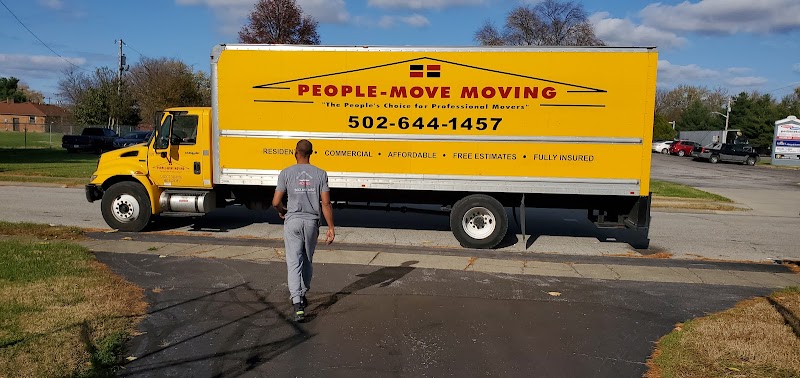
People-Move Moving
Louisville/Jefferson County, KY
★ 4.8 (797 reviews)
J D Taylor Sons Moving Inc
Louisville/Jefferson County, KY
Mac's Moving
Louisville/Jefferson County, KY
Saunier Moving & Storage Louisville
Louisville/Jefferson County, KY
2 Dudes Moving
Louisville/Jefferson County, KY
Clean Slate Junk Removal & Moving
Louisville/Jefferson County, KY
USDOT #3164727
A & S Moving Services
Louisville/Jefferson County, KY
USDOT #855182
Elite Moving & Packing Llc.
Louisville/Jefferson County, KY
Neutz Sons & Daughters Moving
Louisville/Jefferson County, KY
USDOT #1834511
2 Soldiers And A Truck Movers Louisville KY
Louisville/Jefferson County, KY
Square Foot Movers
Louisville/Jefferson County, KY
USDOT #3874867
Fallon Moving & Warehousing
Louisville/Jefferson County, KY
A Local Van Moving & Storage
Louisville/Jefferson County, KY
USDOT #899195
Boyd Moving & Storage Company
Louisville/Jefferson County, KY
Lynn Moving & Storage
Louisville/Jefferson County, KY
Read all 8 customer reviews of Louisville/Jefferson County movers →
Movers near Louisville/Jefferson County
3 more movers within 50 miles of Louisville/Jefferson County.
Based in a neighboring town and serving Louisville/Jefferson County. Each one shows where it is based and how far that is, nearest first.
Move planner
Two quick steps. A personalized plan in 30 seconds.
Robert builds a Louisville/Jefferson County-specific timeline, estimated cost range, and 3-mover shortlist tailored to your job. No forms. No spam. No commitment.
Step 1 of 2
Tell us about your move.
Distance
Property type
Property size
Zip codes (optional — sharpens the cost estimate)
When are you hoping to move?
Cost calculator
Rough moving cost ranges for Louisville
These ranges reflect typical Louisville market pricing for full-service moves (truck, labor, basic insurance). Actual quotes depend on exact distance, floor level, packing services, and seasonal demand. Get itemized written estimates before committing.
| Home size | Local (under 50 mi) | Regional (50-500 mi) | Cross-country (500+ mi) |
|---|---|---|---|
| Studio / 1BR | $300–$650 | $900–$1,600 | $1,500–$2,800 |
| 2BR | $550–$1,000 | $1,400–$2,500 | $2,200–$4,000 |
| 3BR house | $900–$1,600 | $2,200–$3,800 | $3,500–$6,000 |
| 4BR+ house | $1,400–$2,500 | $3,500–$6,000 | $5,500–$10,000+ |
Skip the guesswork
Get matched with professional Louisville/Jefferson County movers.
Robert, our moving concierge, lines up quotes from movers who actually serve your route — free, no obligation.
Local movers in Louisville/Jefferson County
Local moves in Louisville/Jefferson County are priced hourly — you're paying for the crew and truck together, with most companies setting a 2–3 hour minimum and rates that generally run in the $100–$200/hr range depending on crew size and job complexity. The single biggest variable on the final bill is almost always building access: tight historic streets in neighborhoods like the Highlands or NuLu, narrow driveways in Old Louisville's Victorian row houses, or upper-floor units with no elevator can add meaningful time to any move.
What drives local moving costs in Louisville/Jefferson County:
- Home size & crew needed — a 1BR move can often be handled by 2 movers; a 3BR+ will likely need 3 or more, which changes the hourly rate
- Building access — stairs, walk-ups, long carries from the truck to the door, or no freight elevator all add time
- Parking & street access — congested or permit-only streets (common in the Highlands, Crescent Hill, and downtown Louisville) can slow loading and unloading considerably
- Time of month & season — end-of-month dates and summer weekends book fast and can carry a premium; mid-month, mid-week moves are generally easier to schedule and price
- Packing services — if movers pack for you, that adds both labor hours and materials costs to the total
In Louisville, it's worth checking with your building manager or city offices about parking accommodations for a moving truck on narrow or permit-restricted streets — having a clear, legal spot close to the entrance is one of the most practical ways to keep your move on schedule and on budget. If you're moving in or out of a high-rise near downtown or a multi-story walkup in Old Louisville, let your mover know upfront so they can staff appropriately.
When you're ready to compare options, movers in Louisville/Jefferson County are listed here so you can find the right fit for your move.
Neighborhood guide
Where you land in Louisville shapes your move
The Highlands
Eclectic, walkable, dense with bungalows and bars
Median 2BR rent: ~$1,350/mo (1BR)
Narrow lots, steep driveways on some blocks off Bardstown Road, and on-street parking only on many streets — plan for a smaller truck and extra carry time.
NuLu (New Louisville)
Artsy, rapidly gentrifying, urban loft living
Median 2BR rent: ~$1,600/mo (1BR)
Converted warehouses and newer apartment buildings downtown often require freight elevator reservations; confirm building move-in windows well in advance.
Crescent Hill
Quiet, tree-lined, historic craftsman homes
Median 2BR rent: ~$1,450/mo (1BR)
Mature tree canopy means overhead clearance can be tight for large moving trucks on residential side streets; walk the route before the move day.
St. Matthews
Suburban commercial hub, family-oriented, dense retail
Median 2BR rent: ~$1,250/mo (1BR)
High traffic volume on Shelbyville Road and Breckinridge Lane during weekday afternoons — schedule load/unload for mornings to avoid gridlock near the St. Matthews Mall corridor.
Butchertown
Industrial-chic, historic, close to river and NuLu
Median 2BR rent: ~$1,500/mo (1BR)
Older brick streets and uneven alleys are common — dollies and furniture pads take extra abuse here; confirm truck parking options on Story Avenue before arrival.
Prospect / Anchorage
Upscale East End, large lots, gated communities
Median 2BR rent: ~$2,800/mo (single-family)
Long driveways and gated entries in subdivisions like Hunting Creek require advance coordination; large homes here routinely need two trucks and a full crew of four or more.
Shively / Valley Station
Affordable west-side suburbs, working-class, practical
Median 2BR rent: ~$950/mo (1BR)
Flat terrain and wide streets make for efficient loading, but distance from downtown adds drive time — factor mileage into quotes from east-side movers.
Old Louisville
Victorian grandeur, urban density, near U of L campus
Median 2BR rent: ~$1,200/mo (1BR)
The country's largest contiguous Victorian preservation district means narrow shotgun houses, tight staircases, and high ceilings that complicate large-furniture moves — disassembly is often necessary.
Common routes
Louisville's most-traveled moving corridors
Louisville/Jefferson County → Cincinnati, OH
~100 mi north via I-71
$1,200–$2,200
The I-71 corridor between Louisville and Cincinnati is one of Kentucky's busiest relocation lanes, driven by job movement between the two metros' healthcare, logistics, and manufacturing sectors.
Louisville/Jefferson County → Nashville, TN
~175 mi south via I-65
$1,500–$2,800
Louisville to Nashville is a heavily traveled route as Nashville's booming job market pulls transplants from all directions, and the straight shot down I-65 makes it logistically simple.
Louisville/Jefferson County → Chicago, IL
~300 mi north via I-65
$2,500–$4,200
Louisville serves as a southern counterpart to Chicago's labor and manufacturing base; corporate transfers and retirees moving toward lower cost of living drive consistent two-way traffic.
Louisville/Jefferson County → Indianapolis, IN
~115 mi northwest via I-65
$1,200–$2,000
The Louisville–Indianapolis corridor sees frequent moves tied to Amazon's major distribution hubs in both metros and ongoing expansion of logistics employment in southern Indiana.
Louisville/Jefferson County → Lexington, KY
~80 mi east via I-64
$900–$1,600
The University of Kentucky in Lexington and the University of Louisville create a steady stream of student and faculty moves between Kentucky's two largest cities along the I-64 corridor.
Louisville/Jefferson County → Atlanta, GA
~425 mi south via I-65 to I-24
$3,200–$5,500
Atlanta's outsized job market draws Louisville residents seeking warmer weather and more diverse employment, making it one of the longer but common long-haul routes out of the metro.
Honest prices beat estimates
Want an actual quote for your Louisville/Jefferson County move?
Tell Robert the basics and get matched in minutes.
Local figures
Louisville/Jefferson County in numbers.
What the homes are
Louisville/Jefferson CountyUnited States
- Detached houses
- 64% in Louisville/Jefferson County61% in United States
- Townhouses
- 4% in Louisville/Jefferson County6% in United States
- Buildings of 2 to 4 homes
- 11% in Louisville/Jefferson County8% in United States
- Buildings of 5 to 19 homes
- 13% in Louisville/Jefferson County9% in United States
- Buildings of 20 or more homes
- 8% in Louisville/Jefferson County10% in United States
Rent, home values and income
| Figure | Louisville/Jefferson County | Kentucky | U.S. |
|---|---|---|---|
| Median monthly rent | $1,069 | $933 | $1,348 |
| Median home value | $221,500 | $192,300 | $303,400 |
| Median household income | $64,731 | $62,417 | $78,538 |
| Households that rent | 39% | 32% | 35% |
| Residents who moved in the past year | 14% | 13% | 13% |
Source: U.S. Census Bureau, American Community Survey 2019-2023 5-year estimates.
When to move
Louisville's moving calendar, month by month
Jan
off
Ice storms and occasional heavy snow off the Ohio River create risks; however, mover availability is excellent and rates are at their annual low.
Feb
off
Still winter-slow with cold, damp weather typical for Louisville; good rates and easy scheduling, though watch for late-season ice events.
Mar
shoulder
Weather begins to moderate but can be unpredictable — late cold snaps are common — and moving demand starts to pick up from winter lows.
Apr
shoulder
Derby season approaching means hotel and short-term rental rooms tighten; if you need temporary housing, book it early before the Kentucky Derby crowds arrive.
May
peak
University of Louisville and Bellarmine end-of-semester moves combine with general spring demand; the first two weeks of May around Derby week add further congestion.
Jun
peak
Full summer peak begins — humidity and heat make long carry distances exhausting; movers book fast and prices reflect high demand.
Jul
peak
Hottest and most humid month; moving crews work early morning starts, and afternoon thunderstorms can delay jobs — pad your schedule accordingly.
Aug
peak
Back-to-school and university move-in at U of L and other campuses makes the first two weeks of August among the busiest of the year — book 6–8 weeks out.
Sep
shoulder
Demand eases noticeably after Labor Day; temperatures become more comfortable and movers have more availability, though weekend slots still fill quickly.
Oct
shoulder
Arguably Louisville's most pleasant weather for moving — mild temperatures, low humidity, and colorful foliage; a good value month with reasonable rates.
Nov
off
Demand drops sharply; scheduling around Thanksgiving is tricky but early and late November offer easy booking and year-low pricing from most movers.
Dec
off
Lowest demand of the year outside the week between Christmas and New Year's; expect significant discounts and easy availability if you can work around holidays.
Permits + local rules
What Louisville requires before moving day
Louisville Metro Temporary No-Parking Permit
If you need to block a public street or parking lane for a moving truck in Louisville, you'll need a temporary no-parking (parking reservation) permit from Louisville Metro Public Works. This applies to curbside lanes in residential and commercial zones. Applications are handled through Louisville Metro government. Give yourself at least 5–7 business days. Physical signage must be posted 24 hours before the reservation begins.
Permit ~$30–$60 depending on duration, 5–7 business days
Downtown / NuLu Loading Zone Use
In the central business district and the NuLu area along East Market Street, moving trucks using designated loading zones must stay within marked time limits — typically 30 minutes — or risk citation. For larger moves requiring extended street access, coordinate with Louisville Metro Public Works for a temporary lane closure permit, which requires more lead time and may involve traffic control.
Loading zone free if within time limit; lane closure permits vary, allow 10+ business days
Old Louisville Historic District Rules
Old Louisville is a locally designated historic preservation district. While there is no moving-specific permit unique to the district, any exterior alterations triggered by a move (removing window units, installing temporary ramps over historic stoops) may require review by the Louisville Landmarks Commission. Renters and owners should confirm with their property manager before any structural modification, even temporary.
Commission review varies; contact Louisville Landmarks at least 2–3 weeks out if alterations are needed
High-Rise and Condo Elevator Reservations
Downtown apartment towers (such as those near 4th Street Live or along the riverfront) and newer NuLu condo buildings almost universally require advance freight elevator reservations for moves. Building management typically limits moves to weekday business hours or specific weekend windows. Failure to reserve can result in your move being turned away at the door. Contact building management at least 2 weeks in advance.
No city permit; building deposit typically $200–$500, refundable with no damage
Jefferson County Weight Limits on Residential Streets
Louisville Metro and Jefferson County enforce weight limits on certain residential streets, particularly in older neighborhoods with deteriorating infrastructure. Standard long-haul tractor-trailers (over 80,000 lbs gross) may be restricted on some side streets; moving companies typically use smaller straight trucks in these areas. Ask your mover whether your street has posted weight restrictions before booking a full-size semi.
No permit required for compliant vehicles; violations carry fines starting around $100
About moving to Louisville/Jefferson County
What you should know before you book.
Louisville/Jefferson County is a consolidated city-county government anchoring Kentucky's largest metro, home to roughly 770,000 residents. It's best known for Churchill Downs and the Kentucky Derby, the Louisville Slugger factory, and a bourbon distilling industry that has fueled downtown revitalization over the past decade. The city straddles the Ohio River across from Southern Indiana, giving it genuine cross-river commuter traffic and an unusually broad geographic footprint. Culturally, Louisville blends Appalachian, Midwestern, and Southern influences — a mix that shows up in its architecture, food scene, and the wide variety of neighborhood types that movers encounter every week.
Bourbon Trail Gateway
Louisville is the urban anchor of the Kentucky Bourbon Trail. Over 95% of the world's bourbon is produced in Kentucky, and the industry has driven significant investment in downtown hotels, restaurants, and the Whiskey Row district on Main Street. This economic engine draws corporate relocations and hospitality workers regularly, making inbound moves a steady part of the local moving industry's business.
Healthcare and University Hub
The University of Louisville, Norton Healthcare, Baptist Health, and UofL Health are among the metro's largest employers. Academic-year cycles — August and late May — create predictable moving surges that affect availability and pricing. Medical professionals relocating for residency programs at UofL School of Medicine represent a consistent customer segment for Louisville movers.
River City Geography
The Ohio River forms Louisville's northern boundary, separating it from Clark and Floyd Counties in Indiana. The Second Street Bridge and Kennedy Bridge carry I-65 traffic, while the Sherman Minton and Lincoln bridges handle additional cross-river flow. Movers working jobs that span the river must account for bridge delays during peak commute hours and occasional river-related closures.
Affordable Mid-South Cost Base
Louisville consistently ranks among the more affordable large cities in the eastern half of the country. Median home prices and average rents remain well below national averages, attracting transplants from Chicago, Cincinnati, and coastal metros. The relatively lower cost base also means local moving labor rates are competitive, though summer demand does push prices upward like any other market.
Louisville/Jefferson County moving FAQ
Common questions, locally-answered.
How much does a local move within Louisville/Jefferson County typically cost?
+
For a local move (under 50 miles, staying within Jefferson County or nearby), expect to pay roughly $350–$600 for a studio or 1BR with two movers and a truck for 3–4 hours. A 3BR house typically runs $800–$1,500 depending on home complexity, number of stairs, and distance between stops. Summer weekends at peak are on the high end; winter weekday moves come in significantly lower. Always get at least three quotes with identical scope.
When does the Kentucky Derby affect moving in Louisville?
+
The Kentucky Derby runs the first Saturday in May at Churchill Downs. The two weeks surrounding Derby — late April and early May — see massive hotel and short-term rental pressure across Jefferson County. If you need temporary housing during your move, you may find it difficult or expensive to secure near downtown. Plan housing and mover bookings at least 6–8 weeks ahead if your move falls in late April or the first week of May.
Are there neighborhoods in Louisville where moving trucks have access problems?
+
Yes. Old Louisville's Victorian shotgun houses have extremely narrow interior doorways and tight staircases — disassembly of large furniture is often unavoidable. The Highlands along Bardstown Road has limited off-street parking, forcing trucks to double-park, which can attract parking enforcement attention. NuLu lofts in converted warehouses may have freight elevators too small for oversized items. Tell your mover the exact address before booking so they can plan.
What's the best way to move across the Ohio River between Louisville and Southern Indiana?
+
The main crossing options are the Sherman Minton Bridge (I-64), the Kennedy and Abraham Lincoln Bridges (I-65), and the East End Bridges (I-265/Gene Snyder). For most residential moves between Louisville and Clarksville, Jeffersonville, or New Albany, Indiana, movers cross on I-65 or I-64. The East End Bridge is useful for moves between the Prospect area and northern Clark County. Budget for a small additional mileage charge if crossing the river.
How far in advance should I book a Louisville mover during peak season?
+
During peak season — June through mid-August, and early May around Derby — book 4–6 weeks in advance for local moves and 6–8 weeks for long-distance. August 1–15 is the single busiest window due to University of Louisville and Bellarmine University move-ins. For off-peak months (November through February), 1–2 weeks is usually sufficient, and same-week bookings are sometimes possible.
Do Louisville movers charge extra for bourbon or wine collections?
+
Most reputable movers will transport boxed bottles but exclude liability for breakage of alcohol. Given Louisville's culture, several local movers have experience with bourbon collections and use proper divider boxes. However, moving companies are not licensed liquor transporters, and interstate transport of alcohol is technically subject to state laws. For high-value collections, consider a specialty art and antique shipper or transport it personally in a climate-controlled vehicle.
Is there a slow season for moving in Louisville where I can get better rates?
+
January and February are the slowest months. Movers are often willing to negotiate rates or offer discounts for mid-week jobs in winter. The trade-off is weather risk — Louisville averages several ice events per winter, and an icy move day can force rescheduling. If you book a winter move, have a contingency date in mind and ask your mover about their weather rescheduling policy upfront.
What's the typical cost to move from Louisville to Nashville?
+
A Louisville-to-Nashville long-distance move (roughly 175 miles on I-65) typically runs $1,500–$2,800 for a 2–3BR household, depending on total weight, add-on services like packing, and time of year. Full-service moves including packing for a larger home can push past $3,500. Get binding estimates from at least two licensed interstate movers and confirm whether the quote is weight-based or cubic-foot-based.
Do I need to tip movers in Louisville, and how much is appropriate?
+
Tipping is not required but is standard practice for good service. A common range is $20–$40 per mover for a local move completed in a half-day, and $50–$100 per mover for a full-day or multi-stop job. For long-distance moves, $50–$150 per mover is reasonable depending on job difficulty. Cash is preferred by most crews. Tip at the end of the job based on actual performance — stairs, piano moves, and careful handling of fragile items are worth acknowledging.
How does Louisville's summer humidity affect moving day?
+
Louisville summers are genuinely hot and humid — July average highs reach the upper 80s°F with humidity that makes it feel hotter. Movers work early morning starts (typically 8 a.m.) to beat afternoon heat. Wood furniture and musical instruments can be sensitive to humidity swings, especially if moving from an air-conditioned home into a hot truck for hours. For high-value items, ask your mover about climate-controlled vehicle options and plan to air-condition your destination before unloading begins.
Are Louisville movers familiar with moving antiques and historic-home contents?
+
Yes — Old Louisville and the broader Jefferson County area have a high concentration of Victorian and early 20th-century homes filled with antique furniture, oversized mirrors, and period architectural elements. Several established Louisville moving companies specialize in antique and estate moves, using carpet protection, custom crating, and furniture-blanket wrapping as standard. Ask specifically about their experience with curved staircases and original hardwood floors before booking.
What should I know about parking restrictions in Louisville on moving day?
+
In most suburban Louisville neighborhoods (St. Matthews, Middletown, Jeffersontown), parking a moving truck curbside is generally manageable without a permit. In denser areas — Old Louisville, the Highlands, NuLu, Butchertown, and the downtown core — you should apply for a temporary no-parking permit from Louisville Metro Public Works at least 5–7 business days ahead. Post physical 'No Parking' signs 24 hours before your move to alert neighbors and give enforcement time to act on violations.
Moving away from Louisville/Jefferson County?
Relocation guides from Louisville/Jefferson County.
Costs, distance, and what to expect for popular moves out of Louisville/Jefferson County.
Long distance movers in Louisville/Jefferson County→Louisville/Jefferson County → Lexington, KY
~72 mi
Read the guide →Louisville/Jefferson County → Cincinnati, OH
~89 mi
Read the guide →Louisville/Jefferson County → Indianapolis, IN
~107 mi
Read the guide →Louisville/Jefferson County → Nashville, TN
~155 mi
Read the guide →Louisville/Jefferson County → Atlanta, GA
~320 mi
Read the guide →Louisville/Jefferson County → Charlotte, NC
~453 mi
Read the guide →Nearby cities
Movers in cities close to Louisville/Jefferson County.
Jeffersonville, IN
about 4 miles away
Louisville, KY
about 14 miles away
Bardstown, KY
about 35 miles away
Browse moving companies in other Kentucky cities, or explore the full directory by state.
Get your moving quote
Many ways to get a moving quote.
Chat, text, email, or call — whichever’s easiest. Tell Robert about your move and matching movers in your city reach out, usually within a few minutes.