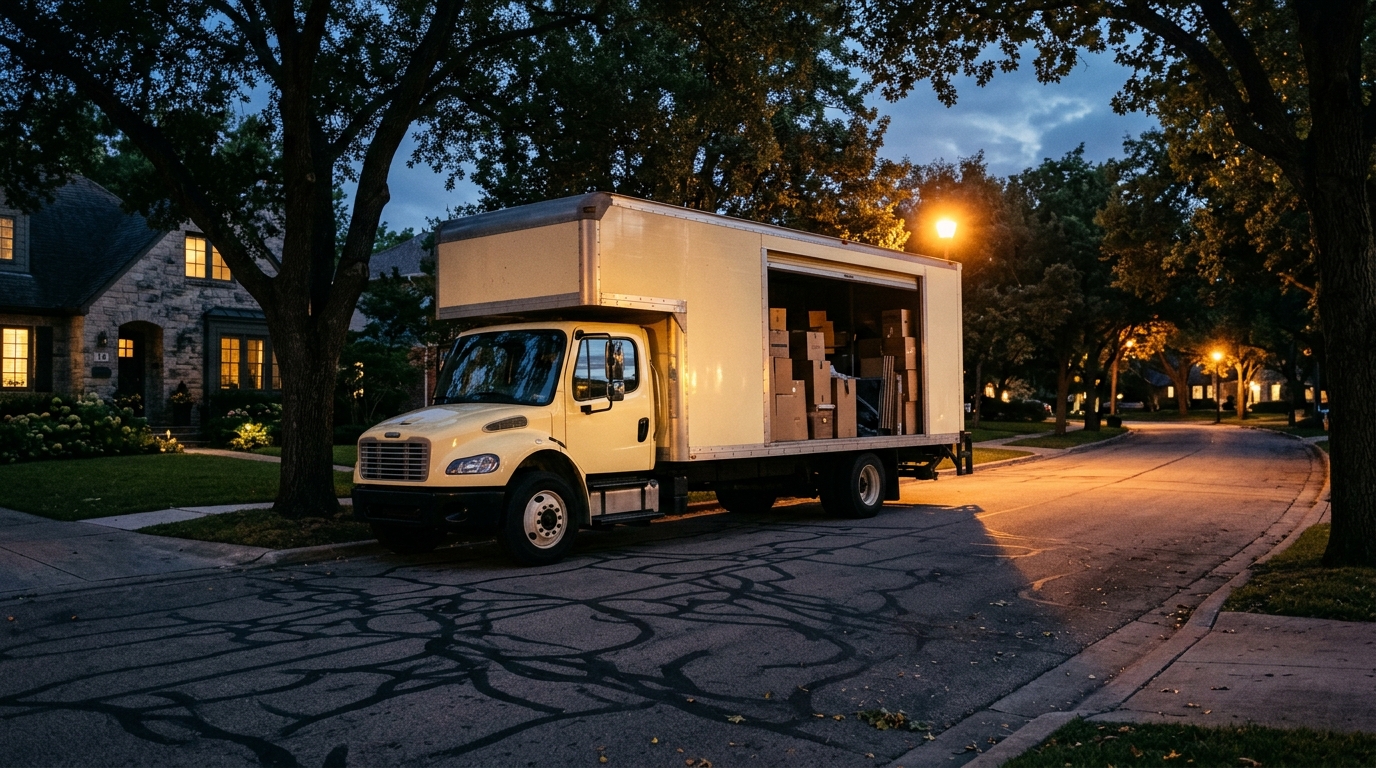
On an interstate move, your belongings almost never arrive the same day the truck leaves your driveway. Most long-distance deliveries take 2 to 14 business days after your load date, and your moving contract will specify a "delivery window" — a range of dates, not a single arrival day — during which your shipment can legally show up. Understanding that window before you sign is one of the most important things you can do to avoid a stressful, expensive surprise.
What Is a Delivery Window on a Long-Distance Move?
A delivery window is the span of dates a mover commits to delivering your shipment. Under federal rules enforced by the Federal Motor Carrier Safety Administration (FMCSA), interstate movers must provide a "first available delivery date" at booking, and then deliver within the agreed spread of days listed in your Order for Service and Bill of Lading.
Movers typically consolidate shipments — your boxes ride alongside other customers' goods on the same truck — which is why a door-to-door move from, say, Chicago to Miami rarely happens overnight. The carrier routes the truck to maximize load efficiency, and that routing determines when your stop falls.
Your mover is required to notify you at least 24 hours before delivery. If they can't reach you and you're not available to accept the shipment within the agreed window, they may place your goods in storage — at your expense.
How Long Do Different Moves Typically Take?
Timelines vary by distance, season, and how full the truck is. Here's what you'll typically see:
| Move Distance | Typical Transit Time |
|---|---|
| Under 500 miles (regional) | 1–3 business days |
| 500–1,000 miles | 3–7 business days |
| 1,000–2,000 miles | 5–10 business days |
| 2,000+ miles (coast-to-coast) | 7–14 business days |
| Peak season (May–August) | Add 2–5 days to any range |
These are typical ranges, not guarantees. A full cross-country load between two major metro areas (Los Angeles to Boston, for example) can occasionally move faster if the carrier has a direct truck, or slower during peak summer weeks when demand surges.

What Factors Stretch or Shrink the Window?
1. Load consolidation
Most interstate carriers use "consolidated loads" — your shipment fills part of a truck that also carries other customers' belongings. The truck may stop multiple times before reaching you, which adds days.
2. Time of year
Summer (June–August) is peak moving season. Trucks run at capacity, and drivers are scarce. Moving in fall or winter — particularly October through February — often means shorter windows and more scheduling flexibility. It also typically means lower rates, as we cover in our guide to moving costs and cost breakdowns by move size.
3. Your destination's accessibility
Narrow streets, high-rise buildings, gated communities, and rural routes can require a shuttle — a smaller vehicle that transfers your goods from the big rig to your door. Shuttles add time and cost. If you're moving to a dense city like Washington, DC or Boston, flag this with your mover upfront.
4. Required permits
Some cities require advance permits for parking a large moving truck on a public street. In places like Chicago or Miami, permit lead times can run several business days, which your mover should handle — but confirm it.
5. Storage-in-transit
If your new home isn't ready when your truck is, the mover may place your goods in a storage warehouse at their facility. This typically costs $50–$150/month per 100 cubic feet, plus a handling fee. Your delivery clock effectively pauses until you give a new release date.
What Your Contract Should Say — and What to Watch For
Before you sign anything, locate these three items in your Order for Service or Bill of Lading:
- First available delivery date — the earliest date you can accept delivery. You choose this at booking; make sure it aligns with when you'll actually be at the new address.
- Delivery spread (the window) — expressed as a date range, e.g., "July 10–17." The mover can deliver on any day in this range.
- Guaranteed delivery date option — some carriers offer a guaranteed date for an additional fee (often $200–$600+). If timing is critical — job start date, school enrollment, lease end — it may be worth it.
Red flag: Any mover who won't put a delivery window in writing, or who promises a single specific date at no extra charge for a long-distance move, is either inexperienced or not being straight with you. Read more about what to look for in how to read a moving quote and spot red flags before you sign.
While you’re reading
Skip the research — let Robert match you with movers.
Free quotes from movers in your area. Pick whichever is easiest.
What Happens If the Mover Is Late?
Under FMCSA regulations (49 CFR Part 375), if an interstate mover misses a guaranteed delivery date, you are entitled to compensation — typically the cost of lodging and meals for each day late, up to the amount stated in your contract. If delivery was not guaranteed (a window only), the mover has more flexibility, though they still must deliver within the agreed spread.
Steps to take if your delivery is running late:
- Call your move coordinator immediately — get a revised ETA in writing (email or text).
- Document your out-of-pocket costs — hotel, meals, pet boarding, clothing purchases. Keep every receipt.
- File a claim if delivery misses the guaranteed date. Our guide on how to file a moving damage or loss claim covers the claims process in detail.
- Contact FMCSA at 1-888-368-7238 or fmcsa.dot.gov if the carrier is unresponsive or holding your goods — the latter is called a "hostage load" and is a federal violation.
How to Protect Yourself Before Moving Day
- Book your first available delivery date conservatively. If you're starting a new job August 1, don't set your delivery date for July 31. Give yourself a 3–5 day buffer.
- Have a contingency plan for your belongings. Know in advance whether you'd use a hotel, family, or a local storage unit if delivery is delayed. Storage unit costs in most US markets run $80–$200/month for a 10×10 unit.
- Keep an "open first" bag or box. Pack essentials — medications, phone charger, a few days of clothes, important documents — that travel with you in your car or carry-on. Never put these on the truck.
- Get your mover's USDOT number and verify it at safer.fmcsa.dot.gov before you book. Licensed interstate movers are required by law to have one.
- Vet your carrier carefully. You can browse mover reviews and find movers in our directory — then check each company's USDOT licensing yourself.
If you're still deciding whether a full-service interstate mover is right for you versus a truck rental or container option, our comparison of moving truck rental vs. full-service movers lays out exactly what each path costs and requires.
Frequently Asked Questions
How many days does a long-distance mover have to deliver my stuff?
There's no single federal deadline that applies to every move — it depends on the delivery window in your signed contract. What FMCSA requires is that the mover honor the dates agreed to in your Order for Service and Bill of Lading, notify you at least 24 hours before arrival, and not hold your goods beyond the window without cause. Typical contracted windows run 1–14 business days depending on distance.
Can I track my shipment during transit?
Many larger carriers now offer GPS tracking portals or app-based updates. Smaller or regional carriers may only provide phone updates from your move coordinator. Ask about tracking options before you book — it's a reasonable question and a sign of a professional operation.
What is "storage-in-transit" and will I be charged for it?
Storage-in-transit (SIT) is when your mover warehouses your goods between pickup and delivery — most often because your new home isn't ready to receive them. In most cases, the first 30 days are covered under your moving contract's valuation, but daily or monthly fees typically apply from day one. Costs vary by carrier and location, but expect $50–$150 per 100 cubic feet per month plus a handling charge. Always clarify SIT rates in writing before your move date.
Does a delivery window mean I have to be home all day every day during that period?
Effectively, yes — or you need someone designated to accept the shipment in your place. Your mover is required to give you at least 24 hours' notice before showing up, so you won't be blindsided. But if you miss the delivery after proper notice, they may take the shipment to a warehouse and charge you storage fees. Make sure someone reliable is available to accept delivery throughout the window.
Is it worth paying extra for a guaranteed delivery date?
If you have a hard deadline — first day at a new job, kids starting school, a lease end date — a guaranteed delivery date is usually worth the premium. Fees typically run $200–$600 or more depending on the carrier and distance. Weigh that against the cost of a hotel, pet boarding, and the stress of not knowing. For most people with a firm schedule, it's cheap insurance.
What should I do the week before my delivery window opens?
Confirm your contact information is current with your move coordinator. Test that you can reach the driver dispatch line (not just the sales office). Make sure someone will be at the new address throughout the window. Have your final balance ready to pay — most carriers require certified funds or a credit card at delivery, and they are not required to unload until payment is made.
Ready to find a licensed, insured long-distance mover with clear delivery window policies? Browse movers by state or let Robert, our moving concierge, match you with carriers on Majestic Moving Companies — no pressure, no hard sell, just straight answers.
Tagged