
Find movers near you
Movers across Nevada.
Compare top-rated local and long-distance movers — and let Robert do the comparison for you.
Get Your Quote→Nevada · NV
Moving companies in Nevada.
80 movers across 5 cities in Nevada — local, long-distance, and specialty handling. Compare listings, get transparent quotes, and use our honest cost guide before you book.
Robert
Online·Call for a quote
Hi — I'm Robert, and I'll help you find the right movers. Where are you moving from, and where are you headed? Prefer a live representative? Just say the word and I'll connect you, or use the call button for a quote anytime.
By chatting with Robert, you agree we may share your move details with movers in your origin city so they can contact you with a quote. We never sell or share your info outside this network. Privacy Policy.
Top movers in Nevada
Nevada movers worth a look.
A few of the top movers statewide. Want a tailored recommendation? Chat with Robert above.


All movers
Every mover in Nevada.
Sorted by best match. Click any card for the full profile and contact details.
Moving People to Action
Las Vegas, NV

Big Top Movers
Las Vegas, NV
★ 5.0 (2 reviews)

Ballpark Movers
Reno, NV
USDOT #4289637

Revolution Moving Systems
Las Vegas, NV
USDOT #2864933
Alpha One Movers
Reno, NV
★ 5.0 (1 reviews)

Moving 2 Nevada
Reno, NV
National All Star Movers
Las Vegas, NV
New Planet Moving & Storage
Las Vegas, NV
★ 3.7 (92 reviews)

WeDo Movings
Las Vegas, NV
★ 4.8 (16 reviews)

Tru Solutions Nevada Moving
Las Vegas, NV
★ 4.0 (539 reviews)

Frontier Movers Of Las Vegas
Las Vegas, NV
★ 4.6 (11 reviews)

Toro Moving
Las Vegas, NV
★ 4.7 (23 reviews)

Moving Forward, LLC
Las Vegas, NV
★ 4.9 (33 reviews)

CMAC Moving & Labor Services
Las Vegas, NV
★ 5.0 (24 reviews)
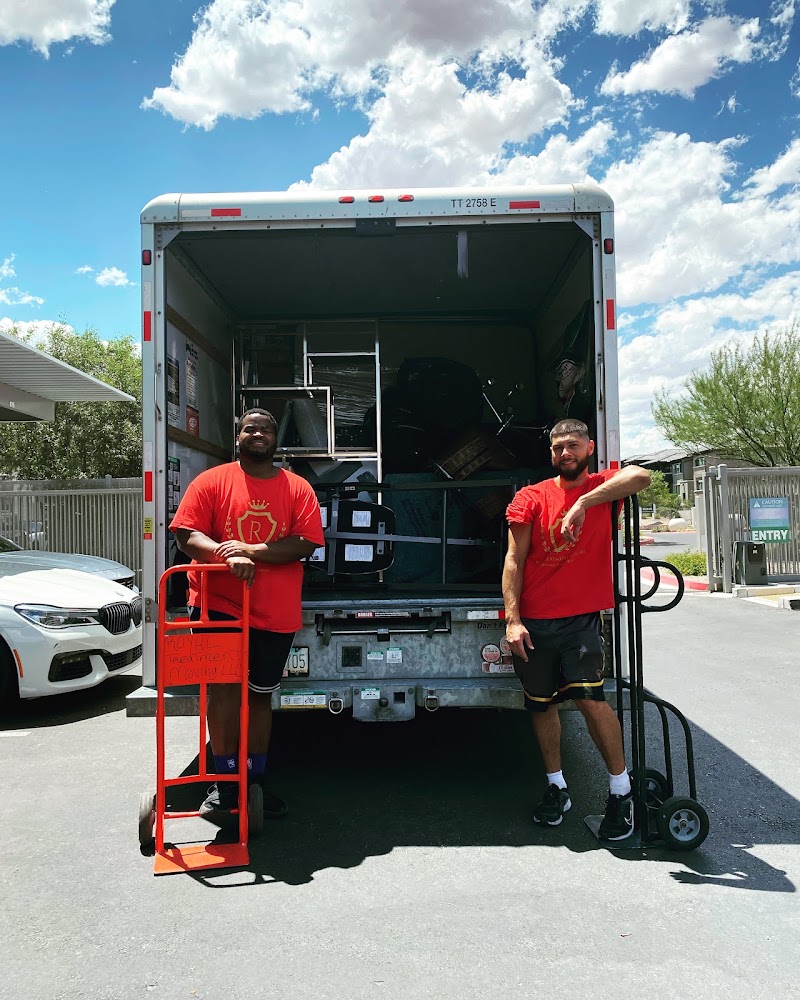
Royal Treatment Moving LLC
Las Vegas, NV
★ 5.0 (26 reviews)
Cities in Nevada
Jump to movers in your city.
5 Nevada cities have moving companies listed.
About moving in Nevada
What shapes a Nevada move.
Nevada consistently ranks among the top destination states for domestic migration, fueled largely by in-migration from California, Arizona, and Utah. Las Vegas and its suburbs (Henderson, North Las Vegas, Summerlin) account for the bulk of activity, while the Reno-Sparks metro has surged thanks to a tech and warehousing boom anchored by Tesla, Google, and Amazon fulfillment operations. Nevada has no state income tax, which remains a primary pull factor. Summers are brutally hot in the south, which creates a compressed moving season; most households in the Las Vegas Valley try to schedule moves before June or after September to avoid triple-digit temperatures.
No State Income Tax
Nevada levies no personal income tax, making it a consistent draw for high earners, retirees, and remote workers relocating from high-tax states like California and New York. This single factor drives a large share of inbound moves, particularly to Henderson and the southwestern Las Vegas Valley, where new master-planned communities cater directly to that demographic.
Extreme Summer Heat Affects Timing
Las Vegas routinely exceeds 110°F in July and August. Most professional movers in the valley schedule early-morning start times during summer and charge premium rates for midday work. Truck interiors can reach dangerous temperatures for electronics, artwork, and wood furniture. If possible, plan southern Nevada moves between October and May to reduce risk and cost.
Reno's Industrial and Tech Growth
The Reno-Sparks metro has attracted major employers to the Tahoe-Reno Industrial Center, driving significant residential relocation from the Bay Area and Pacific Northwest. Reno's climate is more temperate than Las Vegas, with cold winters and mountain passes on I-80 that can delay moves November through March. Budget for potential weather delays if scheduling a winter long-distance move.
Sparse Rural Distances
Outside the two main metros, Nevada is among the least densely populated states in the country. Moving to or from rural communities like Elko, Winnemucca, or Pahrump often requires hiring movers willing to cover long hauls on two-lane highways with few services. Expect fuel surcharges and limited mover availability; planning several weeks ahead is essential for rural relocations.
Anywhere in the state
Find a mover anywhere in Nevada.
Tell Robert where you're headed and get matched with professional local + long-distance movers — free.
Cost of living
Nevada Cost of Living by Metro
Nevada's cost of living is moderate compared to coastal states, though the Las Vegas and Reno metros have seen sharp rent and home-price increases since 2020. The absence of state income tax offsets some housing costs, making Nevada competitive for middle-income households leaving California. Rural areas are notably cheaper but offer fewer services. These factors directly influence whether households hire full-service movers or opt for DIY truck rentals.
| Metro | COL Index | What to expect |
|---|---|---|
| Las Vegas / Henderson | 108 | Rents run roughly $1,550–$1,900 for a 2BR apartment; home prices in Henderson average in the mid-$400Ks, elevated significantly from pre-2020 levels. |
| Reno / Sparks | 112 | A 2BR apartment typically runs $1,600–$2,000; median home prices have climbed to the $450K–$520K range, reflecting strong demand from Bay Area transplants. |
| North Las Vegas | 103 | Slightly more affordable than Henderson, with 2BR rents in the $1,400–$1,700 range and a higher share of working-class and first-time-buyer households driving local moves. |
| Carson City | 99 | The state capital offers a calmer market; 2BR rents average around $1,300–$1,600, and proximity to Reno means many residents commute rather than relocate entirely. |
| Elko | 88 | A mining and ranching hub with noticeably lower housing costs; 2BR rents often fall below $1,100, though limited mover supply can push relocation service costs higher per mile. |
| Pahrump | 84 | One of the more affordable Nevada communities, popular with Las Vegas retirees; median home prices are well below the statewide average, but the area is served by fewer professional movers. |
Common routes
Most Common Nevada Moving Routes
Nevada → California
~270–510 mi (Las Vegas to Los Angeles or San Francisco)
$1,800–$4,500
The Las Vegas–Los Angeles corridor on I-15 is one of the busiest interstate moving routes in the West, driven by constant two-way migration between Southern California and the Las Vegas Valley.
Nevada → Arizona
~290 mi (Las Vegas to Phoenix)
$1,500–$3,200
Retirees and cost-conscious households frequently move between Las Vegas and the Phoenix metro, two Sun Belt cities with overlapping lifestyle and climate profiles.
Nevada → Texas
~1,200 mi (Las Vegas to Dallas)
$3,500–$6,500
Texas is a top long-distance destination for Nevadans seeking larger homes and a different no-income-tax environment, with Dallas and Austin receiving the most relocating households.
Nevada → Utah
~420 mi (Las Vegas to Salt Lake City)
$1,800–$3,800
I-15 connects Las Vegas directly to Salt Lake City, and family-driven relocations along this corridor are common, particularly among households with ties to Utah's large LDS community.
Nevada → Oregon
~600 mi (Reno to Portland)
$2,200–$4,800
Reno residents relocating to the Pacific Northwest commonly use I-80 to Sacramento then I-5 north, a well-traveled route for movers operating out of Northern Nevada.
Nevada → Washington
~850 mi (Reno to Seattle)
$2,800–$5,500
Tech workers and remote employees moving between the Reno-Sparks metro and the Seattle area represent a growing segment of northbound long-distance moves from Nevada.
Licensing + rules
Nevada Moving Regulations You Should Know
Intrastate Mover Registration
Movers operating solely within Nevada are typically required to register with the Nevada Transportation Authority (NTA), which oversees household goods carriers for intrastate moves. Before hiring any local or statewide mover, confirm their NTA registration number. Unregistered movers have no formal accountability under state oversight and may not carry required insurance.
Intrastate movers register with the Nevada Transportation Authority (NTA) under NRS Chapter 706.
Interstate Mover USDOT / FMCSA Requirements
Any mover transporting your belongings across state lines must hold a valid USDOT number and operating authority from the FMCSA. You can verify a mover's interstate authority on the FMCSA's public database before signing any contract. Interstate movers are also required to provide you with the FMCSA's 'Your Rights and Responsibilities When You Move' booklet.
Verify USDOT number and MC authority at the FMCSA SAFER system online.
Binding vs. Non-Binding Estimates
Nevada consumers should understand the difference between binding and non-binding estimates before signing. A binding estimate caps the price; a non-binding estimate can increase based on actual weight. For interstate moves, FMCSA rules limit how much over a non-binding estimate a mover can require payment before releasing your goods at delivery. Always get the estimate in writing.
For interstate moves, FMCSA rules apply; for intrastate, confirm NTA rules on estimate protections.
Released Value vs. Full Value Protection
Federal and state rules require movers to offer at minimum released-value protection at no charge, which reimburses only around $0.60 per pound per item — far below replacement cost for most goods. Full-value protection covers repair or replacement at current market value and costs more. Nevada residents moving high-value items like electronics or art should seriously consider full-value coverage or a third-party policy.
For interstate moves, Full Value Protection applies automatically; Released Value (60 cents per pound per article) is the free basic option, but only takes effect if you sign a written waiver choosing it — it is not a default.
HOA and Building Move-In Rules
Many Las Vegas Valley and Reno master-planned communities and high-rise condos have HOA rules governing move-in hours, elevator reservations, and parking for moving trucks. Violating these rules can result in fines charged back to the homeowner. Confirm any restrictions with your HOA or building management before your move date and share them with your moving company.
HOA rules vary by community; no statewide law governs move-in hours, but many Nevada HOAs enforce strict windows (e.g., 8 AM–5 PM weekdays only).
Nevada moving FAQ
Common Nevada Moving Questions.
When is the best time of year to move in Las Vegas?
+
October through April is the most comfortable window for Las Vegas-area moves. Temperatures during these months typically stay below 85°F, making loading and transport much safer for both crew and belongings. July and August are the hardest months — temperatures regularly exceed 110°F, humidity rises during the monsoon season, and movers often add heat surcharges or limit afternoon availability. If a summer move is unavoidable, book an early-morning start (7 AM or earlier) and confirm your mover's summer policies in advance.
Do I need a licensed mover for a move within Nevada?
+
Yes. Movers operating entirely within Nevada are typically required to be registered with the Nevada Transportation Authority (NTA). Before hiring, ask any intrastate mover for their NTA registration number and verify it. Unlicensed movers have no regulatory oversight, and if a dispute arises, you have far fewer legal protections. For interstate moves — say, Las Vegas to Phoenix — the mover needs a federal USDOT number and FMCSA operating authority instead.
How much does a local move within Las Vegas typically cost?
+
A local move within the Las Vegas Valley for a 2-bedroom home generally runs between $400 and $1,000 for a few hours with two movers and a truck, though larger homes or longer in-city distances can push costs higher. Rates vary by company, season, and whether packing services are included. During peak summer months, some companies apply surcharges. Always get at least two written estimates and confirm whether the rate is hourly or flat-fee.
What's the cost of moving from Las Vegas to Los Angeles?
+
A full-service move from Las Vegas to Los Angeles — roughly 270 miles on I-15 — typically costs between $1,800 and $4,500 depending on the volume of belongings, the services included (packing, specialty items), and seasonal demand. This is one of the most frequently serviced routes in the Southwest, so mover availability is generally good, but prices spike in summer and around holidays. Get binding estimates from at least two FMCSA-registered carriers.
Is Reno a more affordable place to move than Las Vegas?
+
Reno and Las Vegas have converged in cost over recent years due to heavy in-migration from California. Reno's median home prices and rents are roughly comparable to Las Vegas, and in some neighborhoods slightly higher. Reno does offer milder summer temperatures, proximity to Lake Tahoe, and a different lifestyle than Las Vegas. Both cities have no state income tax and are significantly cheaper than the San Francisco Bay Area, which remains the dominant source of Reno's in-migration.
Can a mover hold my belongings hostage if I don't pay more than the estimate?
+
For interstate moves, FMCSA regulations specifically prohibit movers from holding goods hostage beyond the original estimate plus 10% on non-binding estimates — and any remaining overage is billed after 30 days from delivery. For intrastate Nevada moves, NTA rules govern; confirm the specific protections before signing. If a mover demands cash upon delivery far above the estimate, that is a red flag. Report suspected hostage-load situations to the FMCSA or the Nevada Transportation Authority.
Do movers in Nevada need to carry insurance?
+
Registered intrastate movers in Nevada and FMCSA-licensed interstate movers are both required to carry cargo and liability insurance. However, the minimum released-value protection they must offer — approximately $0.60 per pound per article — covers very little. You should ask each mover what full-value protection costs and consider whether your homeowner's or renter's insurance policy covers goods in transit. Some high-value items like art or antiques may require a separate rider.
What are the biggest mistakes people make when moving to Las Vegas?
+
The most common mistakes are scheduling a move during peak summer heat without an early-morning start, underestimating how large the metro area is (Henderson to North Las Vegas can take 45 minutes in traffic), and not accounting for HOA move-in restrictions in gated communities. People also frequently misjudge storage needs — Las Vegas has abundant self-storage, but units in climate-controlled facilities fill quickly in summer. Finally, using an unlicensed mover found through informal ads is a frequent source of fraud complaints.
How does Nevada's lack of state income tax affect relocation decisions?
+
Nevada's zero personal income tax is one of the most significant financial incentives for relocating from states like California, Oregon, or Minnesota. For a household earning $150,000, the annual tax savings versus California can easily exceed $10,000. This has driven sustained in-migration for over a decade, particularly to the Henderson and Summerlin suburbs of Las Vegas. However, Nevada does have higher-than-average sales taxes (state rate of 6.85%, with county additions pushing it to 8.375% in Clark County), which partially offsets the income-tax benefit.
What should I know about moving through I-80 in northern Nevada in winter?
+
Interstate 80 through the Sierra Nevada and northern Nevada is frequently affected by winter storms, with chain controls and road closures possible from November through March. The stretch west of Reno through the Donner Pass area (into California) is particularly prone to closures. If your long-distance move is scheduled in winter and passes through this corridor, confirm with your mover what happens if roads close — who bears delay costs, where goods are stored, and how far out they monitor weather. Build buffer days into your schedule.
Moving out of state?
Long-distance movers in Nevada.
What an interstate move costs and how to choose a licensed mover, city by city. Every city we cover.
Get your moving quote
Many ways to get a moving quote.
Chat, text, email, or call — whichever’s easiest. Tell Robert about your move and matching movers in your city reach out, usually within a few minutes.