Find movers near you
Movers in Reno.
Compare top-rated local and long-distance movers — and let Robert do the comparison for you.
Get Your Quote→Nevada
Moving companies in Reno, NV.
Reno sits at 4,500 feet on the eastern slope of the Sierra Nevada — a fast-growing mid-size city with no state income tax, a booming tech corridor, and weather that swings hard between sun and snow. Whether you're relocating from the Bay Area, moving between Midtown and South Meadows, or heading out of state, local expertise matters here.
Robert
Online·Call for a quote
Hi — I'm Robert, and I'll help you find the right movers. Where are you moving from, and where are you headed? Prefer a live representative? Just say the word and I'll connect you, or use the call button for a quote anytime.
By chatting with Robert, you agree we may share your move details with movers in your origin city so they can contact you with a quote. We never sell or share your info outside this network. Privacy Policy.
Top movers in Reno
Reno movers worth a look.
A few of Reno’s top movers. Want a tailored recommendation? Use the Get quotes form below.
All Reno movers
14 movers serving Reno.

Moving 2 Nevada
Reno, NV
Alpha One Movers
Reno, NV
★ 5.0 (1 reviews)

Ballpark Movers
Reno, NV
USDOT #4289637
A & K Earth Movers
Reno, NV
★ 2.9 (15 reviews)

Tahoe Moving Company
Reno, NV
★ 5.0 (362 reviews)

A & K Earth Movers Inc
Reno, NV
★ 2.9 (15 reviews)

Anytime Anywhere Piano Moving Co.
Reno, NV
★ 5.0 (706 reviews)
OBriens Moving & Storage
Reno, NV
★ 4.3 (68 reviews)

Pro Pool Table Movers
Reno, NV
★ 4.9 (140 reviews)

Wolf Pack Moving
Reno, NV
★ 5.0 (625 reviews)

Humboldt Moving & Storage
Reno, NV
★ 4.9 (31 reviews)
Puliz Moving and Storage
Reno, NV
Red Carpet Moving.
Reno, NV
Reno Pro Services
Reno, NV
Movers near Reno
3 more movers within 50 miles of Reno.
Based in a neighboring town and serving Reno. Each one shows where it is based and how far that is, nearest first.
Move planner
Two quick steps. A personalized plan in 30 seconds.
Robert builds a Reno-specific timeline, estimated cost range, and 3-mover shortlist tailored to your job. No forms. No spam. No commitment.
Step 1 of 2
Tell us about your move.
Distance
Property type
Property size
Zip codes (optional — sharpens the cost estimate)
When are you hoping to move?
Cost calculator
Estimated moving costs from/within Reno
These ranges reflect typical Reno market pricing based on home size. Local moves cover the Reno-Sparks metro. Regional covers routes like Sacramento or Las Vegas. Long-distance covers the Bay Area, Portland, Phoenix, and beyond.
| Home size | Local (under 50 mi) | Regional (50-500 mi) | Cross-country (500+ mi) |
|---|---|---|---|
| Studio / 1BR | $300-$650 | $1,200-$2,500 | $2,000-$3,800 |
| 2BR | $550-$1,100 | $2,000-$3,800 | $3,200-$5,500 |
| 3BR house | $900-$1,700 | $3,200-$5,500 | $5,000-$8,500 |
| 4BR+ house | $1,400-$2,800 | $5,000-$8,000 | $7,500-$13,000 |
Skip the guesswork
Get matched with professional Reno movers.
Robert, our moving concierge, lines up quotes from movers who actually serve your route — free, no obligation.
Local movers in Reno
Local moving in Reno is priced hourly — you're paying for a crew (most jobs run two or three movers) plus the truck, with most companies holding a 2–3 hour minimum. The single biggest swing in your final bill is almost always building access: narrow driveways in older midtown bungalows, multi-story apartment complexes near the University of Nevada without elevator access, or tight parking along downtown streets can all add meaningful time to a move before a single box leaves the house.
What drives your local moving cost in Reno:
- Home size & crew needed — a 1BR with two movers runs far less than a 3BR that warrants three or four
- Building access — stairs, long carries from curb to door, and no elevator add labor time fast
- Parking & street access — downtown Reno and busy corridors like Virginia Street can require extra maneuvering or a longer carry from where the truck can legally stop
- Time of month — end-of-month dates (when leases turn over) book out earliest and sometimes carry a premium
- Packing services — full or partial packing by the crew adds hours and materials costs on top of the base move rate
Reno's mix of older midtown homes and newer master-planned neighborhoods on the south and northwest edges means access conditions vary a lot by zip code — it's worth telling your mover upfront whether there's a long driveway, steps to a front door, or any parking restrictions on your street so they can staff the job right the first time.
Ready to compare options? Browse movers in Reno to get matched with local crews who know the area.
Neighborhood guide
Where people live in Reno — and what movers need to know
Midtown
Walkable, artsy, dense urban corridor
Median 2BR rent: $1,400-$2,100/mo
South Virginia Street is narrow with heavy traffic; double-parking for loading requires quick work and possible coordination with building management in older apartment complexes.
Downtown / Riverwalk
Casino district transitioning to loft living
Median 2BR rent: $1,500-$2,400/mo
Many buildings are converted historic structures with freight elevators that need advance scheduling; street parking for a full-size moving truck often requires a temporary no-parking permit from the City of Reno.
South Meadows
Master-planned suburban, family-oriented, newer builds
Median 2BR rent: $2,000-$2,800/mo
Wide streets and large driveways make access easy, but the neighborhood is spread out with long drives between stops if splitting a load across multiple locations.
Northwest Reno
Upscale hillside homes, golf communities
Median 2BR rent: $2,400-$3,500/mo
Winding roads and steep grades in some hillside sections limit truck size; confirm vehicle access before booking a large semi and budget extra time for narrow switchbacks near the Somersett or Caughlin Ranch areas.
Old Southwest
Historic bungalows, university-adjacent, eclectic
Median 2BR rent: $1,300-$1,900/mo
Tree-canopied streets near UNR can have low-hanging branches that catch taller trucks; older homes often have narrow interior stairs and original hardwood floors that need padding protection.
Spanish Springs (Sparks adjacent)
Suburban valley, fast-growing, newer subdivisions
Median 2BR rent: $1,800-$2,600/mo
Technically within Sparks city limits in many areas, so downtown Reno permit rules don't apply; I-80 access is straightforward, making it a common destination for long-haul drops.
Galena / South Reno Foothills
Semi-rural luxury, mountain-adjacent, horse properties
Median 2BR rent: $2,800-$4,500/mo
Properties can have significant elevation change, long private driveways, and gate access codes; confirm truck clearance and schedule during weekday daylight hours to avoid SR-395 south commute congestion.
University / Mac Kay
Student rentals, older housing stock, transient population
Median 2BR rent: $1,100-$1,700/mo
High move-out/move-in turnover in late May and late August overwhelms local mover availability; book at least 3-4 weeks ahead during those windows and expect elevator wait times in taller student buildings.
Common routes
Where Reno movers are headed — and what it costs
Reno → San Francisco Bay Area, CA
~230 mi west via I-80
$2,800-$5,500
The single busiest corridor for Reno movers — Bay Area transplants moving in and occasional reverse moves; I-80 crosses Donner Pass at 7,000 feet, so winter moves can face chain control delays or road closures.
Reno → Las Vegas, NV
~450 mi south via US-395 and US-95
$2,500-$4,800
An in-state move but a long one; US-95 through the Nevada desert is a straightforward haul with minimal traffic but extreme summer heat that affects how perishables, electronics, and wood furniture are protected.
Reno → Sacramento, CA
~135 mi west via I-80
$1,600-$3,200
A short interstate hop that's popular for both job-related moves and retirees heading toward California's Central Valley; can often be done in a single day.
Reno → Portland, OR
~580 mi northwest via I-80 and I-84
$3,500-$6,500
A common destination for remote workers and transplants seeking a Pacific Northwest lifestyle; the route passes through the Oregon high desert and is manageable year-round outside of winter storm windows.
Reno → Phoenix, AZ
~740 mi southeast via US-95 and I-10
$4,200-$7,500
Retirees and warm-weather seekers make this move regularly; summer timing should be avoided when possible due to extreme desert heat that stresses both crews and temperature-sensitive belongings.
Reno → Boise, ID
~430 mi northeast via I-80 and I-84
$2,800-$5,200
Growing in frequency as both metros have attracted tech migration; the route through the Twin Falls corridor is scenic but passes through mountain terrain where winter conditions require planning.
Honest prices beat estimates
Want an actual quote for your Reno move?
Tell Robert the basics and get matched in minutes.
Local figures
Reno in numbers.
What the homes are
RenoUnited States
- Detached houses
- 50% in Reno61% in United States
- Townhouses
- 6% in Reno6% in United States
- Buildings of 2 to 4 homes
- 8% in Reno8% in United States
- Buildings of 5 to 19 homes
- 17% in Reno9% in United States
- Buildings of 20 or more homes
- 15% in Reno10% in United States
Rent, home values and income
| Figure | Reno | Nevada | U.S. |
|---|---|---|---|
| Median monthly rent | $1,453 | $1,489 | $1,348 |
| Median home value | $498,600 | $406,100 | $303,400 |
| Median household income | $78,448 | $75,561 | $78,538 |
| Households that rent | 51% | 41% | 35% |
| Residents who moved in the past year | 18% | 15% | 13% |
Source: U.S. Census Bureau, American Community Survey 2019-2023 5-year estimates.
When to move
Reno's best — and worst — months to schedule your move
Jan
off
Donner Pass and SR-431 can close due to snow, stranding interstate moves on I-80; local moves face icy residential streets and risk of truck getting stuck on unplowed neighborhood roads.
Feb
off
Winter snowpack peaks in February; while downtown Reno streets are usually clear, hillside neighborhoods and mountain-adjacent areas like Galena can be genuinely inaccessible after storms.
Mar
shoulder
Weather begins to moderate but spring snowstorms are still common in Reno; rates are lower and movers are available, making this a decent value month if you watch the forecast.
Apr
shoulder
Temperatures climb and snow becomes infrequent at valley elevations; one of the better value windows before summer demand kicks in, with reasonable mover availability.
May
shoulder
Late May sees the first surge of university move-outs near UNR; book early if you're in the university corridor, but the rest of the city is still manageable.
Jun
peak
Demand climbs sharply as school ends; temperatures are pleasant (mid-80s), roads are clear, and Bay Area transplants target June closings — movers book out 3-4 weeks in advance.
Jul
peak
Hottest month with highs regularly in the mid-to-upper 90s°F; wood furniture and electronics need protection from heat in truck cargo areas, and crews need more breaks — budget extra time.
Aug
peak
Combined peak from summer demand and university move-in at UNR; Burning Man draws equipment and labor out of northern Nevada during late August, tightening mover availability further.
Sep
shoulder
Temperatures drop to more comfortable levels but wildfire smoke can be heavy across the Truckee Meadows through mid-September — an outdoor health consideration for long loading days.
Oct
shoulder
One of the better value months — fall foliage in the Sierra, comfortable temps, lower rates, and good mover availability; a smart window for anyone with schedule flexibility.
Nov
off
First significant snowfall events often hit in November; I-80 can require chains by late November, and holiday scheduling reduces crew availability around Thanksgiving week.
Dec
off
Lowest demand and lowest rates of the year, but winter road risks are serious — confirm weather windows carefully before scheduling any mountain-route interstate moves.
Permits + local rules
What you need before moving day in Reno
City of Reno temporary no-parking permit
For moves in downtown, Midtown, and other on-street parking areas, you'll need a temporary no-parking permit to reserve curb space for a moving truck. Submit the request to the City of Reno Public Works department. Permit holders must post the no-parking signs 72 hours before the reserved window. Without this, a moving truck risks a citation or tow.
Permit typically ~$35-$60, request at least 3-5 business days in advance
HOA move-in/move-out rules (South Meadows, Somersett, Caughlin Ranch)
Many of Reno's master-planned communities and condo associations require advance notice of moves, restrict move hours to weekdays or specific time windows (often 8am-5pm), and may require a refundable damage deposit for elevator or common-area use. Contact the HOA management company directly when booking your move — movers familiar with these communities will ask about this proactively.
HOA deposits vary $100-$500; notify HOA at least 5-7 business days ahead
Apartment building elevator reservations
High-rise and mid-rise residential buildings downtown and near the UNR campus typically require elevator reservations for moving days. Buildings often pad the elevator interior for the reserved window. Failure to reserve in advance means competing with regular resident traffic and can add hours to a move. Your property manager controls scheduling — confirm before move day.
Usually no fee, but requires 3-5 business days advance notice from building management
Washoe County rural road access (Galena, Virginia City Highlands)
Properties in unincorporated Washoe County on private or unmaintained roads may have weight-limit restrictions on road surfaces, particularly after winter freeze-thaw cycles in spring. Confirm with Washoe County Public Works if your property is served by a road with posted weight limits before sending a fully-loaded semi. Some properties require smaller shuttle trucks for the final approach.
Consult Washoe County Public Works before booking; no standard permit fee but shuttle adds cost
Nevada intrastate mover licensing
Moving companies operating entirely within Nevada are regulated by the Nevada Transportation Authority (NTA), not the FMCSA. Verify your mover holds a valid NTA certificate for intrastate household goods transport. Interstate movers crossing into California, Oregon, or other states need FMCSA authority. Ask for both license numbers when vetting movers — a legitimate company will provide them without hesitation.
Not a customer cost — confirms mover is legally operating in Nevada; verify free at NTA website
About moving to Reno
What you should know before you book.
Reno, Nevada sits along the Truckee River in the high desert at the foot of the Sierra Nevada, about 35 miles northeast of Lake Tahoe. Long known for casinos and quick divorces, the city has reinvented itself since the mid-2010s as a legitimate tech and logistics hub — Tesla's Gigafactory, Switch, and Amazon distribution centers have drawn a wave of transplants, particularly from the Bay Area. The University of Nevada anchors a growing academic presence, and the downtown Riverwalk and Midtown District reflect a city actively building an identity beyond gambling. Cost of living remains well below the coasts, though demand has pushed rents and home prices sharply higher over the past decade.
No state income tax
Nevada levies no personal income tax, which is a primary financial driver for many California transplants and remote workers relocating to Reno. Combined with lower housing costs than the Bay Area or Los Angeles, the effective take-home pay difference can be substantial. This tax structure also affects how moving companies and freelance labor are structured locally — many owner-operators are attracted to the state for the same reason.
High-desert climate extremes
Reno averages over 300 sunny days per year, but its elevation — roughly 4,500 feet — means genuine winters with snow, freezing temperatures, and occasional ice on residential streets. Summers are hot and dry, often reaching the upper 90s°F. Wildfires in the region increasingly produce heavy smoke events from July through September. These conditions shape move timing, packing decisions, and access to mountain neighborhoods near Mount Rose or Galena.
Fast-growing tech and logistics hub
Tesla's Gigafactory in nearby Sparks, Switch's massive data centers, and a cluster of warehousing and e-commerce operations have fundamentally shifted Reno's workforce. Inbound relocation from the San Francisco Bay Area accelerated sharply after 2016 and again post-2020. This growth has strained housing inventory, made the rental market competitive, and created steady demand for both residential and commercial moving services year-round.
Gateway to outdoor recreation
Reno is roughly 45 minutes from Lake Tahoe's north shore, about 35 miles from Mount Rose Ski Resort, and near dozens of trails in the Humboldt-Toiyabe National Forest. This proximity draws outdoor-focused residents and means many moves involve bulky gear — skis, bikes, kayaks, ATVs. Movers familiar with mountain routes and variable road conditions on US-395 and SR-431 are genuinely more useful here than a generic national operator.
Reno moving FAQ
Common questions, locally answered.
How far in advance should I book a Reno mover?
+
For peak season moves (June through August), book at least 3-4 weeks out — and 5-6 weeks if you're moving near UNR's late-August move-in. During Burning Man week in late August, labor and trucks get pulled toward Black Rock City and availability drops further. For fall through spring moves, 1-2 weeks' notice is usually workable, and some movers can accommodate short-notice jobs in the off-season.
Does Reno's altitude or climate affect how my belongings should be packed?
+
Yes, in a few specific ways. The high desert is very dry — wood furniture and musical instruments can crack or warp if moved during extreme temperature swings without proper padding and climate control on the truck. In summer, truck cargo areas can reach temperatures that damage electronics, vinyl records, candles, and certain medications. In winter, oil-based paints, certain plants, and water-filled items can freeze in the cargo hold on overnight or multi-day hauls.
What's the deal with moving over Donner Pass in winter?
+
I-80 over Donner Pass (elevation ~7,227 ft) is the main route between Reno and the Bay Area. Caltrans frequently implements chain controls from roughly November through April — sometimes requiring chains even on commercial vehicles. Closures happen several times each winter. If you're scheduling an interstate move that crosses the Sierra, build in flexibility or an overnight buffer, and confirm your moving company has a winter road policy and the right equipment.
Are there specific challenges moving into Midtown or downtown Reno?
+
Yes. South Virginia Street through Midtown has heavy traffic and narrow lanes, making parking a full-size moving truck genuinely disruptive without a no-parking permit secured in advance. Many Midtown buildings are older and lack elevators, so multi-story moves rely on stair carries — factor that into your estimate. Downtown loft conversions often have freight elevators that need advance scheduling with building management.
What does a local move within Reno typically cost?
+
For a local move within the Reno-Sparks metro, expect to pay roughly $100-$140 per hour for a two-person crew with a truck. A studio or 1BR typically takes 2-4 hours; a 2BR runs 4-6 hours; a 3BR house can take 6-9 hours depending on distance between locations and how much the crew has to carry up stairs. Most Reno movers charge a 2-3 hour minimum plus a truck/travel fee.
Is wildfire smoke a genuine concern when planning a Reno move?
+
It's worth factoring in from July through early October. Air quality in the Truckee Meadows can drop to unhealthy or hazardous levels for days at a time during regional fire events — it happened significantly in 2020, 2021, and other years. Extended outdoor work during heavy smoke events is an actual health concern for moving crews. It won't typically force a cancellation, but it can slow work pace and is worth monitoring on move week.
Should I move before or after Burning Man week?
+
If possible, avoid scheduling moves during the last week of August through the first week of September. Burning Man draws large numbers of trucks, trailers, and labor from the northern Nevada market to the Black Rock Desert, roughly 100 miles north of Reno. Mover availability tightens, and I-80 traffic near the Reno interchange sees unusual congestion from event participants. Moving in mid-August or mid-September avoids this entirely.
How do Reno moving costs compare to what I paid in the Bay Area?
+
Local moving rates in Reno are generally 20-35% lower than comparable moves in San Francisco or San Jose. Bay Area hourly rates for a 2-person crew often run $150-$200/hr; Reno rates are more commonly $100-$140/hr. The savings are more pronounced on labor-heavy moves. However, if you're moving from the Bay Area to Reno, you're paying for an interstate move, which will be priced by weight and distance and typically runs $2,800-$5,500 for a 2-3BR household.
What neighborhoods are most popular for Bay Area transplants moving to Reno?
+
South Meadows and Northwest Reno are the most common landing spots for Bay Area arrivals — both offer newer construction, good schools, and suburban amenities that feel familiar. Damonte Ranch (south Reno) has also been popular. Tech workers who want walkability and a more urban feel tend toward Midtown. Families with children often prioritize school district boundaries when choosing between neighborhoods.
Do movers in Reno handle moves to Lake Tahoe properties?
+
Yes, many Reno-based movers handle Tahoe deliveries regularly, but pricing and logistics differ. The drive to the north shore via SR-431 (Mount Rose Highway) takes about 45-50 minutes in good conditions but involves a 5,000+ foot elevation gain with steep switchbacks that limit truck size. Some movers charge a mountain surcharge or require a shuttle at the summit. South shore Tahoe via US-50 is longer but slightly less steep. Confirm vehicle access and surcharges when booking.
What should I know about moving to or from Spanish Springs and Sparks?
+
Spanish Springs and most of Sparks are separate municipalities from the City of Reno — same metro, different permit requirements and parking rules. The good news is that most of Sparks is newer construction with wide streets and good truck access, and Reno-based movers routinely serve the area without issue. Sparks does not require a city no-parking permit for residential street parking in most cases, but confirm with your mover if you're in a condo or HOA community.
Can I move large items like a hot tub or safe into a Nevada hill property?
+
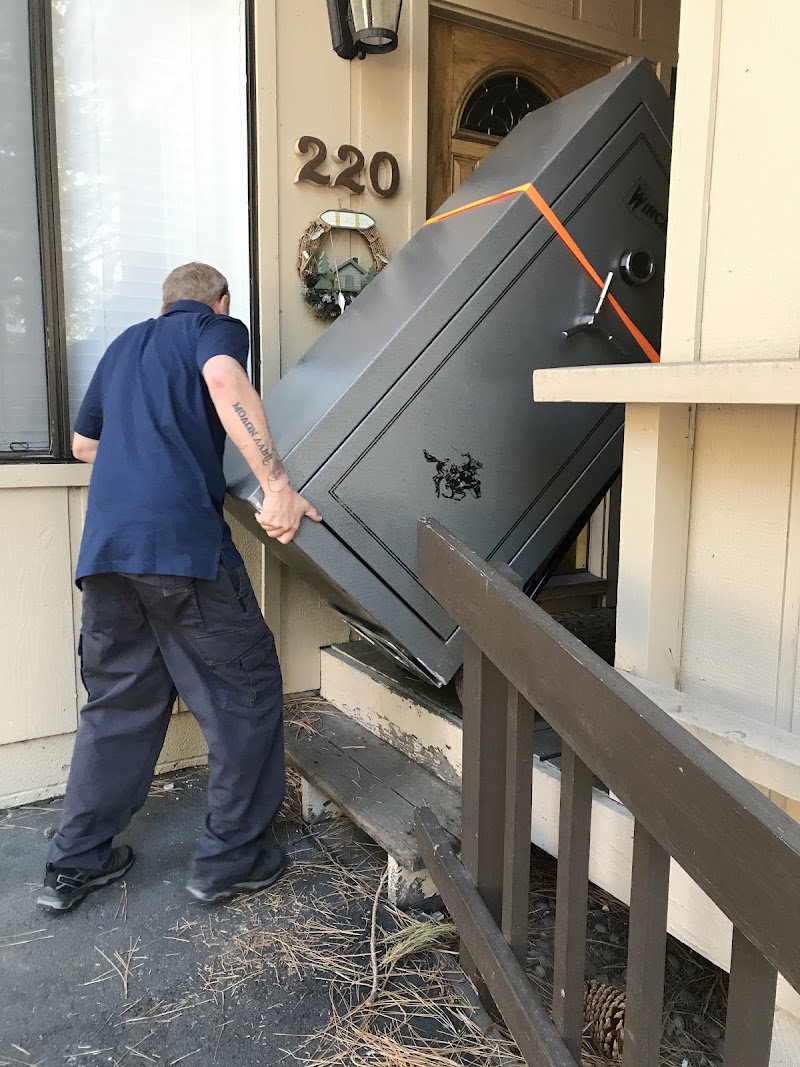
Specialty item moves to hillside or mountain-adjacent properties in Reno require more planning than flat suburban moves. Large safes (400 lbs+), hot tubs, grand pianos, and similar items need specialized equipment — stair climbers, cranes, or additional crew members. Hillside properties in Northwest Reno, Galena, and areas off Old Mount Rose Highway may require confirmation of driveway grade and surface condition. Get a specialty quote separate from your standard moving estimate.
Moving away from Reno?
Long-distance moves out of Reno.
What an interstate move from Reno costs and how to choose a licensed mover.
Long distance movers in Reno→Nearby cities
Movers in cities close to Reno.
Browse moving companies in other Nevada cities, or explore the full directory by state.
Get your moving quote
Many ways to get a moving quote.
Chat, text, email, or call — whichever’s easiest. Tell Robert about your move and matching movers in your city reach out, usually within a few minutes.