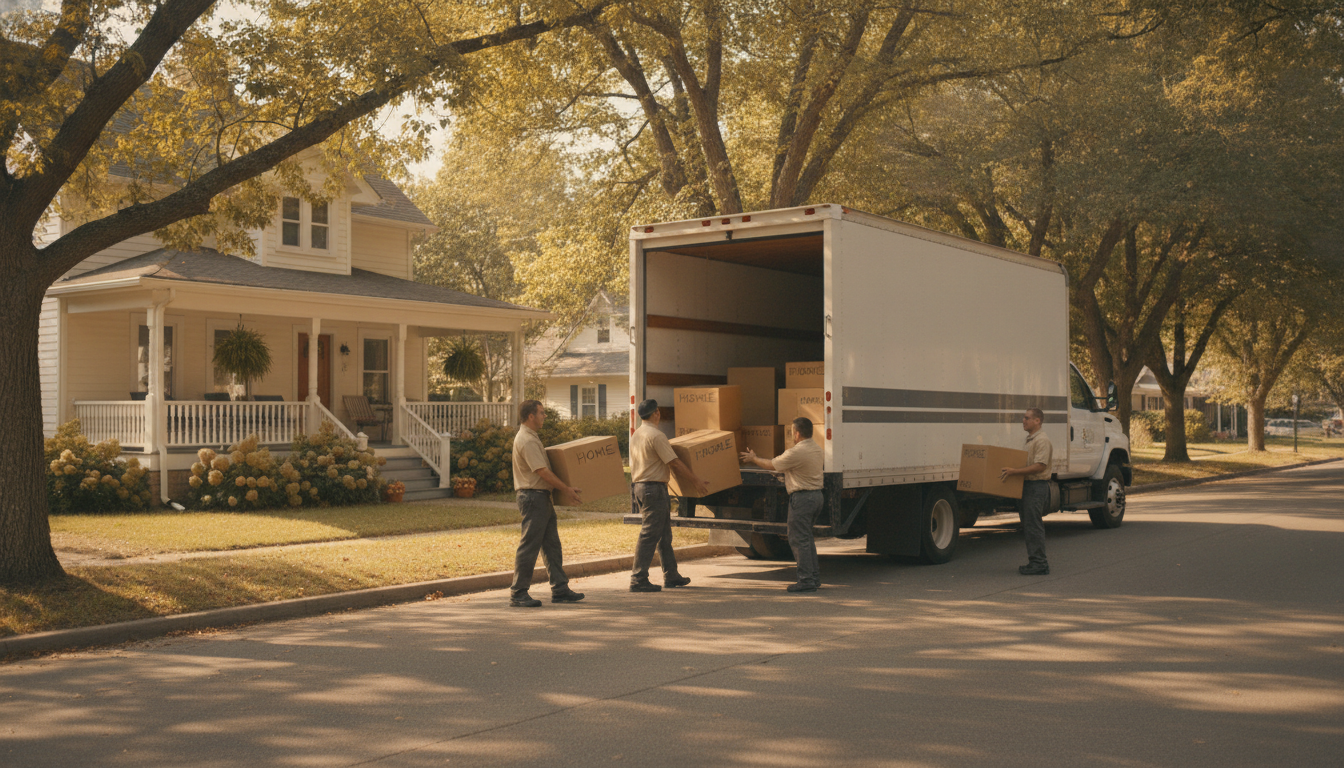
The single most reliable way to save money on a move is to reduce the time your crew spends working and the weight or volume your truck carries — everything else flows from those two levers. We've run moving crews for 35 years, and the customers who come in under budget almost always do the same handful of things right.
What actually drives your moving bill up?
Before you can cut costs, you need to know what you're cutting. Local moves are billed by the hour — typically $100–$200 per hour for a 2-person crew, more for 3- or 4-person crews. Long-distance moves are priced on weight and mileage. Either way, two things inflate the bill fast: volume (too much stuff) and time (inefficient packing, long carries, elevator waits, poor access). Our guide to what movers actually charge breaks the full cost structure down by move size if you want the numbers first.
When should you move to get the lowest price?
Move on a weekday in the off-season and you can save 15–30% on the same exact move compared to a Saturday in June. Here's how the pricing calendar works:
| Timing | Demand Level | Typical Savings |
|---|---|---|
| May–September, weekends | Peak — highest rates | Baseline (full price) |
| October–April, weekdays | Off-peak | 15–30% below peak |
| Mid-month (8th–22nd) | Lower demand | 5–15% vs. month-end |
| First/last 3 days of month | Surge demand | Often 10–20% premium |
| Holidays (Memorial Day, July 4th) | Highest of the year | Avoid if possible |
Landlords and mortgage closings cluster at the start and end of each month, which is why those days book up fast and cost more. If your lease gives you any flexibility, even shifting a Saturday move to Tuesday can save you $200–$400 on a local move.
For timing strategy that goes deeper — including how far out to book — read our guide on how to choose a moving date.
How does decluttering actually save you money?
Every box that doesn't go on the truck is money in your pocket. On a long-distance move, weight matters directly — carriers typically charge $0.50–$1.00 per pound over their base rate tiers, so a 1,000-lb reduction can save $500–$1,000. On a local hourly move, fewer items means fewer hours on the clock.
We've watched customers pay to move furniture they were planning to replace anyway. Don't do it. Sell, donate, or discard anything you wouldn't buy again at half price. Our detailed guide to decluttering before a move has a room-by-room system that makes this fast.
Highest-ROI items to cull before moving:
- Old mattresses and box springs (heavy, low resale, replaceable cheaply)
- Cheap particleboard furniture (IKEA-style pieces often cost more to move than replace)
- Duplicate kitchen items, decade-old appliances, worn tools
- Books (dense and heavy — donate or ship via USPS Media Mail, which is far cheaper than a moving truck)
Should you do your own packing to save money?
Yes — with one important caveat. Doing your own packing is one of the most effective ways to cut a full-service bill. Labor for packing can add $300–$800+ to a move for a 2–3 bedroom home. If you pack yourself, you eliminate that charge entirely.
The caveat: boxes you pack yourself typically receive released valuation for damage purposes (meaning the mover's liability is limited to $0.60/lb per item unless you purchase additional coverage). If you pack a fragile item poorly and it breaks, the mover generally isn't liable. Pack carefully, especially for anything irreplaceable. Our guide to packing fragile items has the exact techniques our crews use.
What's worth packing yourself vs. leaving to the pros:
| Item Type | Pack Yourself? | Notes |
|---|---|---|
| Clothes, linens, towels | Yes | Use wardrobe boxes or bags |
| Books, non-fragile kitchen | Yes | Medium boxes only — keep under 30 lbs |
| Dishes, glassware | Yes, carefully | Use proper cell dividers |
| Artwork, mirrors | Pro recommended | Specialty crating pays off |
| Electronics | Yes | Original boxes best; use anti-static wrap |
| Antiques, collectibles | Pro | Not worth the risk |
How can you reduce the hours your crew works?
Time is money on a local move. These are the specific things that slow crews down — and how to prevent them:
- Have everything boxed and ready before crew arrives. Movers waiting for you to finish packing is the #1 budget killer we see.
- Disassemble furniture in advance. Bed frames, desks, and shelving units take 15–30 minutes each to break down. Do it the night before.
- Clear a path to the door. Narrow hallways with obstacles cost time on every trip.
- Reserve the elevator in advance if you're in a high-rise. Waiting for a shared elevator can add 1–2 hours to a move.
- Park the truck close. Confirm with your building or HOA that a moving truck can park directly at the entrance — a long carry can double loading time.
- Have a layout plan at the destination. Telling movers "just put it anywhere" means boxes end up in wrong rooms and you pay them to shuffle things twice.
While you're reading
Skip the research — let Robert match you with movers.
Get quotes from professional movers in your area, free.
Is it worth getting multiple quotes?
Absolutely — and it's free. Getting 3 quotes from licensed movers is the single easiest way to benchmark fair pricing. But don't just pick the lowest number. A quote that's 40% below the others often means hidden fees, unlicensed operation, or a bait-and-switch on delivery. Our guide on how to read a moving quote will show you exactly what to look for before you sign anything.
For interstate moves, federal law (49 CFR Part 375, enforced by the FMCSA) requires movers to provide a written estimate and to honor a binding quote within stated terms. Always verify a mover's USDOT number at the FMCSA's SAFER database before booking.
You can browse verified movers in our directory and read verified mover reviews to shortlist companies with a track record of honoring their quotes.
What are the sneaky costs that blow budgets?
Even a solid quote can have budget-busters buried in the fine print. The most common ones we see:
- Long carry fees — charged when the truck can't park within ~75 feet of your door (typically $75–$200 extra)
- Stair fees — often $50–$75 per flight above the first
- Elevator fees — common in high-rises, typically $50–$150
- Fuel surcharges — especially on long-distance moves, can run 5–15% of the base rate
- Packing material markups — movers often charge 2–3x retail for boxes and tape; buy your own
- Storage-in-transit fees — if delivery is delayed and your stuff goes into a warehouse, daily fees apply
For the full rundown on what to watch, see our guide to moving hidden fees and surcharges.
Quick-win checklist: saving money on your move
- Schedule for a weekday in October–April if at all possible
- Get at least 3 written estimates from USDOT-licensed movers
- Declutter aggressively — sell or donate before you pack
- Do your own packing for non-fragile items
- Buy boxes secondhand (liquor stores, grocery stores, Buy Nothing groups)
- Disassemble furniture the night before
- Reserve the elevator and confirm truck parking in advance
- Read the quote line by line for long carry, stair, and fuel surcharges
- Ship books via USPS Media Mail (typically $3–$4/lb vs. moving truck rates)
- Ask movers directly if they offer a weekday or off-season discount — many do
Frequently asked questions
How much can I realistically save by moving in the off-season?
Most customers save 15–30% by moving on a weekday between October and April compared to a peak summer weekend. On a $2,000 local move, that's $300–$600 back in your pocket for the same service. The savings are even more pronounced on long-distance moves, where carriers have more capacity and are more willing to negotiate rates during slower months.
Is it cheaper to rent a truck and do it myself?
It depends on the move size and how much you value your time. Truck rental for a local move typically runs $100–$400/day plus mileage and fuel — which sounds cheap, but factor in your labor, time, potential injury, and the cost of a van or trailer if you have more than fits in one load. For anything over a 1-bedroom apartment or a move longer than 50 miles, the math often favors a hybrid approach (you pack, pros move). Our full comparison is in the DIY vs. full-service guide.
Do movers offer discounts if I ask?
Yes — more often than most people realize. We've extended weekday discounts, off-peak rates, and "you-pack" discounts to customers who simply asked. It doesn't always work, but it costs nothing. The best time to ask is when you're getting the written estimate, before you've signed anything.
Should I tip my movers, and does it affect the price?
Tipping is separate from the contract price — it won't change your bill, but it does matter to the crew. Industry standard is $20–$50 per mover for a local move, more for a full-day or long-distance job. For the full etiquette breakdown, see our guide on how to tip movers.
What's the cheapest way to move a small amount of stuff?
For a studio or one-bedroom's worth of items, a portable container (you load it, they haul it) or a hybrid truck rental with a couple of hired labor-only helpers typically beats full-service pricing by 30–50%. You can also browse movers by state to find labor-only companies in your area who charge just for loading and unloading.
How far out should I book to avoid last-minute price bumps?
For peak-season moves (May–September), book 6–8 weeks out. Off-peak, 3–4 weeks is usually fine. Same-week booking is possible but expect to pay a premium — or have limited choice in carriers — as available slots will be scarce.
Ready to start comparing? Find licensed, reviewed movers near you in our directory, or chat with Robert, our AI moving assistant, who can help you figure out what kind of move you need and point you to the right movers for your budget and timeline.
Tagged