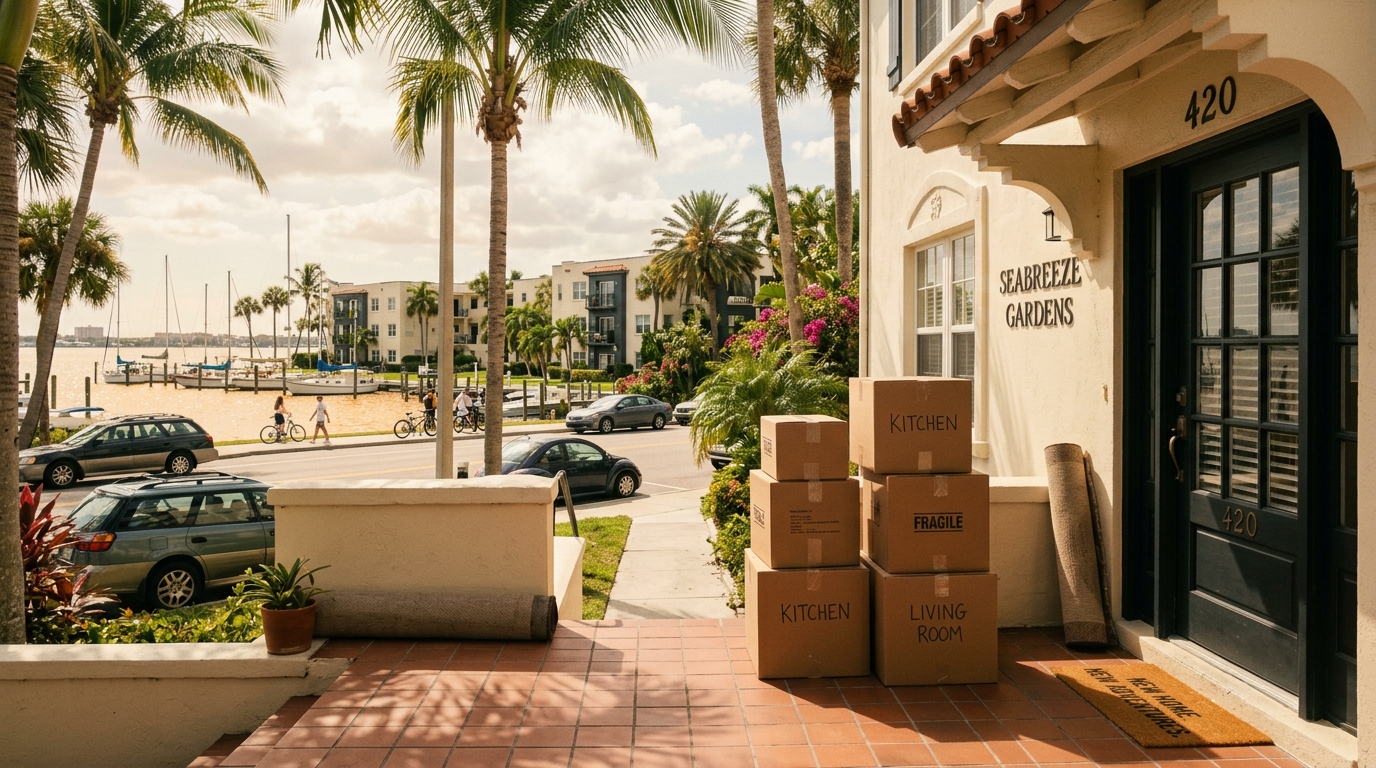
Colorado Springs is a city where six in ten households live in a detached house and just under four in ten rent. Tampa flips both numbers: half of all households rent, and more than a third of homes are inside buildings of five or more units. That one shift — from a predominantly owner-occupied, single-family city to a majority-renter, mid- and high-rise one — drives most of the practical decisions you'll face on this move, from what to put in storage to how your moving day actually runs.
Tampa's Rental Market and What It Means Before You Sign Anything
Because Tampa's rental market is larger and more active than Colorado Springs's, you'll find more inventory — but also more competition, faster lease cycles, and stricter building rules for move-ins. The median rent across both cities sits at nearly the same number, so sticker shock on monthly cost probably won't be your issue. What will matter is timing: Tampa landlords in popular walkable corridors often want leases to begin on the first of the month with 30 to 60 days' lead time, and many mid-rise buildings require you to reserve a freight elevator and loading window before your mover can step on the property.
Before you book a crew through find movers, confirm with your new building exactly what it requires: elevator reservation deadlines, certificate of insurance from the mover, and any move-in fees. Getting that information late is the single most common reason Tampa move-ins get delayed.
If you're buying rather than renting, Tampa's median home value runs about 11% below Colorado Springs's. For buyers coming from the Front Range with equity, that gap can matter — but the nature of the housing stock is different enough that the comparison isn't always direct. Discuss what you need from a home before assuming the savings are straightforward.
Buildings at Both Ends: How the Access Gap Changes Moving Day
This is the most underestimated logistical difference on this route. In Colorado Springs, 61% of homes are detached single-family houses. Most moves there load from a driveway or a two-car garage, with stairs that are predictable and ground-level access that lets a crew work fast. If you're leaving that kind of home, you're probably used to a move that flows.
In Tampa, 34% of homes are in buildings of five or more units. If you're arriving at a high-rise in Channelside or a mid-rise near Hyde Park or Downtown Tampa, your mover will be working off a loading dock, coordinating elevator time, and managing building rules that don't exist in a Briargate or Flying Horse neighborhood back home. That adds time, and time on an interstate move means money.
When you're getting estimates, describe your destination in detail — building type, floor, elevator access, loading dock vs. street parking, any long carry from the truck to the door. Federal rules require that your estimate be based on a physical survey, either in person or by live or recorded video, unless you waive that in writing. A sight-unseen phone quote that ignores these access realities is an FMCSA red flag; don't accept one.
The access difference also shapes what you decide to move at all. Furniture that works perfectly in a four-bedroom house in Briargate may not fit the elevator, the hallway, or the footprint of a Tampa apartment in Seminole Heights or Ybor City. Measure before you move, and consider selling or donating oversized pieces rather than paying interstate rates to move something you'll immediately have to get rid of.
Timing the Move Around Two Very Different Climates
Colorado Springs summers are mild and relatively dry, with low humidity and afternoon thunderstorms that pass quickly. Tampa summers are the opposite: hot, humid, and defined by a hurricane season that runs from June through November. Both facts belong in your calendar.
If you can choose, aim to arrive in Tampa between late November and early May. That window avoids peak hurricane season, keeps Tampa's outdoor heat more manageable for a move-in day, and sidesteps the summer surge in demand that pushes mover availability tighter and transit windows longer. For a move out of Colorado Springs, late spring and early fall tend to be the smoothest — winter can bring heavy snow and cold snaps that complicate loading, and summer demand is high everywhere.
Movers on interstate routes often quote delivery windows rather than a single date. What lands in writing on your bill of lading is what governs; federal rules don't set a fixed number of days, so the agreed window in your paperwork is your protection. Typical interstate transit for this route runs several days to a couple of weeks depending on load consolidation and routing — ask each mover you speak with to be specific about how they handle delivery timing for Florida destinations during hurricane season, when road closures and mandatory evacuations can genuinely disrupt a schedule.
Tampa Neighborhoods Worth Knowing Before You Commit
You don't have to pick a neighborhood blind. People relocating to Tampa most often explore South Tampa, Seminole Heights, Hyde Park, Ybor City, Downtown Tampa, Channelside, New Tampa, and Westchase. The mix matters practically: neighborhoods like New Tampa and Westchase tend toward detached single-family homes and suburban layouts — closer in feel to parts of Colorado Springs, with more driveway-accessible moves. Neighborhoods like Channelside, Downtown, and Hyde Park skew toward the mid- and high-rise building stock that requires the elevator-and-loading-dock logistics described above.
If you're touring apartments or homes remotely before the move — which most people on this route do — ask the property manager specifically about move-in access, parking for a large moving truck, and any building-mandated mover insurance requirements. Knowing this before you sign a lease is far easier than discovering it a week before moving day.
Your New-Resident Steps in Florida
Once you arrive, Florida's FLHSMV requires you to obtain a Florida driver's license within 30 days of establishing residency. You'll need to title and register your vehicle within 10 days — bring your out-of-state title, and budget for a $225 initial registration fee for a first Florida plate. Cars titled out of state also require a physical VIN inspection before titling. If you buy a home and live in it as your primary residence on January 1, you may qualify for Florida's homestead exemption of up to $50,000; the filing deadline is March 1. Check the FLHSMV and your county property appraiser's office for current requirements and any updates.
Choosing a Mover for This Route
This is a long interstate move with two distinct access environments at either end. The things that drive the price aren't mysterious: total shipment weight, the access complexity at your Tampa destination (especially if you're going into a high-rise), any specialty items like a piano or motorcycle, and the time of year you book. What you can control is how clearly you communicate those details upfront.
Movers in Colorado Springs who handle interstate moves regularly will be familiar with Front Range logistics — driveway access, the occasional storage-unit pickup, and early-morning winter load schedules. Movers in Tampa who handle inbound relocations know the building rules, the loading dock protocols, and the hurricane-season delivery contingencies worth building into your contract.
Use find movers or browse by state to identify licensed carriers. When you evaluate estimates, make sure each one is labeled binding or non-binding — federal rules require it. With a binding estimate, you pay that figure at delivery plus any services you added, plus up to 15% for impracticable operations at delivery (anything beyond that is billed later). With a non-binding estimate, you pay 110% of the estimate at delivery and any remaining balance within 30 days after that — 110% is what's due at the door, not a ceiling on the total. A not-to-exceed price, sometimes called a guaranteed not-to-exceed, is a common option movers offer that works like a binding cap; it's worth asking about on a move of this length.
Our team has 35+ years of hands-on service-provider experience, including an operator who ran a moving company for 18 years. That background tells us the moves that go smoothest are the ones where the customer described their situation accurately, got an estimate based on an actual survey, and understood what was in writing before anything was loaded. Start there, and this route — for all its differences — is a manageable one.