Austin homes cost 85% more than Fort Worth homes
Anyone leaving Fort Worth for Austin should start with one number: a typical Austin home sits at $512,700, while a typical Fort Worth home sits at $277,300. That gap decides almost everything else about this move. It affects whether you buy or rent on arrival, how much space you can afford, and which of your belongings are worth carrying south at all.
The two cities are close to the same size, with 941,311 residents in Fort Worth and 967,862 in Austin, so you are not trading a big city for a small town. You are trading one price level for another. Texas has no state income tax, so your paycheck does not pick up a new deduction on arrival. The squeeze is housing alone: across the whole Austin area, overall prices come in at 98 on the 2024 federal price index, just under the 103 for the Dallas-Fort Worth area, with the U.S. at 100.
Both cities are in Texas, so this is an in-state move under Texas rules, covered further down. The page above shows the distance and the price range for the move itself.
What the home-price gap means for your furniture
If you sold or are about to sell a Fort Worth house, the sale does not buy the same home in Austin. The equity from a house in the $277,300 range can point toward a smaller place, a different layout or a rental, and that changes what you should pack.
Before you book anyone, walk through the Fort Worth house with the Austin floor plan in mind. Ask which pieces will not fit and which rooms you will no longer have.
- A dining set sized for a formal dining room can crowd an open-plan apartment.
- A garage full of tools, shelving and yard equipment may have no home in a unit with no garage.
- A second refrigerator, a chest freezer or a workshop bench rarely fits a smaller footprint.
Selling or donating those items before the move costs nothing at the other end. Storage is the middle path if you are renting first and buying later. Furniture that sits in storage while you rent for a few months and then goes into a home you buy means two loads instead of one, and your estimate should reflect that. Tell every mover about the second move up front so the proposal covers it.
Renting first: a 17% rent step against an 85% price step
Rent runs $1,655 a month in Austin and $1,412 in Fort Worth, which makes Austin 17% higher. That is far smaller than the 85% gap in home values. If you rent at both ends, the step up is modest. If you are selling a house and not buying again right away, renting can bridge the gap while you learn the city.
Renting is the normal arrangement in Austin: 56% of households rent there, against 43% in Fort Worth. That means a deep supply of rentals, so you can rent first and look for a place to buy once you know which side of town suits you.
A few planning points follow:
- Overlap the leases by a few days if you can. Paying for both homes for a few days gives you room, so the move is not squeezed into a single day.
- If you are leaving a Fort Worth rental, check your notice period before you commit to an Austin start date. Ending a lease late can cost a full extra month.
- At a larger Austin complex, ask whether the first month's rent is prorated for a mid-month move-in.
- Read your Austin lease for rules on move-in hours, elevator padding and damage deposits before you pick a date. A building that allows moves only on weekdays within set hours can dictate the whole schedule.
Austin's median household income is $91,461, against $76,602 in Fort Worth. A job that comes with you lands you in a city where pay is higher and housing costs more, so run your own numbers before you sign anything instead of assuming the two cancel out.
Where in Austin the truck is going
Austin neighborhoods differ a good deal, and the right one depends on your commute, lifestyle and budget. Each also changes the moving day.
- South Congress and Bouldin Creek. Walkable, eclectic and close to downtown, with restaurants, music venues and Barton Springs Pool nearby. Rents run higher here.
- East Austin. One of the city's fastest-changing areas, mixing long-time residents with new development, craft breweries and coffee shops. It is slightly more affordable than the central neighborhoods, though prices have climbed steadily.
- North Loop and Hyde Park. Quieter, tree-lined streets near UT, with good access to the Domain and the North Austin tech corridors.
- Mueller. A planned community on a former airport site, walkable and known for its parks and farmers' market.
- Cedar Park and Round Rock. Northern suburbs with more square footage and well-rated schools, at meaningfully lower home prices than central Austin while staying within commuting distance.
Apple, Tesla, Google, Oracle and Amazon all have major Austin-area presences. If your job is with one of them, map each neighborhood to the campus before you sign a lease, because the commute will shape your days more than the floor plan will.
A house in Fort Worth, an apartment in Austin: two kinds of moving day
The housing stock is built differently at each end. Detached houses make up 65% of homes in Fort Worth and 44% in Austin, while 25% of Fort Worth homes and 42% of Austin homes sit in large apartment buildings of five units or more. Leaving a Fort Worth house with a driveway may land you in an Austin building where the truck cannot park at the door.
At the Fort Worth house, the questions are about stairs, the length of the walk from the door to the truck, and whether the driveway or the street holds the truck. At an Austin apartment complex they change:
- Is there a freight elevator, or only a passenger one?
- Can you reserve the elevator for a set time window?
- Does the building require a certificate of insurance from the mover before it lets anyone in?
- Where does a large truck park?
Ask the leasing office weeks ahead, not the day before. Then pass the answers to your mover when you request the written proposal. A long carry from a distant parking spot or a slow shared elevator adds time, and time is a main driver of price on a move like this one. A mover who knows the access up front can price it honestly; one who finds out on the day will adjust the bill.
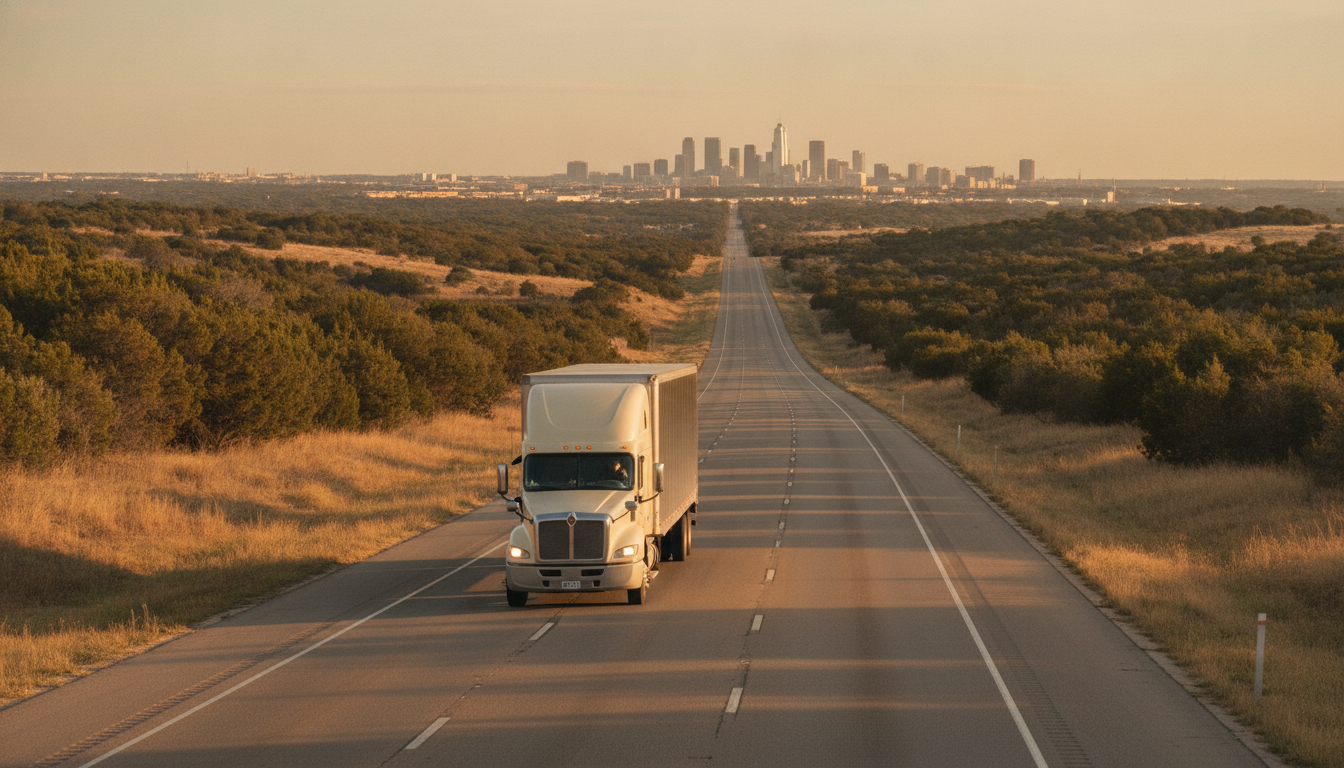
Questions for movers that know the I-35 corridor
Start with movers that run the I-35 corridor regularly. They know Austin's central neighborhoods, with their narrow streets, limited parking and permit requirements in some areas, as well as the suburbs. Browse movers in Fort Worth and movers in Austin, or go to find movers to search the full directory. A move to a different state is a separate matter, and you can browse by state for that.
Majestic Moving Companies is a directory, not a moving company. We connect people with licensed movers, and we do not move, pack or store anything ourselves. Our team has 35+ years of hands-on service-provider experience, including an operator who ran a moving company for 18 years.
For this route, ask each mover:
- Have you moved people into Austin apartment buildings with restricted elevators or limited parking?
- Is your proposal binding or not-to-exceed, and does it include a second move if I am storing first?
- What does your price depend on: total weight, time on site, the number of movers, stairs, the carry, packing?
- Will the same crew load in Fort Worth and unload in Austin, or is the job handed off?
Before you book, confirm the company with TxDMV, the state regulator, and read recent reviews for people describing a move between cities rather than a local job. Ask for a physical walkthrough or a video survey instead of a quote based only on a bedroom count, since a mover who has seen your belongings can commit to a firmer proposal.
Collect at least three written proposals and compare them line by line, not by the bottom number. On this route the gap between quotes comes mostly from access and timing at the Austin end, which is why the building matters as much as the distance.
What TxDMV rules put in your paperwork
Because Fort Worth and Austin are both in Texas, state rules govern this move, not the federal interstate ones, and TxDMV is the regulator. Three points are worth knowing before you sign:
- The proposal. Your mover must hand you a written proposal before loading that is binding or not-to-exceed. Read which one it is and keep it.
- Liability. The mover's liability is whatever the two of you agree to in writing, and the contract can set it as low as $0. A payout of 60 cents per pound is a common example. Ask what the contract pays for a flat-screen TV or an antique dresser, and what a higher level of coverage costs, while you can still negotiate.
- Claims. For anything damaged, put your claim in within 90 days.
Since you already live in Texas, the new-resident steps for your car and license do not apply to you. If you buy in Austin, the school-tax homestead exemption is $140,000, plus $60,000 if you are 65 or older or disabled, and you file by April 30.
Moving day: I-35, the elevator window and the weather
Between these two cities the move is a single loading and a single delivery. The truck often reaches Austin the same day it loads, and a larger home may load one day and deliver the next morning. Get the delivery window in writing.
I-35 through Waco and Round Rock carries heavy traffic, and a crew that finishes loading in the morning can reach the Austin metro during the afternoon rush. A good coordinator builds that into the delivery time. Plan around the weaker of the two sites: if the Austin building has a restricted elevator window, build the whole day around it and time the Fort Worth loading to match.
Do three things before the day:
- Measure the largest pieces against the Austin doorways, stairwells and elevator, not just the rooms.
- Reserve the elevator or the loading area at the Austin building and get the time in writing.
- Keep medications, documents, chargers and a first-night bag with you, not in the truck.
Weather works differently at each season:
- Summer. Highs in both cities regularly pass 100°F, so start early, bring water for everyone and leave nothing heat-sensitive in a parked truck. Candles, electronics, houseplants and anything made of wax or chocolate all suffer.
- Spring. Both areas see severe thunderstorms and tornado risk. A move set for a stormy week may need a backup day, and the tornado watches and severe thunderstorm warnings are worth tracking.
- Winter. Winters are mild, but ice storms and freezes happen in both regions, as the February 2021 storm showed, and one can close roads on the day your truck is due. A February date is a good candidate for a buffer day.
Leave a spare day on either side of any date you cannot move.
Settling in: Austin heat, grid and water
Austin summers stay hot for weeks and run longer into September and October than Fort Worth's do. A well-maintained HVAC system is non-negotiable, so budget for it.
The February 2021 storm hit both cities, and Austin's grid problems made international headlines. Before your first winter, confirm that your new home has updated weatherization and a backup water plan, and learn your utility provider's procedures.
Austin's growth has put pressure on water resources, and lawn-watering restrictions are common during dry summers. I-35 is also Austin's central spine, and traffic through downtown is consistently ranked among the worst in Texas, so remote work or off-peak hours make a noticeable difference to daily life.
Short answers on the Fort Worth sale, Austin curbs and tipping
If my Fort Worth equity falls short of an Austin purchase, which suburbs bring prices down?
Bring more capital or look further out. Austin's outer suburbs, such as Cedar Park, Round Rock, Pflugerville and Kyle, offer price points closer to what a Fort Worth sale can fund.
Does the moving truck need a city permit to park outside my Austin building?
It depends on the street. Central Austin neighborhoods with narrow streets or restricted parking zones may require a parking permit for a large truck. Check with the City of Austin's Transportation Department before your move date, and ask your mover, since movers who work in Austin deal with this often.
Will my Fort Worth load be unloaded in Austin the same day?
Often, yes, for a straightforward move. A four-bedroom home or larger may be loaded one day and delivered the next morning. Whatever the plan, the window belongs in your written paperwork.
Should I plan a spare day for a February move between these two cities?
Yes. Ice storms have disrupted both cities in recent years, so a spare day protects you if roads close on the day the truck is due.
What do I tip a crew that carries my Fort Worth furniture up to an Austin apartment?
Tipping is optional. For a regional move of this length, $20 to $50 per mover is the range to plan around, and more for heavy specialty items or a long run of stairs.