The first thing to know about this move is that Tampa's median rent runs about 18% higher than Minneapolis's. If you're leaving a Minneapolis apartment expecting your rent to hold steady—or drop—budget carefully before you sign anything. That gap doesn't mean Tampa is unaffordable, but it does mean your housing search deserves more runway than you might expect.
The second thing: the kind of building you're moving out of in Minneapolis is probably not the kind you'll be moving into in Tampa. Both of those facts shape every practical decision that follows.
The Rent Gap—and What to Do Before You Sign a Lease
An 18% jump in median rent is large enough to change what you can afford in Tampa even if your income stays the same—and median household incomes in Tampa run below Minneapolis levels, so the local market reflects that pressure. The neighborhoods people ask about most often when relocating to Tampa include South Tampa, Seminole Heights, Hyde Park, Ybor City, Riverside Heights, Westchase, New Tampa, and Channelside. Each sits in a different price tier and a different part of the city.
The practical upshot: try not to lock in a Tampa lease from Minneapolis without at least a video walkthrough—ideally a visit. If you can time your move to arrive before your lease starts rather than the day of, you'll have a few days to confirm the unit is what you were shown. That buffer also gives you a delivery window that's easier for your mover to hit.
From Apartments to Houses: How the Buildings Change Moving Day
Minneapolis skews toward larger apartment buildings—43% of its housing stock is in buildings of five or more units. Tampa skews toward detached houses, which make up 51% of its homes, against 41% in Minneapolis. That single difference reshapes moving day at both ends.
At the Minneapolis end, if you're leaving a multi-unit building, you've likely already navigated freight elevators, reserved loading-dock windows, and street-parking permits for the truck. Confirm those logistics with your building manager four to six weeks out. Minneapolis winters are severe—lows can reach –20°F—so if you're moving in the colder months, ask movers specifically about heated trucks or climate-controlled transport for electronics, artwork, wooden furniture, and anything else sensitive to temperature swings. A mover who doesn't raise this issue when you're scheduling a January or February move is worth questioning.
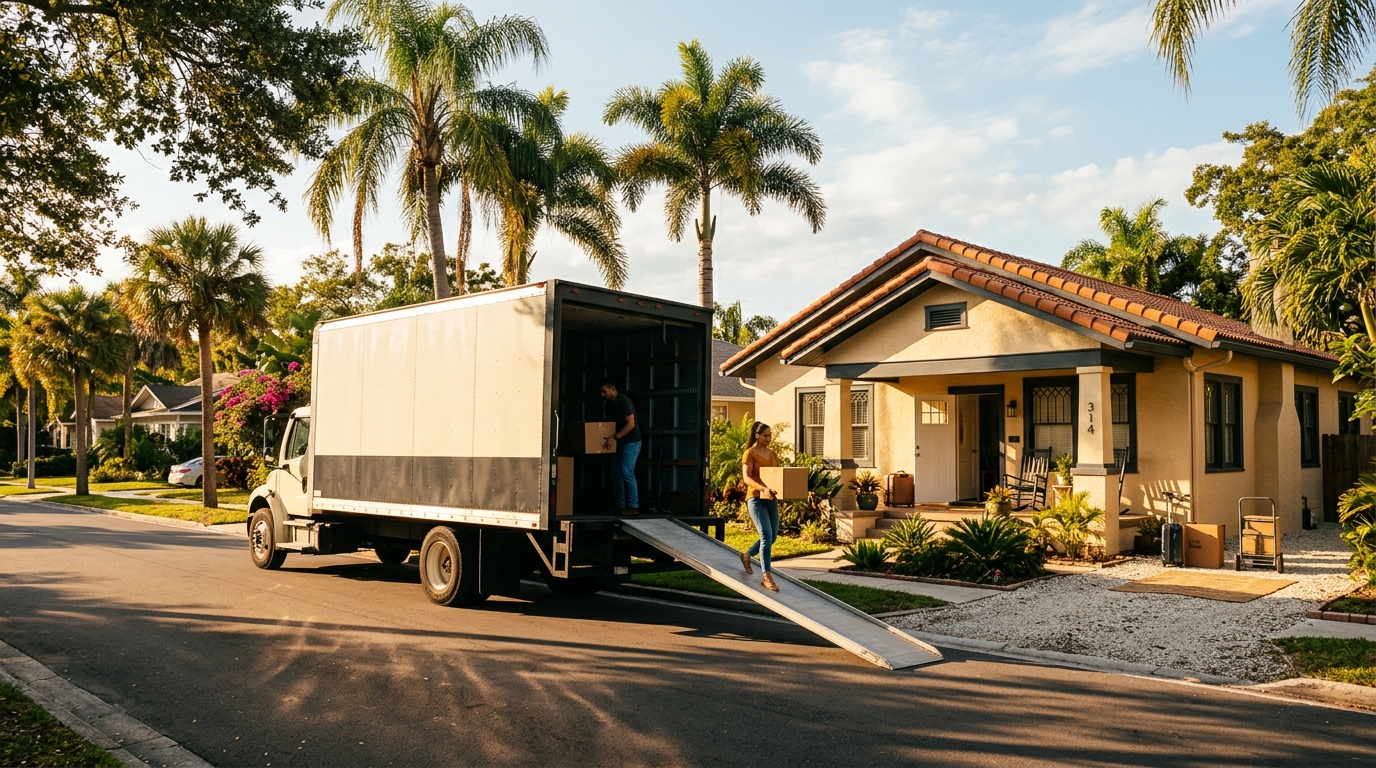
At the Tampa end, a detached house typically means a driveway, a short carry from truck to door, and no elevator to coordinate—which can make for a faster unload. But Tampa's streets in older neighborhoods can be narrow, and a 53-foot trailer may not be able to get close to the door. Ask your mover whether they'll use a smaller shuttle vehicle for the final approach; shuttle fees are genuine and should appear in your estimate before you sign.
If you're moving into a Tampa apartment or condo rather than a house, the dynamics flip: check whether the building has a freight elevator, what hours it's available, and whether parking for a large truck requires a permit from the city. Channelside and the high-rise corridors around downtown Tampa have stricter access requirements than a Seminole Heights bungalow would.
Hurricane Season and When to Move
Tampa's climate is hot and humid year-round, but the window that matters most for planning is June through November: hurricane season. A tropical storm or hurricane can ground crews, close roads, delay shipments, and in serious cases make an area inaccessible for days.
That doesn't mean you can't move during those months—plenty of people do. It means your bill of lading needs a realistic delivery window rather than a single date, and you should ask your mover explicitly what their contingency plan is if a storm warning is issued while your belongings are in transit. Under federal rules, the delivery date or window is whatever is written on your bill of lading; the mover must give you at least 24 hours' notice of delivery and notify you as soon as it knows of any delay. Get that delivery window in writing and make sure it has enough flex built in.
For most people on this route, the smoothest timing is late November through March: you escape a Minneapolis winter, avoid the heart of hurricane season, and land in Tampa's most comfortable weather. The tradeoff is that this is also peak season for Florida-bound moves, so movers in Minneapolis book up earlier. If you're targeting a January or February move, start getting estimates in October.
What Drives the Price on This Route
Don't expect anyone—including us—to give you a reliable number without knowing your inventory. What drives cost on a Minneapolis-to-Tampa move specifically: the weight and volume of what you're shipping (this is an interstate move, and non-binding estimates are based on actual weight), the time of year (winter and early spring are peak), whether a shuttle vehicle is needed at either end, and how much packing service you add. Our team has 35+ years of hands-on service-provider experience, including an operator who ran a moving company for 18 years, and the single biggest source of billing surprises we've seen is customers adding packing services after signing a non-binding estimate without realizing it increases the final weight.
On an interstate move, federal FMCSA rules (49 CFR 375) require every estimate to be either binding or non-binding—and the estimate must say which it is. A not-to-exceed price is a popular product movers offer as a form of binding estimate: you won't pay more than the stated amount, but you might pay less if the actual weight comes in lower. It's worth asking for.
A few rules worth knowing before you sign anything:
- Written estimates must be based on a physical survey—in person or by live or recorded video—unless you waive that in writing. A phone quote with no visual survey is an FMCSA red flag.
- With a non-binding estimate, you must pay no more than 110% of the estimate at delivery to get your goods released; any balance beyond that is billed 30 days later.
- With a binding estimate, you pay the estimate at delivery, plus any services you added after signing, plus up to 15% for impracticable operations; anything above that is billed later.
- Full Value Protection applies automatically on interstate moves: your mover must repair, replace, or pay replacement value for lost or damaged items. Released Value (60 cents per pound per article) is a free alternative, but only if you sign a written waiver choosing it.
- File damage claims in writing within 9 months of delivery. A note on the delivery receipt is not a claim.
- Never sign a blank bill of lading, and make sure you have it at least three days before loading.
Choosing a Mover for This Route
This is a long interstate haul with a specific seasonal risk at the destination end. When you find movers for a Minneapolis-to-Tampa route, look for carriers with demonstrated experience on Southeast corridors—not just general long-distance capacity. On FMCSA's search tool, confirm the company shows as "Motor Carrier of Household Goods," not "Broker of Household Goods." A broker will hand your shipment to a carrier you may never have spoken with; that's not automatically bad, but you should know it's happening and who the actual carrier will be before you sign.
Avoid any company that asks for a large cash deposit upfront—FMCSA flags that as a warning sign—or that quotes a price over the phone without asking to see your home.
Movers in Tampa who handle inbound moves from the Midwest will know the shuttle and permitting requirements for the neighborhoods listed above. Ask them directly. And if you want to browse by state to compare options on either end, that's a good way to see who is licensed in Minnesota and Florida.
Tampa is a similar size to Minneapolis—close enough that the city itself won't feel like a leap. The housing market, the climate calendar, and the building stock are where the notable differences live. Plan around those, and the move itself becomes a matter of logistics.