The sharpest thing to know before this move: you are leaving a city of more than 400,000 people for one of roughly 114,000. Springfield is the Illinois state capital, not a suburb of something larger, and its pace, its housing market, and its street-level geography are all shaped by that smaller scale. If you are leaving Tulsa for a change of tempo, you will find it — but it also means you need to think differently about where to live and what to spend.
A Smaller City with a Tighter Housing Market
Tulsa's rental market is large enough that availability is rarely the constraint. In Springfield it is a different calculation. Only 37% of households rent here, compared with 48% in Tulsa, which means the rental pool is proportionally smaller. Fewer apartments are turning over at any given moment — Springfield's 14% one-year resident turnover is noticeably lower than Tulsa's 18% — so good units tend to move quickly. If you are planning to rent on arrival, start your search earlier than you would have in Tulsa, and be prepared to sign a lease before you have finished packing.
The flip side is that buying is more accessible here than you might expect. The median home value in Springfield is roughly $155,200, about 18% below Tulsa's $189,600 median. For a buyer coming out of Tulsa's market, that gap gives you room to step up in size or condition without stretching your budget. Combined with a median household income in Springfield that actually runs a bit higher than Tulsa's, the ownership math in Springfield is notably more favorable than it looks from across the state line. If you have been renting in Tulsa and wondering whether ownership might pencil out somewhere smaller, this is the route where that question is worth asking seriously.
Median rent tells a quieter version of the same story: Springfield's $945 monthly median runs about 5% below Tulsa's $998. That difference won't transform a budget, but it means you are unlikely to experience sticker shock on the rental side of things.
The Buildings Are Different — and That Changes Moving Day
This is where the size difference becomes concrete and physical. In Tulsa, 27% of homes are in buildings of five or more units — apartment towers, mid-rise complexes, buildings with freight elevators and designated loading zones. In Springfield, that share drops to 17%. Detached houses account for 65% of Springfield's housing stock, a few points higher than Tulsa's 62%.
What that means on moving day depends entirely on which end of the spectrum you are coming from and going to.
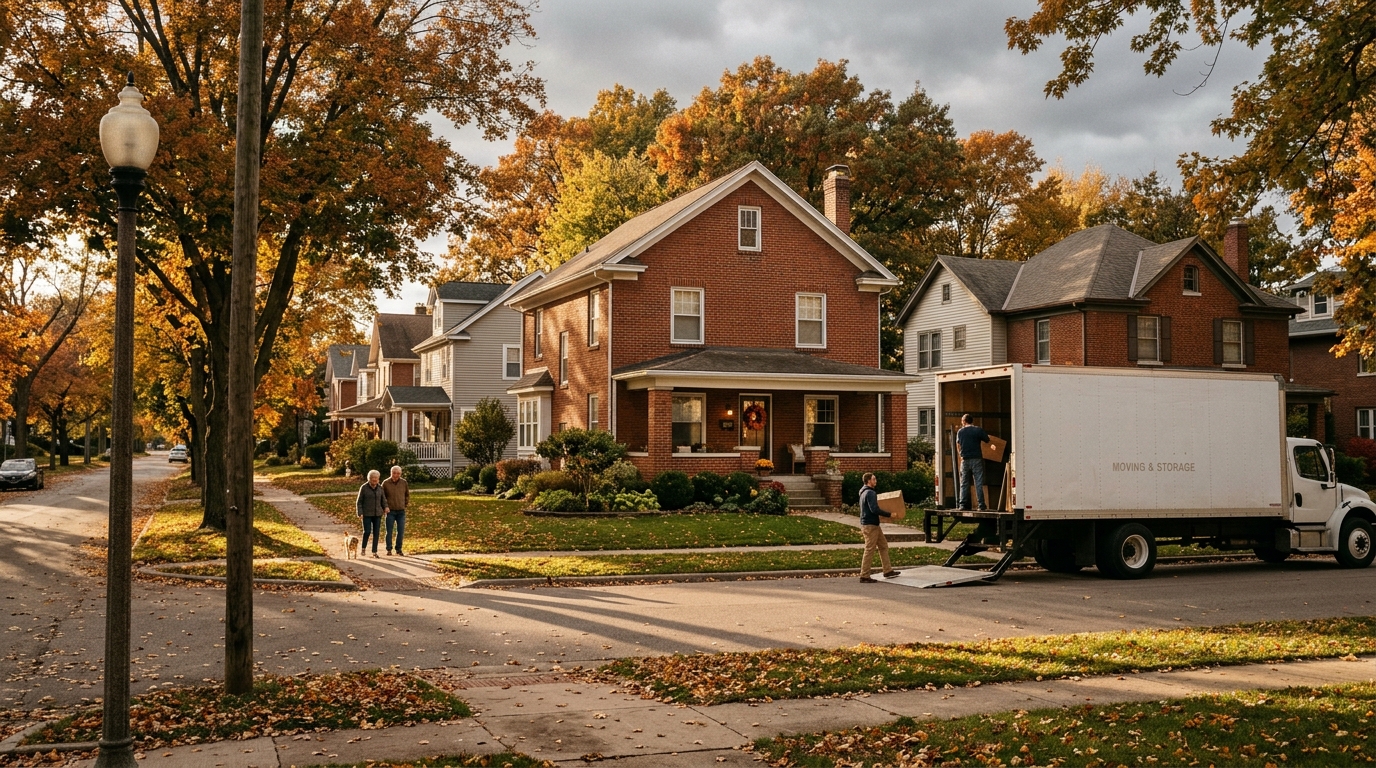
If you are leaving a mid-rise or high-rise apartment in Tulsa, you are probably already familiar with the elevator reservation process — booking a service elevator window, protecting the cab, coordinating with your building manager. If you are arriving at a detached house in Springfield, that coordination goes away, replaced by questions of driveway access, parking for the truck, and stair counts inside the home. Older homes on Springfield's residential streets — particularly the two-story brick and frame houses common across much of the city — can have narrow staircases and tight doorways. Mention the layout to your mover during the estimate, including any tight turns or low ceilings on upper floors.
If the move runs the other direction — from a Tulsa house to a Springfield apartment — ask specifically about elevator access and building move-in policies when you sign your lease. Some buildings require a refundable damage deposit to use the service elevator. Get that detail before your truck arrives.
Parking for a large truck is worth a phone call regardless of destination. On Springfield's older residential streets, a 53-foot trailer may need a special permit or may simply be impractical. A reputable mover will raise this question during the estimate; if they don't, raise it yourself.
Timing the Move Around Two Sets of Seasons
Tulsa and Springfield share the basic Midwestern weather personality — hot, humid summers and a genuine risk of severe weather in spring — but their winters are different enough to matter for scheduling.
Tulsa winters are relatively mild. A bad week brings ice storms and maybe some snow, but extended cold is not the norm. Springfield winters are harder. Average lows drop into the teens and twenties, and moderate snowfall is a regular part of the season. A moving truck navigating Springfield's residential streets in January or February is dealing with a different set of conditions than the same truck would face in Tulsa.
The practical upshot: if you have any flexibility in timing, late spring and early fall are the most predictable windows at both ends of this route. Late spring gives you a buffer between the severe-storm season in Oklahoma and the onset of full summer heat and humidity in Illinois. Early fall — September and into October — is typically settled weather in both states before Springfield's winter sets in.
If you are moving in summer, schedule loading and unloading for early morning. Crews working in direct afternoon sun in humid 90-degree heat work more slowly and more carefully, which affects how long the job takes. That matters whether you are paying by the hour or working within a binding estimate window.
If a winter move is unavoidable, talk with your mover explicitly about ice and access. Ask how they handle delays caused by weather and what your options are if the delivery window shifts.
How the Move Itself Works on This Route
Tulsa to Springfield is an interstate move governed by federal FMCSA rules, which gives you specific protections worth knowing before you sign anything.
Every estimate must be identified in writing as either binding or non-binding. A binding estimate fixes the price for the services listed; at delivery, you pay that amount plus any services you added after signing, plus up to 15% for impracticable operations encountered during the move (anything above that 15% is billed afterward, not collected at delivery). A non-binding estimate is based on actual weight — the final bill could be higher or lower. At delivery on a non-binding estimate, the mover must release your goods once you pay 110% of the estimate; any remaining balance comes in a bill issued no sooner than 30 days later. Many movers also offer a not-to-exceed price, which functions as a binding ceiling: you pay the estimate or the actual cost, whichever is lower. If price certainty matters to you on this route, that is worth asking about specifically.
Your estimate must be based on a physical survey — in person or by live or recorded video — unless you waive that in writing. A quote given over the phone without seeing your belongings is an FMCSA red flag. Do not accept one.
On valuation: Full Value Protection applies automatically to interstate moves. Under it, the mover is responsible for repairing, replacing, or paying the replacement value of anything damaged or lost. If you prefer to reduce the cost of the move, you can choose Released Value instead — 60 cents per pound per article — but only by signing a written waiver that explicitly selects it. Valuation is the mover's liability level; it is not the same as moving insurance, which is a separate, optional product.
Get your bill of lading at least three days before loading. Do not sign it if it is blank or incomplete. A large upfront cash deposit, before any services are rendered, is another red flag worth noting.
If something is damaged, file your claim in writing within nine months of delivery. A note on the delivery receipt is not a claim. The mover must acknowledge your written claim within 30 days and resolve it — paying, declining, or making an offer — within 120 days.
Finding the Right Mover for This Route
Not every carrier that operates in Oklahoma serves central Illinois, and the reverse is equally true. When you find movers for this route, confirm that the company you hire holds active FMCSA authority for interstate household goods moves — not just brokerage authority. On FMCSA's search tool, "Motor Carrier of Household Goods" means the company physically moves you; "Broker of Household Goods" means they hand your job to a carrier you may not have vetted yourself. Both are legal, but you should know which one you are dealing with before you sign.
Our team has 35+ years of hands-on service-provider experience, including an operator who ran a moving company for 18 years, and the consistent advice from that background is simple: get at least two written estimates from carriers who have actually seen what you are moving, read both documents carefully before signing, and ask each mover how they handle the Springfield delivery window specifically — because access, parking, and building logistics at the destination are where surprises tend to happen on this route.
You can start by browsing movers in Tulsa or movers in Springfield, or browse by state if you want to explore carriers licensed in Oklahoma or Illinois. The directory lists companies by the authority type they hold, so you can see exactly what you are working with before you make contact.
Springfield is a city that rewards people who arrive with a plan. The housing market is more owner-friendly than Tulsa's, the winters are more serious, and the buildings are more likely to have driveways than loading docks. Get those details right, and the move itself is straightforward.