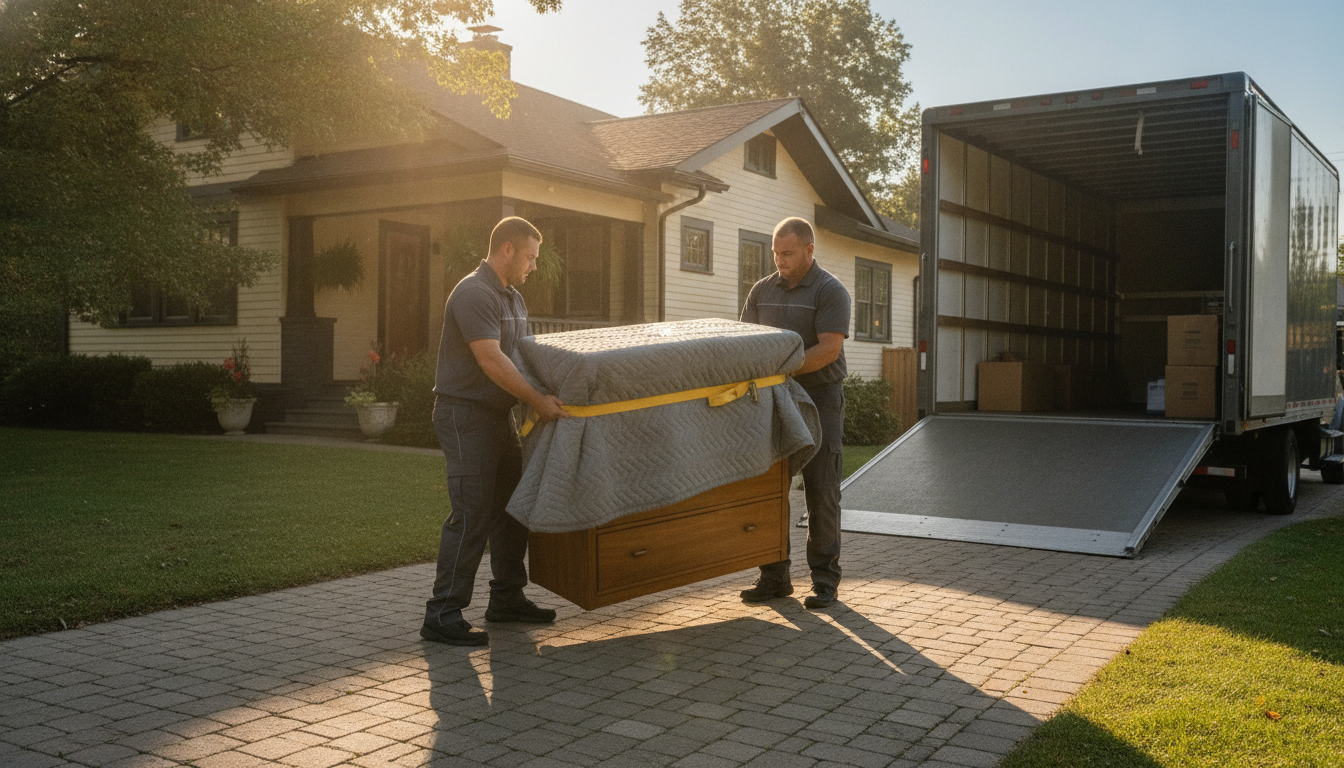
Most local movers charge by the hour, and your total bill is almost entirely determined by three things: how many movers show up, how long the job takes, and how far the truck travels. A typical two-person crew runs $100–$160 per hour in most US markets; a three-person crew runs $140–$220 per hour. Add an extra hour of hidden time-wasters — elevator waits, disassembly you didn't expect, a truck parked three blocks away — and you've paid for a crew member you didn't plan on.
What follows is exactly what to know before the clock starts.
How do movers calculate hourly charges?
Every hourly move is billed in three layers:
- Labor rate — the per-hour charge for the crew, typically billed in 30-minute or 15-minute increments after the first hour.
- Truck fee / travel fee — either a flat fuel/truck charge ($50–$150 is common) or a "portal-to-portal" charge that starts the clock when the truck leaves the company's yard and stops when it returns.
- Add-on fees — stairs, long carries, heavy-item surcharges, packing materials, and disassembly/reassembly. These are legitimate but often not quoted upfront.
The final bill = (hourly rate × hours worked) + truck/travel fee + any add-ons. Understanding each layer is the fastest way to read a quote critically — our guide on how to read a moving quote walks you through every line item to watch for.
What does a 2-person vs. 3-person crew actually cost?
| Crew Size | Typical Hourly Rate | Best For | Estimated Time: 1-BR | Estimated Time: 3-BR |
|---|---|---|---|---|
| 2 movers | $100–$160/hr | Studios, 1–2 BR, short distance | 2–4 hrs | 6–9 hrs |
| 3 movers | $140–$220/hr | 2–4 BR, heavy items, tight schedules | 2–3 hrs | 4–6 hrs |
| 4 movers | $180–$280/hr | Large homes, full-floor moves, time-critical | Rarely needed | 3–5 hrs |
Rates reflect 2025–2026 US market averages and vary significantly by city. Major metros like Boston, San Francisco, and Chicago typically run 20–35% above these ranges; smaller markets like Tulsa or Des Moines often come in below them.
A third mover costs more per hour but almost always reduces total hours enough to save money on moves larger than a one-bedroom. We've seen customers insist on a two-person crew to save $40/hour and end up paying for two extra hours — a net loss of $120–$200.
What time does the clock actually start — and stop?
This is the detail that catches most people off guard.
Portal-to-portal billing means the clock starts the moment the truck leaves the moving company's facility — not when it arrives at your door. If the company is 20 minutes away, you're paying for that drive both ways. Always ask: "Is your travel time billed portal-to-portal, or do you charge a flat travel/fuel fee?"
A flat travel fee ($75–$150) is usually more predictable and often cheaper than portal-to-portal on a long travel day.
The clock typically stops when the last item is placed in your new home and the paperwork is signed — not when the truck leaves your driveway.
What makes a move take longer than expected?
It's predictable what will slow a crew down. Here's what adds time — and what you can do about each:
- Boxes not sealed or stacked — a crew that has to stop and tape your boxes mid-move loses 15–30 minutes easily. Have everything sealed, labeled, and staged by the door before the truck arrives. Our labeling guide shows the system we use with our own crews.
- Furniture that needs disassembly — bed frames, large sectionals, and IKEA pieces take time. Either disassemble them yourself the night before or expect to pay for that time.
- Elevator waits and loading dock rules — condo buildings often have reserved elevator windows. Missing your window can cost 30–60 minutes of crew time sitting idle. See our guide on moving into a condo building for exactly what to arrange in advance.
- Long carries — if the truck can't park within 75 feet of your front door, movers may charge a long-carry fee ($50–$150) and it takes more time per trip.
- Stairs — most companies charge $50–$75 per flight above the first, and stairs genuinely slow down the pace. Mention every flight on both ends when you get your quote.
- Items you weren't going to move but changed your mind about — the last-minute "can you take the treadmill too?" costs time. Settle your inventory before move day.
Minimum hour requirements: what to know before you book
Most local movers require a 2-hour or 3-hour minimum, regardless of how fast the job goes. If your crew finishes a small studio in 90 minutes, you're still paying for two hours. That's not a rip-off — it covers their drive time and dispatch — but it's worth knowing so you price alternatives correctly.
For very small moves (a single room, a few pieces of furniture), you might be better served by a smaller operator or a labor-only service where you've rented the truck yourself. Our breakdown of moving truck rental vs. full-service movers can help you decide which approach makes financial sense for your situation.
While you’re reading
Skip the research — let Robert match you with movers.
Free quotes from movers in your area. Pick whichever is easiest.
How to actually reduce your hourly bill
These are the moves we recommend before the truck shows up:
- Pre-pack everything — not just most things. Every box sealed, every drawer emptied, every item off walls. Movers charging by the hour are not efficient packers.
- Disassemble large furniture the night before. Screws in a labeled zip-lock bag taped to the piece.
- Create a clear path — from every room to the front door and from the driveway to the truck. Movers navigate obstacles slowly.
- Reserve parking in advance — especially in dense cities. A parking permit for a moving truck costs $30–$80 in most cities and saves far more in avoided long-carry time.
- Book a morning start time — afternoon moves in urban areas regularly run into traffic delays. An 8 AM start is almost always faster end-to-end.
- Choose the right crew size — don't under-crew to save on the hourly rate. More movers on the right job = fewer total hours = lower total bill.
- Tip in cash at the end — this isn't about the bill, but it matters. A well-tipped crew moves with purpose. Our guide on how to tip movers covers what's expected and what's genuinely appreciated.
What's a reasonable hourly rate for my city?
Rates vary sharply by market. As a general benchmark:
| Market Type | 2-Person Crew ($/hr) | 3-Person Crew ($/hr) |
|---|---|---|
| High-cost metros (SF, NYC, Boston, Chicago) | $150–$200+ | $200–$280+ |
| Mid-size cities (Atlanta, Minneapolis, Portland) | $120–$160 | $160–$220 |
| Smaller/lower-cost markets (Tulsa, Des Moines, Knoxville) | $95–$135 | $130–$175 |
If you're moving in or around a specific city, the find movers directory on this site lets you compare local companies by location — and you can filter by reviews to see how crews actually perform on the clock.
If you want to compare companies across a whole state before narrowing down, browse movers by state is the fastest way to get a regional picture.
Frequently asked questions
How long does a typical local move take?
A one-bedroom apartment with a two-person crew typically takes 2–4 hours. A two-bedroom home usually runs 3–5 hours with two movers, or 2–4 hours with three. A three- or four-bedroom home should be budgeted at 5–8 hours minimum. These ranges assume everything is pre-packed and the crew has reasonable access — stairs, long carries, and elevator waits all add time.
Is it cheaper to hire 2 movers or 3 movers?
For anything larger than a one-bedroom, three movers is usually cheaper in total dollars even though the hourly rate is higher. The third mover reduces total hours enough to offset the rate difference in most cases. Use two movers for studios and one-bedrooms, three movers for two- and three-bedrooms, and four movers for large homes or tight time windows.
What is a travel fee, and is it negotiable?
A travel fee covers the mover's time and fuel driving to and from your location. It's usually either a flat fee ($50–$150) or a portal-to-portal billing structure that charges you for drive time at the crew's hourly rate. Flat fees are more predictable. Some companies will reduce or waive the travel fee if you're within their core service area — it's worth asking directly before you book.
Do movers charge extra for stairs or elevators?
Yes, typically. Most companies charge $50–$75 per flight of stairs above the ground floor, applied at both origin and destination. Elevator situations vary — some companies charge a flat fee, others just absorb it into time. Always disclose stairs and elevator logistics when getting a quote so there are no surprises on the bill. Our resource on moving hidden fees covers every common add-on charge in detail.
When does the hourly clock start and stop?
This depends on the company's billing policy. Portal-to-portal billing starts the clock when the truck leaves the yard; door-to-door billing starts when movers arrive at your home. The clock typically stops when the last item is placed at the destination and you sign off on the job. Always confirm this before booking — it can add 30–60 minutes to your bill without anyone doing anything wrong.
Can I negotiate the hourly rate with movers?
Rates are less negotiable than structure. Most companies won't budge on their per-hour rate, but you may be able to negotiate a lower flat travel fee, waived minimum hours on a small job, or a discount for booking on a weekday or off-peak date. Moving mid-month on a Tuesday or Wednesday typically gets you a better rate than a Saturday at month's end — our post on how to choose a moving date explains exactly how timing affects price.
Ready to see what local crews charge in your area? Use the Majestic Moving directory to find licensed movers near you — and ask Robert, our moving concierge, if you want help comparing quotes or figuring out the right crew size for your job. He's available on every page and won't waste your time.
Tagged