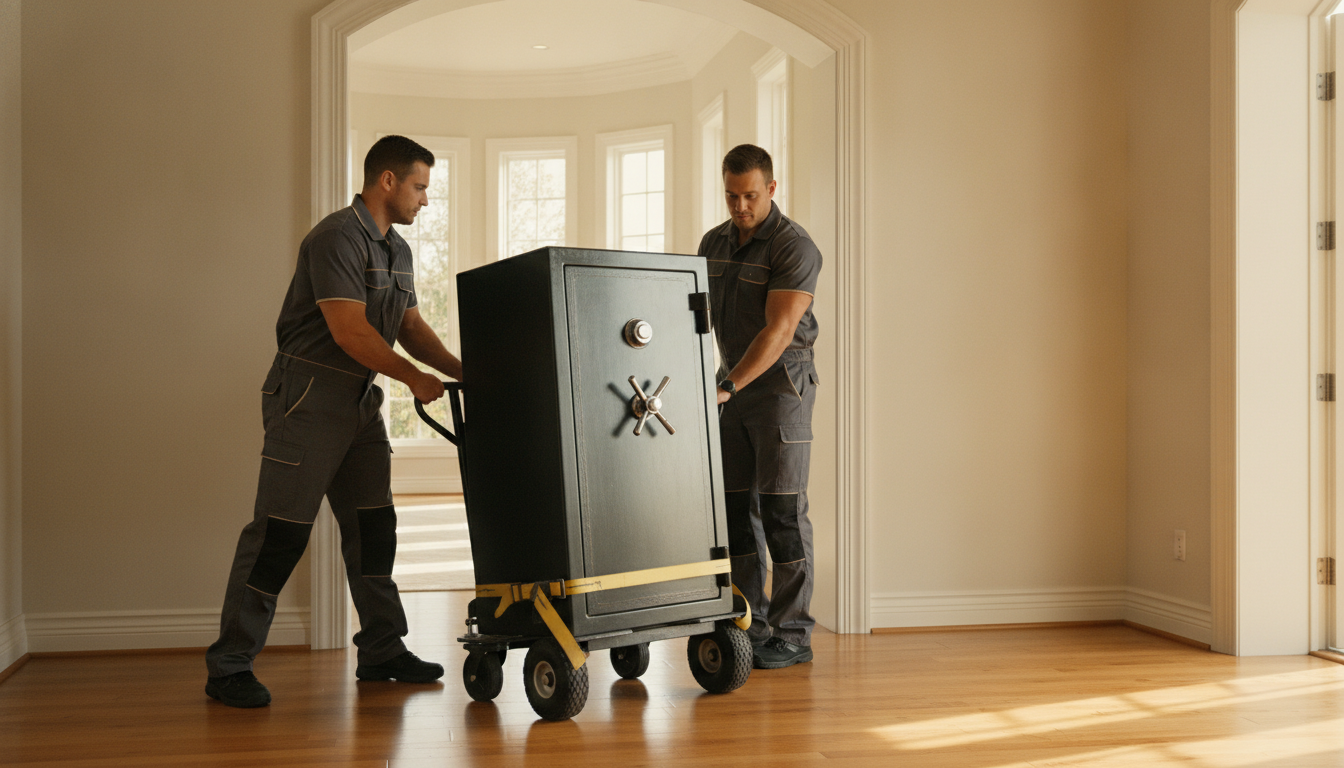
Moving a gun safe typically costs $150–$600 for a local move and $300–$1,200+ for long-distance, depending on the safe's weight, how many stairs are involved, and whether the mover has the right equipment. Most residential gun safes weigh between 200 and 1,000 pounds — and that single fact drives almost every decision you'll make about how to move one safely.
Gun safes are among the most consistently underestimated jobs a homeowner brings to a moving crew. Here's everything you need to know before moving day.
Why Gun Safes Are Different From Other Heavy Furniture
A 400-pound safe is not the same as a 400-pound dresser. The weight is concentrated in a metal shell with no grip points, no legs to leverage against, and a center of gravity that shifts depending on what's inside. The locking bolts and reinforced door panels mean the weight distribution is uneven and unpredictable.
Standard moving dollies often aren't rated for safes above 600 pounds. A heavy safe on the wrong equipment on a staircase is a genuine safety hazard — not a "we'll figure it out" situation. We've seen crews turn jobs down on the spot when a customer assumed a two-man team with a regular dolly could handle a 700-pound long-gun safe in a basement.
If a mover quotes a gun safe move without asking about weight and access, that's a red flag worth taking seriously — see our guide on spotting moving scams before you book for the full list.
What Does It Cost to Move a Gun Safe?
Costs vary by safe size, floor access, and distance. Here's a realistic breakdown:
| Safe Weight | Same-Floor / No Stairs | One Flight of Stairs | Two+ Flights / Basement |
|---|---|---|---|
| Under 300 lbs | $150–$250 | $200–$350 | $300–$500 |
| 300–600 lbs | $250–$400 | $350–$550 | $450–$750 |
| 600–1,000 lbs | $400–$600 | $500–$800 | $700–$1,200+ |
| 1,000+ lbs | Custom quote | Custom quote | Custom quote |
These ranges reflect local moves within the same metro area. For long-distance moves, add the standard weight-based freight calculation — typically $0.50–$1.00 per pound per 1,000 miles for specialty cargo. A 500-pound safe moved 1,500 miles could add $375–$750 to your base moving bill before any other charges.
Common add-on fees to watch for:
- Stair carry: $50–$150 per flight, billed on top of base rate
- Long carry (truck can't park close): $75–$200
- Narrow doorway / tight hallway surcharge: $50–$150
- Disassembly of door (for extreme tight fits): rare, $100–$300
- Crane or rigging for basement egress through a window well: $500–$1,500+
For a broader look at how movers price heavy items, see our cost breakdown guide by home size.
Should You Empty the Safe Before Moving It?
Yes — always empty the safe before your movers arrive. This is not optional.
Here's why it matters on multiple levels:
- Weight. A safe packed with long guns, handguns, and ammunition can add 50–200 pounds over its empty rating. Every extra pound affects the crew's ability to control it safely.
- Federal law. Under 18 U.S.C. § 922, transporting firearms across state lines requires that the owner comply with both the origin and destination state's laws. Movers are not licensed firearms dealers — they cannot legally be responsible for the chain of custody of your guns during transit. You transport your firearms separately.
- Ammunition. Most moving companies' terms of service explicitly prohibit transporting ammunition. This is typically non-negotiable. Check your mover's contract before move day.
- Valuables. Anything irreplaceable (documents, jewelry, cash) should travel with you, not in a locked steel box on a moving truck.
What you can leave in the safe: empty holsters, cleaning kits, non-prohibited accessories. Confirm with your specific mover before assuming.
How to Transport Your Firearms During a Move
This is your responsibility, not your mover's. Federal law (18 U.S.C. § 926A) allows lawful owners to transport unloaded firearms across state lines in a locked container in a vehicle, as long as possession is legal in both the origin and destination states — but state laws vary significantly.
Before transporting firearms across state lines:
- Verify the destination state's laws on magazine capacity, suppressor regulations, and any required permits
- California, New York, Illinois, New Jersey, and Massachusetts have notably stricter import rules
- Some states require transport directly to a federally licensed dealer (FFL) if the firearm is not legal to possess there
- When in doubt, consult a firearms attorney or your state's attorney general office — not your moving company
For everything else about crossing state lines with a mover, our guide on interstate moving rules covers what the regulations actually require.
What to Tell Your Mover When You Book
Surprises on moving day cost you money and goodwill. When you call to book, give the mover this information upfront:
- The exact make and model of the safe (so they can look up the published weight)
- Current floor and destination floor — including whether there's a basement egress
- Doorway width at the narrowest point on the path (measure in inches)
- Staircase details — straight run, L-shaped, or spiral; width; any low ceilings
- Elevator availability if moving to/from an apartment or condo
- Whether the safe needs to go into a vehicle (some movers won't load safes into box trucks without a liftgate rated for the weight)
A good mover will ask most of these questions unprompted. If they don't, raise them yourself. You can find mover reviews on our directory to check how other customers rate a company's communication before the job.
While you’re reading
Skip the research — let Robert match you with movers.
Free quotes from movers in your area. Pick whichever is easiest.
How to Prepare the Safe and the Path for Moving Day
Do this the day before your movers arrive:
- Clear the path completely. Remove rugs, door stops, and any furniture within 3 feet of the route
- Measure every doorway on the path from the safe's current location to the truck — width and height
- Protect your floors. Lay down cardboard or moving blankets along the route; ask your mover whether they provide floor protection or whether you need to supply it
- Identify the entry point at the new location and measure those doorways too before move day
- Confirm parking and access at both addresses — a liftgate truck needs significant clearance
If your safe is in a finished basement with a standard 30-inch door and a 90-degree turn at the bottom of the stairs, say so when you book. That's a job some crews will decline without specialized stair-climbing dolly equipment.
Can You Move a Gun Safe Yourself?
For safes under 200 pounds, a DIY move with a heavy-duty appliance dolly, moving straps, and two strong adults is feasible — on a flat surface. Even then, the risk of injury is serious.
For anything over 300 pounds, we strongly recommend hiring a professional crew with a stair-climbing dolly or power stair-climber. The rental cost for appropriate equipment (typically $100–$200/day for a motorized stair climber) plus the physical risk almost always makes professional help the smarter financial and safety call.
If you're weighing DIY vs. full-service for the rest of your move, our DIY vs. full-service comparison guide lays out the actual tradeoffs.
Finding the Right Mover for a Safe
Not every moving company has the equipment or experience for heavy safes. When you're vetting movers, ask directly:
- "Do you have a stair-climbing dolly rated for [safe weight]?"
- "Have your crew moved safes in this weight range before?"
- "Is there an additional charge for the safe, and what does it cover?"
- "What happens if the safe can't fit through a doorway?"
You can browse movers by state on our directory to find companies in your area and filter for those with specialty heavy-item experience. If you're in a major metro — say, Chicago, Atlanta, or Tampa — you'll typically find several companies with dedicated safe-moving crews.
Once you've narrowed it down, our guide on how to hire a moving company you can actually trust walks you through the full vetting process.
Frequently Asked Questions
How much does it cost to move a gun safe locally?
Most local gun safe moves cost $150–$600, depending on weight and access. A 300-pound safe on a ground floor with easy truck access is on the low end. A 700-pound safe coming out of a basement with stairs is on the high end — or may require a custom quote and specialized rigging equipment.
Do movers transport firearms inside the safe?
No. Reputable moving companies will not transport firearms, loaded magazines, or live ammunition — even inside a locked safe. It's both a federal legal issue and a standard clause in most moving company contracts. You transport your firearms separately in your own vehicle, following the laws of every state you pass through.
Does my moving company's liability cover a gun safe if it's damaged?
With released-value protection on an interstate move — the free basic option, available only if you sign a written waiver choosing it — items are covered at $0.60 per pound per article. For a 500-pound safe, that's $300 — likely far less than the safe's value. Full-value protection or a separate moving insurance policy is worth considering for high-value safes. See our guide on what moving coverage types actually mean for details.
Do I need any permits to move a gun safe across state lines?
No permit is required for the safe itself. However, the firearms inside are subject to federal and state laws. Under 18 U.S.C. § 926A, you may transport unloaded firearms in a locked container through states where you couldn't otherwise legally possess them — but this has limits. Some states (notably California, New York, and New Jersey) have restrictions that may affect what you can bring. Confirm your destination state's laws before your move date.
What's the heaviest safe a standard moving crew can handle?
Most two-person crews with a standard appliance dolly can safely handle safes up to about 400–500 pounds on a flat surface. For heavier safes or any stair work above 300 pounds, a three- or four-person crew with a motorized stair-climbing dolly is the professional standard. Always confirm equipment and crew size when booking.
How far in advance should I book a mover for a gun safe?
At least 2–4 weeks for a local move, and 6–8 weeks for a long-distance move. Movers with the right equipment for heavy safes are in demand, and last-minute availability for specialty jobs is limited. If you're in a bind, our same-day and short-notice moving guide covers your options — but expect a premium.
Ready to find a mover who's actually equipped for the job? Browse movers on our directory, or chat with Robert, our moving concierge, who can help you match with the right crew for your safe's weight, your floor plan, and your timeline.
Tagged