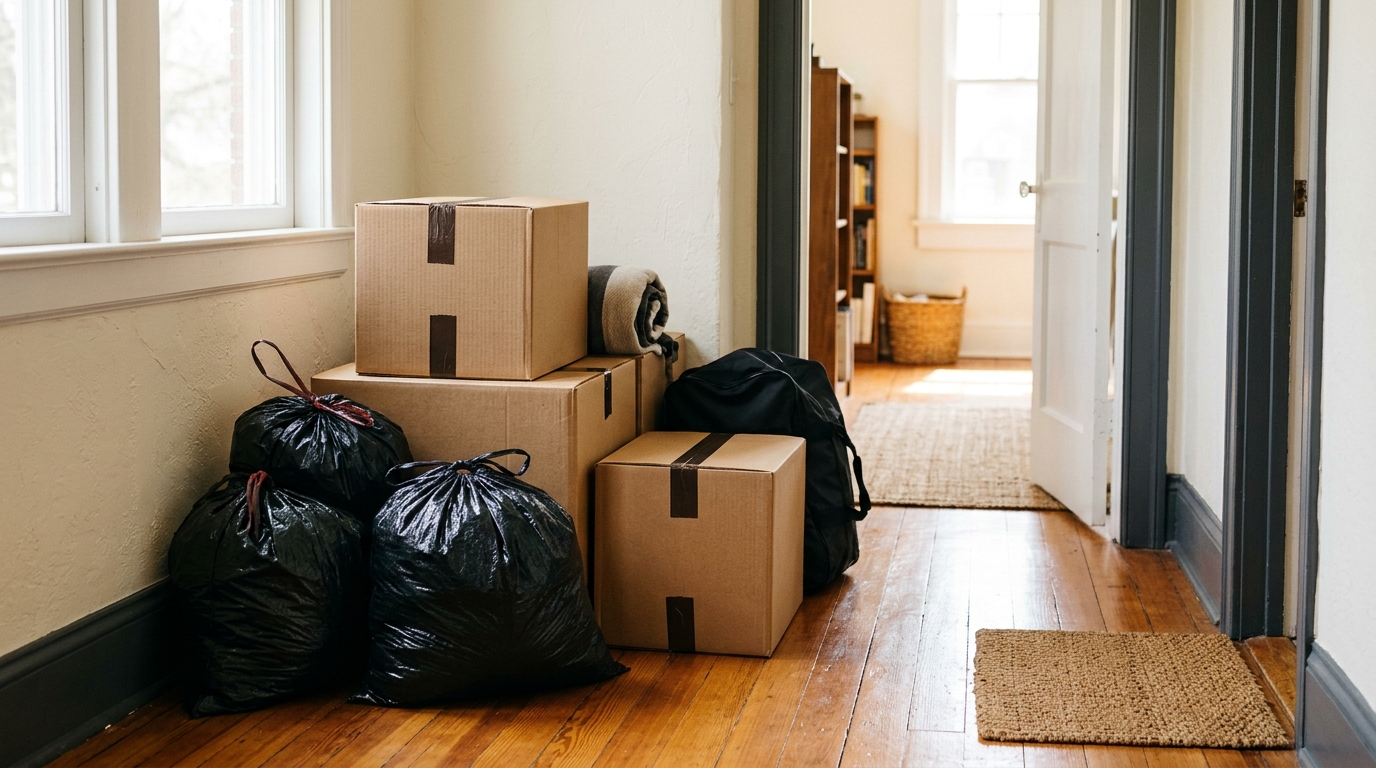
Most professional movers will load clothes packed in trash bags — it is one of the most common packing shortcuts they see. That said, movers are not required to accept bags, some companies have policies against them, and anything that isn't in a box often comes with a reduced or zero liability if it's damaged in transit. Whether bags make sense depends on your move type, your mover's policy, and which clothes you're talking about.
Do movers have a rule against trash bags?
No universal rule exists. Policies vary by company, and our team has 35+ years of hands-on service-provider experience, including an operator who ran a moving company for 18 years — and in that time, bags of soft goods were almost always loaded without objection.
What movers care about most is truckload efficiency and liability. A rigid box stacks neatly; a lumpy bag does not. Bags also offer no protection against moisture, tears, or compression. Some carriers will note on the inventory sheet that bag contents were not inspected and accept no liability for damage. A few high-volume local movers refuse bags outright because they slow down the loading process.
The practical rule of thumb: call your mover before moving day and ask directly. If they say bags are fine, confirm whether that changes anything on the bill of lading or their liability for the contents.
Which clothes actually work well in trash bags?
Not all clothing is equal when it comes to bags. Here's how to think about it:
| Clothing type | Bag okay? | Why |
|---|---|---|
| Casual tops, jeans, hoodies | ✅ Yes | Wrinkle-resistant, low value |
| Towels, gym clothes, loungewear | ✅ Yes | Soft goods, no damage risk |
| Bedding, throw blankets | ✅ Yes | Bulky, boxes waste space |
| Dress shirts, blazers, suits | ⚠️ Risky | Heavy creasing; use wardrobe boxes |
| Delicate fabrics (silk, linen) | ❌ No | Compress and wrinkle badly |
| Coats and formal wear | ❌ No | Need wardrobe boxes or garment bags |
| Shoes | ⚠️ Risky | Better in original boxes or a dedicated box; see our guide on packing shoes for a move |
The clothes most people throw in trash bags — everyday t-shirts, jeans, gym gear, and towels — are genuinely fine. The ones that suffer are anything structured or delicate.
How to pack clothes in trash bags so movers will accept them
Even when a mover allows bags, how you pack them matters for truck space and liability.
- Use contractor-grade or heavy-duty bags (3 mil or thicker). Standard kitchen bags tear when lifted. A 33-gallon contractor bag handles a full load of clothes without splitting.
- Don't overfill. A bag so stuffed it can't be tied is a liability — for the clothes and for whoever carries it. Keep bags liftable: roughly 30–40 lbs maximum.
- Tie securely and label each bag. Write the destination room directly on a piece of tape stuck to the outside. This is the most-skipped step and the one that costs the most time on unloading day. Our box-labeling system guide applies to bags, too.
- Keep one "open-first" bag separate. Pack a day-one bag with whatever you'll need in the first 24 hours — a change of clothes, pajamas, toiletries. Keep that bag with you in the car, not on the truck.
- Tell your mover in advance how many bags you have. Surprise volume can affect the estimate, especially on hourly local moves.
Will bags affect your estimate or final bill?
Possibly — and it depends on whether you're moving locally or long-distance.
Local (hourly) moves: More bags can mean more loading time, which can mean a higher bill. Bags are harder to stack than boxes, so movers may spend extra minutes arranging them. On an hourly rate of $100–$200 per crew hour (typical range for a 2-person crew in 2026), even 20 extra minutes adds up. Check our guide on how movers charge by the hour before you decide how many bags to use.
Long-distance moves: These are typically priced by weight or cubic footage. Trash bags compress, so they may actually reduce cubic footage compared to half-empty boxes — a minor plus. Weight won't change. Confirm pricing method with your mover when you get a moving quote.
Liability: On interstate moves, movers are required to offer Full Value Protection and Released Value (60 cents per pound per article, which applies only if you sign a written waiver choosing it). Neither protects clothes in bags well — at 60 cents per pound, a torn bag of clothes worth $300 might yield a few dollars in a claim. Ask your mover how bag contents are handled on the inventory and whether they're covered under whatever valuation option you choose.
While you’re reading
Skip the research — let Robert match you with movers.
Free quotes from movers in your area. Pick whichever is easiest.
Smart alternatives that are faster than boxing but safer than bags
If you want something between a trash bag and a full cardboard box, these options work well:
- Wardrobe boxes — Hanging clothes go straight in on the bar; no folding. Movers almost universally accept them, and you can stuff the bottom with shoes or folded items. They typically cost $10–$20 each if your mover doesn't supply them.
- Vacuum seal bags — Compress bulky items like comforters and winter coats dramatically. Worth reading our full guide on vacuum seal bags for moving before you buy — they're great for some things and damaging for others.
- Reusable totes — Many movers accept these just as readily as bags, and they're sturdier. They won't stack like boxes but are fine for soft goods.
- Dresser drawers left in — A frequently missed option: many movers will transport dressers with lightweight, non-breakable items still inside the drawers, which saves both boxes and time. Confirm with your mover first. Our post on whether you have to empty dresser drawers covers this in detail.
What movers notice — and don't care about
Movers are not judging your packing choices. As we cover in depth in do movers judge a messy house, professionals care about two things: doing the job efficiently and protecting their liability. A bag of t-shirts won't raise an eyebrow. What will slow things down is a bag that's so heavy it takes two people to lift, or one that tears on the stairs and scatters clothes across the landing.
The best thing you can do is communicate clearly before moving day. Tell your mover roughly how many bags versus boxes you have, ask about their policy in writing, and confirm whether bags are listed separately on the inventory.
Ready to find a mover who fits your packing style? Browse movers in our directory or read mover reviews to see how companies handle everyday packing situations before you book.
Frequently asked questions
Will movers refuse to load clothes in trash bags?
Most won't refuse, but some companies have policies against bags because they're hard to stack in the truck. Always confirm with your mover before moving day — a quick call or email is all it takes.
Do movers charge extra for trash bags?
Not usually as a line item, but on hourly local moves, bags can take longer to load efficiently than boxes, which may add time to the job. Long-distance movers pricing by weight won't charge extra.
What is the best type of bag to use for moving clothes?
Heavy-duty contractor bags (33 gallon, 3 mil thickness) are the strongest option. Standard kitchen garbage bags tear too easily when full of clothes. Keep each bag under about 35–40 lbs so it's manageable.
Are clothes in trash bags covered if something is damaged?
Coverage depends on the valuation option you've chosen and how the mover documents the bags on the inventory. Bag contents are harder to inspect and often noted as unchecked. Ask your mover specifically how bagged items are handled before you sign anything.
Can I leave clothes in my dresser drawers instead of using bags?
Often yes — many movers will move a dresser with lightweight clothes still inside the drawers, saving you time and boxes. Confirm with your mover first, since this depends on the dresser's weight and construction.
What clothes should never go in a trash bag for a move?
Avoid bags for structured garments (suits, blazers, dress shirts), delicate fabrics (silk, chiffon, linen), and formal wear. Use wardrobe boxes or garment bags for these items to prevent heavy creasing and damage.
Have more questions about how to prepare your clothes and soft goods for moving day? Find movers near you or connect with Robert, our moving concierge, for personalized help navigating your options.
Tagged