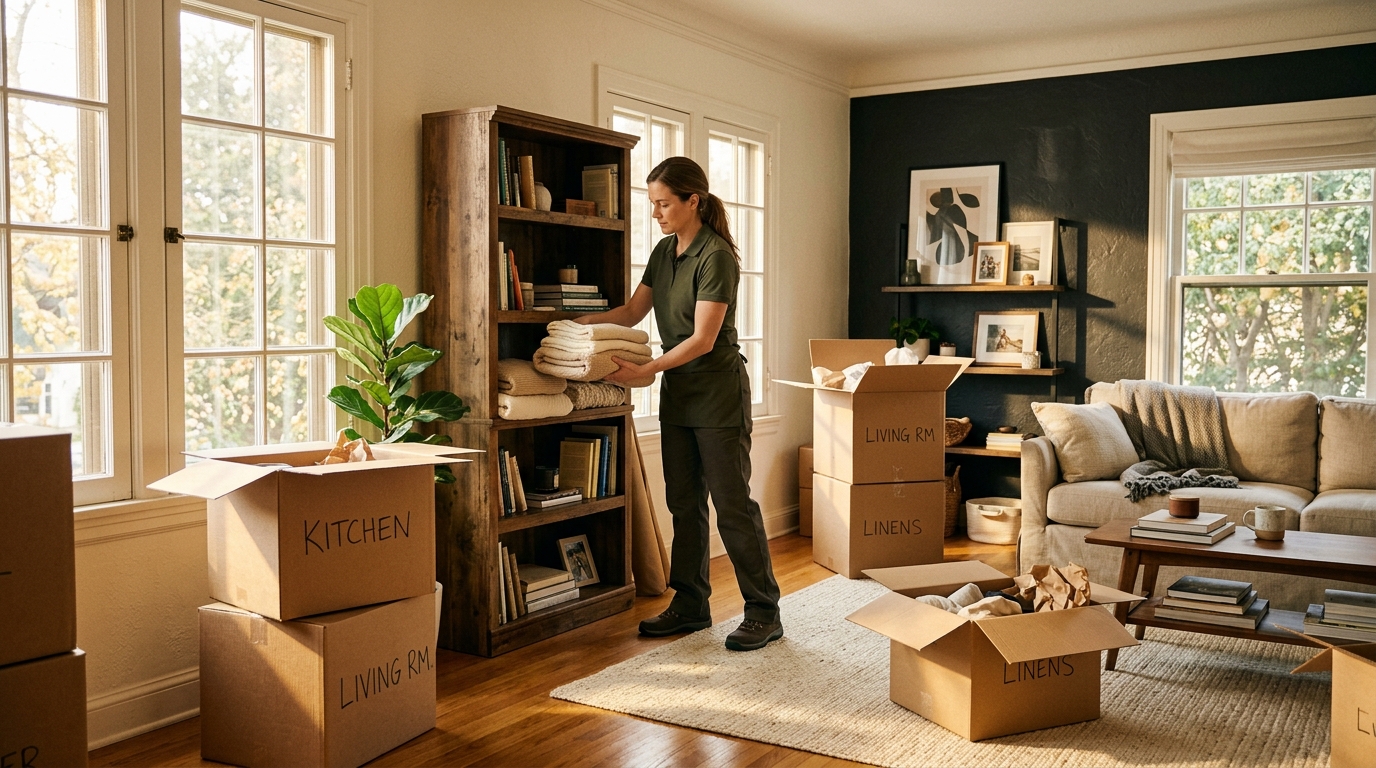
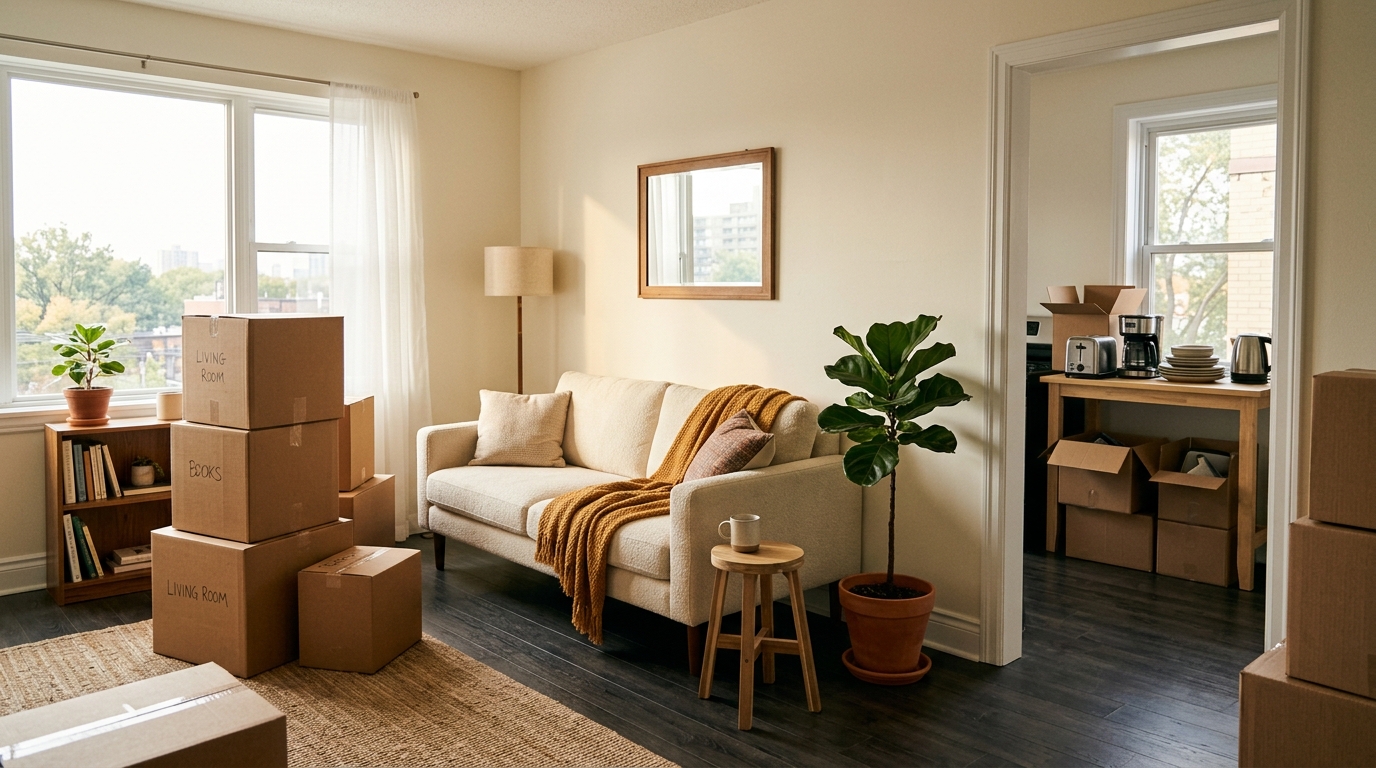
The first week after a move is the one most people underplan. Focus on five things in order: safety, sleep, utilities, documents, and neighborhood basics — and you'll feel settled far faster than the average mover who just starts pulling items out of boxes at random.
Households that feel "home" within two weeks are always the ones that worked a clear priority list in the first seven days. Here's ours.
Why the First Week After Moving In Matters More Than the Move Itself
The actual moving day gets all the attention — and most of the planning. But the week that follows determines whether you feel settled in a month or still lost in three. Skipping the basics (changed locks, registered utilities, confirmed mail forwarding) creates compounding problems: a missed bill here, a delayed driver's license there, and suddenly it's been two months and nothing feels right.
Start structured. It pays off.
Day 1: Safety and Sleep — In That Order
Before you unpack a single decorative item, do these two things.
Change the locks (or rekey them)
You have no idea how many copies of your key are floating around — landlord contractors, previous owners' family members, dog walkers. Rekeying a standard deadbolt typically costs $20–$50 per lock if you do it yourself, or $75–$150 per lock with a locksmith. A full front-and-back rekey job on a standard home usually runs $150–$300. Do it Day 1.
Set up your bedroom before anything else
This is the most important unpacking decision you'll make. A made bed, accessible toiletries, and a clear path to the bathroom is all you need to function on Day 2. Everything else can wait. If the truck delivered your items as planned, you already read our guide on what to do in the first 72 hours after moving in — use that for the immediate post-arrival window, and use this post for the days that follow.
Day 2–3: Utilities, Internet, and Accounts
Confirm every utility is in your name and active
| Utility | Typical setup lead time | Notes |
|---|---|---|
| Electricity | Same day – 3 business days | Most providers activate within 24 hrs |
| Gas | 1–5 business days | May require an in-person appointment |
| Water/sewer | Often already active; update billing name | Check with local municipality |
| Internet | 3–14 days for installation | Order before move-in whenever possible |
| Renter's/homeowner's insurance | Immediate (online) | Required before most mortgage closings |
If you haven't already worked through the complete utilities and internet setup checklist, now is the time. Don't assume the previous tenant's account rolled over to you — it didn't, and you may have been using their service on their dime, or none at all.
Check that USPS mail forwarding is active
Mail forwarding from your old address takes 7–10 business days to activate after you submit it. If you haven't filed yet, do it at usps.com now. The standard forwarding period is 12 months for first-class mail.
Day 3–4: Document Updates
This is the part everyone procrastinates on and regrets. Your address ties into more systems than you think.
Priority document updates in your first week
- Driver's license / state ID — Most states require an address update within 10–30 days of moving. Fees are typically $10–$25 for a reissue. Failing to update can affect traffic tickets, jury summons, and voter registration.
- Vehicle registration — Usually tied to your license update; most states require it within 30–90 days of establishing residency. Late fees range from $25–$100+.
- Voter registration — Deadlines vary by state, typically 15–30 days before an election. Many states now allow online updates in minutes.
- Bank and credit accounts — Log in and update; don't wait for a statement to bounce.
- Employer HR records — Affects payroll, W-2 delivery, and benefits.
- Health insurance — Moving across county or state lines often qualifies as a Special Enrollment Period (SEP) — you have 60 days from the move date to update coverage.
- USPS Informed Delivery — Re-register with your new address so you get daily previews of incoming mail.
For the full document change checklist, see our post on updating your address and documents after a move.
Day 4–5: Unpack by Priority, Not by Box Number
After safety and admin are handled, you earn the right to actually unpack. Here's how it's done efficiently:
The right unpacking order
- Kitchen — Functional kitchen = functional household. Start with the items you actually use daily (coffee maker, one set of pots, everyday dishes). Leave specialty items for later.
- Bathrooms — Towels, toiletries, toilet paper. All of it.
- Kids' rooms (if applicable) — Familiar surroundings help kids adjust faster. Settling kids in their new space is one of the highest-ROI things you can do in week one.
- Living room — Furniture placement first, then electronics, then décor.
- Home office — Especially if you work from home; get this functional before Day 7.
- Everything else — Guest rooms, storage areas, garage. These can wait weeks without causing genuine problems.
Label-driven unpacking tip
If you labeled your boxes well before the move, you already know which boxes hold daily-use items (marked OPEN FIRST) vs. seasonal stuff. If you didn't — lesson learned for next time — focus on tearing into boxes in the kitchen and bathrooms and ignore everything else until you've got a functioning home base.
While you’re reading
Skip the research — let Robert match you with movers.
Free quotes from movers in your area. Pick whichever is easiest.
Day 5–6: Home Systems Walk-Through
This is the thing most new homeowners skip and then panic about six months later.
What to locate and test
- Main water shutoff valve — Know where it is before a pipe leaks
- Electrical panel — Label every breaker; confirm GFCI outlets in bathrooms and kitchen work
- HVAC filter — Replace it now; dirty filters raise energy costs and reduce air quality. A standard 1-inch filter costs $5–$20 depending on MERV rating
- Smoke and CO detectors — Test all of them; replace batteries even if they seem fine. NFPA guidelines recommend testing monthly and replacing batteries annually (or getting 10-year sealed units)
- Water heater — Note the age (stamped on the unit) and set temperature to 120°F per EPA and DOE guidelines to prevent scalding and reduce energy use
- Exterior lights and locks — Check every door and window lock; replace or add deadbolts as needed
If you're renting, document any issues with photos and timestamps and send them to your landlord in writing within 24–48 hours of move-in. This protects your security deposit.
Day 6–7: Neighborhood Basics
Feeling at home in a new place accelerates the moment you know where things are and recognize a few faces.
The practical neighborhood checklist
- Grocery store — Drive or walk it; know your nearest option
- Pharmacy — Transfer prescriptions before you run out
- Urgent care / ER — Know the nearest one before you need it
- Nearest transit stop (if applicable) — Download the local transit app
- Trash and recycling schedule — Your local city or county website has pickup days; missing the first few is a common new-homeowner mistake
- HOA or building management contact (if applicable) — Introduce yourself; get the rules doc
For a deeper look at building your social footing in a new area, our guide on settling into a new neighborhood after a move covers everything from meet-your-neighbors strategies to finding your local routines.
What Can Wait Until Week 2 (and Beyond)
Not everything needs to happen in Day 1–7. Give yourself permission to defer:
- Wall art and décor — Live in the space first; you'll place things more intentionally
- Furniture rearrangements — Your first layout is almost never your final one
- Deep cleaning — A surface clean is fine; full deep-clean can happen once boxes are cleared
- Storage unit organization — If you used a storage unit during the transition, that can wait until you know what you actually need in the house
Finding Movers You Can Trust for Your Next Move
If you're still in the process of choosing a mover for an upcoming move, find movers near you or browse moving companies by state to compare licensed, insured options in your area. Our moving concierge Robert can answer questions about your specific situation — available right on the site, any time.
Frequently Asked Questions
How long does it take to feel settled after moving into a new home?
Most people feel genuinely settled — meaning they know where things are, have their routines back, and feel comfortable — within four to six weeks. The households that work a clear first-week priority list (safety, utilities, documents, unpacking in order) typically hit that mark faster. Don't measure yourself against the boxes still in the garage; measure against whether you're sleeping well and functioning daily.
What's the first thing you should unpack after moving in?
The bedroom comes first — a made bed and accessible toiletries gets you through the first days. After that, the kitchen is the highest-priority room because a functional kitchen restores normal daily life faster than anything else. Bathrooms are a close third. Leave guest rooms, storage areas, and décor for later.
Do I need to change the locks when I move into a new home?
Yes, in virtually every case. Whether you're buying or renting, you have no way to know how many copies of the existing key are in circulation. Rekeying (rather than full replacement) is faster and cheaper — typically $75–$150 per lock with a locksmith — and most landlords are legally required to provide new keys or allow rekeying when requested. Check your state's landlord-tenant statutes for specifics.
How soon do I need to update my driver's license after moving to a new state?
Most states require you to obtain a new state driver's license within 30–60 days of establishing residency. If you moved within the same state, most states require an address update within 10–30 days. Deadlines and fees vary by state — check your new state's DMV website for exact rules. Driving on an out-of-state license beyond the deadline can result in fines.
What utilities do I need to set up immediately when moving into a new home?
Electricity and gas are the most critical — without them you can't cook, heat, or cool the space. Water is usually already active but needs to be billed in your name. Internet typically takes 3–14 days for installation, so order it before your move-in date if possible. Renter's or homeowner's insurance should be active from Day 1.
What should I do if I notice damage to the new home on move-in day?
Document everything with dated photos and send a written notice to your landlord or seller within 24–48 hours. For renters, this protects your security deposit from being charged for pre-existing damage. For buyers, check whether any damage constitutes a breach of the purchase agreement and consult your real estate attorney if needed. For damage caused by movers during delivery, our guide on how to file a moving damage claim covers your rights and next steps.
Tagged