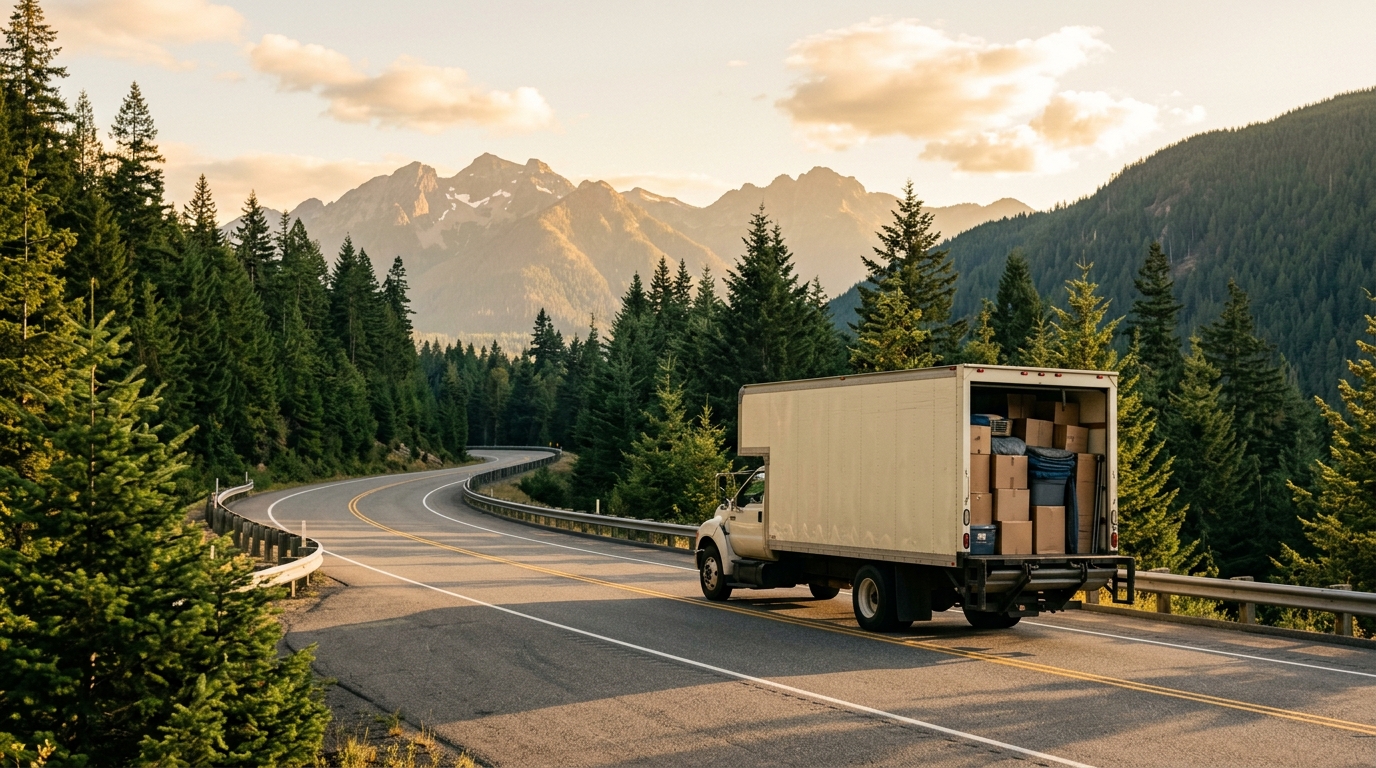
Relocating from San Francisco to Washington state is a federally regulated interstate move that typically costs $3,000–$8,000 or more, depending on home size, the volume of belongings, and the time of year you move. The single biggest change most movers notice isn't the distance — it's the financial shift: Washington has no state income tax, while California charges up to 13.3%, and the statewide cost of living in Washington is dramatically lower than what San Francisco residents are used to paying.
What does a move from San Francisco to Washington cost?
The driving distance from San Francisco to the Seattle metro area is roughly 800 miles, putting this squarely in long-distance interstate moving territory. Costs vary considerably based on:
- Home size: A studio or 1-bedroom typically runs less than a 3-bedroom house with full furniture.
- Volume and weight: Interstate movers price by weight (non-binding estimates) or by declared inventory (binding estimates).
- Season: Summer (June–August) is peak season; expect higher rates and tighter availability. Late fall and winter often offer more flexibility and competitive pricing.
- Services: Full-pack, crating of fragile items, vehicle transport, and storage-in-transit all add to the final number.
As a general range for planning purposes, most San Francisco households moving to Washington pay somewhere between $3,000 and $8,000+ for a professionally licensed interstate mover. These are estimates — your actual cost depends on your specific inventory and circumstances. Find movers who serve this route to get written estimates based on your actual situation.
How do San Francisco and Washington compare on cost of living?
Important context: the San Francisco numbers reflect a single, high-cost city, while the Washington figures are statewide averages that blend lower-cost rural areas with pricier metros like Seattle and Bellevue. They are not a strict apples-to-apples comparison, but they give a useful directional picture.
| San Francisco (city) | Washington (statewide avg) | |
|---|---|---|
| Cost-of-living index | 116 | 107 |
| Median 2BR rent | $3,800/mo | $1,850/mo |
| Median home price | $1,300,000 | $575,000 |
| State income tax | Up to 13.3% | 0% (none) |
The spread is striking. Even if you settle in a higher-cost Washington city like Seattle or Kirkland, most San Francisco transplants find meaningful savings on housing. Add the absence of a state income tax, and the financial case for this move is often compelling — though it's worth researching the specific Washington city or county you're targeting, since local property taxes and other costs vary.
Where in Washington do people moving from San Francisco tend to land?
Washington is a large, geographically diverse state. The most common destinations for Bay Area transplants include:
- Seattle / King County: The tech-industry hub, with a dense urban core, strong transit, and a culture that feels familiar to many San Franciscans. Neighborhoods range from Capitol Hill and Fremont to suburban Bellevue and Redmond.
- Tacoma: A growing city south of Seattle with a lower cost of living, a revitalized downtown arts scene, and easy access to Mount Rainier.
- Olympia: The state capital, smaller and quieter, popular with those seeking a slower pace while staying in Western Washington.
- Spokane: Eastern Washington's largest city — semi-arid, sunnier, and significantly more affordable, though culturally and climatically quite different from both San Francisco and the Seattle side of the Cascades.
- Bellingham: A college town near the Canadian border, popular with outdoor enthusiasts, with a Pacific Northwest feel and lower price points than Seattle.
Connect with movers in Washington who know these destinations and can advise on logistics specific to each area.
How does the climate compare?
San Francisco is famous for its mild, fog-influenced weather: summers rarely climb above 70°F, winters rarely dip below 40°F, and most rainfall arrives between November and March. The main hazards are earthquake risk (the city sits near the San Andreas and Hayward faults) and wildfire smoke that can drift in from surrounding regions in late summer and fall.
Washington's climate depends heavily on which side of the Cascade Mountains you choose:
- Western Washington (Seattle, Tacoma, Olympia, Bellingham): Mild and rainy, with cool, wet winters and relatively dry, comfortable summers. It's the climate most similar to what San Franciscans know — though expect more consistent grey skies and rain from October through May.
- Eastern Washington (Spokane and beyond): Semi-arid, with hotter summers, colder winters with actual snowfall, and far more sunshine year-round. A bigger climate adjustment for Bay Area natives.
Washington-specific natural hazards include volcanic activity from Cascade peaks like Mount Rainier and Mount St. Helens, wildfires east of the Cascades (increasingly active in late summer), and occasional flooding — particularly in river valleys on the western side.
How does an interstate move from San Francisco to Washington work?
Because you're crossing a state line, your move is governed by federal FMCSA rules (49 CFR 375). Here's what you need to know:
Licensing
Every interstate mover must be registered with the FMCSA and hold a valid USDOT number and MC number. You can verify any mover at protectyourmove.gov. On the FMCSA search, "Motor Carrier of Household Goods" means the company will actually move you; "Broker of Household Goods" means they'll hand your shipment to another carrier — both are legal, but you should know which one you're hiring.
Estimates
Federal rules recognize two estimate types, and every estimate must clearly state which it is:
- Binding estimate: You pay the agreed price at delivery, plus any services added after signing, plus up to 15% for impracticable operations charged at delivery (anything above that is billed afterward).
- Non-binding estimate: The final bill is based on actual weight. At delivery, the mover must release your goods once you pay 110% of the estimate; any remaining balance is billed after 30 days from delivery. Note: 110% is what's due at the door — it's not a cap on the total bill.
Many movers also offer a not-to-exceed price, which guarantees your bill won't go above a set number even if actual weight runs higher. This is a popular and legitimate product worth asking about.
A written estimate must be based on a physical survey — in person or by live or recorded video — unless you waive that in writing. A sight-unseen phone quote is flagged by the FMCSA as a red flag.
Valuation
Valuation is the mover's level of liability for your goods — it is not insurance.
- Full Value Protection applies automatically; under it, the mover must repair, replace, or pay the replacement value of any lost or damaged item.
- Released Value (60 cents per pound per article) is the free, basic option — but it applies only if you sign a written waiver choosing it. Many customers do, because it lowers the cost of the move.
If you want broader financial protection, separate moving insurance is available through third-party insurers and is regulated at the state level.
Delivery windows
No federal law sets a specific number of delivery days. The window is whatever is agreed and written on your bill of lading. Long-haul moves from San Francisco to Washington often span several days to a couple of weeks in transit — your mover should give you a range at booking. The mover must provide 24 hours' notice before delivery and notify you as soon as it learns of any delay.
You must receive your bill of lading at least 3 days before loading and can cancel within 3 days. Never sign a blank document.
How to choose a licensed long-distance mover
Our team has 35+ years of hands-on service-provider experience, including an operator who ran a moving company for 18 years. The consistent advice: take the licensing and estimate process seriously before you sign anything.
What to do:
- Verify the USDOT and MC numbers on protectyourmove.gov before any conversation goes further.
- Get at least three written estimates based on an in-person or video survey of your home.
- Ask specifically for a binding or not-to-exceed estimate if you want cost certainty.
- Read the bill of lading carefully — it is your legal contract.
- Check verified review platforms for recent, documented customer experiences.
- Be cautious of large upfront cash deposits — the FMCSA flags these as a red flag.
Start by browsing movers in San Francisco who specialize in long-distance and interstate routes, or browse by state to explore carriers licensed to operate in Washington.
New Washington resident checklist
Washington doesn't require a vehicle registration within a specific short window in the same way some states do, but you'll want to transfer your driver's license and vehicle registration promptly. Check the Washington State Department of Licensing (dol.wa.gov) for current deadlines and fees, as these details change and vary by situation. If you're buying a home, look into Washington's property tax exemption programs for primary residences through the Washington State Department of Revenue.
Frequently asked questions
Is a move from San Francisco to Washington an interstate move?
Yes. Any move that crosses a state line is an interstate move, governed by federal FMCSA rules. Your mover must hold a valid USDOT number and MC number, and all federal valuation, estimate, and delivery rules apply.
How long does it take to move from San Francisco to Washington?
Transit times vary by mover, route, and time of year. For a long-haul move of roughly 800+ miles, transit typically spans several days to a couple of weeks. The exact delivery window should be agreed upon in writing on your bill of lading before loading begins. Your mover is required to give you 24 hours' notice before arrival.
Does Washington have a state income tax?
No. Washington has no state income tax. For residents moving from California, where the top rate reaches 13.3%, this is often one of the most significant financial changes of the move.
What's the difference between Full Value Protection and Released Value?
Both are forms of valuation — the mover's liability for your belongings, not insurance policies. Full Value Protection (applied automatically) requires the mover to repair, replace, or pay the replacement value of lost or damaged items. Released Value (60 cents per pound per article) is the free, lower-cost option — but you must sign a written waiver to choose it. For higher-value items, ask your mover about separate third-party moving insurance.
How do I know if a Washington-bound mover is legitimate?
Look up the company's USDOT number and MC number at protectyourmove.gov. Confirm they're registered as a "Motor Carrier of Household Goods" (or a licensed broker). Refuse any mover who gives you a quote without surveying your home in person or by video, or who asks for a large cash deposit upfront.
Is the cost of living really that much lower in Washington than San Francisco?
The data suggests a substantial difference. On the federal price index for 2024 (U.S. = 100), the San Francisco area sits at 116; Washington statewide sits at 107. Median 2BR rent drops from $3,800 in San Francisco to $1,850 statewide in Washington, and median home prices go from $1,300,000 to $575,000. Keep in mind these are city-vs.-state comparisons — Seattle and the Eastside are pricier than the statewide average — but even in higher-cost Washington markets, most San Francisco transplants find meaningful savings.