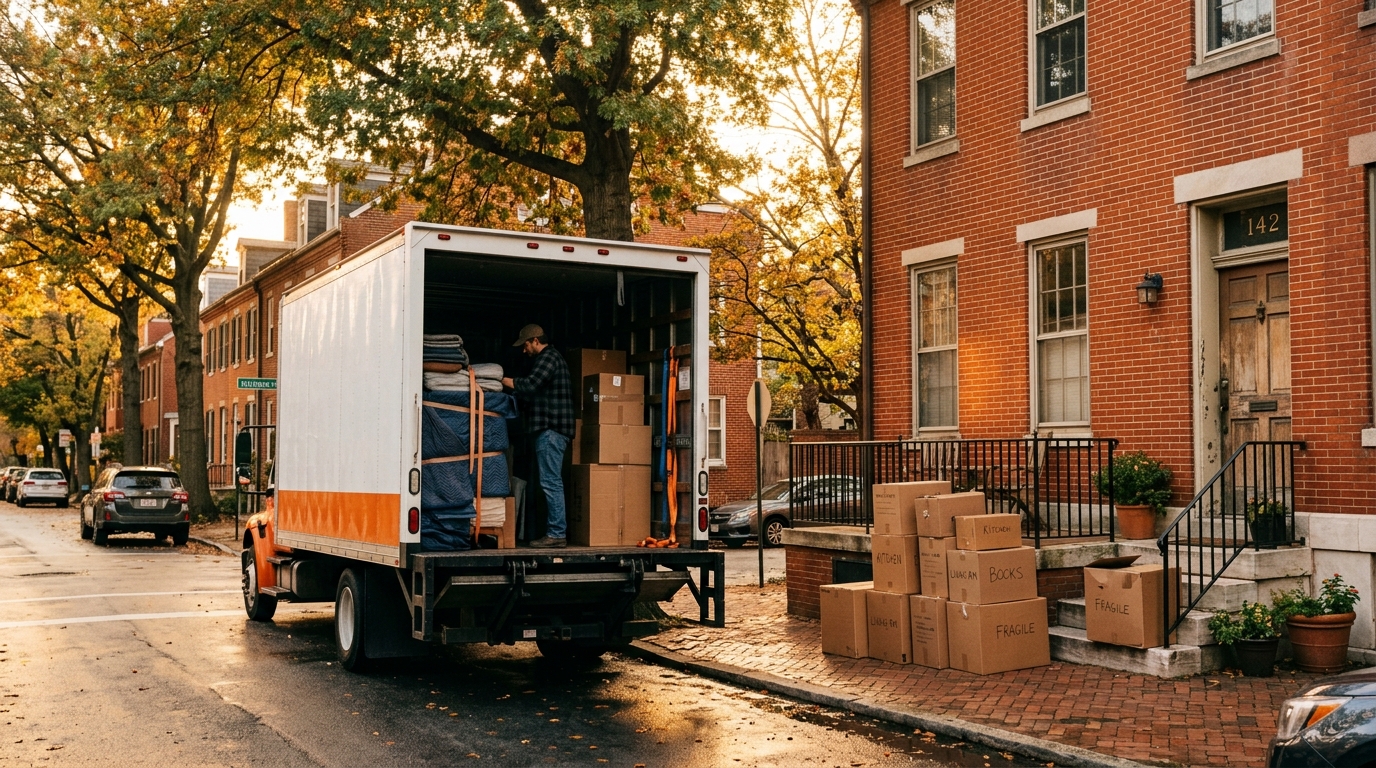
Relocating from Maryland to Pittsburgh is a federally regulated interstate move that typically costs between $2,000 and $6,500, depending on home size, distance within each state, and the time of year you move. On the federal price index for 2024 (U.S. = 100), the Pittsburgh area's 95 is about 10% lower than Maryland's statewide figure of 105, and median home prices are roughly $155,000 less — making Pittsburgh one of the most affordable major cities within driving distance of the Mid-Atlantic corridor. The single biggest adjustment most Maryland movers report: Pennsylvania's flat 3.07% income tax rate is structurally simpler than Maryland's graduated 2%–5.75% bracket, but Pittsburgh winters bring heavier snowfall and far more cloud cover than nearly anywhere in Maryland.
What does a move from Maryland to Pittsburgh cost?
Move costs are estimates that shift with home size, the specific towns you're moving between, the season, and the services you choose (packing, storage, specialty items). That said, here are realistic ranges our team — which includes an operator who ran a moving company for 18 years — considers typical for this corridor:
Factors that move the needle most:
- Distance within each state. A move from Ocean City, MD to Pittsburgh is longer than one from Frederick, MD — and fuel, labor, and truck time all scale accordingly.
- Summer peak season. May through August is the busiest and most expensive window. If your timeline is flexible, a fall or late-winter move can cut costs noticeably.
- Full-service vs. load-only. Hiring movers to pack, load, transport, and unload costs more than renting a container or trailer and doing the labor yourself.
- Binding vs. non-binding estimate. More on this in the interstate rules section below.
Find movers who serve the Maryland–Pittsburgh corridor and request at least three written estimates before committing.
How do Maryland and Pittsburgh compare on cost of living and taxes?
The table below uses Maryland statewide averages on the left and Pittsburgh city-specific figures on the right. Because one is a state average and the other is a single city, they are not a strict apples-to-apples comparison — your actual experience will depend on which part of Maryland you're leaving and which Pittsburgh neighborhood you're settling into.
What the numbers mean in practice:
- A renter moving from suburban Maryland could save $300–$500 per month on a comparable two-bedroom.
- Buyers who sell a Maryland home near the median price may be able to purchase in Pittsburgh outright or with a significantly smaller mortgage.
- Pennsylvania's flat income tax rate is lower than Maryland's top bracket, but higher than Maryland's bottom brackets — so the tax picture depends heavily on your income level. Consult a tax professional for your specific situation.
Where to live in Pittsburgh
Pittsburgh is a city of distinct, walkable neighborhoods, each with its own personality. While we don't manufacture neighborhood statistics, here's an honest orientation:
- Shadyside and Squirrel Hill tend to attract buyers and renters who want walkable retail, restaurant strips, and proximity to universities. Both are among the city's more established and competitive real estate markets.
- Lawrenceville (lower, central, and upper) has seen significant investment over the past decade and draws younger professionals and creative-industry workers. Expect a range of price points depending on the block.
- Mt. Lebanon and Peters Township are popular suburban options just south of the city proper — often chosen by families prioritizing school districts and more space.
- The North Shore and North Side sit across the Allegheny River from downtown and offer proximity to stadiums and the river trails.
- Oakland is Pittsburgh's university and medical hub — practical for healthcare workers, researchers, and students.
Because Pittsburgh is built across hills, valleys, and three rivers, your commute pattern matters enormously. Before signing a lease or making an offer, test your actual drive or transit route during rush hour.
Climate: What Maryland movers should expect in Pittsburgh
Maryland's climate varies from humid subtropical in the south and along the coast — with actual hurricane and nor'easter exposure — to humid continental in the western mountains with meaningful snowfall. Pittsburgh falls squarely into the humid continental category with a few local quirks worth knowing:
- Summers are warm and humid, with highs typically in the 80–85°F range. Very similar to western Maryland summers.
- Winters are cold and snowy, averaging around 40 inches of snow annually — more consistent winter precipitation than most of Maryland outside of Garrett County.
- Cloud cover is Pittsburgh's most talked-about weather trait. The city consistently ranks among the cloudiest in the US, especially November through March. If you're moving from the Chesapeake region or the DC suburbs, this is a genuine lifestyle adjustment.
- No major hurricane risk. Pittsburgh is far enough inland that tropical systems typically weaken significantly before reaching the area.
- Ice storms and flooding are relevant hazards, particularly at the confluence of Pittsburgh's three rivers (the Allegheny, Monongahela, and Ohio). If you're considering a home near any waterway, review its flood zone designation carefully.
How interstate moves work: FMCSA rules you need to know
Because you're crossing a state line, your move is governed by federal law — specifically 49 CFR 375, enforced by the Federal Motor Carrier Safety Administration (FMCSA). Here's what actually matters:
Licensing
Every mover you hire for this move must be registered with the FMCSA and hold an active USDOT number. Verify any mover at fmcsa.dot.gov before signing anything. On FMCSA's search tool, "Motor Carrier of Household Goods" means the company moves your belongings; "Broker of Household Goods" means they hand your job off to another carrier. Both are legal — but you should know which one you're hiring.
Written estimates — and why the survey matters
Federal rules require that written estimates be based on a physical survey of your belongings — conducted in person or by live or recorded video — unless you waive that requirement in writing. A mover who gives you a price over the phone without seeing what you own is an FMCSA red flag.
Every estimate must state whether it is binding or non-binding:
- Binding estimate: You pay the estimate at delivery, plus any services added after signing, plus up to 15% for impracticable operations (anything above that is billed later — not collected at the door).
- Non-binding estimate: The final bill is based on actual weight. At delivery, you must pay 110% of the estimate to get your goods released; any remaining balance is billed within 30 days. Note: 110% is the amount due at delivery, not a cap on the total bill.
Many movers also offer a not-to-exceed price, which functions like a binding estimate with an upward ceiling — worth asking about if you want cost certainty.
Valuation — not the same as insurance
Your mover's liability for lost or damaged goods is called valuation, not insurance.
- Full Value Protection — the mover must repair, replace, or pay the replacement value of any damaged item.
- Released Value — basic coverage at 60 cents per pound per article, at no added charge. This option applies only if you sign a written waiver choosing it.
Separate moving insurance is optional and regulated at the state level; ask your mover or an independent insurance provider for details.
Delivery windows and the bill of lading
No federal law sets a specific number of days for delivery. Your delivery date or window is whatever is agreed and written on your bill of lading — the legally binding contract for your move. You must receive the bill of lading at least 3 business days before loading and may cancel within that window. Never sign a blank bill of lading.
The mover must give you 24 hours' notice before delivery and notify you as soon as it learns of any delay. For a Maryland-to-Pittsburgh move, transit is often 1–3 days, but interstate shipments can sometimes be consolidated with other loads; confirm the window in writing.
Claims
If something is lost or damaged, file a written claim within 9 months of delivery. A note on the delivery receipt is not a claim. The mover must acknowledge your claim within 30 days and resolve it — paying, declining, or making an offer — within 120 days.
How to pick a licensed long-distance mover
Our team has 35+ years of hands-on service-provider experience, and the advice that consistently matters most:
- Verify the USDOT number on fmcsa.dot.gov before the conversation goes any further.
- Get at least three written estimates based on an actual survey — in person or video.
- Ask for your estimate type in writing (binding, non-binding, or not-to-exceed).
- Read verified reviews on platforms that confirm the reviewer used the service. Look for patterns in complaints, not just star ratings.
- Avoid large upfront cash deposits. FMCSA treats a large cash deposit requirement as a red flag for fraud.
- Confirm your delivery window in writing on the bill of lading before loading day.
Browse movers in Maryland to start comparing licensed carriers at your origin, or go directly to movers in Pittsburgh to see who serves that destination. You can also browse by state to find licensed movers across the full route.
Frequently asked questions
How long does a move from Maryland to Pittsburgh typically take?
Transit time for a Maryland-to-Pittsburgh move is often 1–3 days for the drive itself, but interstate shipments are sometimes consolidated with other loads, which can extend the window. The delivery date or window that governs your move is whatever is written on your bill of lading — confirm it in writing before loading, and make sure the mover commits to 24-hour delivery notice.
Is a Maryland-to-Pittsburgh move covered by federal moving laws?
Yes. Because you are crossing a state line, your move is governed by federal FMCSA regulations (49 CFR 375). This means your mover must be USDOT-registered, provide a written estimate based on a physical or video survey, give you a bill of lading at least 3 days before loading, and follow federal rules on valuation, delivery, and claims. Pennsylvania's state rules would apply only if you were moving within Pennsylvania.
Will my Maryland income be taxed by Pennsylvania after I move?
Once you establish Pennsylvania residency, your income is subject to Pennsylvania's flat 3.07% state income tax — compared to Maryland's graduated rate of 2%–5.75%. In the year you move, you'll likely file partial-year returns in both states. Consult a tax professional for your specific situation, as local earned income taxes (which Pittsburgh levies) also apply and can affect your total picture.
What are Pittsburgh's biggest weather surprises for Maryland transplants?
Two things catch most Maryland movers off guard: the volume of cloud cover (Pittsburgh is consistently among the cloudiest US cities, especially in winter) and the consistency of snow. At roughly 40 inches annually, Pittsburgh gets more reliable winter snowfall than all but the western mountains of Maryland. The good news: no meaningful hurricane risk, and the city handles winter weather well.
How do I verify a mover is legitimate before hiring them?
Go to fmcsa.dot.gov and search by the mover's company name or USDOT number. Confirm their registration is active and check their complaint history. A mover without an active USDOT number cannot legally transport your goods across state lines. Also confirm whether they are a motor carrier (they move you) or a broker (they hand off your job) — both are legal, but you deserve to know.
Should I choose a binding or non-binding estimate for this move?
Both are legal and each has trade-offs. A binding estimate gives you cost certainty — you pay the agreed price at delivery regardless of actual weight, plus any added services or impracticable operations charges. A non-binding estimate means the final bill is based on actual weight, which could be lower or higher than the estimate; you pay 110% at delivery, with any remaining balance due within 30 days. Many people in this corridor prefer asking movers for a not-to-exceed price, which caps upward cost surprises. Discuss options with at least three licensed movers before deciding.