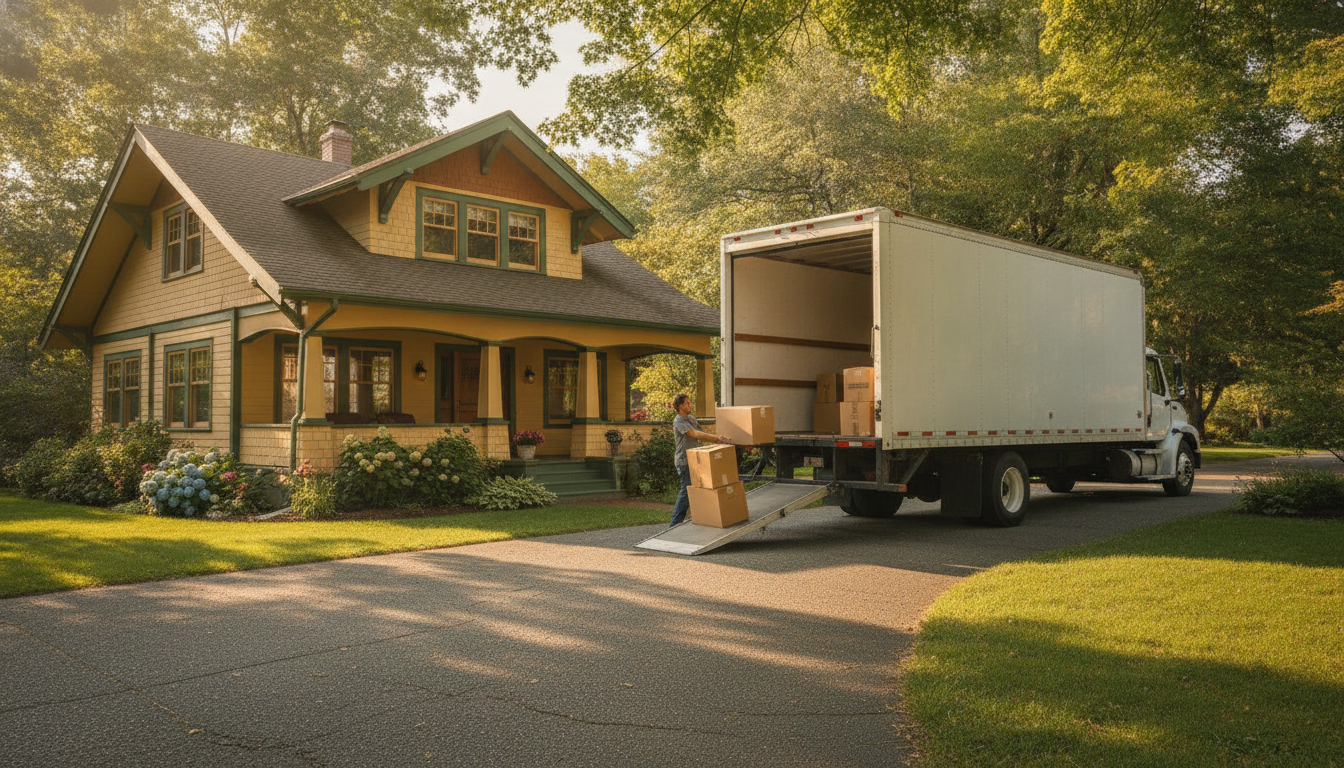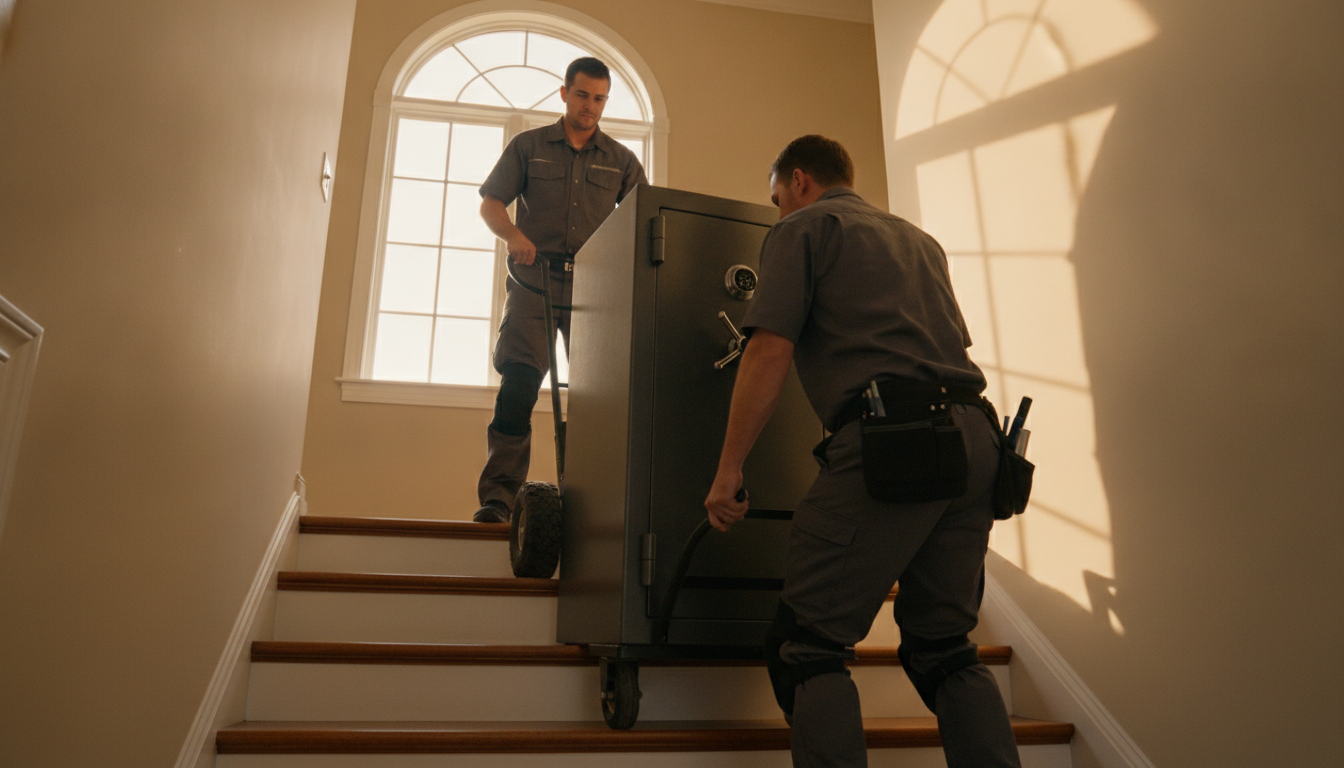
Moving a gun safe, floor safe, or oversized piece of furniture typically costs $150–$600 for in-home repositioning and $300–$1,200+ for a full move to a new address, depending on the item's weight, the number of stairs involved, and whether specialty equipment is required. Most standard moving crews are not equipped for this work — you need to ask the right questions before booking.
Why safes and oversized furniture are a category unto themselves
A king-size sectional sofa is bulky, but it disassembles. A 750-pound gun safe does not. Nothing separates an experienced crew from an unprepared one faster than a 600-pound Liberty safe at the bottom of a basement staircase.
The core problem is weight concentration. A standard household refrigerator runs 200–300 lbs and has wheels. A mid-size gun safe — say, a 36-gun long-gun cabinet — weighs 400–700 lbs and has zero flexibility. Oversized items like antique armoires, solid-wood pool tables without disassembly, or marble-top sideboards present similar challenges: dense, rigid, and unforgiving of tight turns.
Standard movers carry furniture dollies rated to 600–800 lbs and moving blankets. Specialty safe movers carry stair-climbing powered dollies, skates, and Johnson bars — and they charge accordingly.
What does it cost to move a safe or oversized furniture piece?
Prices vary by item weight, access difficulty, distance, and whether the job is local or long-distance.
| Item Type | Typical Weight | Local Move Cost | Long-Distance Add-On |
|---|---|---|---|
| Small handgun/jewelry safe | Under 100 lbs | $75–$150 (often included in standard move) | Minimal surcharge |
| Mid-size gun safe (12–24 gun) | 200–400 lbs | $150–$350 | $100–$250 |
| Large gun safe (36–48 gun) | 400–700 lbs | $300–$600 | $200–$500 |
| High-end floor safe (in-ground) | N/A (not moveable without contractor) | Not applicable | Not applicable |
| Antique armoire / solid wood wardrobe | 200–500 lbs | $150–$400 | $100–$300 |
| Marble-top sideboard or buffet | 150–400 lbs | $125–$300 | $100–$200 |
| Piano-size oversized cabinet | 300–600 lbs | $250–$500 | $150–$350 |
Note: Prices above reflect typical ranges we see in the market. Your actual quote will depend on your specific item and local labor rates. Always get a written, itemized estimate before booking.
The 5 access factors that drive the final price up
1. Stairs — and how many there are
Every flight of stairs typically adds $50–$150 to a specialty item quote. A safe in a ground-floor garage is straightforward. The same safe in a second-floor bedroom, reached by a narrow 36-inch-wide staircase with a 90-degree landing? That's a two-crew, two-hour job minimum.
Ask yourself: Is there a straight shot to a door, or does the crew have to navigate turns, low ceilings, or a spiral staircase? Spiral staircases often make safe relocation physically impossible without a crane or window removal — budget $500–$2,000+ for that scenario.
2. Doorway and hallway clearance
Standard interior doorways are 32–36 inches wide. Many large safes are 24–30 inches wide — which sounds fine until you factor in the dolly width (typically 18–24 inches) and the clearance needed to tilt and maneuver. Measure your widest doorway and compare it to the safe's external dimensions before you book anything.
3. Flooring type along the path
Hardwood, tile, and luxury vinyl plank can be damaged by the weight of a dolly carrying 600+ lbs. Specialty crews use Masonite boards or plywood runners to distribute weight — sometimes included in the quote, sometimes a $50–$100 add-on. Ask explicitly.
4. Elevator vs. no elevator
In a building with a freight elevator rated to at least 1,500 lbs, a heavy safe move becomes dramatically easier. In a walk-up, the cost and difficulty scale quickly. See our guide on moving into a condo building for the full checklist of building logistics to confirm before moving day.
5. Distance to the truck
A safe in the back corner of a basement 80 feet from the nearest exterior door is a longer, harder job than one parked 10 feet from a garage door. Labor cost tracks time, and time tracks distance and difficulty.
How to prepare before the crew arrives
Step 1: Know the exact weight and dimensions
Check the manufacturer's spec sheet or look up the model number online. Movers will ask. Giving them "it's really heavy" helps no one.
Step 2: Empty the safe completely
This sounds obvious, but we've shown up to move a safe that still had 80 lbs of ammunition inside. Empty it entirely — firearms, documents, cash, everything. Most movers won't touch a loaded safe, and the liability issues are genuine.
Step 3: Clear the path
Walk the full route from the safe's current location to the truck. Remove throw rugs, door stoppers, baby gates, and anything that creates a trip hazard or obstruction. Prop doors open with wedges.
Step 4: Protect the floors yourself, or confirm the crew will
If the crew doesn't mention floor protection proactively, ask. Don't assume.
Step 5: Confirm the receiving location in advance
The crew needs to know where the item is going at the destination — which room, which floor, what the access is like. Give them the same detailed picture of the destination that you've mapped out for the origin.
While you’re reading
Skip the research — let Robert match you with movers.
Free quotes from movers in your area. Pick whichever is easiest.
Who should you hire: a general mover or a specialty crew?
For items under 300 lbs, a well-equipped general moving crew can typically handle the job safely — provided they have a proper appliance dolly and moving straps. Ask when you book: "Do you have experience moving gun safes, and what's your heaviest single-item move?"
For items over 300 lbs, strongly consider a crew that specializes in safe or piano moving. These crews carry powered stair-climbing equipment and carry higher liability coverage for specialty items. You can find movers in our directory and filter for specialty moving services.
For long-distance moves, the safe will typically be moved as part of your full household shipment — but confirm with your carrier that their crew is equipped and trained for the weight. Under FMCSA regulations, interstate movers must provide you with written documentation of how your goods are protected, which includes specialty items. If you haven't read your bill of lading carefully, our guide on what FMCSA rules require movers to tell you is worth reviewing before you sign.
Oversized furniture: what's different from a safe
Oversized furniture — a California king sleigh bed with a solid wood headboard, a 9-foot antique hutch, a 500-lb marble dining table — presents a different challenge than a safe. The weight is often comparable, but the fragility is much higher and disassembly options vary.
Always ask:
- Can this piece be disassembled, and if so, who does it?
- Are the hardware and assembly instructions available?
- Does the piece have fragile veneers, marble tops, or glass inserts that need crating?
Marble-top pieces in particular need to travel flat, not on edge — a detail that affects how the truck is loaded. Crating a marble top typically adds $100–$300 to the job. Confirm this in writing on your estimate. If you're comparing what's included versus what costs extra, our guide to hidden moving fees covers every common surcharge you'll encounter.
A quick note on in-ground and wall safes
If you're moving and have an in-ground floor safe or a wall safe bolted to studs, those are not moving jobs — they're contractor jobs. Removing an in-ground safe typically requires a licensed locksmith or safe technician and possibly a concrete contractor. Budget $300–$1,500 for extraction alone, separate from any moving costs. Check with your real estate agent whether leaving an in-ground safe in place adds value to the sale — sometimes it does.
Frequently asked questions
How much does it cost to move a gun safe?
Moving a gun safe locally typically costs $150–$600 depending on the safe's weight and the access at both locations. A small handgun safe under 100 lbs is often included in a standard move at no extra charge. A 500-lb gun safe requiring stair navigation can run $400–$700 with a specialty crew. Long-distance moves add $100–$500 on top of your base shipment rate.
Can regular movers move a heavy safe?
Most general moving crews can handle safes up to 300 lbs if they have the right equipment. For anything heavier, a specialty crew with a powered stair-climbing dolly is strongly recommended. Always ask the company directly what their maximum single-item weight capacity is and whether they carry specialty equipment.
Do movers charge extra for stairs when moving a safe?
Yes. Most specialty crews add $50–$150 per flight of stairs for heavy items. Some quote a fixed price that includes up to one flight and charge incrementally after that. Get this spelled out in writing before the job starts.
Do I need to empty a safe before movers will move it?
Yes, in virtually all cases. Most moving companies will not move a safe containing firearms, ammunition, or valuables — both for liability reasons and because the added weight affects how the job is priced and executed. Empty the safe entirely before the crew arrives.
What's the heaviest item a standard moving truck can carry?
Standard moving trucks have cargo capacities of 5,000–10,000 lbs, so the truck itself is rarely the limiting factor. The constraints are almost always the crew's ability to lift and maneuver the item safely and the structural ratings of dollies, ramps, and lift gates. Lift gates on residential moving trucks are typically rated to 1,500–2,500 lbs — sufficient for most safes, but worth confirming.
How do I find a mover who can handle a large safe or oversized piece?
Ask directly when you call for a quote: "We have a [weight] lb [item] on [floor] — do you have the crew and equipment for that?" A mover who hedges or doesn't ask follow-up questions about the access is a red flag. You can also browse movers by state in our directory to find companies in your area, then check their mover reviews for mentions of specialty or heavy-item experience.
Moving a heavy safe or oversized piece doesn't have to be a disaster — but it does require the right crew, the right equipment, and an honest conversation about access before anyone shows up. If you're ready to find a mover who can handle it, browse our directory or chat with Robert, our moving concierge, to get matched with the right company for your job.
Tagged