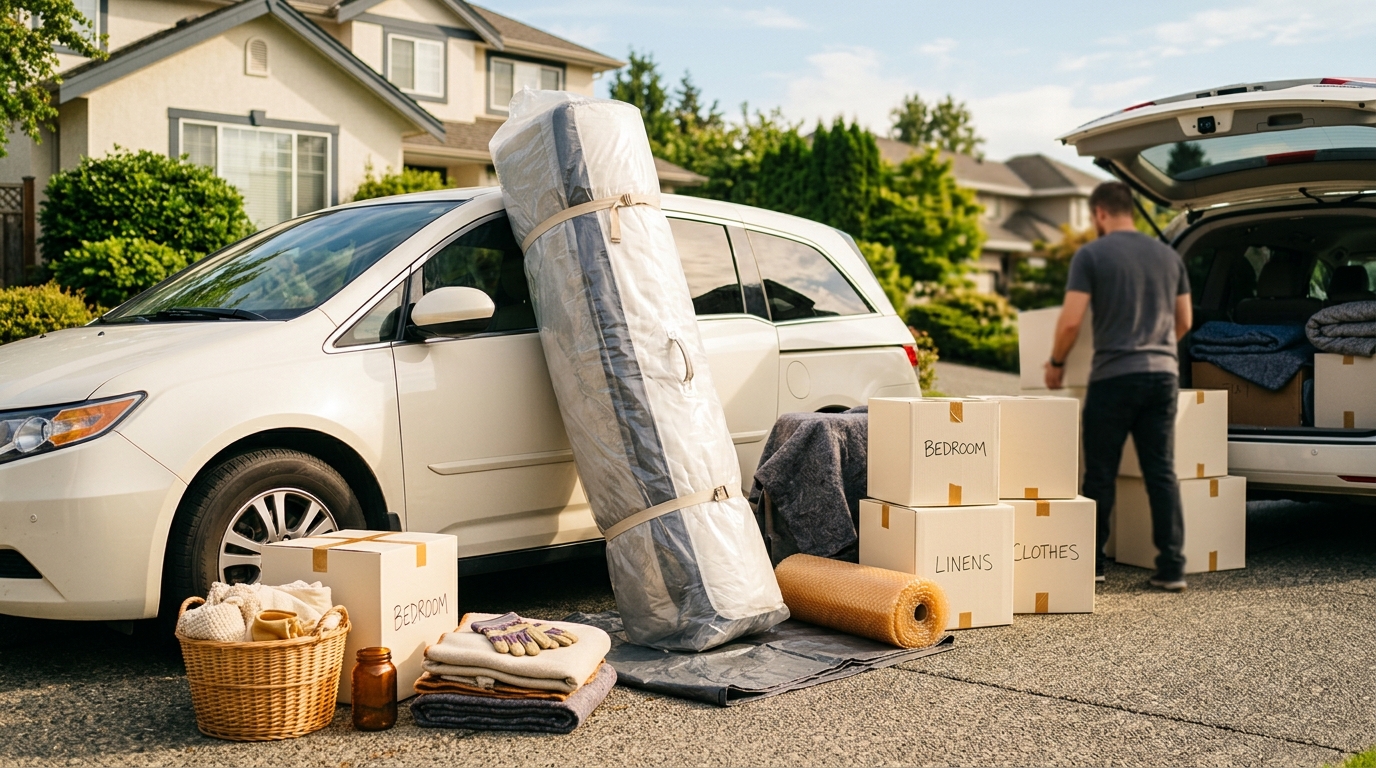
A studio or one-bedroom apartment move typically costs $300–$700 for a local move with professional movers and takes 2–4 hours with a two-person crew. Done right, it's the simplest move you'll ever do. Done carelessly — wrong box count, no elevator reservation, a crew that's too small or too big — it turns into an expensive, exhausting half-day you didn't plan for.
Here's what separates the smooth ones from the disasters. Here's what separates the smooth ones from the disasters.
Is a Studio Move Really That Different From a Larger Move?
Yes — but not in the ways most people expect. The volume is smaller, but the density often isn't. A studio or one-bedroom apartment typically contains:
- 30–60 medium boxes of packed belongings
- 5–15 pieces of furniture (bed frame, mattress, sofa, dresser, desk, dining table)
- 1–2 large items (TV, bike, small appliance)
The actual challenge with small apartment moves is logistics, not volume: narrow hallways, no freight elevator, street parking restrictions, and the sheer number of trips up and down stairs. One flight of stairs typically adds $25–$60 per flight to your moving bill. Three flights in and three flights out on a narrow Brooklyn or Chicago walk-up can quietly add $200+ before a single box is packed.
How Much Does a Studio or Small Apartment Move Cost?
Costs depend heavily on whether you're moving locally or long-distance, and what time of year you move.
| Move Type | Typical Cost Range | What Drives It |
|---|---|---|
| Local studio move (2 movers, 2–3 hrs) | $300–$600 | Hourly rate + travel time |
| Local 1-bedroom move (2–3 movers, 3–4 hrs) | $450–$800 | More furniture, longer load |
| Long-distance studio move (under 500 mi) | $900–$2,000 | Weight + mileage |
| Long-distance 1-bedroom (500–1,500 mi) | $1,500–$3,500 | Weight + mileage + fuel |
| DIY truck rental (local, 1 day) | $80–$200 + fuel | Truck size, mileage, insurance |
For a full breakdown of what drives moving costs at every level, see our 2026 US moving cost breakdown.
Moving on a weekend in June will cost you more than a Tuesday in February. If you have flexibility, off-peak timing is the single easiest way to cut your bill — sometimes by 15–25%.
How Many Movers Do You Actually Need?
For a studio or one-bedroom apartment, two movers is the right crew size in most cases. Here's the honest breakdown:
- 1 mover: Only makes sense for a single-room, ground-floor move with minimal furniture. Most companies won't send just one for liability reasons.
- 2 movers: The sweet spot for studios and small 1-bedrooms. Efficient, affordable, and fast enough to beat the minimum hourly charge.
- 3 movers: Worth it if you're on the 3rd floor or higher, have a full 1-bedroom with heavy furniture (sleeper sofa, solid wood pieces), or have a very tight move-out window.
Adding a third mover typically adds $40–$80/hour to your rate but can shave an hour off the job — so the math often works out close to even. Ask your mover to help you decide based on your specific inventory and building.
For a deeper dive into crew sizes and hourly rates, our guide on local moving rates and crew sizes walks through exactly when the upgrade pays off.
Step-by-Step: How to Pack a Studio or Small Apartment
Small doesn't mean quick to pack. A studio often has more small, fiddly items per square foot than a house — kitchen supplies, bathroom products, electronics, clothing — and those take longer to box than furniture.
1. Start a full week out, not the night before
Two days of packing for a studio is realistic if you're working alone after your day job. Three days is comfortable. The night-before panic pack is how things get broken.
2. Purge before you pack
The less you move, the less you pay. A studio move is the perfect moment to cut loose anything you haven't used in 12 months. Our guide on how to declutter before a move has a practical, room-by-room system for this.
3. Pack in this order
- Out-of-season clothing and linens — lowest urgency, easiest to box
- Books, décor, non-essentials — uniform boxes, easy to stack
- Kitchen — leave out only what you'll use until moving day (see our 48-hour kitchen packing guide)
- Bathroom — pack all but daily-use items two days before
- Electronics and valuables — pack these last, move them in your personal vehicle if possible
- Bed and sofa — disassemble the night before, move out first on moving day
4. Label every box with room AND contents
"Kitchen – spices/small appliances" beats "Kitchen" every time. You'll thank yourself on the other end. Our moving box labeling guide has a color-coding system that takes five minutes to set up and saves hours of searching.
5. Keep an "open first" box
One clearly labeled box or bag with: toilet paper, phone charger, one change of clothes, a towel, coffee supplies, and any medications. This stays in your car, not the truck.
While you’re reading
Skip the research — let Robert match you with movers.
Free quotes from movers in your area. Pick whichever is easiest.
What to Do Before the Movers Arrive
These steps get skipped constantly, and they cause most of the delays and extra charges we've seen over the years.
- Reserve the elevator. Most apartment buildings with a freight elevator require a reservation 24–72 hours in advance. Some charge a $50–$150 deposit. Call your building manager now.
- Check parking rules. Many cities require a temporary no-parking permit for the moving truck. In cities like Chicago, Boston, or Washington DC, this can take 48–72 hours to arrange through the city's transportation department. Skipping it risks a ticket or, worse, the truck being towed.
- Measure your furniture. Movers hate surprises. A sofa that won't fit through a doorway costs you time. Measure the sofa, the door frame, and the hallway before moving day.
- Protect your floors. Lay down cardboard or moving blankets in high-traffic areas. Your landlord will thank you, and your security deposit will survive.
Should You Hire Movers or DIY a Small Apartment Move?
For most people moving locally, a studio or one-bedroom is the one move where DIY is genuinely viable — if you have friends who will actually show up and you can rent a van or small truck.
That said, DIY costs add up fast: truck rental, fuel, furniture dollies, moving blankets, packing supplies, and the serious risk of a back injury or a broken TV. If you're moving on the 3rd floor or higher, DIY almost never saves money once you account for time and risk.
Our full comparison — DIY truck rental vs. full-service movers — walks through the true cost of each option with a side-by-side breakdown.
For a small local move, finding movers in your area often surfaces options in the $300–$500 range — competitive with a DIY truck once you price it out honestly.
Red Flags to Watch for When Booking Movers for a Small Move
Small moves attract a disproportionate share of low-quality operators, because customers assume it's "too small to bother vetting carefully." It isn't.
- No written quote: Any mover who only quotes over the phone and won't provide a written estimate is a risk. Demand it in writing.
- Unusually low hourly rate: Rates significantly below your local market average often mean hidden fuel surcharges, surprise fees for stairs, or slow crews who drag out the hours.
- No USDOT number for interstate moves: If you're crossing state lines, your mover must be registered with the FMCSA and carry a valid USDOT number. Verify it at the FMCSA's online database (safer.fmcsa.dot.gov) before you book.
- Large upfront deposit: A deposit of 25% or more before your move is a common warning sign. Read our guide on moving deposits and payment to know what's normal.
You can check mover reviews on our platform to see what actual customers say before you commit.
Frequently Asked Questions
How long does it take to move a studio apartment?
A studio apartment move with two professional movers typically takes 2–4 hours from first box loaded to last box delivered, assuming a local move under 20 miles. Add time for stairs (roughly 15–30 minutes per floor for a full load), long carries from a distant parking spot, and elevator wait times.
How many boxes does a studio apartment take?
Most studios require 25–50 boxes, depending on how much kitchen equipment and clothing you own. Budget for at least 10 small boxes, 15–20 medium boxes, and 5 large boxes as a starting point, then adjust as you start packing.
Is it worth hiring movers for a one-bedroom apartment?
For most people, yes — especially on the second floor or higher. The cost of two movers for 3 hours ($300–$600 in most US markets) is competitive with a DIY truck rental once you add fuel, supplies, dollies, and the risk of injury or damage. If you have a ground-floor unit and two reliable friends, DIY can work, but it's a narrower case than most people assume.
Do I need a parking permit for a moving truck?
In dense urban areas — particularly in cities like Boston, Chicago, and Washington DC — you typically need a temporary no-parking permit (sometimes called a "moving permit" or "street-use permit") to reserve curb space for a moving truck. Fees range from free to $100+ and lead times are typically 48–72 hours. Check with your city's transportation or parking authority well before your move date.
What's the cheapest way to move a studio apartment?
The most reliable way to cut costs: move on a weekday in the off-peak season (September–April), purge everything you don't need before getting quotes (movers charge by weight or time, so less stuff = less money), and do your own packing rather than paying for professional packing services. Comparing quotes from at least three movers in your area is also one of the highest-leverage steps you can take.
What should I do if something gets damaged during my small apartment move?
Document the damage immediately with photos and notify your mover in writing within 9 months (the minimum window required by federal law for interstate moves). Your coverage depends on which valuation option you selected at booking — on interstate moves, Full Value Protection applies automatically unless you sign a written waiver choosing Released Value Protection at $0.60 per pound per item, which pays very little. For full protection, you typically need to declare Full Value Protection or buy a separate policy. See our full guide on moving valuation vs. insurance coverage for the details.
Ready to find movers for your studio or small apartment? Browse movers by state to find licensed, companies near you — or let Robert, our moving concierge, help you figure out exactly what you need for your specific move.
Tagged