Moving a water softener is a plumbing job first and a hauling job second. Before anything goes near a dolly, you need to bypass and disconnect the unit from your water supply, drain both the resin tank and the brine tank, and decide what to do with any remaining salt — which can easily weigh 50–100 lbs on its own. Only then is the unit light and stable enough to transport safely.
This guide covers every step, including the one most people overlook: whether the softener is even worth taking.
Should You Take Your Water Softener or Leave It?
This is the question to settle first, because the answer changes everything else.
Reasons to take it:
- You own it outright (not rented from a water-treatment company).
- Your new home has the same type of hard water and a suitable installation point (typically near the main water line, before the water heater).
- The unit is less than 8–10 years old. Softeners typically last 10–15 years with good maintenance.
- Your new home is in a hard-water area — cities like Houston, Phoenix, and Las Vegas are well-known for high mineral content in municipal water.
Reasons to leave it:
- The softener was installed by a rental or lease company (check your paperwork — removing a leased unit can trigger fees).
- Your new home already has a softener, or is in a soft-water area where you won't need one.
- The unit is old, heavily corroded, or the resin bed is exhausted (signs include slippery water that never feels quite right, or persistent hardness even after regeneration cycles).
- Disconnecting and reinstalling it costs more than a comparable new unit. Entry-level whole-home softeners start around $400–$600; professional installation typically adds $200–$500 depending on your plumbing layout.
If you're leaving it, skip to the section on what to tell the buyers or property manager. If you're taking it, start below.
Step 1 — Bypass the Unit Before You Touch Anything
Nearly every modern water softener has a built-in bypass valve, usually a single lever or two side knobs on the back of the control head. Turn it to bypass position. This routes water around the softener so the rest of the house keeps working while you disconnect.
If your unit lacks a bypass valve, shut off the main water supply to the house before disconnecting any fittings.
Step 2 — Run a Manual Regeneration Cycle (Optional but Smart)
Triggering a manual regeneration cycle before disconnection flushes the resin bed with brine and backwashes it. This leaves the resin tank cleaner and lighter for transport. Consult your owner's manual or the control-head menu — the option is usually labeled "Regen," "Regenerate," or "Manual."
The cycle takes roughly 60–90 minutes. Plan for it.
Step 3 — Drain Both Tanks
Resin tank: After the regen cycle (or if you skip it), disconnect the drain hose from the control head and let any remaining water drain into a bucket or floor drain. The resin tank itself holds water in and around the resin beads. Tipping the unit can slosh this water and shift the resin, so drain as thoroughly as possible.
Brine tank (the salt tank): This is where most of the weight is. Scoop out any remaining salt pellets into sealed bags or buckets — they're reusable at your new home. Then bail or sponge out any standing brine (salt water) at the bottom. A wet-dry vacuum works well here. The goal is to remove as much liquid as possible before moving.
A fully loaded brine tank can weigh 200–300 lbs. Drained and mostly empty, the same tank may weigh 20–40 lbs. The difference matters for doorways, stairs, and your movers' backs.
Step 4 — Disconnect the Plumbing
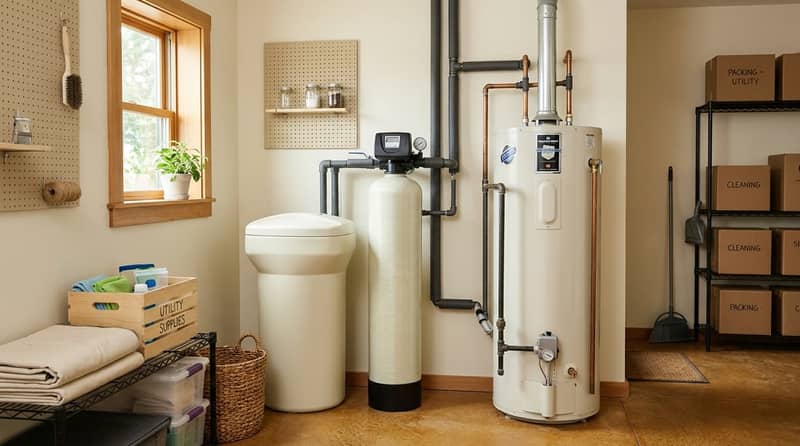
Water softeners connect to your main water line using compression fittings, union fittings, or flex connectors. Have a bucket ready — there will be residual water in the lines.
- Close the bypass valve (if not already done) or shut off the main water supply.
- Disconnect the inlet and outlet lines at the control head.
- Disconnect the drain hose (runs to a floor drain, laundry sink, or standpipe).
- If the unit has an overflow tube, remove it too.
- Cap or plug the open water lines to prevent drips during the move.
If the plumbing connections involve soldered copper or glued PVC that can't be unscrewed, you'll need a licensed plumber to cut and cap the lines — and to reconnect at the other end. Factor that into your cost decision.
Step 5 — Unplug the Control Head
The electronic control head runs on standard 120V power. Unplug it, coil the cord, and secure it to the unit with a zip tie or tape. Remove any programming manuals or warranty cards from the cabinet and pack them separately — you'll need them for reinstallation.
Step 6 — Prepare Each Tank for Transport
Water softeners typically consist of two separate tanks: the resin/mineral tank (tall and cylindrical) and the brine tank (shorter and wider). Most systems allow these to be separated for moving.
- Secure the control head with its protective cover if it has one, or wrap it in moving blankets.
- If the resin tank has a cap or plug at the bottom, make sure it is seated firmly.
- Tape a "this side up" label to each tank — resin tanks must stay upright. Tipping them can shift the resin bed, clog the distributor tube, or spill residual water.
- Pack salt in sealed, heavy-duty contractor bags (50 lbs each is manageable). Do not load loose salt pellets into the moving truck — they will scatter.
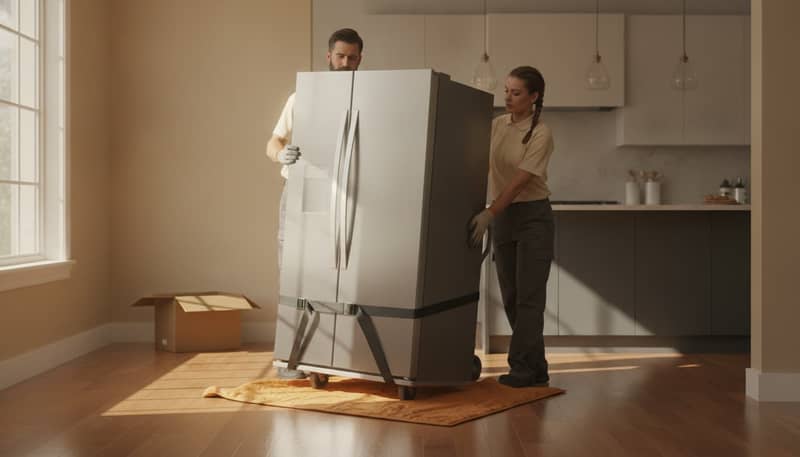
For related guidance on protecting bulky utility equipment, our guide on moving large appliances covers refrigerators, washers, dryers, and similar items that require plumbing or electrical disconnection before moving day.
While you’re reading
Skip the research — let Robert match you with movers.
Free quotes from movers in your area. Pick whichever is easiest.
What to Tell Your Movers
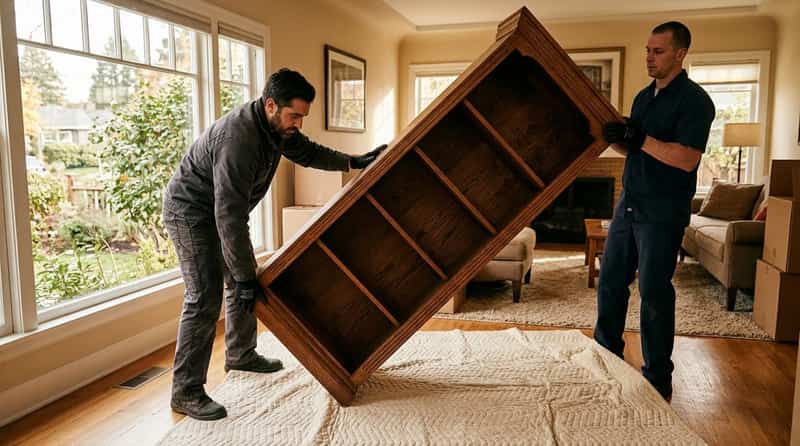
Professional movers can carry a water softener, but they need to know what they're dealing with before they show up. Tell them:
- The approximate weight of each tank (drained).
- Whether there are stairs, tight doorways, or a basement installation involved.
- Whether the tanks separate or must move as one unit.
- That the resin tank must stay upright at all times.
Most general movers will handle a drained, disconnected softener without issue. If the unit is unusually large (some whole-home systems have resin tanks 10–12 inches in diameter and 48–54 inches tall), confirm in advance. You can find movers who handle specialty items, or browse by state to compare carriers in your area before you book.
You may also want to review mover reviews for companies that specifically mention appliance or utility disconnection services — that kind of detail often appears in customer write-ups.
Reinstallation at Your New Home
Reinstallation is the reverse of disconnection, but with one important addition: the softener must be programmed for your new water's hardness level. Water hardness varies significantly by region and even by neighborhood within a city. Many municipal water providers publish annual water quality reports online; well-water users will need a separate hardness test (inexpensive test kits are available at hardware stores).
Expect to hire a licensed plumber for reconnection if the new home's plumbing requires new fittings, a longer drain run, or any soldered connections. Plumbing labor typically runs $75–$150 per hour.
What to Do With the Salt You're Not Taking
Salt pellets are heavy and inexpensive — a 40-lb bag runs $7–$12 at most hardware stores. Rather than moving large quantities:
- Offer leftover salt to the new owners of your old home (if they're keeping the softener).
- Leave clearly labeled bags in the utility room as part of your seller's disclosure or move-out communication.
- Donate to neighbors with their own softeners.
- Do not pour large quantities of brine down storm drains — it can harm local waterways. Dispose of brine at a household waste facility if needed, or dilute heavily with water before draining into the sanitary sewer (check local rules first).
If You're Leaving the Softener Behind
If you're leaving the unit with the home, do two things:
- Document its condition — photograph the control head, the salt level, and any service labels before you leave. This protects you if a buyer later claims the unit was damaged.
- Disclose it in writing — in most states, a working water softener that is attached to the plumbing is considered a fixture and conveys with the house unless specifically excluded in the purchase contract. If you want to take it, that exclusion needs to be in writing well before closing. Talk to your real estate agent.
Frequently Asked Questions
Can movers move a water softener without it being drained first?
Most movers will decline to move a water softener that still contains significant water or salt. Even if they agree, a loaded brine tank can weigh 200–300 lbs, which creates injury risk and potential truck-weight issues. Drain both tanks before moving day — it protects the equipment, the movers, and your floors.
Is a water softener considered a fixture or personal property?
In most US states, a water softener that is plumbed into the main water supply is treated as a fixture and is presumed to convey with the home unless the purchase contract says otherwise. If you intend to take it, exclude it explicitly in writing and disclose that to buyers before they make an offer.
How much does it cost to move a water softener?
The moving cost itself — just loading, transporting, and unloading the drained unit — is typically absorbed into your overall moving quote without a large surcharge, since a drained softener is not unusually heavy. The bigger costs are disconnection and reinstallation: plumber fees of $150–$400 or more, plus any new fittings or flex connectors needed at the new address.
Do I need a plumber to disconnect my water softener?
Not necessarily. If your softener uses standard compression or union fittings and has a bypass valve, a confident DIYer can disconnect it. If the inlet and outlet lines are soldered copper or glued PVC, you'll need a licensed plumber to cut and cap the lines safely — and to reconnect at the other end.
What happens if I tip the resin tank on its side during the move?
Tipping the resin tank can shift the resin bed, dislodge the distributor tube inside, and allow residual water to leak. Keep it upright throughout loading, transport, and unloading. If tipping is unavoidable, run a backwash cycle at the new home before putting the system back into service.
Should I service my water softener before moving it?
If the unit is due for resin cleaning or if the control head has been showing error codes, address that before the move rather than after. Moving a malfunctioning softener to a new home and then calling a technician costs more than fixing it in place. Check the owner's manual for recommended service intervals — most whole-home units benefit from a resin cleaner treatment every 6–12 months.
Need a mover who can handle appliance disconnections, or want help finding carriers in your area? Browse the Majestic Moving Companies directory to find movers near you, or reach out to Robert, our moving concierge, for personalized guidance.
Tagged