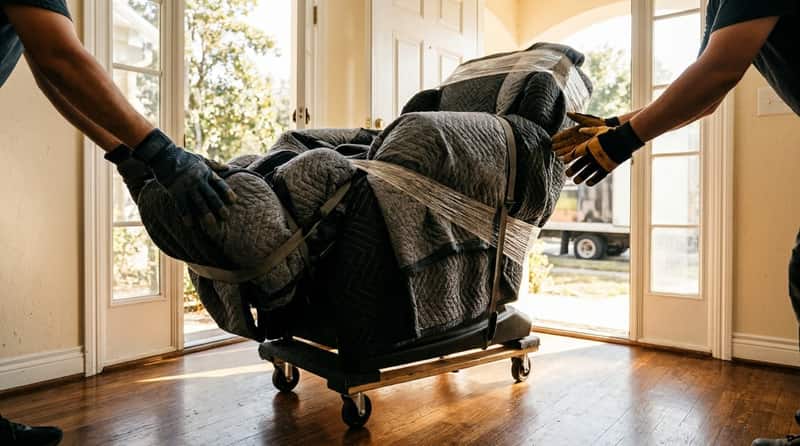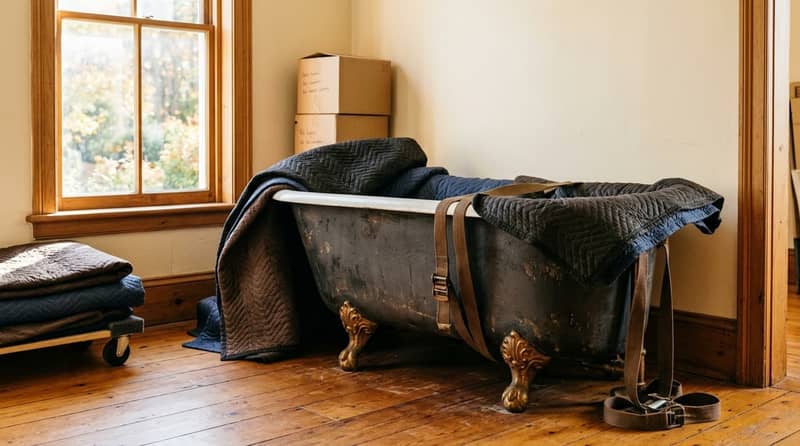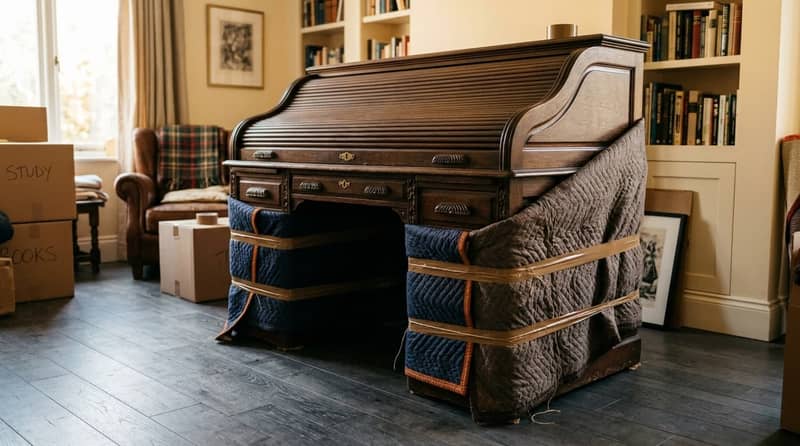
Whether yours is a freestanding butcher block cart on casters or a plumbed, granite-topped cabinet bolted to the floor, moving a kitchen island comes down to three things: know the weight, check for utilities (plumbing, electrical, gas), and disassemble before the truck arrives. A freestanding cart can be rolled onto a dolly in minutes; a built-in island with a stone top can require two or three professionals, specialty lifting equipment, and coordination with a plumber or electrician before moving day.
What Type of Kitchen Island Do You Have?
The correct answer to "how do I move my kitchen island?" starts here — the type determines everything else.
| Island Type | Typical Weight | Utility Connections | Difficulty |
|---|---|---|---|
| Freestanding rolling cart (butcher block, IKEA-style) | 40–120 lbs | None | Low — DIY-friendly |
| Freestanding cabinet island (no utilities) | 150–350 lbs | None | Medium — 2–3 people |
| Built-in island, wood or laminate top | 200–400 lbs | Possibly electrical | Medium-High |
| Built-in island, stone or granite top | 350–600+ lbs | Electrical, sometimes plumbing or gas | High — professionals recommended |
| Waterfall or full stone island | 500–900+ lbs | Often plumbing, electrical, gas | High — always use professionals |
Weigh your island before quoting it to your mover. If you don't have specs, measure the countertop square footage and ask your installer or look up the slab weight (granite typically runs 18–20 lbs per square foot at ¾-inch thickness).
Step 1: Check for Utility Connections Before You Touch Anything
Built-in islands frequently hide plumbing under the sink basin, electrical outlets in the cabinet face, or a gas line running to a cooktop. Disconnecting any of these improperly is dangerous.
- Electrical outlets or pendant wiring routed through the island: Have a licensed electrician disconnect and cap the circuit before you remove the island.
- Plumbing (sink or dishwasher): Turn off the supply valve, drain standing water, and disconnect supply and drain lines. If the drain runs through the floor or sub-floor, a plumber should disconnect it.
- Gas line (cooktop or range): This is non-negotiable — a licensed plumber or gas fitter must disconnect and cap the line. Never attempt this yourself.
Once all utilities are cleared, get written confirmation from each tradesperson. Your mover will want to know the island is fully disconnected before they attempt to move it.
Step 2: Remove the Countertop (If Possible)
Stone countertops are almost always separate from the base cabinet — they're set in adhesive and silicone, not bolted. Separating the top from the base cuts weight dramatically and reduces the risk of cracking.
- Score the silicone bead around the perimeter with a utility knife.
- Slide a thin pry bar or plastic shims between the stone and cabinet edge — work slowly around all four sides.
- With two or more people (or professionals), lift the top straight up. Never torque it sideways; stone cracks under lateral stress.
- Transport the slab on-edge, not flat — flat slabs are far more prone to cracking in transit.
Laminate, butcher block, and solid-surface tops may be screwed down from underneath through corner brackets. Remove the screws and lift straight up.
If the top is integrated and cannot be safely removed, tell your mover upfront. They'll need an appliance dolly rated for the combined weight, and potentially a Genie lift or similar equipment for very heavy pieces.
Step 3: Detach the Island Base From the Floor
Built-in islands are almost always anchored with screws through the toe-kick into the subfloor or secured with construction adhesive.
- Remove the toe-kick panel (usually clips or finish nails).
- Look for lag screws or L-brackets along the bottom interior perimeter.
- Remove all fasteners. If adhesive was used, score it with a utility knife — don't pry against the cabinet face.
- Check for any hardwood flooring that was installed around the island rather than under it. If the flooring stops at the island edge, you'll have a gap to address after the island is gone — flag this for your contractor.
Step 4: Disassemble What You Can
The more you break down before the movers arrive, the lower your bill and the lower the risk of damage. For hourly-rate local moves, time saved on disassembly directly reduces cost.
- Doors and drawers: Remove all drawers and doors. Tape hardware into a labeled bag and place it inside a drawer for transport.
- Shelving: Pull out adjustable shelves and pack them vertically in a wardrobe box or bundle them with packing blankets.
- Casters (rolling carts): If the casters unscrew, remove them. Rolling carts over thresholds and ramps can tip if the wheels catch.
- Extension leaves or drop-down sections: Secure or remove any hinged leaves.
Label every bag of hardware with which piece it belongs to and photograph the assembly before you take it apart. See our guide to building a moving binder for a simple system to keep this documentation together.
Step 5: Protect the Surfaces for Transit
An unwrapped stone slab or wood countertop will be scratched or chipped before it reaches the truck.
- Stone tops: Wrap in moving blankets, then stretch-wrap over the blankets to hold them in place. Transport on-edge between two padded uprights, never flat in a stack.
- Butcher block and wood tops: Wrap in plastic stretch wrap first (to guard against moisture), then pad with moving blankets.
- Cabinet faces: Cover with moving blankets or furniture pads secured with tape that won't pull the finish (blue painter's tape works well on painted cabinets; use stretch wrap over stained wood).
- Corners: Add corner guards — pieces of cardboard folded into an L-shape, taped snugly over every exposed corner.
For more on how professional movers protect furniture surfaces, see what movers use to protect your floors, doorways, and stairwells.
While you’re reading
Skip the research — let Robert match you with movers.
Free quotes from movers in your area. Pick whichever is easiest.
Step 6: Moving a Freestanding Rolling Cart
A lightweight butcher block or stainless cart on casters is the easiest version of this move. Even so, don't just roll it onto the truck unprotected.
- Empty every drawer and shelf — weight on casters over a ramp or truck lift can tip even a stable cart.
- Tape or zip-tie the drawers shut.
- Wrap the top and sides in moving blankets.
- Use a furniture dolly rather than the cart's own casters for loading — casters aren't designed for the flex of a truck ramp.
- Stand the cart upright in the truck, wedged against the wall, and secure with tie-down straps. Never stack anything on top of a wood or stainless surface without padding.
What to Tell Your Mover — and What to Ask
Movers price heavy, awkward items differently from standard furniture. When you get a moving quote, be specific:
- State the type (freestanding vs. built-in), dimensions, and estimated weight.
- Confirm whether utilities are disconnected.
- Mention whether the countertop is separate or integrated.
- Ask whether their equipment includes an appliance dolly rated for the island's weight.
- Ask how they plan to transport a stone top — on-edge is correct; flat is a red flag.
For built-in islands over roughly 300 lbs, or any piece with a stone top that can't be separated, our team has 35+ years of hands-on service-provider experience, including an operator who ran a moving company for 18 years — and the consistent advice from that experience is: hire professionals who specialize in heavy furniture, not a general crew who hasn't moved stone before.
You can find movers in our directory, or browse mover reviews to see how companies in your area have handled specialty and heavy items. Reading what other customers say about specialty items is one of the best ways to identify a crew that actually has the right equipment.
What Does Moving a Kitchen Island Cost?
Cost varies significantly by type and whether utilities are involved.
| Scenario | Typical Cost Range |
|---|---|
| Freestanding cart (included in a standard move) | Usually no extra charge |
| Heavy freestanding cabinet (200–350 lbs) | $50–$150 extra, or billed in added hourly time |
| Built-in island, pre-disconnected by customer | $100–$300 depending on weight and access |
| Built-in with granite top (movers handle full separation) | $200–$500+ |
| Plumber/electrician pre-work (not the mover's charge) | $150–$400 per trade, depending on scope |
These are typical ranges, not guarantees. Get a written estimate — and for a heavy built-in, ask for a binding or not-to-exceed price so you're not surprised at delivery. For a full primer on how those estimate types work, see our guide to binding vs. non-binding moving estimates.
Frequently Asked Questions
Can movers move a kitchen island that's still attached to the floor?
Most movers will not move a built-in island that hasn't been disconnected and unanchored from the floor — doing so risks damage to the floor, the island, and the surrounding cabinetry. You need to remove all fasteners and disconnect any utilities before the moving crew arrives. Some specialty movers offer disconnection services; ask explicitly when booking.
Do I need a plumber before moving a kitchen island?
If your island has a sink, dishwasher, or any plumbing connection, yes — a licensed plumber should disconnect and cap the lines before the movers touch the piece. Gas lines must always be handled by a licensed professional. Don't skip this step; it's both a safety issue and typically a condition of the mover's insurance coverage.
Will movers move a granite countertop that's been removed from the island?
Many general movers will, but you should confirm they have experience moving stone slabs and that they'll transport it on-edge, not flat. A 25-square-foot granite slab at ¾-inch thickness can weigh 450 lbs or more. If the mover seems unsure about the on-edge transport requirement, that's worth taking seriously before you book.
Is a kitchen island considered specialty or oversized furniture?
For pricing purposes, most movers treat a heavy built-in island (especially one with a stone top) as a specialty item, similar to a gun safe or large appliance. Freestanding carts under about 150 lbs are typically included in standard furniture pricing. Always describe the island specifically so the mover can price it correctly — a mismatch between the quote and what shows up on moving day can lead to disputes.
Can I move a butcher block island myself?
A freestanding butcher block cart under about 100 lbs is DIY-friendly if you have two people, a furniture dolly, and moving blankets. Anything heavier, or anything that requires disconnecting utilities, is worth hiring professionals for — the risk of injury or damage to your floors isn't worth the savings.
What happens to the floor gap left behind after a built-in island is moved?
This is a renovation question, not a moving question — your mover won't address it. If your flooring was installed around the island rather than under it, you'll likely need a flooring contractor to patch or extend the floor after the island is gone. Flag this before moving day so it doesn't catch you off guard on arrival at your new home.
Ready to find a mover who handles heavy and specialty furniture? Browse movers near you, or reach out to Robert, our moving concierge, for help matching your island move to the right crew.
Tagged