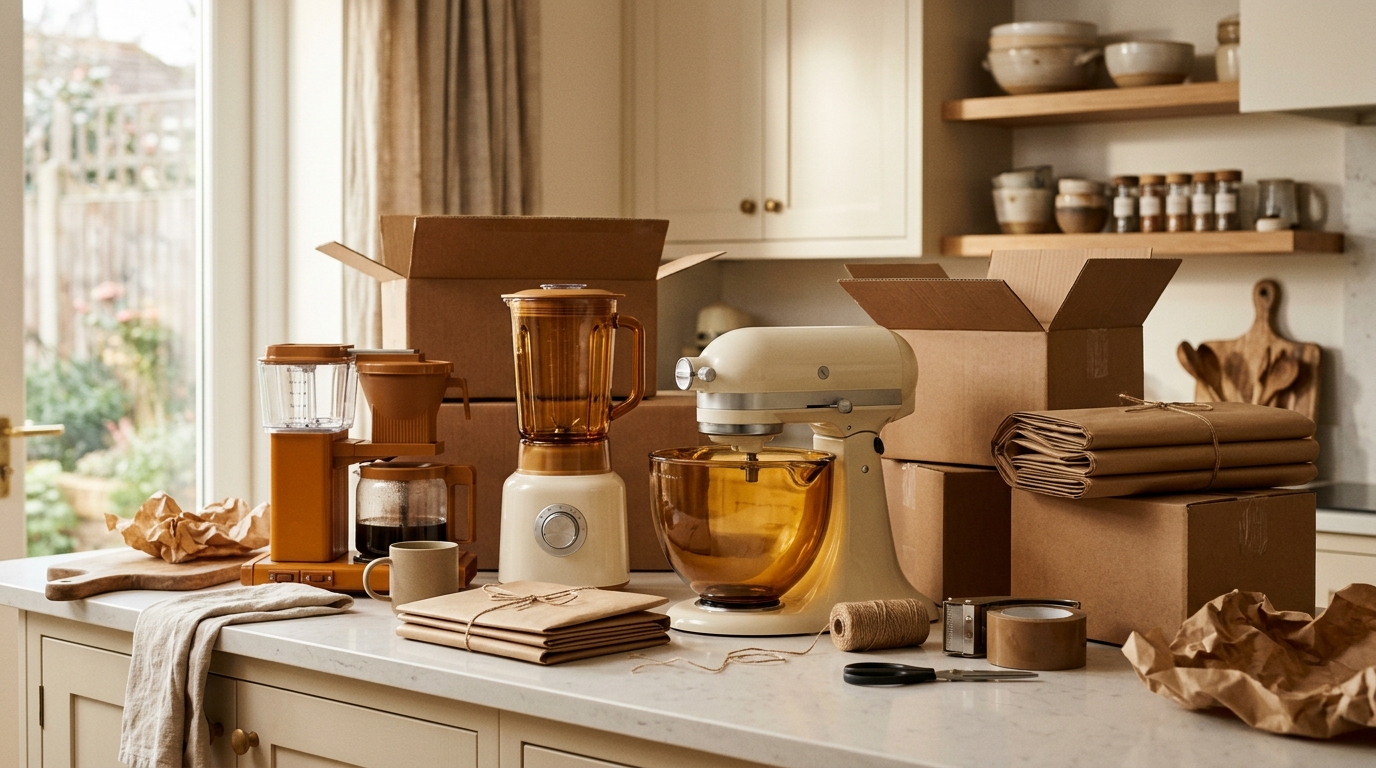
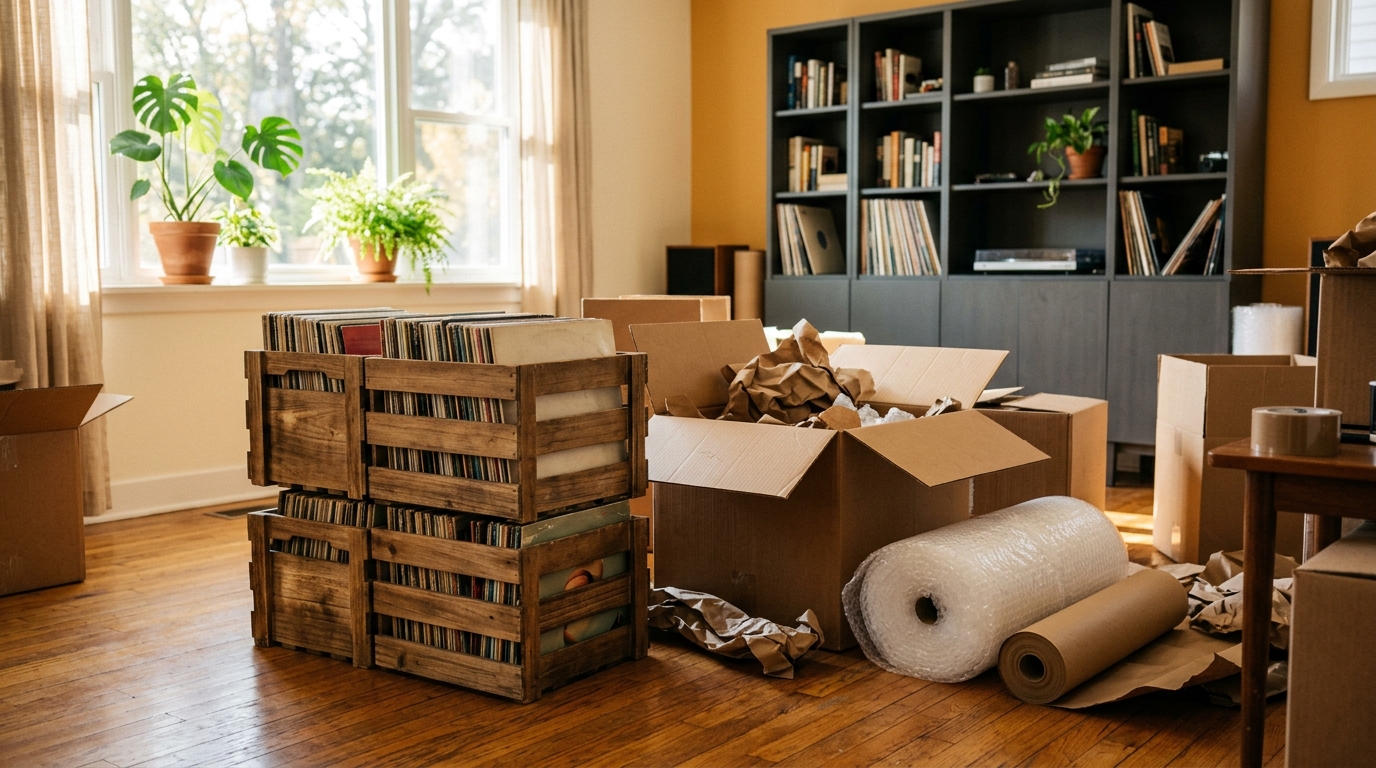
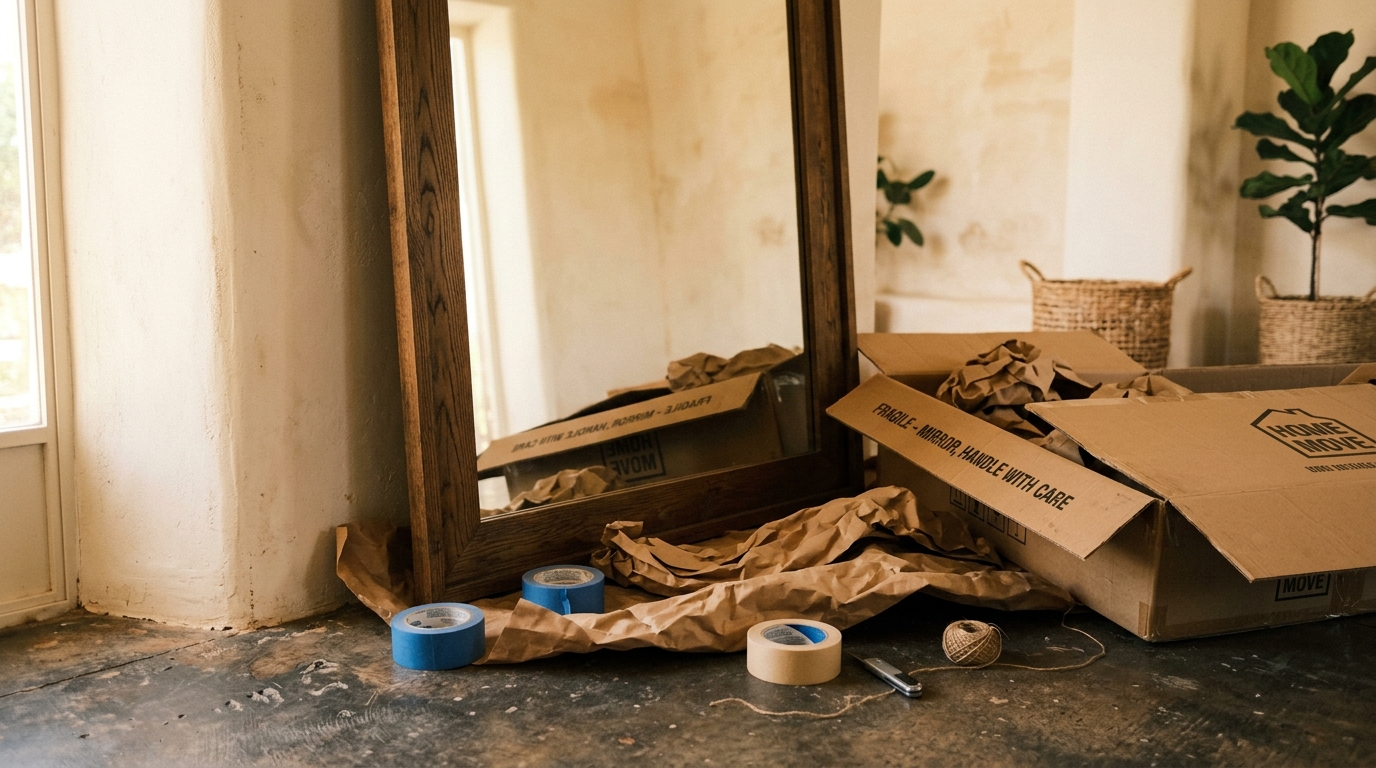
The safest rule for packing fragile and valuable items is this: pack them as if the truck will hit a pothole at 60 mph, because sometimes it does. That means individual wrapping, firm cushioning on all six sides of the box, and a label that says "FRAGILE – THIS SIDE UP" in permanent marker — not a sticker that falls off in humidity. Almost every breakage story starts with the same mistake: not enough internal padding, or a box that wasn't full enough to keep things from shifting.
What Materials Do You Actually Need?
Skip the foam peanuts for anything you genuinely care about — they shift in transit and leave items unprotected. Here's what we use and trust:
- Unprinted packing paper (not newspaper — the ink transfers and can stain ceramics permanently)
- Double-wall corrugated boxes for heavy fragile items like stone sculptures or stacked china
- Standard-wall dish pack boxes (typically 18"×18"×28") for kitchen items — they're deeper and purpose-built
- Small cells/dividers for glasses and stemware — these eliminate glass-on-glass contact completely
- Bubble wrap (½" bubble) for a final outer layer on anything delicate
- Foam corner protectors for framed art and mirrors
- Stretch wrap / plastic film to bundle grouped items and prevent lids from opening mid-transit
- Acid-free tissue paper for antiques, silver, and items where chemical reactions matter
Budget reality: A dish pack box costs $3–$6 at a box retailer. A cell kit for stemware runs $8–$15. Spending $40–$60 on proper supplies can protect thousands of dollars of belongings. It is always worth it.
Room-by-Room: How to Pack What's Most Likely to Break
Kitchen: China, Glassware, and Ceramics
The number-one mistake is stacking plates flat. Pack plates on their edge, like records in a crate. They're engineered to bear weight that way, not to absorb lateral shock when stacked horizontally.
- Line the bottom of a dish pack box with at least 3 inches of crumpled packing paper.
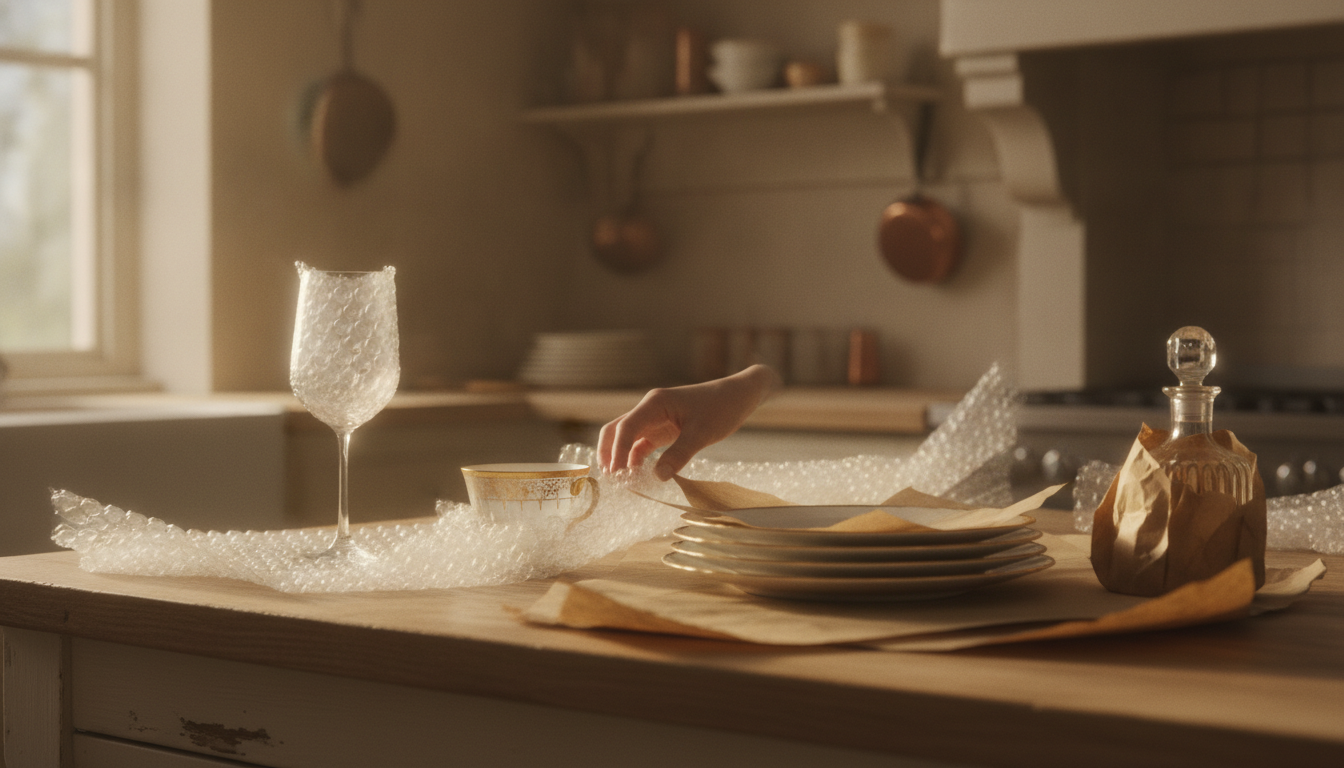
- Wrap each plate individually in two full sheets of packing paper; start at a corner, roll diagonally, tucking edges as you go.
- Stand plates on edge in the box, wrapped side facing out.
- Place bowls nested in sets of two to three, each nest wrapped together, then placed upright.
- Pack glasses and stemware in cell dividers — one glass per cell. If you don't have dividers, crumple paper inside each glass, then wrap the outside, and pack glasses upright (never upside down in a box without dividers).
- Fill every air gap with crumpled paper. The box should feel solid when you press the top before closing.
- Label: FRAGILE – KITCHEN – PLATES UPRIGHT – THIS SIDE UP.
Living Room: Art, Frames, and Decorative Objects
Framed artwork under roughly 24"×30" can typically be wrapped in mirror/picture boxes (sold in pairs that telescope). Larger pieces need custom crating — this is a job for a specialty mover or art shipper.
- Wrap the glass surface in packing paper first, then apply a large X of painter's tape across the glass. This won't prevent breakage, but it holds the shards together if the glass cracks.
- Apply foam corner protectors to all four corners, secured with stretch wrap.
- Wrap the whole piece in two layers of bubble wrap, taped closed.
- Place in a mirror box or between two layers of cardboard cut to size, edges taped.
- Mark the box: FRAGILE – ARTWORK – DO NOT LAY FLAT.
For sculptures, figurines, and decorative objects: wrap in tissue paper first (for surface protection), then bubble wrap, then box with 3-inch cushioning on all sides. Pack only one object per small box unless items are very small and individually wrapped.
If you're moving art, antiques, and collectibles, the post covers specialty crating, appraisals, and what full-value protection actually requires for irreplaceable pieces.
Bedroom: Mirrors and Lamps
Mirrors should be treated like large art — upright, never flat, in mirror boxes or sandwiched between custom-cut cardboard. Lamp shades are often underestimated: pack them separately in their own box with crumpled paper on all sides, and never stack anything on top of the shade box.
Home Office: Electronics and Monitors
Original boxes are genuinely the best option for electronics. If you've kept them, use them. If not:
- Wrap monitors and TVs in an anti-static bubble wrap (standard bubble wrap can generate static)
- Pad all sides with at least 2 inches of foam or crumpled paper
- Mark the box with the contents and "FRAGILE – ELECTRONICS"
For cables, label each one before disconnecting. We use a simple system: a numbered sticker on the cable and the same number written on the port or device with a dry-erase marker. Our room-by-room home office packing guide covers this in full detail.
The Six-Side Rule (and Why Most People Miss It)
Every fragile item needs cushioning on all six sides of its box: top, bottom, left, right, front, and back. Most people pad the bottom. Fewer pad the top. Almost no one pads the sides. When a box falls over or gets stacked wrong, it's the side impact that does the damage.
A properly packed box should:
- Have 2–3 inches of cushioning on every interior wall
- Feel firm — no movement when shaken
- Weigh no more than 30–35 lbs (heavier and handlers rush, which causes drops)
- Be sealed with at least two strips of packing tape on every seam
What Movers Will and Won't Cover for Fragile Items
This is where a lot of customers get caught off guard. Under Released Value Protection, which on a move between states applies only if you sign a written waiver choosing it, movers are liable for 60 cents per pound per article — which means a 2-lb crystal vase worth $400 is covered for $1.20. That's not a typo.
Full Value Protection is the default on a move between states (its cost must be included in your estimate), and it requires movers to repair, replace, or pay current market value for damaged items. It typically costs 1%–2% of declared value (often with a deductible of $250–$500), but the specific cost and terms vary by carrier.
One critical caveat: If you pack the box yourself and something inside is damaged, it may be more difficult to establish your claim — those boxes usually go on the inventory as "PBO" (Packed By Owner), and the federal booklet lists improper packing of boxes you pack yourself among the things that can limit what the mover owes you. If a fragile item matters to you, ask your mover to pack it.
For a full breakdown of what each coverage tier actually means, see what moving insurance actually covers.
While you’re reading
Skip the research — let Robert match you with movers.
Free quotes from movers in your area. Pick whichever is easiest.
Comparing Your Packing Options for Fragile Items
| Option | Cost | Protection Level | Best For |
|---|---|---|---|
| Self-pack with proper materials | $40–$100 in supplies | Good (if done correctly) | Budget-conscious movers with time |
| Mover packs fragile items only | $100–$400 extra, typically | Best (full liability retained) | China, crystal, art |
| Specialty art/antique crating | $200–$2,000+ per piece | Professional-grade | Irreplaceable, high-value items |
| Original manufacturer boxes | $0 (if kept) | Excellent | Electronics, appliances |
5 Things We See Go Wrong — Every Time
- Using newspaper. The ink permanently stains unglazed ceramics and silverware. Always use unprinted packing paper.
- Half-full boxes. Items shift and collide. Fill every box completely — use crumpled paper to top off any gaps.
- Overloading dish boxes. A dish pack shouldn't exceed 35 lbs. Past that, the box bottom is at risk and handlers rush.
- Skipping the "THIS SIDE UP" label. Movers handling 100+ boxes in a day will stack whatever fits. A clear arrow and label in permanent marker on all four sides is the only thing that works.
- Assuming movers know what's inside. Label every box with what's fragile. "Kitchen – china – fragile – upright" is infinitely better than just "Kitchen."
If you want a comprehensive system for labeling so you and your movers are on the same page from the start, our box labeling guide lays out the exact method we use with our own crews.
What to Transport Yourself
Some items simply should not go on the truck at all:
- Irreplaceable family heirlooms (photos, documents, jewelry)
- Items worth more than $100 per pound — the math on released value coverage doesn't work
- Passports, financial documents, hard drives
- Prescription medications
- Items with sentimental value that cannot be replaced at any price
Transport these in your personal vehicle or carry-on luggage. No packing technique fully substitutes for physical custody of something you cannot lose.
Finding Movers Who Handle Fragile Items Well
Not all moving crews are equally careful, and the difference often comes down to vetting before you book. A crew experienced with fragile items will walk through your home before the move, ask about high-value items, and note them on the inventory. They won't rush the wrapping.
You can find movers in your area and filter for specialty capabilities, or browse movers by state if you're relocating across state lines. Reading mover reviews specifically for how crews handled fragile and high-value items is one of the best ways to filter before committing.
Our complete guide to hiring a moving company you can trust walks through the questions to ask about fragile item handling before you sign anything.
Frequently Asked Questions
Can I use clothing or towels instead of packing paper?
Yes, for some items. Soft linens work well as cushioning layers for non-breakable items or as outer wrapping for items already wrapped in packing paper. But they don't replace paper for direct surface contact — fabric can snag on unglazed ceramics or painted surfaces, and it doesn't wrap tightly enough to prevent movement inside a box. Use both together for maximum protection.
How many layers of bubble wrap does a fragile item need?
For most ceramics and glassware: two full layers. For very delicate items (thin crystal, antique porcelain): three layers, plus a layer of packing paper underneath the bubble wrap to protect the surface from the plastic dimpling under pressure. The outer layer of bubble wrap should be large enough to overlap itself when wrapped around the item.
Should I label fragile boxes on the top or the sides?
Both. Labels on the top can face down if a box is inverted. Label all four sides and the top in permanent marker — not just a sticker. "FRAGILE" and a directional arrow should be visible no matter which way the box is oriented when it's picked up.
Do movers have to honor a "fragile" label?
Movers are not legally required to treat a self-packed box differently based on a label alone. However, experienced movers will. More importantly, a clear label protects you in a claims conversation: it documents that you communicated the contents were fragile. Always photograph your packed, labeled boxes before the truck loads.
Is it worth paying movers to pack fragile items for me?
In most cases, yes — particularly for china, crystal, art, and anything over $200 in value. When you pack a box yourself and something inside is damaged, it may be more difficult to establish your claim; when movers pack it, that question doesn't come up. That difference, not just the expertise, is what you're paying for. For a 3-bedroom home, professional packing of fragile items only (not the whole house) typically runs $150–$350 extra.
What happens if a fragile item breaks during the move?
Document it immediately — photograph the broken item in the box before removing anything. Note it on the inventory sheet before the crew leaves (do not sign a clean delivery receipt if you discover damage). File a claim in writing within the timeframe required by your contract (typically 9 months for interstate moves under FMCSA rules). For a step-by-step walkthrough, see our guide to filing a moving damage claim.
Packing fragile items well is the single highest-return investment you can make before a move. If you're not sure who to trust with the job, browse movers in your area or ask Robert — our moving concierge — to help you find movers at majesticmovingcompanies.com.
Tagged