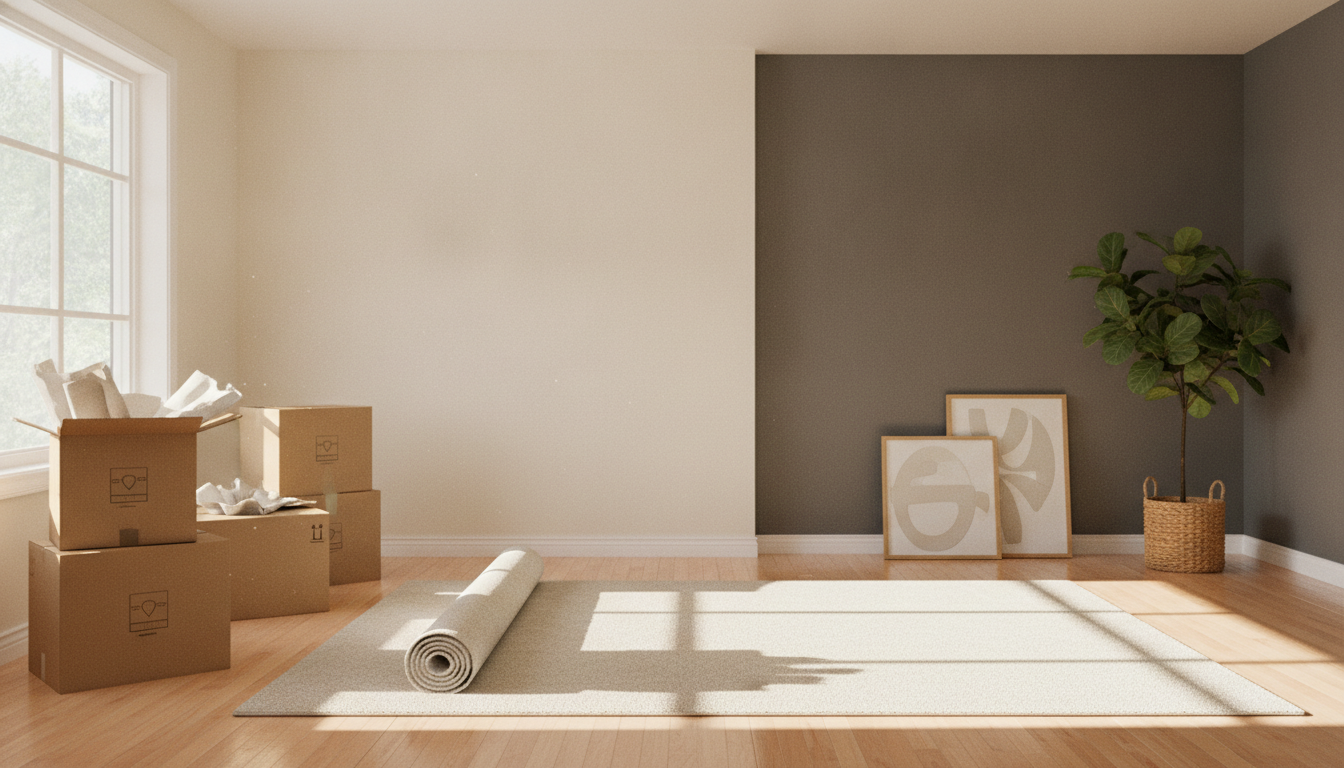
How to Move Into a New Home: The Room-by-Room After-Move Checklist You Actually Need
The first thing to do after the moving truck leaves is change the locks, locate your water shut-off valve, and photograph every room before you unpack a single box. Those three steps protect you legally, physically, and financially — and most people skip all of them. After 35+ years of helping families land in new homes, we've seen what goes wrong in the first week. This checklist is what we'd hand our own kids on move-in day.
Why the first 72 hours matter more than you think
The window between "truck gone" and "fully unpacked" is when damage goes undocumented, lease disputes get muddy, and small problems (a dripping valve, a breaker that trips, a missing smoke detector battery) get buried under boxes. Move fast on the safety and documentation steps. Everything else can wait.
Before you start hauling boxes room by room, run through these five tasks — they take less than 30 minutes and will save you serious headaches.
The five things to do before you unpack anything
- Walk every room and photograph or video it. Capture existing scratches, scuffs, stains, and damage. If you're renting, this is your legal protection against an unfair security-deposit deduction. If you bought, it documents pre-existing conditions for your homeowner's insurance claim baseline.
- Locate your main water shut-off valve. In a house, it's typically in the basement, crawlspace, utility room, or near the street meter. In a condo or apartment, check behind the toilet or under the kitchen sink. You need to find this before a pipe leaks at midnight.
- Change (or rekey) every exterior lock. Previous owners or tenants may have made copies. A locksmith charges roughly $75–$150 to rekey a standard lockset; replacing deadbolts runs $100–$250 per door. Owners: do it immediately. Renters: ask your landlord in writing — many leases require permission but landlords often accommodate the request.
- Test every smoke detector and carbon monoxide detector. Replace batteries if they're more than six months old. If detectors are over 10 years old, replace the units entirely. In most states this is a legal requirement for landlords, but verify — you're the one sleeping there.
- Find the electrical panel and label any unlabeled breakers. Flip each breaker off while a helper calls out which lights or outlets went dark. A piece of blue painter's tape and a marker takes 20 minutes and prevents future panic.
Room-by-room new-home checklist
Kitchen
- Run the dishwasher empty on a hot cycle to clear residue from the previous occupants.
- Check under the sink for active drips or soft spots in the cabinet floor (a telltale sign of an old leak).
- Test the garbage disposal and all burners/oven elements.
- Wipe refrigerator coils if the fridge is staying; clean the interior before loading food.
- Confirm the range hood fan vents to the outside and not just through a charcoal filter (common in older rentals).
- Set the refrigerator to 37°F and the freezer to 0°F.
If you're still recovering from the chaos of packing, our guide on how to pack a kitchen in 48 hours has the reverse process — it'll help you know which boxes to open first.
Bathrooms
- Run hot water in all sinks and showers for two to three minutes to flush stagnant water from supply lines.
- Check caulk around tubs and showers for gaps or mold. Recaulking costs about $10 in materials and an hour of your time.
- Confirm exhaust fans actually vent to the exterior (stick a piece of tissue near the fan — it should pull and hold).
- Locate the shutoff valve behind each toilet. Know how to use it.
Bedrooms
- Measure window dimensions before buying curtains or blinds — window sizes vary more than you'd expect, even in the same house.
- Verify closet lighting works and that closet doors clear each other and the walls.
- Check that every bedroom door locks from the inside (a basic privacy feature often missing after renovations).
Living and dining areas
- Test every outlet with a phone charger or plug-in nightlight — dead outlets are common after remodels.
- Look for signs of water damage on ceilings: yellowish rings, soft drywall, or peeling paint.
- If there's a fireplace, confirm the flue is open before lighting anything. A closed damper fills a house with smoke in minutes.
Basement, garage, and exterior
- Check the water heater's temperature setting. The Consumer Product Safety Commission recommends 120°F to prevent scalding and bacterial growth.
- Inspect the garage door's auto-reverse safety feature: place a 2×4 flat on the ground in the door's path and press close. The door should reverse on contact. If it doesn't, do not use the door until it's serviced.
- Walk the exterior perimeter and note any grading issues — ground sloping toward the foundation channels water into your basement.
- Test outdoor hose bibs and irrigation systems before winter if you're moving in during fall.
Utility and service setup: what to prioritize by day
| Task | When to Do It | Notes |
|---|---|---|
| Electric, gas, water confirmed in your name | Before move-in | Call provider 2–3 weeks out |
| Internet/cable installation | Day 1–3 | Self-install kits often ship in 2–5 days; tech visit may take a week |
| Mail forwarding confirmed | Day 1 | USPS forwarding takes 7–10 business days to kick in fully |
| Trash/recycling schedule | Day 1–2 | Ask a neighbor or check the city's website |
| HOA introduction (if applicable) | Week 1 | Get a copy of the rules in writing |
| Renters or homeowner's insurance active | Before move-in | Coverage should be in place before the first box arrives |
For a deeper dive into getting services running, see our full guide on setting up utilities and internet in a new home.
While you're reading
Skip the research — let Robert match you with movers.
Get quotes from professional movers in your area, free.
Documents and accounts to update in week one
Most people know to forward their mail. Fewer people update the accounts that matter most. Work through this list in your first week:
- Driver's license and vehicle registration — most states require an address update within 10–30 days of moving. Fees and timelines vary by state; check your state's DMV website directly.
- Voter registration — can typically be done online at vote.gov in about three minutes.
- Banks and credit cards — log in and update your address; call the number on the back of the card for cards that don't allow online address changes.
- Employer HR and payroll system — affects W-2s and any direct-deposit paper statements.
- Health insurance, life insurance, auto insurance — insurers need a current address; some auto policies in different states require re-rating.
- Subscriptions and deliveries — streaming services don't care, but Amazon, prescription mail-order, and recurring deliveries do.
Our complete address and documents update checklist walks through all 20+ categories, including ones most people forget (like their FSA/HSA administrator and their 401(k) plan).
Security and peace of mind: the overlooked list
- Install a video doorbell or basic security camera at the front door. Entry-level models run $50–$150. Even if you don't use the monitoring, the footage can be valuable.
- Introduce yourself to immediate neighbors. It sounds old-fashioned, but a neighbor who knows your face will call you if they see something unusual. It's the original neighborhood watch.
- Store emergency numbers somewhere physical. Your phone dies. The power goes out. Tape your utility company's outage line, your building manager, and your insurance agent's number inside a kitchen cabinet.
- Know your neighborhood's evacuation routes if you're in a flood plain, wildfire zone, or hurricane corridor. Check FEMA's flood map at msc.fema.gov if you're unsure.
If you're still in the process of choosing your new area, our guide to finding the best neighborhood in a new city covers what to research before you commit.
A quick note on unpacking strategy
Unpack in this order and you'll feel settled 40% faster than going room by room randomly:
- Beds and bedding — you need to sleep on night one.
- Bathroom essentials — toiletries, towels, toilet paper.
- Kitchen basics — coffee maker, one pot, one pan, plates and utensils for the household.
- Kids' rooms and pet gear — they need their space to feel safe before you feel settled.
- Everything else — at your own pace, one room at a time.
For the full unpacking game plan, our room-by-room unpacking guide has a sequence that minimizes the "I can't find anything" misery of week one.
Finding trustworthy movers for your next move
If you're still mid-move — or planning a future one — browse verified movers on Majestic to find licensed, insured companies in your area. You can also search movers by state if you're relocating across state lines and want to compare local and long-distance options. Our AI agent Robert is on-site to help you narrow down options, ask questions, and get pointed in the right direction without the sales pressure.
Frequently asked questions
What is the first thing you should do when you move into a new home?
Change the locks (or have them rekeyed) and photograph every room before unpacking. These two steps protect your security and create a documented baseline for any future damage or deposit disputes. Both can be done in under an hour on move-in day.
How long does it realistically take to settle into a new home?
Most people feel functionally settled — beds made, kitchen usable, bathrooms organized — within 3 to 5 days if they unpack intentionally. Full "nesting" (wall art, final furniture placement, everything in its place) typically takes 2 to 6 weeks, and that's completely normal.
Do I need to update my driver's license when I move to a new state?
Yes, and the deadline is stricter than most people realize. Most states require you to obtain a new in-state driver's license within 30 to 60 days of establishing residency. Driving on an out-of-state license beyond that window can result in fines. Check your new state's DMV website for the exact deadline and required documents.
What should I check before buying a house versus renting — is the checklist different?
The room-by-room safety and utility checks are essentially the same. The main difference: as an owner, you're responsible for every repair and replacement yourself, so your pre-move-in inspection should be even more thorough (ideally backed by a professional home inspection report). As a renter, document existing damage in writing to your landlord within 24–48 hours of move-in to protect your security deposit.
How do I find my home's water shut-off valve?
In a single-family home, look in the basement near the front foundation wall, in the utility room near the water heater, or in a crawlspace access point. In a condo or apartment, check under bathroom sinks and behind the toilet. There's also typically a street-side shutoff near your water meter, operated with a special tool (your local water utility can shut this one in an emergency if you call them).
When should I contact my insurance company after moving?
Before you move in, not after. Your homeowner's or renter's policy should be active before the first box crosses the threshold. If you're switching insurers, confirm the new policy's effective date overlaps with your move-in date so there's no coverage gap. Also notify your auto insurer — rates can change by ZIP code, sometimes significantly.
Tagged