A portable moving container works best when you treat it like a well-loaded moving truck — heavy items on the bottom, fragile things cushioned and braced, and anything hazardous or irreplaceable kept completely out of it. Load it wrong, and you'll open the door at your destination to a pile of broken furniture and crushed boxes. Load it right, and it's one of the most affordable, flexible ways to move.
Here's exactly what goes in, what stays out, and why — with no fluff.
What actually goes in a moving container?
Portable containers — the kind delivered to your driveway and picked up by a truck driver — are built for household goods: furniture, boxes of clothing and linens, kitchen gear, books, and most standard appliances. They handle the same inventory a full-service moving truck would carry.
The difference is you pack and load it yourself (or hire labor-only movers to help), so the decisions about what goes where fall to you.
The best items to load in a container
- Solid wood and upholstered furniture — sofas, bed frames, dressers, dining tables
- Mattresses (wrapped in a mattress bag — never left bare)
- Boxes of clothes, linens, and soft goods — they pack well and fill gaps
- Kitchenware — pots, pans, small appliances, properly packed dishes
- Books and media — use small boxes; books are heavy and crush larger cartons
- Large appliances — refrigerators, washers, dryers — with cords secured and doors taped shut
- Garage items — tools, hand equipment, shelving, sports gear
- Outdoor furniture — cleaned and dried before loading
If you're planning a longer haul, our guide on how to move with a moving container covers container options, freight timelines, and what to expect when the pod arrives.
What you must keep out of a moving container
This is where people get into trouble — and where damage claims start. Containers sit outside, on flatbed trucks, and in storage yards. Temperature swings, humidity, and rough road vibration are serious.
Items that should never go in a container
| Category | Examples | Why |
|---|---|---|
| Hazardous materials | Propane tanks, paint, gasoline, aerosols, pool chemicals | FMCSA regulations prohibit transport; fire and explosion risk |
| Perishable food | Fresh produce, frozen items, open pantry staples | Mold, pests, and spillage |
| Live plants | Houseplants of any kind | Most states restrict cross-state transport; plants die in sealed containers |
| Pets | Any animal | Illegal and dangerous |
| High-value irreplaceable items | Passports, jewelry, cash, legal documents, hard drives | No liability protection if lost or damaged |
| Temperature-sensitive items | Wine collections, vinyl records, fine art, candles, medications | Containers can reach 130°F in summer heat |
| Firearms (without compliance) | Handguns, rifles | Must comply with federal and state transport laws; confirm before loading |
Federal rules under the FMCSA (49 CFR Part 177) prohibit transporting hazardous materials — including common household chemicals — in the same vehicle as household goods. Even if a container company doesn't check, you're liable for any resulting damage or regulatory violation.
For items you're not sure about, our moving insurance coverage types explained guide breaks down what's typically covered and what falls outside any protection — including self-packed containers.

How to prioritize what goes in first vs. what gets stored separately
If you're using a container alongside a storage unit or making multiple trips, the sequencing matters.
Load the container with items you need to arrive intact at your destination
- Furniture you'll set up immediately (bed, couch, dining table)
- Clothing and daily-use kitchen items
- Electronics (packed carefully with original boxes or foam)
- Children's essentials — their room contents should be accessible first
Put overflow in a separate storage unit
If you're staging a move — closing on a new house in 30 days while your lease ends now — a storage unit makes more sense for the secondary load. See our breakdown of how to find and rent a storage unit when moving for realistic costs and size guidance.
How to load a portable container so nothing shifts
This is the step most people rush — and regret.
Step-by-step loading process
- Clean and dry everything before loading. Moisture causes mold. Even damp garage items can wreck boxes stored next to them.
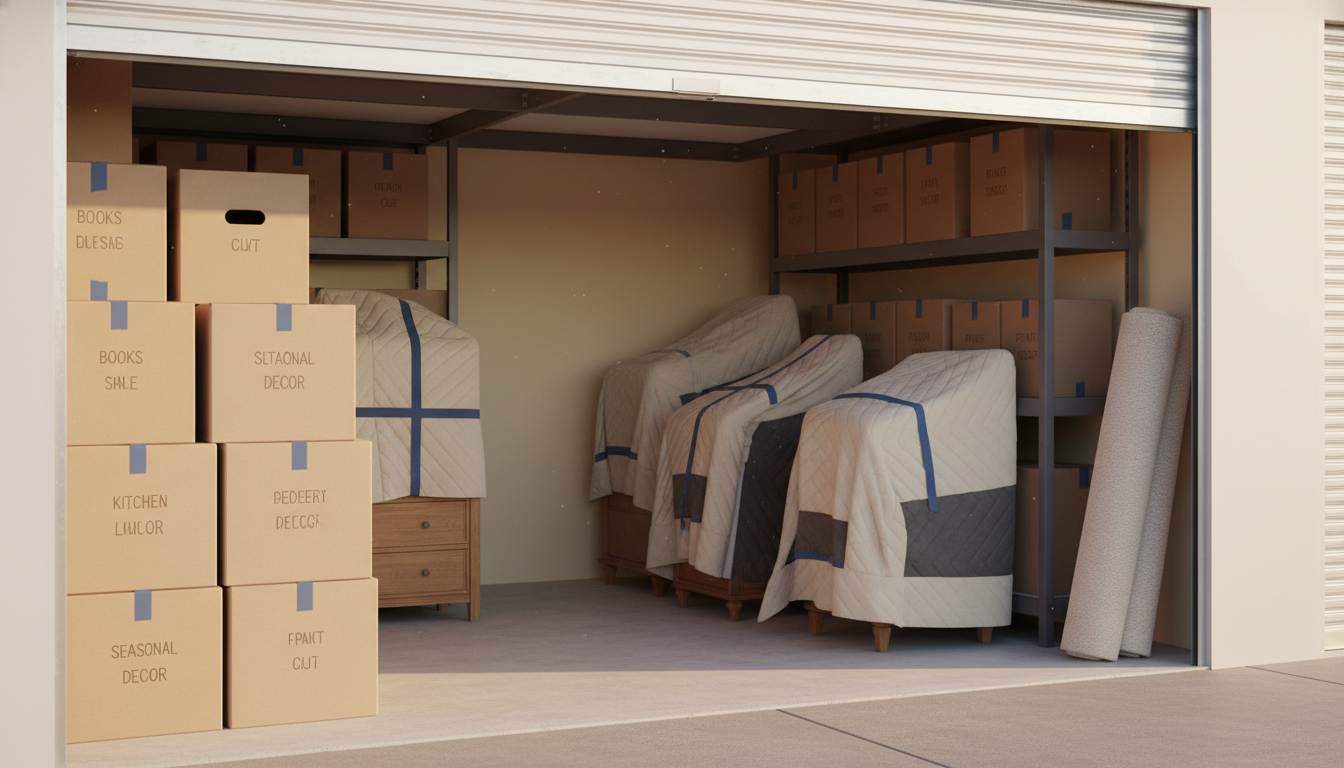
- Lay appliances and heavy furniture flat against the back wall first. Refrigerators stand upright; dressers can go on their backs if protected.
- Fill vertical space. Stand mattresses on end along the side walls, secured with tie-down straps through the container's anchor points.
- Stack boxes heaviest on the bottom, lightest on top. A box of books under a box of pillows. Never the reverse.
- Fill every gap. Loose space lets boxes shift and topple. Use soft goods — comforters, towels, rolled rugs — as filler between furniture pieces.
- Tie down the load. Use ratchet straps through the container's built-in anchor rings. At minimum, strap across the load at two heights.
- Don't overfill past the door threshold. A container that can't close properly isn't sealed against weather or theft.
A well-loaded 16-foot container holds roughly 3–4 rooms of furniture and boxes. A 12-foot container fits a 1–2 bedroom apartment comfortably. If you're comparing container sizes and costs, our full guide on using a portable moving container walks through pricing from major providers.
While you’re reading
Skip the research — let Robert match you with movers.
Free quotes from movers in your area. Pick whichever is easiest.
What about items that are valuable but not prohibited?
Electronics, artwork, and antiques technically can go in a container — but they carry risk if not packed correctly and if the container isn't climate-controlled (most aren't).
For electronics: Use original packaging whenever possible. If you don't have it, wrap in anti-static bubble wrap and double-box. Never lay a flat-screen TV flat — always stand it on edge.
For artwork and mirrors: Use mirror boxes (available at moving supply stores for $5–$15 each). Mark them "FRAGILE — DO NOT LAY FLAT" even if you're the only one touching them. It's a mental reminder during your own loading.
For antiques and collectibles: Honestly, if it's irreplaceable or worth more than $500, carry it in your own vehicle. Container coverage is set by the company's contract, not federal mover rules — some include nothing by default, and one freight-trailer service includes just $0.10 per pound per item for damage it causes. A 10-lb lamp worth $2,000 gets you $1 if it's destroyed. You can read more about how this math works in our guide to moving valuation vs. insurance coverage.
Does renter's or homeowner's insurance cover items in a container?
In many cases, yes — but with limits. Most standard homeowner's and renter's policies extend some coverage to belongings in transit or temporary storage, but check your specific policy for:
- The coverage window (often 30–60 days)
- Whether self-packed containers are excluded
- Per-item or per-claim limits on valuables
Call your insurer before moving day. It takes ten minutes and the answer matters.
Putting it all together: a quick reference checklist
✅ Load in the container:
- Furniture, mattresses (bagged), linens, clothing
- Packed kitchen items, small appliances
- Books (small boxes), electronics (properly packed)
- Large appliances (drained and secured)
- Garage tools and sports equipment
❌ Keep out of the container:
- Hazardous materials (paint, propane, chemicals)
- Perishable food or open pantry items
- Live plants and animals
- Passports, cash, jewelry, irreplaceable documents
- Medications, wine, vinyl records (temperature risk)
When you're ready to compare container providers and find the right movers to help with loading, browse movers by state on our directory — you can filter for labor-only moving help that works with containers. Or find movers in your area directly. Our moving concierge Robert can also help you match container logistics to your specific move timeline.
Frequently asked questions
Can I put food in a moving container?
Non-perishable, sealed food in airtight containers is generally allowed, but most container companies discourage it because food attracts pests during storage or transit. Never load open containers, fresh produce, or anything that requires refrigeration. When in doubt, donate or consume before moving day.
How hot does the inside of a portable container get?
In direct summer sun, the interior of a steel container can reach 120–130°F. That's enough to warp vinyl records, melt candles, damage adhesives in furniture, and ruin wine. If you're moving in summer or to a warm climate like Atlanta or Orlando, keep temperature-sensitive items in your air-conditioned vehicle.
Can I leave stuff in dressers and nightstands inside the container?
Light, soft items — clothing, linens, light accessories — can stay in drawers as long as the drawers are secured (tape them shut or remove and wrap them). Heavy items like books or tools shouldn't stay in furniture because the added weight strains drawer slides and the furniture frame during transit jolts.
What's the maximum weight I can put in a moving container?
Weight limits vary by provider and container size, but most standard 16-foot portable containers have weight limits of 4,500–6,000 lbs. A typical 3-bedroom home's contents run 5,000–8,000 lbs, so two containers or a combination with a truck may be needed. Confirm the weight limit with your provider before loading — overweight containers may incur fees of $75–$200 or more.
Do I need to be home when the container is delivered or picked up?
Typically yes for delivery — you need to confirm placement. Pickup usually just requires that the container be fully closed, locked, and accessible. Most companies give you a delivery window of a few hours; confirm the process when booking so you're not caught off guard.
What happens if I accidentally pack something prohibited?
If a prohibited hazardous item is discovered, the container company can refuse transport, charge a disposal fee (often $200–$500+), or hold your load until the item is removed. In serious cases involving regulated hazmat, there can be federal fines. It's not worth the risk — clear out paint cans, propane tanks, and chemicals before loading day.
Tagged