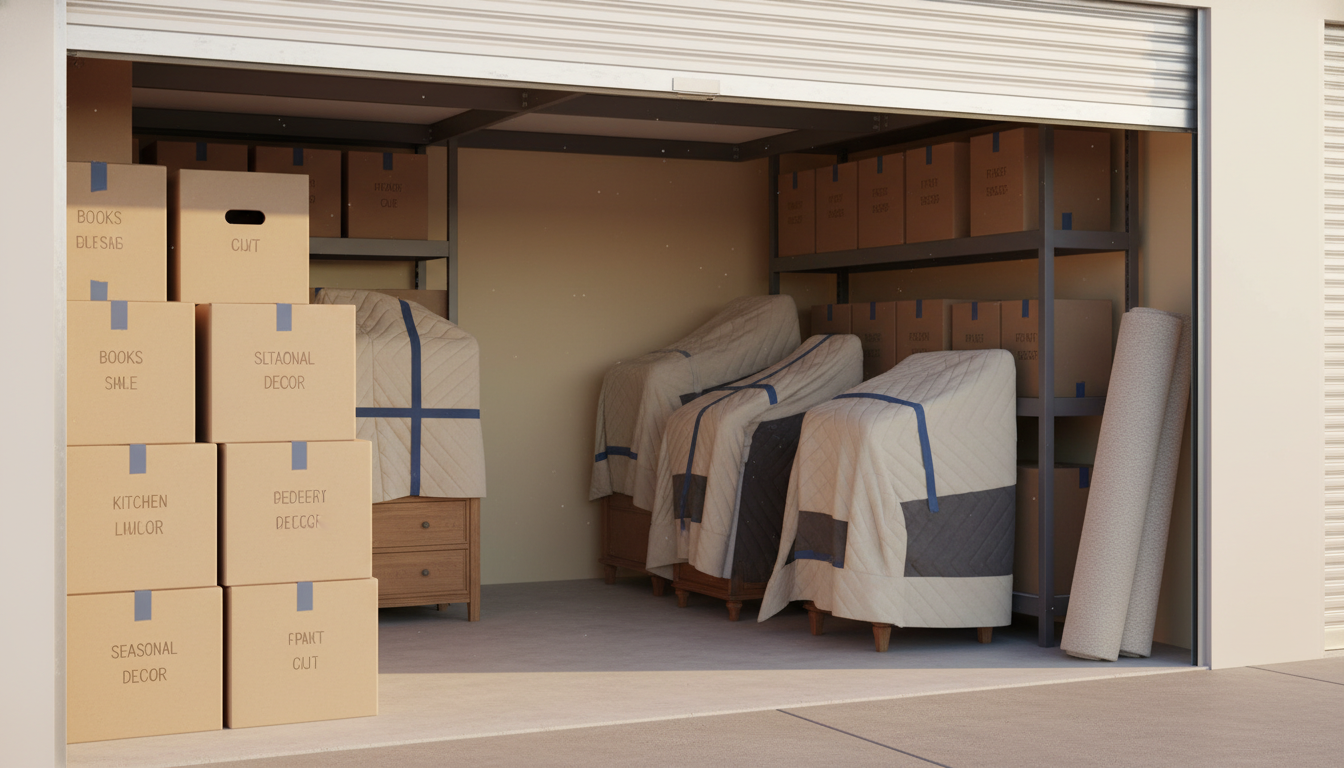
The smartest thing to go into storage during a move is whatever you won't need in the first 30–60 days at your new home, doesn't fit your new space yet, or costs more to move than to store short-term. Get that decision right, and you can cut your moving truck load — and your moving bill — meaningfully. Get it wrong, and you're paying $150–$350 a month to warehouse things you could have donated or moved directly.
Here's the honest framework we use.
Why Storage Is a Moving Tool, Not a Last Resort
Most people think of storage as something you rent when the move goes sideways. We think of it as a legitimate part of move planning — when used deliberately.
Renting a 10×10 storage unit for two months typically costs $120–$220 depending on your metro area. That same cubic footage on a moving truck can add $300–$700 to a long-distance bill (movers charge by weight and space), or 1–2 hours to a local job billed hourly. Done right, storage saves money. Done carelessly, it just delays a decision you should have made before the truck arrived.
If you're still working out your overall cost picture, our guide on how much it actually costs to move by home size, distance, and move type is a good starting point before you decide how much storage you need.
What Should Actually Go in Storage?
Items you won't need in the first 30–60 days
The most reliable rule: if you can answer "I won't touch this until we're fully settled," it's a storage candidate.
- Off-season clothing and gear (ski equipment in July, beach chairs in January)
- Holiday decorations
- Extra sets of dishes, linens, or towels beyond what you'll use immediately
- Exercise equipment you haven't used in months
- Books and media collections you're not actively reading or watching
- Workshop tools you don't need for the move or immediate repairs
Furniture that doesn't fit the new space yet
If your dining table seats 10 and your new apartment has a kitchen nook, don't force it onto the truck and then squeeze it into a hallway. Store it short-term while you figure out whether to sell it, keep it for a future home, or give it away. This is especially common in apartment and condo moves where square footage drops significantly.
Items awaiting a decision
We call these "deliberate deferral" items. You're not ready to let go of them, but you're not sure they belong in the new house either. Give yourself 60–90 days of distance before deciding. Storage buys you that time without cluttering your new space or making a rushed choice you'll regret.
Large items that require a staging period
Renovating before you fully move in? Furniture and boxes can live in storage — or in a portable container parked in your driveway — while floors are being refinished or walls painted. This is one of the most practical uses of storage-in-transit arrangements, where your movers hold your goods between pickup and delivery.
What Should NOT Go in Storage
This is where people get into trouble — and where we've seen the most costly mistakes.
| Item | Why It's a Problem in Storage |
|---|---|
| Food (canned or dry) | Attracts pests; most facilities prohibit it |
| Hazardous materials (paint, propane, chemicals) | Fire and liability risk; explicitly banned |
| Valuables (jewelry, documents, cash) | No standard storage insurance covers high-value items; use a safe or safe-deposit box |
| Medications and medical equipment | Temperature swings; access issues |
| Plants | Won't survive in a dark, sealed unit |
| Pets | Obviously, but worth saying |
| Electronics you'll need immediately | Retrieving from storage mid-move is a hassle |
| Anything with sentimental irreplaceability | Keep it with you or ship it separately with full valuation coverage |
For anything genuinely irreplaceable — family photos, heirlooms, original artwork — understand your coverage before you store. Our breakdown of moving valuation coverage for items in storage walks through what's typically protected and what isn't.
How to Actually Make the Decision: A Room-by-Room Pass
Don't do this by feel. Walk every room with three labels in your head: Move Now, Store, Let Go.
Kitchen
Move everything you'll cook with in the first week. Store duplicate small appliances (the second blender, the waffle iron you use twice a year), extra serving dishes, and seasonal items. Let go of anything broken or unused in the past year.
Living room
Move your main sofa, coffee table, and whatever you need to make the space livable immediately. Store accent furniture, extra bookshelves, or pieces that don't match the new layout yet.
Bedrooms
Move beds, dressers, and all clothing for the current season. Store off-season wardrobes, guest room furniture if you don't have a guest room yet, and any pieces that are downsizing casualties.
Garage / basement
This is the category that inflates moving bills the most. Be ruthless. Store sporting equipment and tools you genuinely use seasonally. Let go of anything that hasn't moved in two years. Almost nothing from a garage needs to get on a long-distance truck if you're downsizing or haven't used it recently.
While you’re reading
Skip the research — let Robert match you with movers.
Free quotes from movers in your area. Pick whichever is easiest.
Sizing Your Unit: What Actually Fits
| Unit Size | Roughly Holds | Typical Monthly Cost (US avg) |
|---|---|---|
| 5×5 (25 sq ft) | Small boxes, seasonal items, a few furniture pieces | $45–$90 |
| 5×10 (50 sq ft) | Studio apartment contents, one room of furniture | $70–$140 |
| 10×10 (100 sq ft) | 1–2 bedroom apartment contents | $120–$220 |
| 10×15 (150 sq ft) | 2–3 bedroom home partial contents | $150–$280 |
| 10×20 (200 sq ft) | Full 3-bedroom home, or garage + living areas | $180–$350 |
Costs vary significantly by city. A 10×10 in a downtown metro like Boston or San Francisco can run $250–$350/month, while the same unit in a mid-size Midwestern city often comes in under $130. Always get three quotes and ask specifically whether the advertised rate is a promotional first-month price — many are.
For a deeper look at sizing and pricing, our guide to finding and renting a storage unit during a move covers what to watch out for when signing a storage lease.
Climate Control: When You Actually Need It
Climate-controlled units typically cost 20–50% more. They're worth it for:
- Wood furniture (warping and cracking from humidity)
- Electronics
- Artwork, photographs, or documents
- Musical instruments
- Wine or leather goods
They're overkill for metal tools, plastic bins of seasonal clothing, patio furniture, and most cardboard boxes of books.
The Hidden Cost of Storage That Nobody Mentions
Storing something for "a few months" that stays for a year is one of the most common moving budget mistakes we see. A 10×10 unit at $160/month is $1,920 over a year — which often exceeds the resale or replacement value of what's inside.
Set a hard exit date when you rent: 30, 60, or 90 days. Put it on the calendar. Visit the unit within the first two weeks of your move, after the dust settles, and make actual decisions about what's coming home and what's going to donation. The discipline of an exit date is what separates storage as a useful tool from storage as an expensive avoidance strategy.
If you're also trying to figure out how to reduce the overall volume before the truck arrives, how to declutter before a move walks through what to sell, donate, and let go of — and why doing it before you pack is almost always cheaper than after.
Frequently asked questions
What items should always go in storage during a move, not on the truck?
Off-season gear, holiday decorations, duplicate household items, and furniture that won't fit your new space immediately are the strongest candidates. The guiding test is: will I need this in the first 30 days? If not, storage is often cheaper than the truck space it would consume — particularly on long-distance moves where you're billed by weight.
Is it worth renting a storage unit for a local move?
Sometimes yes, especially if you're downsizing, renovating your new home before you fully move in, or moving in stages. For a straight local move where everything goes directly to the new address, storage usually adds cost and complexity. The math shifts if your new home has significantly less space and you need time to decide what stays.
What should I never put in a storage unit?
Food, hazardous materials (paint, propane, chemicals), medications, plants, cash, and anything genuinely irreplaceable — including original documents and family heirlooms. Most storage facilities prohibit hazardous materials explicitly, and standard storage coverage typically won't reimburse you for high-value items. Keep those with you or use a bank safe-deposit box.
How long should I plan to keep items in storage during a move?
30–90 days is a healthy range for a deliberate storage plan. Beyond 90 days, ask yourself honestly whether you're delaying a decision that should have been made before the move. The longer items sit in storage, the more likely you're paying rent on things you'd have been better off selling or donating.
Do storage facilities offer moving insurance?
Most offer basic protection plans — typically $2,000–$5,000 in coverage at low cost — but exclusions are significant. High-value items, flood damage, and pest damage are commonly excluded. Your homeowner's or renter's insurance policy may extend coverage to off-premises storage, which is worth confirming before you sign a lease. See our full breakdown of what moving insurance actually covers for context.
How do I figure out what size storage unit I need?
Start by listing the bulkiest items first — sofas, dressers, appliances — since they define your floor plan, not just volume. A 10×10 unit typically holds the contents of a one-bedroom apartment if packed efficiently. Add 50 sq ft for each additional room you're storing. When in doubt, go one size larger: the price difference between a 10×10 and a 10×15 is usually $30–$60/month, but cramming too much into a small unit risks damage.
Ready to find a mover who can help you think through the full picture — truck, storage, and logistics together? Browse movers in your area or search by state to compare options. Our moving concierge Robert is also available on the site to answer questions live and help you figure out what makes sense for your specific move.
Tagged