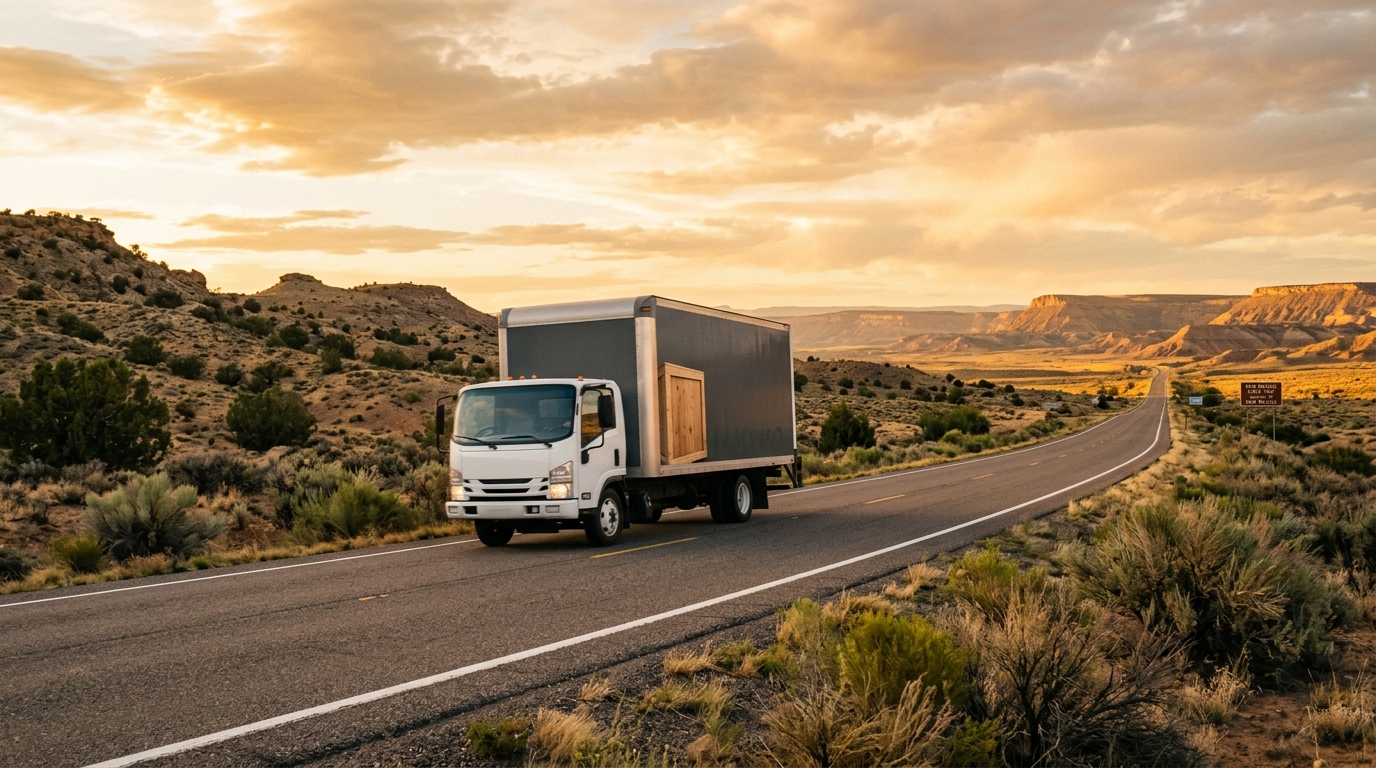
An interstate move from San Diego to New Mexico typically runs $2,500–$6,500 for a standard two-to-three-bedroom household, depending on distance to your specific New Mexico destination, home size, and the time of year you move. The single biggest change you'll feel on day one isn't the drive — it's the dramatic drop in cost of living: on the federal price index for 2024 (U.S. = 100), New Mexico statewide sits at 92, compared to 112 for the San Diego area, meaning everyday expenses, rent, and home prices are considerably lower. Add a state income tax rate capped at 5.9% versus California's top rate of 13.3%, and the financial relief is immediate and genuine.
What does a move from San Diego to New Mexico cost?
Moving costs on this route depend on four main variables: the size of your home, the exact mileage (San Diego to Albuquerque is roughly 790 miles; to Santa Fe, about 850 miles), the season, and the services you choose.
Typical estimates by home size:
- Studio or 1-bedroom: $1,800–$3,200
- 2-bedroom: $2,500–$4,500
- 3-bedroom: $3,800–$6,500
- 4+ bedrooms: $5,500–$9,500+
These are estimates and vary meaningfully based on whether you need packing services, specialty item handling (pianos, artwork, vehicles), shuttle service for difficult access addresses, or storage-in-transit. Peak moving season — roughly Memorial Day through Labor Day — typically commands higher rates and tighter scheduling. If your timeline is flexible, late fall or winter moves often come in at the lower end of these ranges.
Always request at least three written binding estimates before committing to a mover. More on that below.
How does cost of living compare? San Diego vs. New Mexico
This comparison deserves a clear disclaimer: the San Diego figures below reflect a single large city, while the New Mexico figures are statewide averages — not any one city. Urban New Mexico metros like Albuquerque will be higher than the state average; smaller towns will be lower. That said, the directional story is consistent: nearly every cost category is meaningfully lower in New Mexico.
For San Diegans who have been renting, the rental savings alone can be transformative — a two-bedroom in New Mexico runs roughly 63% less than in San Diego on average. Homeownership, which feels out of reach for many San Diego residents, becomes a realistic near-term goal for a wide range of households after this move.
Where in New Mexico do San Diego movers land?
New Mexico is geographically diverse, and where you settle shapes your experience enormously. Here are the major metros worth considering:
Albuquerque
New Mexico's largest city and its economic hub, Albuquerque offers the widest range of neighborhoods, employers, healthcare systems, and cultural amenities. It sits at roughly 5,300 feet elevation — noticeable but manageable — and has a well-established arts and food scene. Most people moving from San Diego find the urban infrastructure familiar enough to settle in comfortably.
Santa Fe
The state capital is known nationally for its arts community, adobe architecture, and outdoor access. At 7,000+ feet, it has genuine four-season weather. It attracts a creative, outdoors-oriented demographic and tends to be pricier than other New Mexico cities — though still well below San Diego levels.
Las Cruces
Located in southern New Mexico near the Texas border, Las Cruces is a fast-growing college town anchored by New Mexico State University. It has a strong agricultural economy and is popular with retirees and remote workers who want lower costs and proximity to the El Paso metro.
Taos, Rio Rancho, and smaller communities
Rio Rancho, just northwest of Albuquerque, is a rapidly growing suburb with newer housing stock. Taos draws artists, skiers, and those seeking a smaller community with deep cultural roots. Remote workers and retirees from California increasingly make up a significant portion of new arrivals in these areas.
Browse movers in New Mexico to find licensed carriers that serve these specific destinations.
Climate and lifestyle: what changes, what doesn't
San Diego's Mediterranean climate is famously gentle — mild, sunny, and predictable, with summer highs in the 75–80°F range and winter highs around 65°F. It's one of the most comfortable urban climates in the country.
New Mexico is a genuine adjustment. The state has a semi-arid to arid climate with hot summers, mild winters, and extraordinary sunshine — more than 300 days per year in many areas. Summers in Albuquerque regularly reach the 90s°F, and high-elevation cities like Santa Fe can see actual snow in winter. The altitude is the adjustment most San Diegans underestimate: even moderate activity feels harder at 5,000–7,000 feet for the first few weeks.
Seasonal awareness matters in both states. San Diego residents are familiar with wildfire risk and Santa Ana wind events in fall. New Mexico has its own wildfire risk, particularly in forested mountain areas, and experiences monsoon season from roughly July through September — afternoon and evening thunderstorms that can bring heavy rain, lightning, and flash flooding in arroyos. New arrivals should learn local weather patterns quickly.
What doesn't change: the outdoor lifestyle. If you moved to San Diego for the hiking, mountain biking, and open skies, New Mexico delivers all three in abundance.
How interstate moving works: what you need to know
FMCSA licensing
Any mover transporting your belongings across state lines must be registered with the Federal Motor Carrier Safety Administration (FMCSA) and hold a valid USDOT number and MC (Motor Carrier) number. You can verify any mover's credentials for free at the FMCSA's online search tool before signing anything. Licensed movers in San Diego will have these numbers prominently displayed.
Binding vs. non-binding estimates
- A binding estimate locks in your price based on the agreed-upon inventory and services. Barring changes you initiate, you pay that amount.
- A non-binding estimate is a good-faith projection — the final bill can exceed it (within FMCSA limits).
- A binding not-to-exceed estimate is the most protective option: you pay the binding price or the actual weight cost, whichever is lower.
For a cross-country move like this, we strongly recommend requesting a binding or binding not-to-exceed estimate.
Valuation (not insurance)
Federal law requires movers to offer two valuation options. Released value is included at no cost but covers only $0.60 per pound per item — far too little for most households. Full value protection covers repair or replacement at current market value and is worth the added cost for a move of this distance. Note that carrier valuation is not the same as third-party moving insurance; you can purchase additional coverage separately.
Delivery windows
Interstate movers typically provide a delivery window rather than a guaranteed date — commonly 3–14 days depending on distance, load consolidation, and route. San Diego to New Mexico moves often fall in the 3–7 day range, but confirm this in writing before your move date.
How to choose a licensed long-distance mover
- Verify USDOT and MC numbers on the FMCSA website before any conversation goes further.
- Get three written binding estimates — in-home or virtual surveys are more accurate than phone quotes.
- Read verified reviews on verified review platforms, filtering for interstate move experiences specifically.
- Confirm what's included — packing materials, disassembly, long-carry fees, and elevator fees are common add-ons that inflate final bills.
- Ask about subcontracting — some brokers book your move and hand it to a carrier you haven't vetted. Know who is actually showing up.
- Get everything in writing — the estimate, pickup window, delivery window, and cancellation policy.
Use our directory to find movers who serve the San Diego to New Mexico route, or browse by state to explore carriers licensed in your origin and destination.
Frequently asked questions
How long does a move from San Diego to New Mexico take?
Driving time from San Diego to Albuquerque is roughly 10–12 hours nonstop. For your belongings, expect a delivery window of 3–7 business days on most interstate carrier schedules — though this can extend during peak season or if your shipment is consolidated with other loads. Get the delivery window in writing before you sign.
Is moving from San Diego to New Mexico worth it financially?
For most households, yes — especially if housing costs are your primary pressure. On the federal price index for 2024, the figure drops from 112 (the San Diego area) to 92 for New Mexico statewide, median home prices fall from $850,000 to around $285,000, and the top state income tax rate goes from 13.3% (California) to 5.9% (New Mexico). The actual impact depends on your income, lifestyle, and which New Mexico city you choose — urban Albuquerque will run higher than the statewide average.
What's the best time of year to make this move?
Late September through early November and February through March are generally the most favorable windows — lower mover demand means better pricing and scheduling flexibility. Avoid peak summer (June–August) if possible, both for cost reasons and because moving into a New Mexico home during monsoon season and high heat adds logistical complexity.
Do I need to re-register my vehicle and update my license after moving to New Mexico?
Yes. New Mexico law generally requires new residents to obtain a New Mexico driver's license and register vehicles within 90 days of establishing residency. You'll also need to update your voter registration and, if you own a home, look into homestead exemption filing with your county assessor.
Will my San Diego-based movers take me all the way to New Mexico?
Licensed interstate movers based in San Diego can legally operate across state lines as long as they hold a valid USDOT and MC number. Many San Diego carriers service the Southwest corridor regularly. You can also book a carrier based anywhere in the country that serves both markets — what matters is their licensing, not their home base.
How do I protect myself from moving scams on a long-distance move?
The most common scams involve dramatically low estimates, demands for large cash deposits upfront, or "hostage load" scenarios where a mover holds your belongings pending an inflated final payment. Protect yourself: verify FMCSA credentials, never pay more than a modest deposit before delivery, get a binding estimate, and ensure you have a signed bill of lading before your items leave your home. Legitimate movers will not pressure you or refuse to provide documentation.