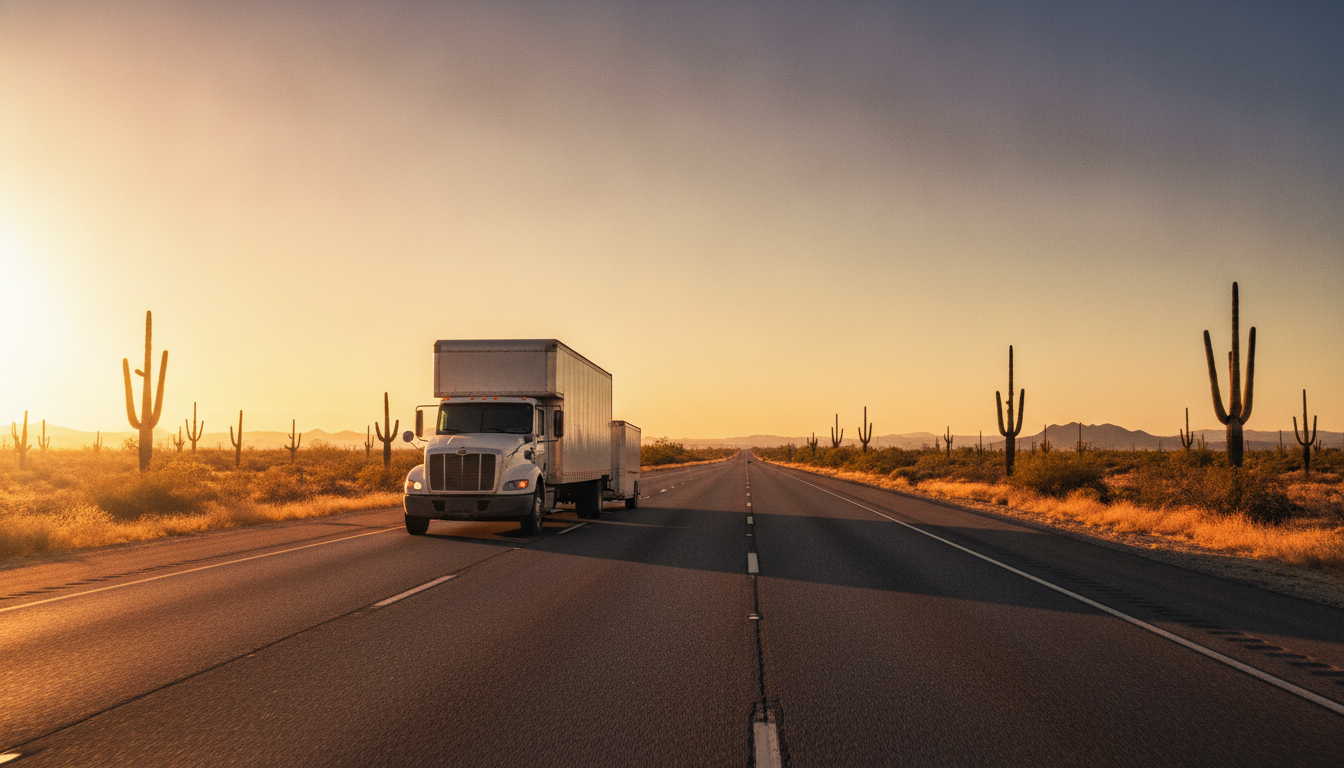
Two similar-sized cities, two very different housing markets
With roughly 1.6 million people in Phoenix and 1.4 million in San Diego, you are not trading a big city for a small town. What changes is what a home costs, how it is built, and what the sky does from June to September.
Majestic Moving Companies is a directory that connects you with licensed movers; we do not move, pack or store anything.
The housing gap decides what you bring
A house priced at the Phoenix middle, $381,900, would sit at $848,500 in San Diego, so the gap is 55%. Monthly rent follows the same direction at $1,458 in Phoenix against $2,223 in San Diego, 34% lower. Household income also falls, from $104,321 in San Diego to $77,041 in Phoenix, so set a Phoenix salary beside both housing figures before you commit to a lease or an offer.
What this means for packing:
- Rooms in a Phoenix home may be larger or smaller than the ones you are leaving. Measure them, or ask the landlord or seller for dimensions, before deciding which furniture makes the trip.
- If you will need more furniture than you own, list the gaps now instead of shipping pieces you do not plan to keep.
- Selling or donating something before the move reduces the weight on your estimate, which matters because weight is the main thing the price follows.
Renters make up 52% of San Diego households and 43% of Phoenix households. If you rent in San Diego, read your lease for the notice period before you pick a moving date, and line up the end of that lease with the start of your Phoenix housing. If you own, closing dates on a sale and a purchase can fall apart from each other, so ask your mover about short-term storage or a longer delivery window.
What sets the price of this move
You will find the price range for this route at the top of this page. Your own quote will land inside it or outside it depending on a handful of things:
- Weight and home size. An interstate move is priced on the weight of your shipment, not by the hour.
- Packing. Having the crew pack adds labor and materials; packing yourself does not.
- Access at both addresses. Stairs, elevators and long carries from the door to the truck all add time.
Show the surveyor every closet, garage shelf and storage unit. Anything left out of the inventory shows up as extra weight later.
Elevator or driveway: how moving day differs at each end
San Diego has more apartment living than Phoenix: 38% of its homes are in buildings of five or more units, against 26% in Phoenix, and detached houses are 44% of homes in San Diego against 60% in Phoenix. That shapes the day itself.
If you leave an apartment building in San Diego:
- Ask the building about a reserved elevator, a loading dock and a place for the truck to park. Some buildings require this ahead of time.
- Tell the mover about the carry from your door to the truck, because it is part of what they are pricing.
If you arrive at a Phoenix house:
- Check that the driveway or street in front is open for a large truck, and tell the mover about any steps at the front door.
- Plan to unload in the cooler part of the day in summer.
Either way, walk both addresses with a tape measure before the survey. A doorway, a stairwell or a freight elevator that will not take a sofa is far easier to deal with on paper than on moving day, and it tells the mover how many people and how much time the job needs.
Weather you are trading: Santa Ana season for the monsoon
San Diego's Mediterranean climate keeps summer highs around 75 to 80°F and winter highs near 65°F. Fall brings occasional Santa Ana wind events and seasonal wildfire risk, so if you are leaving in autumn, watch the forecast and air quality on loading day.
Phoenix is a different story:
- Summer heat. Temperatures routinely pass 110°F from June through September. Air conditioning is a necessity, not a comfort, and outdoor life shifts to early morning and evening.
- Haboobs. Dust storms can roll into the Valley with little warning, particularly in the monsoon season from July to September. Keep an emergency kit in your car, and if one hits, pull over and wait it out.
- Wildfire smoke. Phoenix does not face direct wildfire risk the way San Diego does, but smoke from surrounding regions drifts in during summer. Keep that in mind if anyone in your household has respiratory concerns.
- Winter. Phoenix winters run 65 to 70°F, almost identical to San Diego's winter highs.
For timing, the cooler months are easier on your crew, on your family and on your own unloading day, since you avoid June through September heat. If you must move in summer, ask for a morning loading window, and leave early yourself when you drive the I-8 corridor through the Imperial Valley into the Phoenix basin, where the heat builds fast by midday.
Lining up the move, step by step
- Start asking for quotes early. Collect at least three, and give yourself enough time to do the survey with each mover and to compare the paperwork line by line instead of just the totals. Starting early also leaves room to ask for a particular loading date.
- Do the survey. An in-person or video walkthrough lets the mover see everything that is going.
- Ask for a loading window and a delivery window in writing. On a route like this one, movers often quote 1 to 5 business days from pickup to delivery. Treat that as a range some movers quote, not a promise, and make sure the window you agree to is written on the paperwork.
- Choose your valuation level. See the rules below.
- Read the bill of lading before signing it. Never sign a blank document.
- Confirm the building details. Elevator reservation, parking and driveway access at each end, as above.
Estimates and liability between California and Arizona
On a move from San Diego to Phoenix, a binding estimate means you pay the quoted amount at delivery, plus services you added after signing and up to 15% for impracticable operations, with anything above that billed later; a non-binding estimate rests on actual weight, so the mover must release your goods once you pay 110% of the estimate, and any remaining balance is billed after 30 days from delivery. Because the move crosses a state line, Full Value Protection applies automatically, meaning the mover must repair, replace or pay replacement value, while Released Value at 60 cents per pound per article applies only if you sign a written waiver choosing it, and either way it is the mover's liability level rather than insurance. Every estimate must say which type it is and be based on a physical survey, in person or by live or recorded video, unless you waive it in writing, so treat a sight-unseen phone quote as a red flag.
Choosing a carrier on the California to Arizona lane
Not every moving company is set up for interstate work. Look for:
- Interstate authority. A mover crossing state lines must be registered with the Federal Motor Carrier Safety Administration. Check the USDOT number on the FMCSA website before you sign.
- The estimate in writing. Ask which type it is, and ask whether the mover offers a binding or not-to-exceed price.
- Review patterns. One or two bad reviews do not disqualify a company. Consistent complaints about missing items or surprise fees do.
- Experience on this lane. Ask how often the mover runs San Diego to Phoenix, since a crew that does it regularly knows the routing.
To start collecting quotes from your end, see movers in San Diego, or find movers across our whole directory. You can also browse by state for listed movers working in California and Arizona.
Phoenix areas, from Midtown to Ahwatukee
Phoenix is a sprawling metro, so understand the areas before you sign a lease or make an offer. Here are six areas and what each offers:
- Downtown Phoenix and Midtown. Walkable, with light rail, arts and food. Closest in feel to San Diego's urban core or Hillcrest.
- Scottsdale (Old Town and North Scottsdale). Polished and resort-like, with strong dining and nightlife. Higher priced, but still well below San Diego comparables.
- Tempe. Home to Arizona State University, with a younger population; a good fit for renters and first-time buyers.
- Gilbert and Chandler. Southeast Valley suburbs with excellent schools, newer housing and family-friendly infrastructure.
- Peoria and Surprise. Northwest suburbs with larger lots and lower prices.
- Ahwatukee. A quieter, mountain-adjacent community at the south end of Phoenix, with easy freeway access.
If you are coming from a walkable San Diego neighborhood, test the commute and the nearest grocery store at the hours you would actually use them before you sign, because the distances between areas in the Valley are long. Phoenix is car-dependent. Outside a few urban neighborhoods, a vehicle is essential, so plan to bring your car or budget time to buy one. You can look at movers in Phoenix to see locally based options at the destination end.
Taxes, car and paperwork after you arrive
The tax difference is one of the larger changes. Arizona has a flat income tax of 2.5%, while California's top marginal rate is 13.3%. Check both states' tax agencies for the current rates before relying on those figures.
Prices overall are also lower: the 2024 federal index puts the Phoenix area at 103 and the San Diego area at 112, with the national level at 100.
In your first weeks:
- Driver's license and registration. Update both with the Arizona Motor Vehicle Division as soon as you establish residency.
- Voting and mail. Register to vote if you are eligible, and update your address with the USPS.
- Air conditioning. If you move into an older home, have the HVAC system serviced before your first Phoenix summer.
- Furniture and appliances. There are no utility or voltage differences between California and Arizona, so your appliances will work.
Short answers for San Diego movers heading to Arizona
How long until my belongings arrive in Phoenix?
Movers often quote 1 to 5 business days from pickup, depending on their schedule. No law sets a number of days, so the window written on your paperwork is the one that counts, and the mover must give you 24 hours' notice of delivery.
Does moving in winter help with the Phoenix heat?
Moving between October and April avoids the June to September stretch when Phoenix routinely passes 110°F. Ask for a morning loading window whichever month you choose.
Should a California to Arizona quote be binding?
A binding estimate ties your price to the inventory and services you agreed, which is why we suggest asking for one on an interstate move. A not-to-exceed price is a common version of it, so ask each mover which they offer.
Will my furniture and appliances work in Arizona?
Yes. There are no utility or voltage differences between the two states. If you are going from a smaller San Diego space to a larger Phoenix home, list what you will need to add and measure the new rooms instead of shipping items you do not plan to keep.
Is Phoenix a financial step down or up from San Diego?
The housing figures are lower: homes are 55% lower at the median and rent 34% lower, and Arizona's income tax is a flat 2.5% against California's top rate of 13.3%. Incomes are lower too, $77,041 against $104,321, so your own pay, industry and lifestyle decide how the numbers add up for you.
Which Arizona errands come first after unloading?
Start with your driver's license and vehicle registration at the Arizona Motor Vehicle Division, due as soon as you establish residency. Then register to vote, update your USPS address and book HVAC service if the home is older.