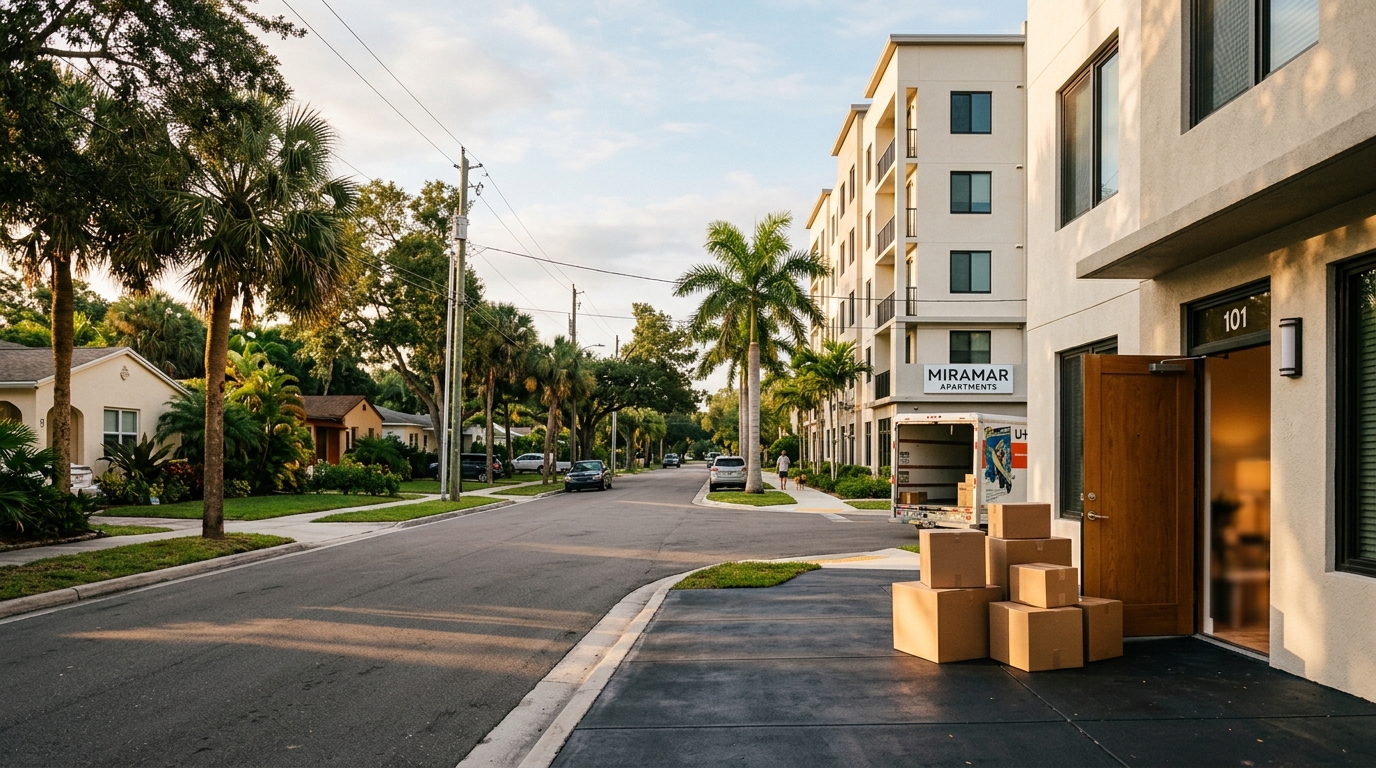
The Building Is Different Before the Truck Even Arrives
The most consequential difference between Tampa and Orlando has nothing to do with lifestyle — it shows up the moment the movers pull up to your new address. In Tampa, 51% of homes are detached single-family houses. In Orlando, that figure drops to 32%, while nearly half of all homes — 49% — sit inside buildings of five or more units. If you're leaving a Tampa bungalow with a driveway and arriving at an Orlando apartment tower with a single service elevator and a loading dock that requires a reservation, you're essentially managing two completely different moving days back to back.
That gap is the first thing to sort out before you book anything. Find movers who regularly work both ends of this route, because the practical demands are that distinct.
On the Tampa side, most people load from a driveway or street-level front door. Furniture comes straight out, goes straight onto the truck. Parking a 26-foot moving truck in front of a Tampa house is usually straightforward. On the Orlando side, if you're landing in a mid-rise or high-rise, your building's management office controls the elevator — you'll likely need to book a move-in window in advance, sometimes weeks out. Loading dock access may be limited to mornings. Some buildings charge a move-in fee or require a refundable deposit for elevator padding. Find this out before your lease is signed, not after the truck is loaded.
If you're moving into one of Orlando's more transit-oriented or downtown-adjacent neighborhoods, parking restrictions for large vehicles can add serious friction to an already tight elevator window. Ask your building manager exactly how long you have and whether you need to arrange anything with the city for the street. Movers in Orlando who work those neighborhoods regularly will know the logistics before you have to ask.
Orlando Is a Renter's City — Which Affects Your Timing
Sixty percent of Orlando households rent. That's ten percentage points higher than Tampa's 50%, and it has a practical effect on the rental market's pace and competition. Lease-start dates cluster around the first and fifteenth of the month. Available units move quickly, especially in summer, which is peak moving season everywhere in Florida.
Orlando's median rent runs about $1,650 a month, roughly 5% above Tampa's $1,567. That's not a dramatic gap, but it's enough to matter if you're searching for the same unit type you had in Tampa and expecting a similar price. What it means is that the Orlando rental market is slightly tighter, and slightly more expensive, for a city that's actually smaller — 311,732 residents compared to Tampa's 393,389. Demand in Orlando's rental stock is concentrated enough that you should expect to sign a lease before you give notice in Tampa, not after.
If you're considering buying instead of renting, the picture flips slightly in your favor: the median home value in Orlando is $359,000 against $375,300 in Tampa, about 4% lower. Homeownership is less common in Orlando, which can actually mean less competition in some segments of the for-sale market. Florida's homestead exemption — up to $50,000 — requires you to own and live in the home on January 1 and file by March 1, so timing your purchase with that calendar in mind can be worth substantial money.
Moving Day, Season, and What the Weather Actually Does
Both cities are hot and humid, and both sit inside Florida's hurricane season window of June through November. But there's a texture difference worth noting: Orlando's summer afternoons bring daily thunderstorms with a reliability that Tampa's don't always match. A storm can roll in by 2 p.m., drop an inch of rain in thirty minutes, and be gone by 3. If your move-in elevator window runs from noon to 4 p.m., that storm is happening during your move.
Build contingency into the day. Start loading as early as your building permits. If you're moving in summer — and many people do, because that's when leases turn over — ask your mover what their rain protocol is and make sure furniture and boxes are wrapped or padded for a wet afternoon. Wardrobe boxes and plastic wrap matter more here than in a dry-climate move.
If you have any flexibility, the period from late October through early December tends to offer the most predictable weather on both ends: hurricane season is winding down, the afternoon storms ease, and the heat becomes manageable. This is when movers in Tampa tend to have more availability and when you're less likely to be competing for Orlando elevator windows with every other lease that turned over in August.
What Drives the Cost on This Route
Because this is an in-state move within Florida, it falls under Florida's own consumer protection rules, administered by the Florida Department of Agriculture and Consumer Services (FDACS), rather than federal FMCSA interstate rules. That means the specific liability and estimate rules that apply to long-distance moves don't govern this one — check directly with your mover and with FDACS for the rules that do apply.
What actually drives the price on this route is access: at the Tampa end, access is usually easy, which keeps costs predictable. At the Orlando end, the building type is what swings the number. A ground-floor apartment with street parking loads and unloads quickly. A twelfth-floor unit with one shared elevator and a 9 a.m.–1 p.m. move-in window adds labor hours, and labor hours are what you're paying for on an in-state move of this length. If your new building charges a move-in fee or elevator deposit, that comes out of your pocket separately — it's not something movers typically cover.
Volume matters too. Orlando's apartments skew smaller than Tampa's detached houses, which means if you're downsizing — trading a three-bedroom house for a two-bedroom apartment — you may be selling or donating furniture before the move rather than paying to transport it. Browse by state if you're comparing what moves cost across Florida's different markets.
Choosing a Mover for This Route
This is a short in-state move, which means you'll see a wide range of operators offering it. The quality gap between the best and the least careful is significant, and it shows up in the details of building access, not just in the price.
Ask any mover you're considering whether they regularly work apartment buildings in Orlando and whether they're familiar with elevator reservation requirements. A mover who usually works suburban house-to-house moves may not think to ask about dock access or move-in window cutoffs until they're already there.
Get your estimate in writing, and make sure it accounts for both ends of the move — including any stairs, elevator wait time, or long carries from a loading dock to your unit. Confirm that what you're signing is either a binding or non-binding estimate, understand what that means for your final bill, and never sign a blank or incomplete document.
Our team has 35+ years of hands-on service-provider experience, including an operator who ran a moving company for 18 years — long enough to know that the moves that go wrong on a route like this one almost always go wrong because of a mismatch between what the mover prepared for and what the building actually required. Use find movers to connect with licensed operators who know the Orlando market, and ask the right questions before moving day, not during it.