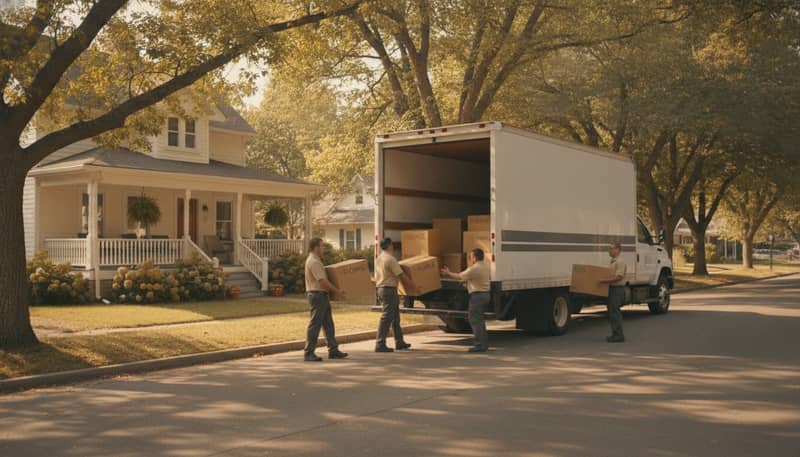
For most moves, the answer is: bring the high-value, hard-to-replace pieces and leave the cheap or bulky ones behind. The math is simple — moving companies typically charge by weight or by time, so hauling a $200 particle-board bookcase 1,500 miles can cost more in freight than the shelf is worth new at a big-box store. Run each piece through the three-question test below and you'll have a clear answer room by room.
Why This Decision Is Harder Than It Looks
Furniture has two prices that rarely match: what you paid for it and what it costs to move it. A king-size sectional might have set you back $3,000, but if it weighs 400 lbs and you're headed cross-country, movers may price that piece at $300–$600 in added weight charges alone — before assembly fees, stair carries, or long-carry surcharges.
On a local move, the math shifts. A two-hour local job where movers charge by the hour means that same sectional might cost you $40–$80 extra in time, which is easy to justify. Distance is the multiplier that changes everything.
The Three-Question Test: Run Every Piece Through This
Ask these three questions about each item. If you get two or more "no" answers, seriously consider selling, donating, or leaving it.
- Would replacing it new cost more than moving it costs?
- Would you buy this exact piece again, in this condition, for your new home?
- Is it irreplaceable, sentimental, or genuinely hard to find?
That's it. No elaborate spreadsheet needed. The test works because it forces you to separate emotional attachment from financial logic — which is exactly where most people get tripped up.
What Moving a Piece Actually Costs
Before you can run the test, you need a ballpark for what movers charge. Here's how the two main scenarios play out:
| Move type | How furniture is priced | Rough cost per large piece |
|---|---|---|
| Local (hourly) | By time — bulkier = slower = more hours | $30–$120 depending on crew size and time |
| Long-distance (by weight) | By total shipment weight | $1–$2+ per pound; a 300-lb sofa = $300–$600+ |
| Long-distance (binding price) | Fixed price for the whole move | Furniture volume directly affects the quote |
| DIY truck rental | Truck size + fuel + your time | Often $0.20–$0.50 per lb equivalent in truck size cost |
For long-distance moves, our guide on how moving quotes are priced by weight vs. cubic feet explains exactly how carriers calculate your bill — worth reading before you decide what to load.
Room-by-Room Guidance
Living Room
Keep: Sofas and sectionals you love and that fit your new space. Quality hardwood coffee tables and media consoles. Recliners with powered mechanisms (replacing them costs $500–$1,500+).
Leave: Particle-board entertainment centers. Worn or stained upholstered chairs. Anything that won't fit the floor plan of your new home. IKEA-style shelving that costs less than $150 to replace often isn't worth the freight.
Bedroom
Keep: Solid-wood bed frames, especially antiques or heirlooms. Quality mattresses in good condition (a new queen-size mattress runs $600–$2,000+). Dressers with dovetail joints or hardwood construction.
Leave: Box springs more than 8 years old. Cheap metal bed frames (a new one is $50–$150). Particle-board dressers — they rarely survive a long-distance move in one piece anyway, and movers know it.
Dining Room
Keep: Solid-wood dining tables and chairs — these hold value and are expensive to replace. China cabinets and hutches with sentimental or antique value.
Leave: Flat-pack dining sets. Folding tables and chairs you bought for a temporary setup.
Home Office
Keep: Quality desks, especially L-shaped or standing desks ($400–$1,500 new). Ergonomic chairs you've already broken in ($300–$1,000+).
Leave: Cheap filing cabinets — they're heavy and inexpensive to replace. Particleboard shelving. If you're relocating for a new-build home, you may want to wait and measure before committing to your old office layout anyway.
Garage and Outdoors
Keep: High-quality patio furniture sets (quality aluminum or teak runs $1,000–$5,000). Specialized tools and workbenches you use regularly.
Leave: Faded or worn plastic outdoor furniture. Single-season items you're unlikely to use in your new climate.
When Buying New Makes More Financial Sense
Buying new wins when any of these are true:
- The move is long-distance and the piece is heavy but cheap. A 200-lb particle-board wardrobe worth $180 may cost $200–$400 to ship interstate.
- The piece doesn't fit your new space. Measure before you decide — an oversized sectional in a smaller apartment is a liability, not an asset.
- You were already planning to replace it. If you've been putting off a furniture upgrade, a move is a logical break point.
- Delivery to your new address is comparable in cost. Many furniture retailers offer free or low-cost delivery; factor that in against your moving quote.
If your moving bill is already climbing, our budget-move cost guide covers more ways to trim the number before the truck rolls.
While you’re reading
Skip the research — let Robert match you with movers.
Free quotes from movers in your area. Pick whichever is easiest.
When Moving Old Furniture Beats Buying New
Moving wins when:
- The piece is genuinely valuable or irreplaceable. Antiques, family heirlooms, and quality hardwood furniture appreciate or hold value. The cost to move a $4,000 dining set is almost always less than buying comparable quality new.
- The move is local. On an hourly local job, the marginal cost per piece is low. It often makes sense to bring everything and sort it out later.
- You love it and it fits. Don't let a moving calculator talk you out of furniture you'll regret leaving.
- Replacement would take weeks. Some specialty or custom furniture has long lead times — if you need to be functional on day one, keeping what you have may be the practical choice.
A Smart Middle Path: Sell First, Buy After You Arrive
Many movers find a third option works best: sell or donate the borderline pieces before the move, pocket the cash, and buy replacements once you've seen your new space. Facebook Marketplace, neighborhood buy-nothing groups, and local consignment shops can move furniture quickly. If you have more pieces than you expected to part with, see our guide on what to do with furniture movers can haul away — some full-service movers will remove items you don't want as part of the job.
One caution: don't sell so aggressively that you're sleeping on the floor for a month. Keep the essentials — bed, a chair, a table — and sell the rest.
Don't Forget What Moving Furniture Actually Involves
Large, heavy pieces are where injuries and damage happen most often. A mover you've checked on FMCSA's search tool for a valid USDOT number will carry blankets and moving pads to protect furniture in transit. If you're deciding whether to find movers or handle pieces yourself, factor in the physical reality: a solid-wood armoire can weigh 300–500 lbs and genuinely requires professional equipment to move safely.
For pieces you've decided to bring, our guide on moving heavy furniture without scratching your floors is worth bookmarking for moving day.
Frequently Asked Questions
Is it cheaper to move furniture or buy new?
It depends on distance and the piece's weight and value. On a local move, bringing most furniture is usually cheaper. On a long-distance move, cheap, heavy pieces — especially particle-board items under $300 — often cost more to ship than to replace. Quality hardwood and specialty pieces almost always justify the freight.
What furniture is never worth moving long-distance?
Particle-board or flat-pack furniture is the most common answer. It's heavy relative to its value, doesn't survive long trips well, and is inexpensive to replace. Large, worn mattresses (over 8 years old), broken or stained upholstered items, and outdoor furniture in poor condition round out the list.
How do movers price furniture on a long-distance move?
For interstate moves under FMCSA rules, movers must offer either a binding or non-binding estimate. A non-binding estimate prices your move based on actual weight at pickup; a binding estimate locks in a price. Either way, more and heavier furniture means a higher bill. Getting a written estimate based on a physical survey — in person or by live/recorded video — is required by federal rules unless you waive it in writing. Our guide to binding vs. non-binding estimates explains what each type means for your final bill.
Should I sell my furniture before or after getting a moving quote?
Get the quote first. Once you see the actual number for moving everything, it's much easier to decide what's worth keeping. You'll also know the weight-based cost per pound, which lets you calculate whether individual heavy pieces are worth their freight.
Can movers help me get rid of furniture I don't want?
Some full-service movers will remove unwanted items as a separate service, often for an additional fee. It's worth asking when you book. Alternatively, scheduling a junk-removal pickup before moving day is a common and affordable option — typically $100–$300 depending on volume.
Does the type of move change the decision?
Significantly. On a local hourly move, the cost difference between bringing a piece and leaving it is often $20–$60 — rarely worth the hassle of replacing it. On a cross-country or interstate move priced by weight, that same calculation can flip entirely. Always browse movers by state and get written quotes before making final furniture decisions — the actual numbers will make the right choice obvious.
Still working through the numbers? Start by finding movers in your area to get written estimates — once you see the actual freight cost, every furniture decision gets a lot clearer. You can also reach out to Robert, our moving concierge, through the site for personalized guidance on what to ask movers before you sign.
Tagged