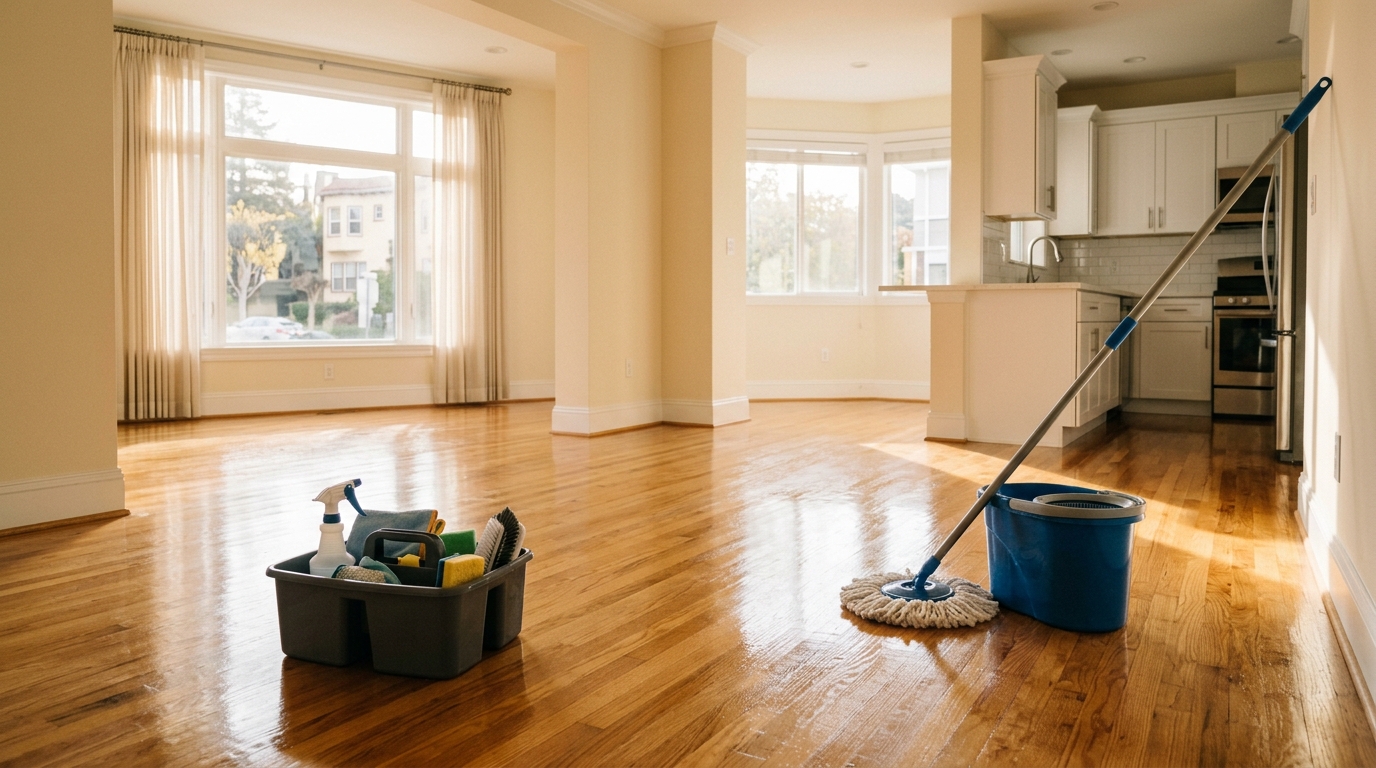
A professional move-out clean typically costs $150–$600, depending on the size of your home. A studio or one-bedroom runs $150–$250; a two- or three-bedroom house lands between $250 and $450; larger four-bedroom homes often reach $450–$600 or more. Those ranges assume the unit is already empty — if furniture is still in place, expect a surcharge of $50–$150 or an hourly rate rather than a fixed price.
Getting this right matters: in most states, a landlord can withhold your security deposit for cleaning costs that exceed "ordinary wear and tear." Spending $200 on a professional clean is almost always cheaper than losing $800 in deposit money.
What drives the price up or down?
Several factors push a move-out clean outside the typical range:
- Square footage — the single biggest cost driver. Most services price by the hour (often $40–$70 per cleaner) or by square footage.
- Number of bathrooms — bathrooms take disproportionate time; each extra full bath typically adds $30–$60.
- Condition — a unit that hasn't been deep-cleaned in two or three years will take longer and cost more. Heavy grease buildup in ovens or soap scum on shower tile adds time.
- Add-on services — inside-oven cleaning ($30–$60), inside-refrigerator cleaning ($25–$50), interior window washing ($5–$15 per pane), and carpet shampooing ($100–$300 depending on area) are usually priced separately.
- Location — cleaning rates in Chicago or San Francisco run higher than in smaller metros. Browse movers and local service providers by state to get a sense of local pricing in your market.
- Timing — same-day or next-morning bookings carry a premium of 20–40%.
| Home size | Typical range | What's usually included |
|---|---|---|
| Studio / 1 BR | $150–$250 | Kitchen, bath, main room, floors |
| 2 BR / 1–2 BA | $220–$350 | Above + second bedroom |
| 3 BR / 2 BA | $300–$450 | Above + extra bath |
| 4 BR / 2–3 BA | $400–$600+ | Above + extra rooms |
| Add-on: oven | +$30–$60 | Interior oven scrub |
| Add-on: fridge | +$25–$50 | Interior fridge wipe-down |
| Add-on: carpets | +$100–$300 | Steam or shampoo cleaning |
What does a move-out clean actually need to cover?
A standard cleaning visit covers dusting, vacuuming, mopping, and surface wipe-downs. A move-out clean goes further because the unit is empty and every surface is exposed. Landlords and property managers typically inspect:
- Kitchen — inside the oven and broiler drawer, range hood filter, inside and outside the refrigerator, inside cabinets and drawers, under the sink (wipe for moisture and mold), backsplash grout.
- Bathrooms — toilet base and under the rim, grout lines, inside medicine cabinet, exhaust fan cover, caulk around tub and shower.
- Walls and baseboards — scuff marks, crayon, tape residue, fingerprints around light switches.
- Windows and blinds — interior glass, sills, and tracks; horizontal blinds collect dust that's visible on inspection.
- Floors — corners and edges (where vacuums miss), under where appliances were, inside closets.
- Light fixtures and ceiling fans — dead bugs inside globe fixtures are a common lease-violation note.
- Closets and storage areas — shelves, rods, and floors.
If carpets are present, ask your landlord explicitly whether a professional steam clean is required by your lease before move-out — many leases require it regardless of condition.
DIY vs. hiring out: which makes more financial sense?
Do the math before you grab a mop. A thorough DIY move-out clean on a two-bedroom takes most people 6–10 hours and requires supplies (oven cleaner, grout brush, microfiber cloths, etc.) that cost $30–$60 if you don't already own them. If your time is worth anything — or if you're coordinating moving trucks, childcare, and key returns on the same day — hiring out often wins.
The calculus changes based on your deposit size:
- Small deposit (under $400): DIY is often worth it if you have the time and the unit is in reasonable shape.
- Mid-range deposit ($500–$1,500): a professional clean at $200–$350 is usually a sound investment.
- Large deposit ($1,500+): absolutely worth hiring, and consider adding carpet cleaning and window washing if the lease requires it.
If you're already coordinating a move, your plate is full. Our guide on getting your home ready before the movers arrive can help you sequence the cleaning and the move so neither gets rushed.
While you’re reading
Skip the research — let Robert match you with movers.
Free quotes from movers in your area. Pick whichever is easiest.
How to find and vet a move-out cleaning service
- Get at least three quotes. Pricing varies widely. Always confirm whether the quote is for an empty unit; a furnished-unit price is higher.
- Ask what is and isn't included. "Move-out clean" means different things to different services. Confirm oven, fridge, and windows explicitly.
- Confirm a fixed price or not-to-exceed quote. Hourly rates can balloon if the unit is dirtier than expected. A fixed price for the whole job protects you.
- Ask for a re-clean guarantee. Reputable services will return within 24–48 hours if the landlord flags something during inspection.
- Read reviews on established platforms. Check mover reviews and other verified review platforms for cleaning services in your area to find companies with a track record of passing landlord inspections — not just leaving a unit looking good to the eye.
- Get a receipt. If your landlord later deducts cleaning costs from your deposit, a dated receipt from a professional service is your evidence.
Timing your clean: before or after the movers?
Always schedule the clean after the movers have emptied the unit — not before. Movers track in dirt, scratch floors, and brush walls. Cleaning before the truck leaves wastes your money.
A practical sequence:
- Movers load and leave.
- Do a walk-through and remove any leftover items (see our guide on what to do when you have items you're not keeping).
- Cleaners arrive — ideally the same day or the morning after.
- You do a final walk-through with the cleaners present, noting anything missed.
- Return keys and do the landlord walk-through within 24 hours of the clean while everything is still fresh.
What landlords can — and can't — charge you for
Most states require landlords to distinguish between normal wear and tear (which they absorb) and damage or excessive dirtiness (which they can charge you for). Nail holes from picture hanging are typically wear and tear. Grease-caked burner grates or a bathroom with mold from poor ventilation typically are not.
Landlord-tenant law is state-specific, and the rules on deposit return timelines and itemized deduction requirements vary widely. Texas, Florida, New York, and New Jersey all have different standards — always check with your state's consumer protection or attorney general's office if you believe a deduction is improper. A cleaning receipt is your strongest defense.
If you're moving to a new state and want to understand what's ahead, our state moving guides cover the logistics of major destinations across the US.
Frequently asked questions
How much does a move-out clean cost for a two-bedroom apartment?
A two-bedroom apartment with one or two bathrooms typically costs $220–$350 for a professional move-out clean in most US markets. Add $30–$60 if you need the oven cleaned inside, and $25–$50 for the refrigerator interior. Urban markets like San Francisco, New York, or Boston often run $50–$100 higher than those ranges.
Is a move-out clean the same as a deep clean?
They overlap but aren't identical. A deep clean is done while the unit is occupied and focuses on neglected areas. A move-out clean (also called an end-of-tenancy clean) is performed on an empty unit with the explicit goal of passing a landlord inspection — it includes inside appliances, inside cabinets, window tracks, and baseboards more thoroughly than a standard recurring clean.
Can I just clean it myself to save money?
Yes, and for smaller units in good condition it often makes sense. Budget 6–10 hours for a two-bedroom, and don't skip the oven interior, grout lines, window tracks, and closet corners — those are the spots landlords specifically check. If your deposit is $1,000 or more, a professional clean is almost always worth the cost relative to the risk of deductions.
Do I need to have carpets professionally cleaned?
Check your lease first. Many leases require professional carpet cleaning before move-out regardless of carpet condition. If yours does, keep the receipt — it's proof of compliance. If your lease is silent on it, steam cleaning is still worth doing if the carpets are visibly stained or have odors.
Does the cleaning service need to be done before or after I return my keys?
After the movers leave but before you return keys. Schedule the clean with enough buffer (at least one day) to handle any re-clean requests before your lease end date. Returning keys before the clean is done can complicate access.
What happens if my landlord says the unit still isn't clean after a professional service?
Contact the cleaning company immediately — most reputable services offer a re-clean guarantee within 24–48 hours at no extra charge. If the landlord still withholds deposit money for cleaning after you have a professional receipt, consult your state's landlord-tenant dispute process. Many states require itemized deduction notices within a set window (often 14–30 days).
Planning the rest of your move? Find licensed movers in your area through our directory, or connect with Robert, our moving concierge, for help narrowing down the right companies for your move date and budget.
Tagged