The fastest way to move heavy furniture without scratching your floors is to place the right slider under each leg before you push — felt pads for hard floors, plastic or rubber discs for carpet — and never drag a bare leg across any surface. Do that one thing consistently, and you'll finish moving day without a single gouge, scuff, or scratch. Everything below tells you which tools to use on which floor, how to lift safely, and what professional movers do that most DIYers skip.
Why floors get damaged — and how to stop it before it starts
Scratches happen in three moments: when you first lift a piece and set it down wrong, when you slide it without protection, and when movers carry something heavy through a doorway and clip the threshold. Each has a specific fix.
The root cause is almost always bare metal or hard plastic — chair glides, furniture feet, caster wheels — dragging under load. Even a 40-pound nightstand can leave a deep scratch in engineered hardwood if its metal foot catches the grain. A 300-pound armoire pressing on a single unprotected leg concentrates enormous pressure per square inch.
What tools actually work (and which floor each one suits)
| Tool | Best floor type | Best use case |
|---|---|---|
| Felt furniture sliders | Hardwood, laminate, tile, LVP | Sliding large pieces laterally; lightweight to medium pieces |
| Plastic / hard-resin sliders | Carpet only | Sliding furniture across carpet (felt stalls on pile) |
| Moving blankets (furniture pads) | All hard floors | Wrapping and dragging when sliders won't fit under legs |
| Furniture dollies (4-wheel) | Hard floors and smooth carpet | Heavy appliances, dressers, bookcases, wardrobes |
| Appliance hand truck (2-wheel) | All surfaces | Refrigerators, washers, tall bookcases — tipped and rolled |
| Rubber caster cups | Hardwood, tile | Protecting floors under piano or heavy furniture in place (not for sliding) |
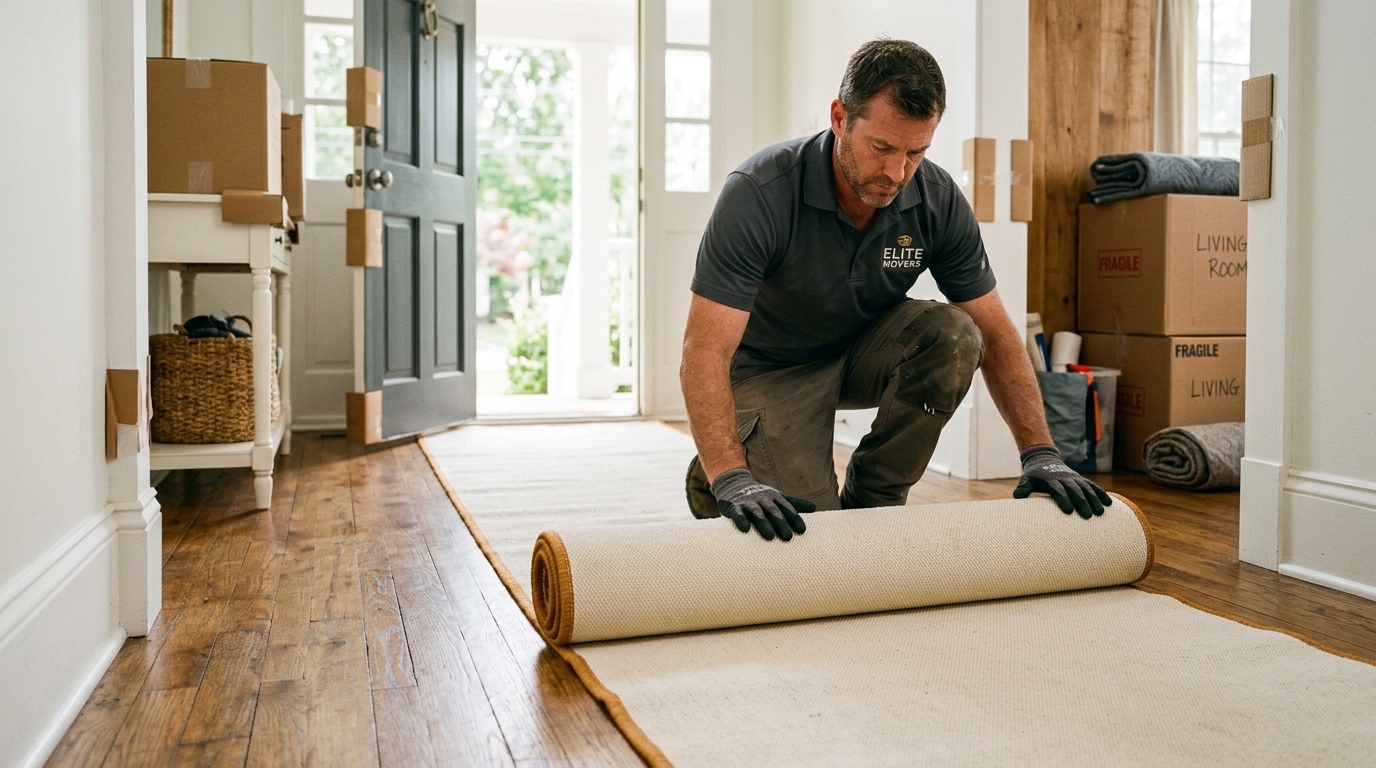
| Ram board / rosin paper | All hard floors | Protecting pathways from foot traffic and dragging during a full move |
Felt sliders
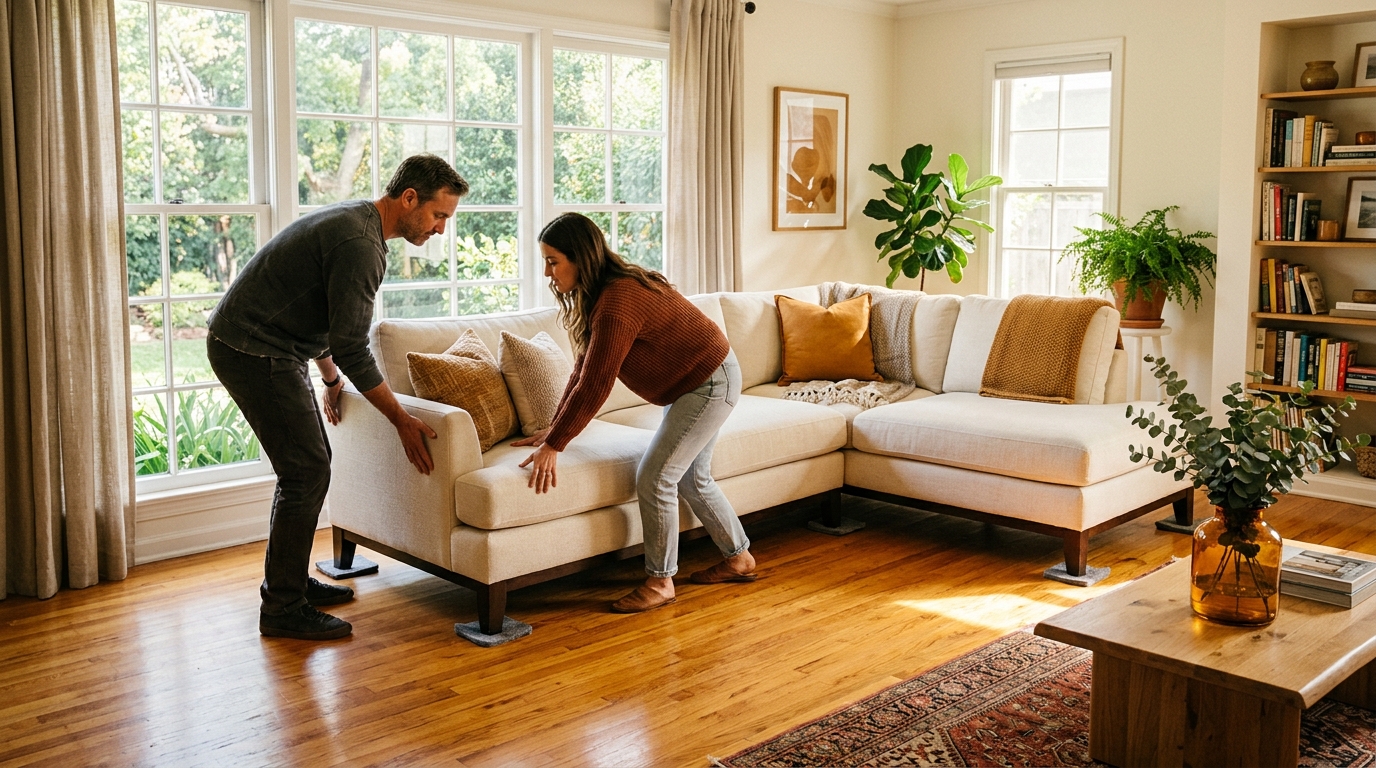
Felt is the workhorse for hardwood, laminate, tile, and luxury vinyl plank (LVP). Self-adhesive felt pads (typically $5–$15 for a pack of 16) stick directly to a leg or can be taped to a blanket underneath a piece. Reusable plastic-backed felt discs (often sold in 5-inch rounds for $10–$20 a set of 4) work better under sofas and heavy chairs because you can slide them in and out quickly.
One rule: felt must be clean and debris-free. A piece of grit trapped in the felt turns it into sandpaper. Shake them out before every use.
Plastic sliders on carpet
Felt stalls on carpet pile — the fibers grip it. Hard plastic or slick resin sliders are designed to glide over carpet without bunching it. They're inexpensive ($8–$15 for a set of 4), and they make a dramatic difference when you're repositioning a couch or bed frame on a carpeted floor.
Moving blankets
For furniture with no legs — a dresser base, a sofa with a platform base, a wardrobe — fold a moving blanket in half and slide it underneath one end, then tilt the piece onto it. You can then drag or pivot on the blanket. Do movers wrap furniture in plastic? covers when blankets versus plastic wrap is the right call, but for floor protection, a thick blanket under the base beats any other solution for legless pieces.
Furniture dollies
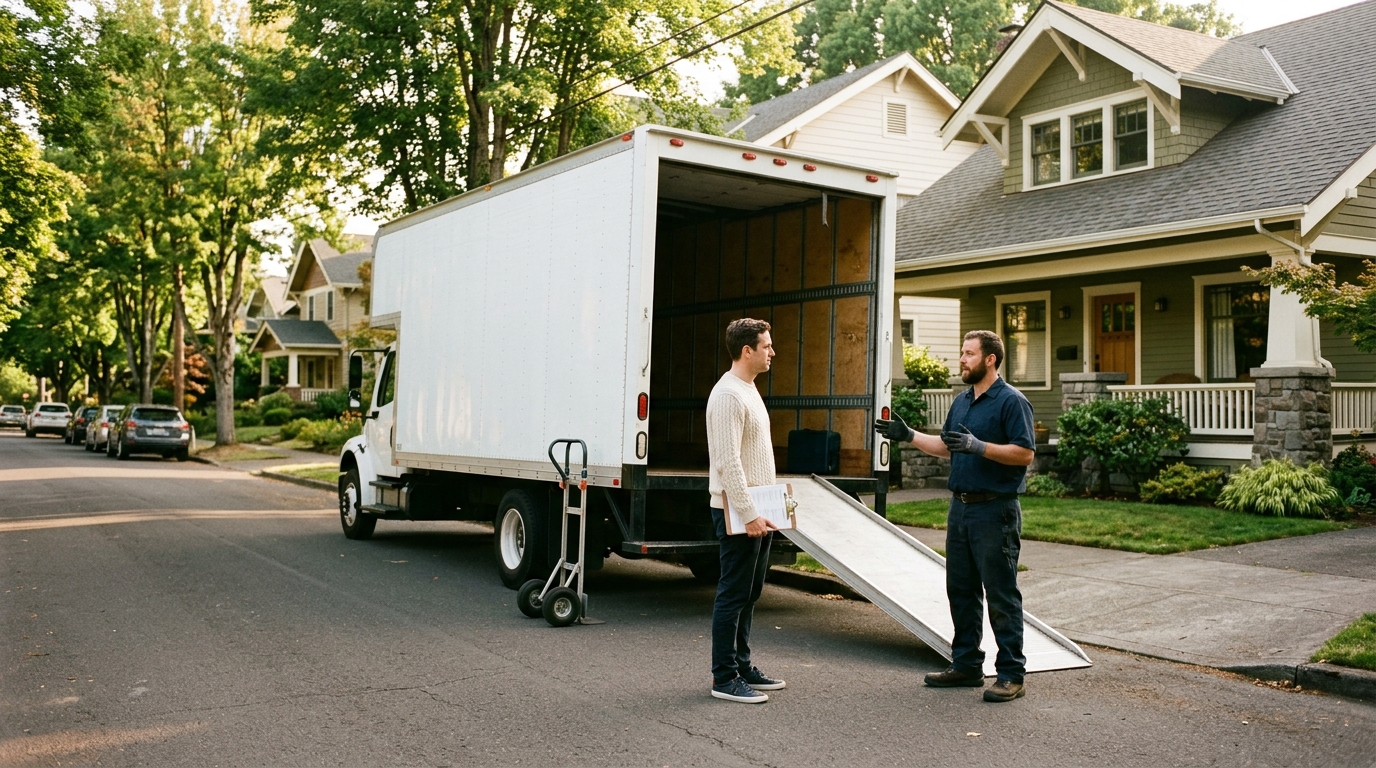
A 4-wheel furniture dolly — a low flat platform on swivel casters — is the single biggest upgrade you can make for a multi-room move. You tip a piece onto the dolly (or recruit a helper to hold one end while you slide the dolly under the other), then roll it to the truck or the new room. Dollies are available to rent at most truck rental locations for $10–$20/day. The gear movers use to move furniture goes deep on dollies, straps, and hand trucks if you want the full professional toolkit.
Floor-by-floor protection plan
Hardwood and engineered wood
The most scratch-prone surface you'll encounter. Always use felt sliders or lay blankets along the entire travel path. Avoid any wheeled dolly with bare metal casters — use rubber-wheeled dollies only. Tape ram board or rosin paper ($25–$40 for a 100-foot roll) along the walking path from each room to the door if you're doing a full move. Lift, don't drag, at doorway thresholds — the gap between flooring sections is where the deepest gouges happen.
Laminate and LVP
Laminate looks tough but scratches more easily than solid hardwood because the surface layer is thin. Felt sliders work well. The bigger risk with LVP is denting from concentrated point loads, so use large-base dollies rather than narrow hand trucks when moving appliances.
Tile and stone
Tile is scratch-resistant but chips at grout lines. A dolly wheel dropping into a grout joint can pop a tile. Keep felt or blanket coverage over grout-heavy areas. Also note: uneven tile can tip a dolly — have a second person stabilize tall pieces.
Carpet
Carpet hides scratches, but furniture can tear pile and compress padding permanently. Use plastic sliders when repositioning, and a dolly for anything over 100 lbs. Never use an appliance hand truck on loop-pile carpet without first laying a piece of plywood or hardboard — the wheels will chew through the fibers.
While you’re reading
Skip the research — let Robert match you with movers.
Free quotes from movers in your area. Pick whichever is easiest.
Step-by-step: sliding a sofa or bed frame safely
- Clear the path first. Remove rugs, door mats, and power cords before you move anything. A cord caught under a leg is a tripping hazard and will scratch the floor as the furniture sweeps over it.
- Tilt the piece to access one end. Have one person tilt the sofa or bed frame slightly while the other places sliders under each foot or corner of the base. If the piece has no feet, place a folded blanket under the end being slid.
- Place sliders under every contact point. A sofa with six legs needs six sliders. Missing one means that leg drags bare on the floor.
- Push from the back, not the side. Lateral force can rack a frame and unbalance the load. Pushing straight forward keeps the sliders flat.
- Move slowly at door frames and thresholds. Lift the leading edge slightly as you cross a threshold — this is where most hardwood damage occurs.
- Remove sliders before setting the piece in its final position. Felt left under furniture legs indefinitely compresses and can leave small indentations over time.
What professional movers do that most people skip
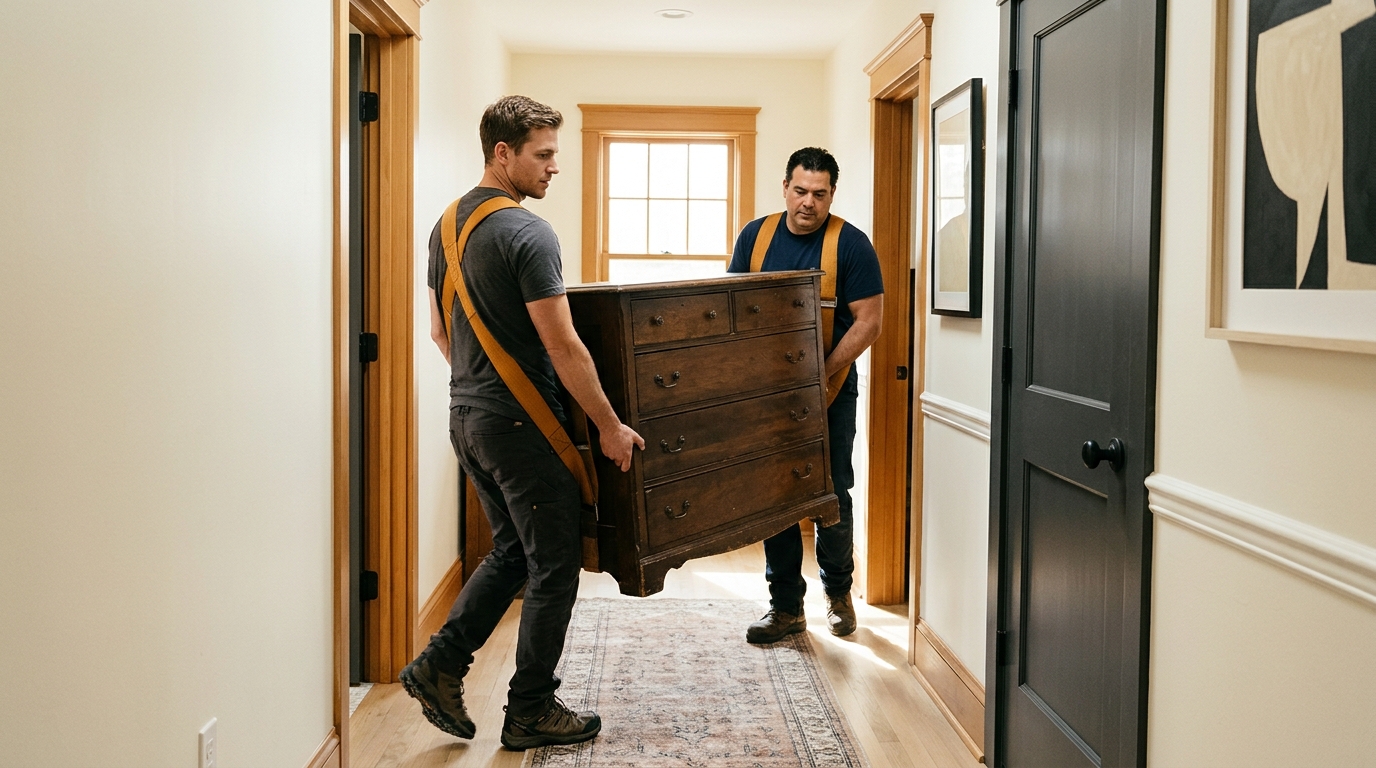
Professional movers who handle floors carefully typically do three things DIYers overlook. First, they lay floor runners (ram board or resin paper) before a single piece moves — protecting the whole path rather than just the furniture feet. Second, they use proper lifting technique (back straight, bend at the knees, lift in unison on a count) to avoid setting pieces down hard. Third, they take doors off the hinges for large pieces rather than scraping furniture through a narrow opening — a 5-minute task that prevents frame and floor damage.
If you're hiring movers, ask upfront whether they provide floor runners and how they handle hardwood protection. Reading mover reviews from other customers in similar homes (hardwood, older construction, tight hallways) is a useful way to gauge how careful a crew actually is. You can also find movers near you and ask each company specifically about their floor-protection protocol before you book.
When to call a professional for a single piece
Some pieces should not be slid, even with perfect technique. A grand piano, a large gun safe, a marble-top dining table, or a reinforced steel filing cabinet all create point loads high enough to damage even tile and concrete subfloors without specialized dollies and weight distribution boards. Our team has 35+ years of hands-on service-provider experience, including an operator who ran a moving company for 18 years — and the consistent advice from that background is this: for anything over 400 lbs or with a small contact footprint, the cost of hiring a specialty mover ($150–$400 for a single heavy item, in most cases) is a fraction of the cost of repairing a gouged hardwood floor, which can run $300–$800 for a small area and much more for full refinishing.
You can browse movers by state to find companies that specialize in heavy single-item moves.
Frequently asked questions
What is the best thing to put under furniture legs to protect hardwood floors?
Thick felt sliders — either self-adhesive pads or reusable plastic-backed discs — are the most effective protection for hardwood, laminate, and LVP. They allow you to slide a piece without lifting it fully, and the felt won't scratch the finish. Keep them clean and replace them if the felt wears thin.
Can you slide furniture on carpet without scratching it?
Carpet doesn't scratch the way hard floors do, but heavy furniture can compress and tear the pile. Use hard plastic or resin furniture sliders (not felt — felt grips carpet) when repositioning on carpet, and a furniture dolly with rubber wheels for anything heavy enough to cause permanent pile compression.
Do moving blankets protect hardwood floors?
Yes — a thick folded moving blanket under a piece of furniture acts as both cushioning and a sliding surface. It's particularly useful for base-to-floor contact (armoires, wardrobes, platform beds) where sliders can't reach under the furniture. The blanket distributes weight and lets you drag the piece without direct contact with the floor.
How do I move a heavy dresser without scratching the floor by myself?
Tilt the dresser backward slightly and place a furniture slider or folded blanket under the front feet. Then tilt it forward and place sliders under the back feet. Once all feet are on sliders, you can push from the back with steady, forward pressure — no helper needed for most standard dressers. Remove drawers first to cut weight by 30–50%.
Should I put down floor protection for the whole move, not just individual pieces?
Yes, if you're doing a full room or full-home move. Ram board or rosin paper laid along high-traffic corridors prevents cumulative damage from foot traffic, dolly wheels, and furniture corners during a long moving day. It's inexpensive insurance compared to floor refinishing costs.
Will movers protect my floors, or do I need to do it myself?
Many full-service movers include floor runners and moving blankets in their standard service — but practices vary. Ask explicitly before the job starts, get confirmation in writing if it matters to you, and check what other customers say in mover reviews about how a company handles floor protection. Don't assume it's automatic.
Moving day goes smoother when floors are protected before the first piece moves. If you'd like help finding a mover who handles floors carefully, search the directory at Majestic Moving Companies or connect with Robert, our moving concierge, who can point you toward the right options for your move.
Tagged