Yes — most professional movers will roll up your area rugs as part of the move. Rolling is standard practice because it protects the rug during transit and makes it far easier to carry and load. What varies between companies is whether they wrap the rolled rug, how they secure it, and whether any of that is included in the base price or billed as an add-on.
What Movers Typically Do With Area Rugs
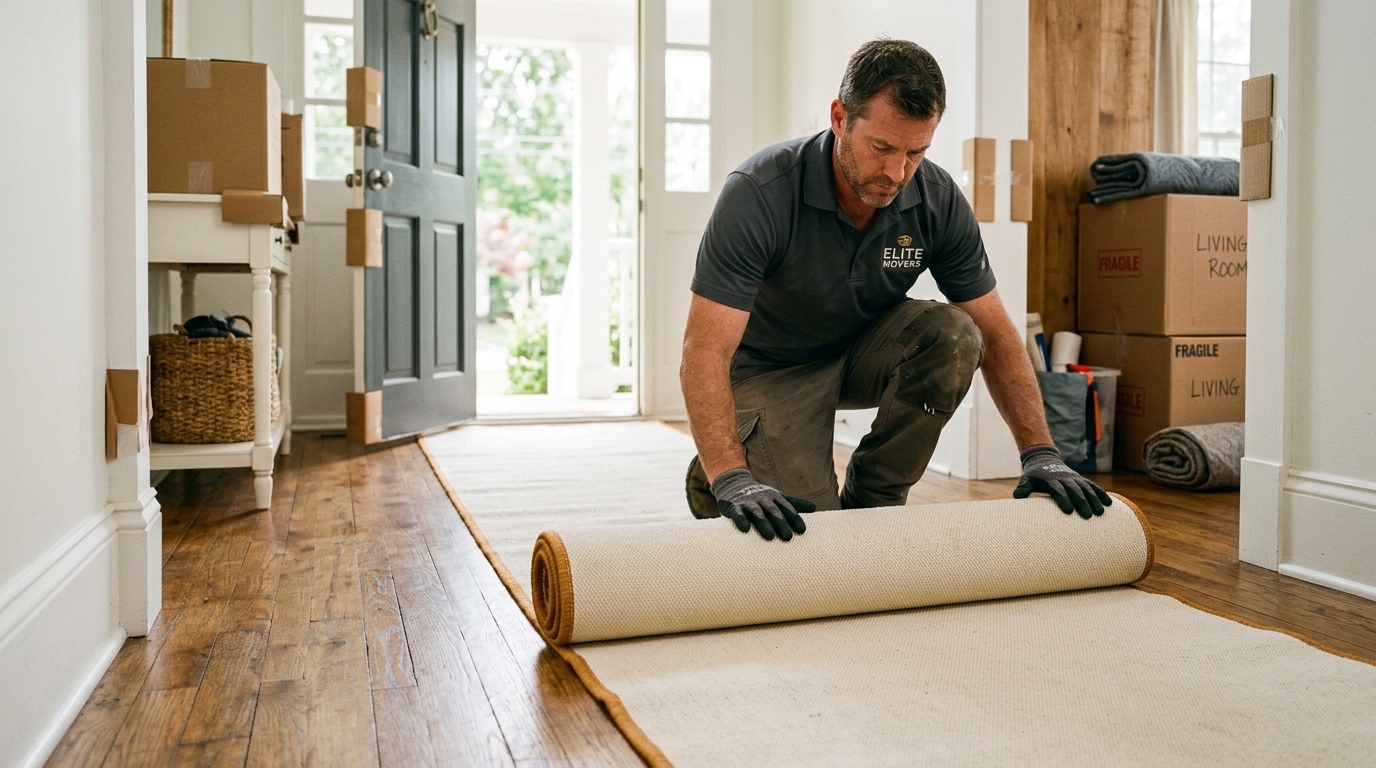
When a moving crew reaches a room with an area rug, the usual sequence goes like this:
- Clear the rug. Furniture sitting on the rug gets moved off first — either set aside in the same room or loaded onto the truck. Movers won't roll a rug with a sofa still on top of it.
- Vacuum or shake (sometimes). A conscientious crew will do a quick check for debris. Don't count on a thorough cleaning — that's your job before moving day if you care about it.
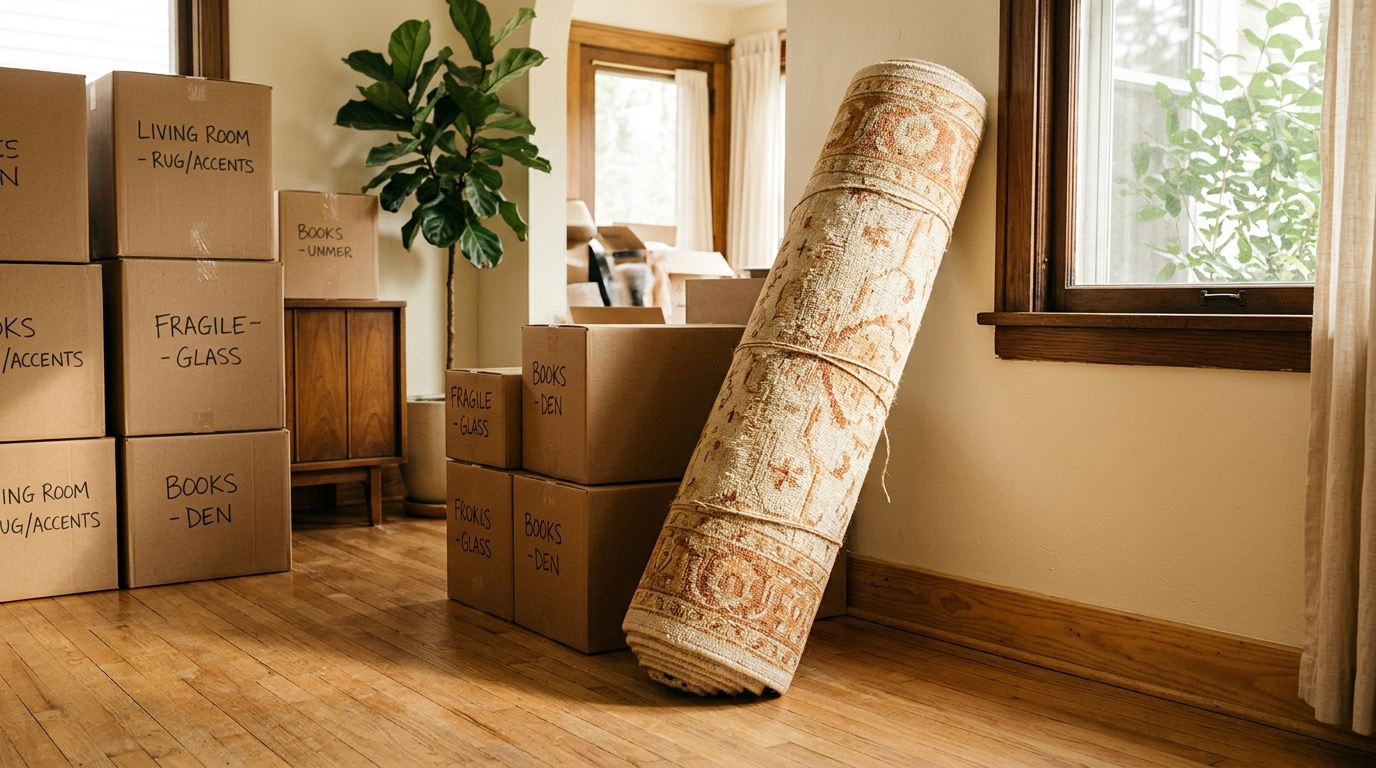
- Roll tightly from one end. Rugs are rolled pile-inward (face-to-face) for most weaves, which protects the fibers. Very heavy or stiff rugs — think a 10×14 wool rug — may be rolled the other way depending on what the rug allows.
- Secure with stretch wrap, rope, or tape on the outer surface. This keeps the roll from unraveling in the truck.
- Wrap in moving blankets or plastic, or not. Here's where crews differ. Some companies pad every rug; others wrap only rugs you flag as delicate or valuable. Plastic is fast but traps moisture — something to watch if your rug is stored overnight or in a humid truck. See our full guide on what movers use to protect your floors, doorways, and stairwells for how padding typically gets allocated across your home.
For loading, a rolled rug typically goes vertically along the truck wall, or flat under lighter items — never under heavy furniture, which can crease or crush the fibers.
Does Rolling Area Rugs Cost Extra?
For a standard area rug (say, 5×8 or 8×10), most full-service movers treat rolling as part of normal service at no extra charge. You're paying them to move your household — rugs are part of the household.
Where you may see an upcharge:
| Situation | Likely extra cost? |
|---|---|
| Standard area rug (5×8, 8×10) | Rarely — usually included |
| Oversized rug (12×18 or larger) | Sometimes — requires more labor and truck space |
| Antique, Oriental, or Persian rug | Often — careful handling, specialty wrap may be billed separately |
| Rug cleaning or storage before moving | Almost always — that's a separate service |
| Rug wrapping in specialty materials (acid-free kraft paper, custom tube) | Yes — ask your mover in advance |
If you have valuable or delicate rugs, discuss them during your estimate so any extra handling is written into the quote — not added as a surprise at delivery.
What You Should Do Before the Movers Arrive
A little prep on your end makes the rug portion of moving day smoother and reduces the chance of damage.
- Vacuum both sides. Debris caught in the roll can abrade fibers in transit. If the rug has fringe, gently comb it out so it doesn't get caught or torn.
- Note any existing damage. Document stains, worn spots, or loose fringe with photos before the truck arrives. This matters if you ever need to file a moving damage claim later.
- Flag your valuable rugs explicitly. Don't assume the crew knows an heirloom Tabriz from a machine-made jute rug. Point it out, ask how they'll wrap it, and get any special-handling agreement in writing before loading day.
- Consider a specialty rug mover for irreplaceable pieces. A full-service moving company handles rugs competently for everyday moves. For museum-quality antique rugs, a specialty art and antique mover — or a dedicated rug-cleaning and storage company — may offer acid-free tube rolling and archival wrapping that general movers don't carry. Our post on how to move art, antiques, and collectibles covers that decision in detail.
- Clear the path. Rugs rolled in a congested room are harder to carry out without bumping walls or doorframes. Move small furniture and obstacles out of the path before the crew arrives — this is covered in getting your home ready before the movers arrive.
While you’re reading
Skip the research — let Robert match you with movers.
Free quotes from movers in your area. Pick whichever is easiest.
What About Wall-to-Wall Carpet?
This is a completely different situation. Movers do not remove, roll, or reinstall wall-to-wall carpet. That's a flooring contractor job. If you're pulling up carpet before or after a move, you'll need to hire separately. Movers may, however, use carpet scraps or runners as floor protection during the move itself — that's a different use of the material.
How to Protect Your Floors While Rugs Are Moved
Once a rug comes up, the bare floor underneath is exposed and vulnerable to scratches from furniture legs, dollies, and foot traffic. Most professional movers carry floor runners — heavy-duty plastic or fabric strips — that get laid down over hardwood and tile during the move. If your mover doesn't mention floor protection, ask. You can also read about what movers use to protect floors and doorways to know what to request.
Should You Roll Rugs Yourself Before Movers Arrive?
You can, but it's usually not necessary for standard area rugs. If you're doing a partial DIY move or you're worried about a specific rug, rolling it yourself — tightly, secured with rope or strong rubber bands — before the crew arrives just means one less thing to coordinate on a busy morning. If you do roll it yourself, label it with the destination room so the crew knows where it goes at the new place. A quick label system like the one in how to label moving boxes like a pro works just as well on rolled rugs tied with a tag.
Finding a Mover Who Handles Rugs Right
Not every mover takes the same care with soft furnishings. When you're comparing companies, ask specifically: "How do you handle large or valuable area rugs?" A mover who gives a vague answer or brushes it off is worth noting. Read mover reviews and look for mentions of how crews handled fragile or bulky items — that tells you more than a sales pitch. You can also find movers near you and browse movers by state to compare companies in your area before you book.
Our team has 35+ years of hands-on service-provider experience, including an operator who ran a moving company for 18 years. The consistent advice: tell your movers about every rug before moving day, not after the truck shows up.
Frequently Asked Questions
Do movers charge extra to roll up rugs?
For standard area rugs, most full-service movers include rolling in their base service. Oversized rugs (12 feet wide or larger) or antique rugs requiring specialty wrapping may carry an add-on charge. Confirm during your estimate so it's in writing before moving day.
Will movers wrap my rug in plastic or moving blankets?
It depends on the company. Many crews wrap rugs in moving blankets; others use stretch wrap. Plastic wrap is fast but can trap moisture if the rug sits in storage or a warm truck overnight — ask your mover what they use, especially for wool or antique rugs.
Should I vacuum my rugs before the movers roll them?
Yes. Vacuuming both sides before moving day removes debris that can abrade fibers during transit. It also makes the rolled rug cleaner when you unroll it at your new home.
What if I have an antique or Persian rug?
Flag it to your mover before the move and ask about their wrapping method. For truly irreplaceable rugs, consider a specialty art and antique mover who uses acid-free tube rolling and archival materials. A general moving company may not carry those supplies.
Will movers roll up rugs if furniture is still on them?
No. Furniture must come off the rug before it can be rolled. Movers will typically move the furniture first, then roll the rug. If you want furniture moved in a specific order, communicate that at the start of moving day.
Do movers remove wall-to-wall carpet?
No. Wall-to-wall carpet is a flooring installation, not a movable item. If you need carpet removed or reinstalled, that requires a flooring contractor, not a moving company.
Ready to find a mover who handles your home — rugs and all — with care? Browse movers near you or connect with Robert, our moving concierge, for help narrowing down your options.
Tagged