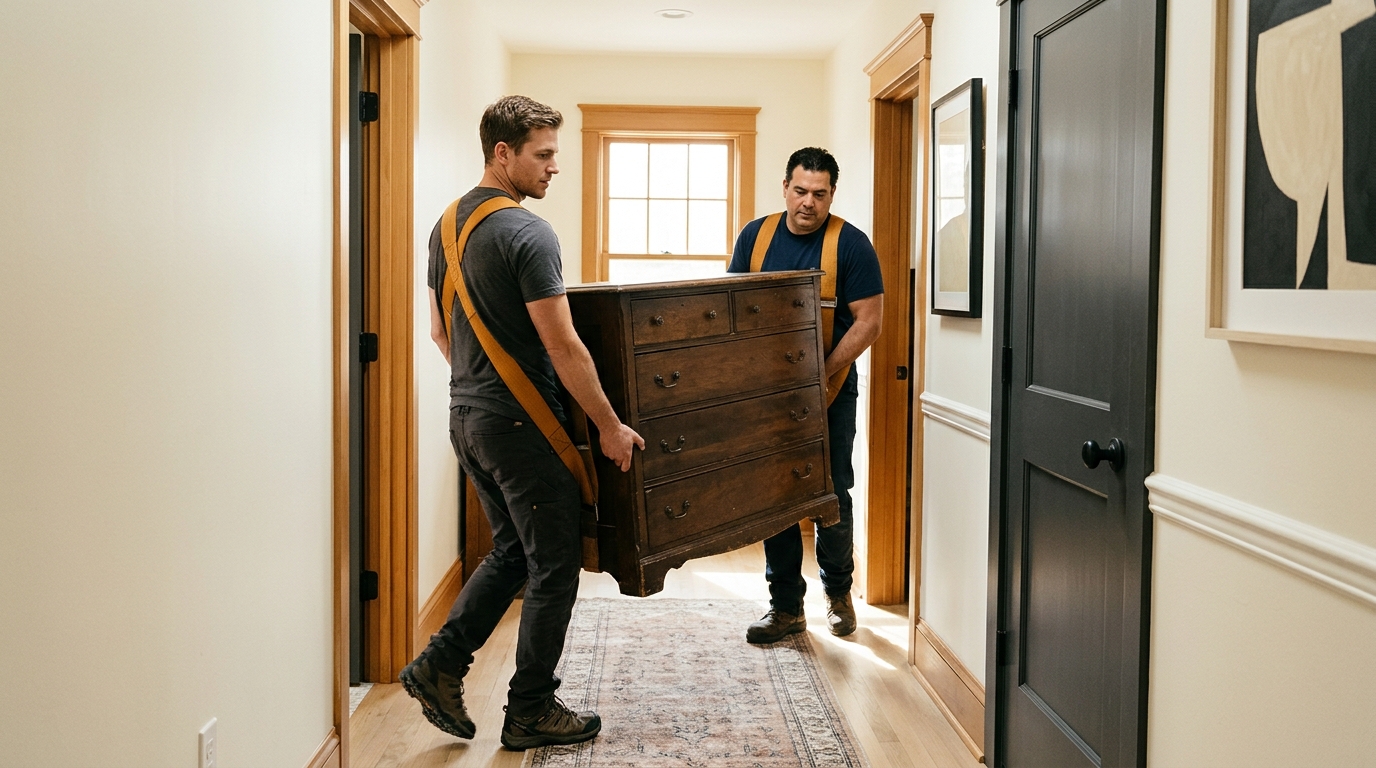
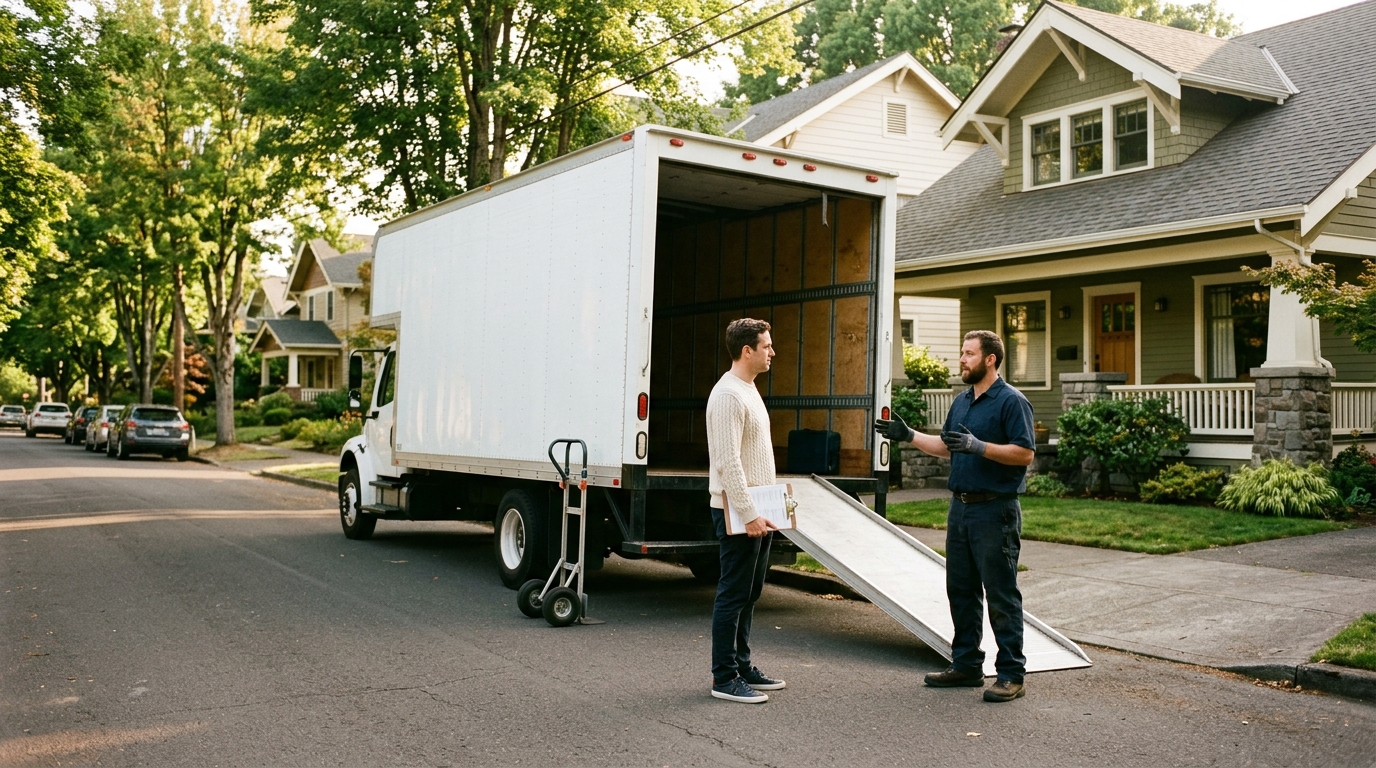
Preparing for movers means completing your packing, labeling every box with its destination room, clearing safe pathways through your home, and handling appliances and large items the night before the crew arrives. Do those four things and a professional moving team can load and go without delay — which directly controls how long the job takes and what you pay.
Our team has 35+ years of hands-on service-provider experience, including an operator who ran a moving company for 18 years. The prep mistakes we've seen cost customers the most money aren't dramatic — they're mundane: half-packed boxes, unmarked cartons, and driveways that can't fit a truck. This guide fixes all of that.
Why prep work matters more than most people realize
On a local hourly move, every extra minute costs money. On a long-distance move, a crew that has to work around chaos can miss weight estimates and pick-up windows. Either way, the single biggest lever you control is how ready your home is when the movers walk in the door.
If you're still building your timeline, the week-by-week moving checklist is a solid place to anchor your prep against specific deadlines.
The week before: what needs to happen before moving day
1. Finish packing — completely
Movers are not packers unless you've paid for that service. If boxes aren't sealed and labeled when they arrive, you'll either pay for their time while you scramble or end up with random items thrown in bags at the last minute.
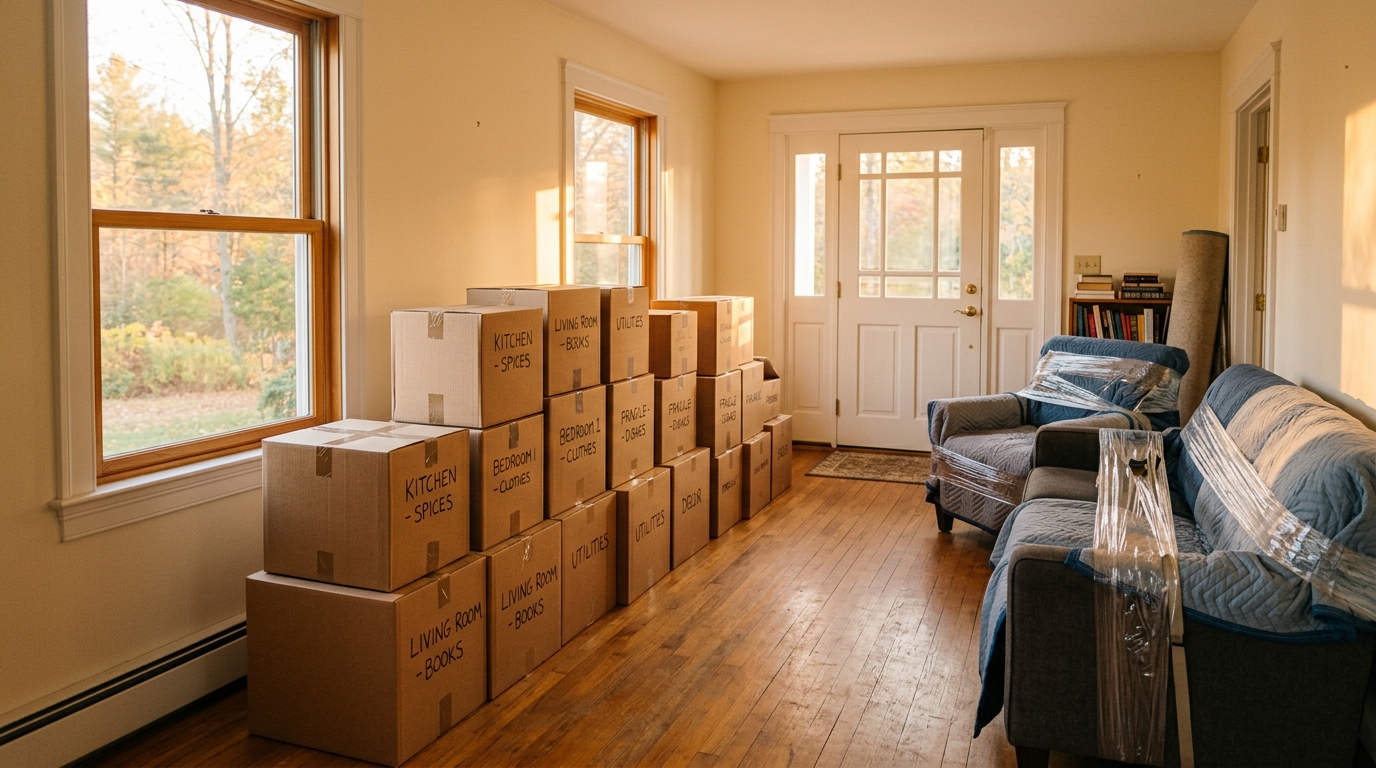
- Every box should be full, closed, and taped shut. Partially filled boxes collapse under weight.
- Use the right box for the right load. Heavy items (books, tools) go in small boxes; light bulky items (linens, pillows) go in large ones.
- Seal every box with two strips of tape on the bottom seam and two on the top. For a full breakdown of taping methods, see what kind of tape movers use and how much you need.
2. Label every box with its destination room — not its contents
Movers read destination labels when they're unloading, not when they're loading. "Kitchen" gets a box to the right room faster than "plates and mixing bowls." Write the destination room in large print on at least two sides of each box. If you color-code, put a legend on your front door at the new place.
For a full labeling system, this guide to labeling boxes so you can find everything on day one covers room codes, priority markings, and fragile notation.
3. Separate what isn't going on the truck
Set aside in one clearly marked spot:
- Items you're moving yourself (valuables, medications, irreplaceable documents, car keys)
- Things going to donation or trash that haven't left yet
- Anything that needs special handling you've already discussed with your mover (firearms, perishables, plants)
Movers will load what's in their path. If it shouldn't go on the truck, physically remove it from the loading area or put a bright note on it.
The night before: the practical checklist
Work through this the evening before moving day so morning is calm:
- Defrost your refrigerator and freezer. Unplug them at least 8–12 hours before the move. Mop up the melt water. A wet fridge in a truck is a mold risk — and movers can legitimately refuse to load one that hasn't been defrosted.
- Disconnect washer hoses and dryer venting. If you're taking your appliances, the connections need to be dry and capped. For step-by-step specifics, this appliance moving guide covers refrigerators, washers, dryers, and stoves.
- Disassemble what you've agreed to disassemble. Bed frames, large desks, and sectional sofas are usually faster to move in pieces. Confirm with your mover who's handling what — movers' policies on bed frame disassembly and reassembly vary by company and price tier.
- Charge your phone. You'll need it for contact, photos of the truck inventory, and your bill of lading review.
- Take photos of every room. Documented condition before loading is your baseline if you need to file a damage claim later.
- Confirm the morning logistics with your mover. Start time, parking situation, elevator reservation if you're in a building, and your contact number.
Moving-day morning: what to do before the truck pulls up
Clear the path — indoors and out
Walk every route from each room to the front door and remove obstacles: rugs that slide, loose cords, children's toys, pets. Then step outside:
- Is there a clear parking spot long enough for a moving truck (typically 35–50 feet)?
- If you're on a city street, did you arrange temporary parking permits in advance?
- Is the driveway clear of vehicles?
A truck that can't park close to the door costs you time on every trip.
Protect floors and door frames before the first item moves
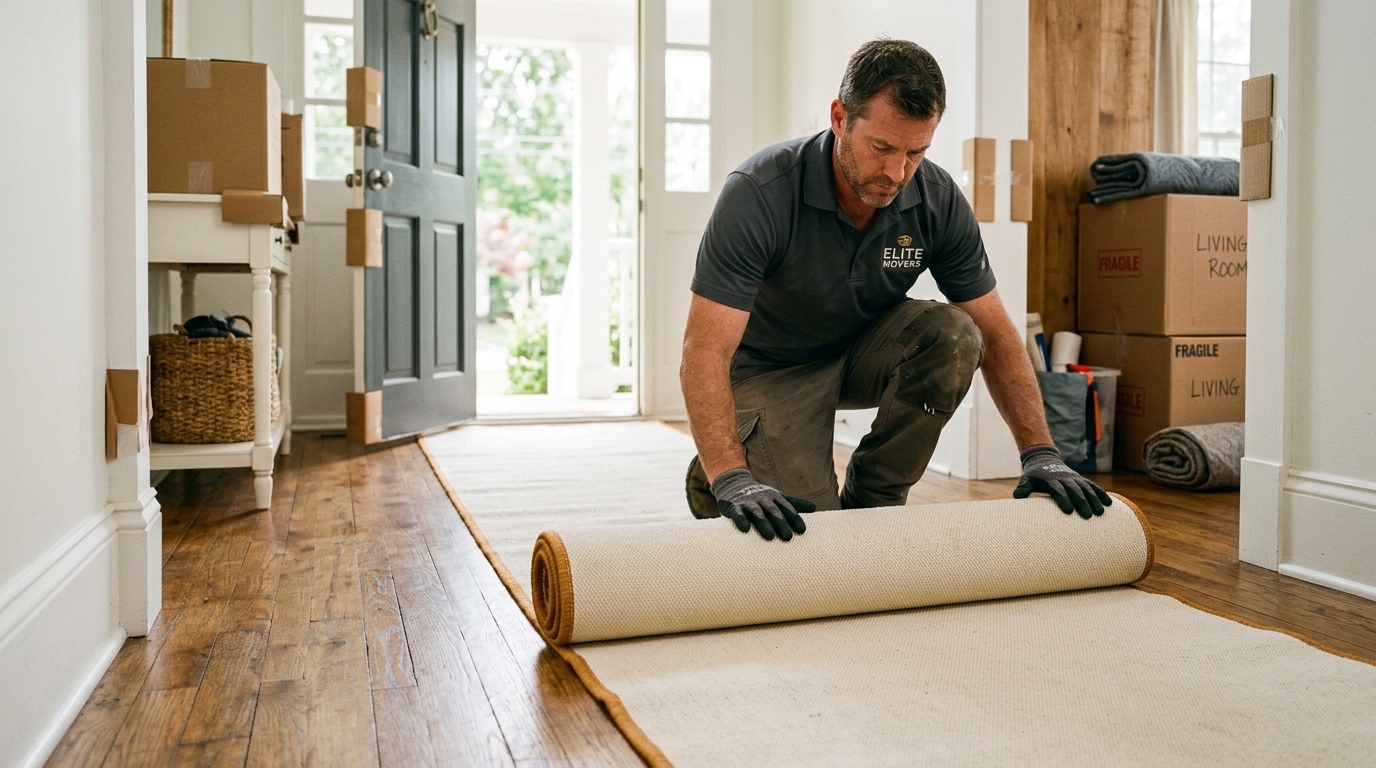
Professional movers typically bring floor runners and door-frame padding, but confirm this in advance. If your hardwood floors or freshly painted door frames aren't protected, ask the crew lead before anything moves. It's far easier to address before the first heavy piece comes through.
Do a final sweep of closets, cabinets, and outdoor spaces
People consistently forget: attic pull-down stairs, garage shelves, under-deck storage, medicine cabinets, and the back of deep closets. Walk every space with fresh eyes.
While you’re reading
Skip the research — let Robert match you with movers.
Free quotes from movers in your area. Pick whichever is easiest.
What to tell the movers when they arrive
The first five minutes with your crew sets the tone for the whole job. Cover these points quickly:
| Topic | What to communicate |
|---|---|
| Fragile or high-value items | Point them out; confirm how they'll be wrapped |
| Items NOT going on the truck | Show the crew exactly where they are |
| Disassembly agreements | Confirm what was in the estimate |
| Building rules (apartments/condos) | Elevator reservation times, loading dock hours |
| Destination room layout | Describe or sketch where large furniture goes |
| Special access at destination | Gate codes, parking restrictions, narrow hallways |
Hand the crew lead your destination address in writing — don't rely on a verbal handoff.
What to keep with you (not on the truck)
These items should ride with you, not in the moving truck:
- Passports, birth certificates, Social Security cards
- Prescription medications and medical devices
- Jewelry and irreplaceable heirlooms
- Laptop, external hard drives, and irreplaceable photos
- Payment method for the movers (cash, card, or certified check — confirm what they accept in advance; see how to pay your movers)
- A bag with one day's worth of essentials for the first night in your new place
A note on valuation: what happens if something breaks
Before moving day, confirm in writing what valuation option you've selected. For interstate moves, federal rules give you two options: Full Value Protection — where the mover must repair, replace, or pay replacement value — or Released Value at 60 cents per pound per article, which requires a signed written waiver. Neither is "automatic." You choose, and the choice goes in your paperwork.
For in-state moves, your state's rules apply instead of federal ones; what the mover owes you is whatever your contract says. Read what moving valuation actually means for your belongings before signing anything.
Finding movers before any of this applies
All of the prep above works best when you've already confirmed your mover is licensed and reputable. Browse movers on Majestic Moving Companies or search by state to compare licensed carriers. Our moving concierge Robert can help you narrow down options based on your move type, timeline, and budget — ask him anything on the site.
Frequently asked questions
How far in advance should I finish packing before movers arrive?
Finish packing at least the night before. Same-morning packing is the single most common cause of moving delays and extra hourly charges. The goal is to hand the crew a home where every box is sealed, labeled, and ready to load from the moment they walk in.
Do I need to empty dresser drawers before movers come?
For local moves, many movers will transport dressers with drawers intact if the dresser is solid and not too heavy — ask yours in advance. For long-distance moves, drawers typically need to be emptied because the dresser will be turned on its side or stacked. When in doubt, empty them: a lighter dresser is always easier and safer to move.
Should I be home the entire time movers are working?
Yes. You or a designated adult representative should be present from the moment the crew arrives until the last item is loaded and you've reviewed and signed the bill of lading. You need to answer questions, approve placements, and document the condition of your belongings before the truck leaves.
What should I do with my pets on moving day?
Keep pets in a closed room or in a crate away from the loading area, then move them to a safe, quiet space at your destination before furniture arrives. Moving day foot traffic and open doors are a serious escape risk. For a full guide, see what moving day actually does to your pet and how to help.
Do I need to tip movers, and when?
Tipping is not required but is standard practice for a job well done. For local moves, $20–$50 per mover is a common range; for long-distance moves, the amount and timing are different. See how to tip movers on a local move for a full breakdown by crew size and job length.
What if I'm not fully packed when the movers arrive?
Tell the crew lead immediately. They may be able to start in finished rooms while you complete other areas, but you'll be on the clock for that extra time. On a binding estimate, the mover may add charges for packing services if they end up doing work not included in the original quote. Avoid this situation entirely by building a buffer day into your timeline.
Tagged